Ancient Chinese Clothing: Regional Substyles & Variations

The Geography of Antiquity: Beyond a Monolithic Wardrobe
When studying ancient Chinese clothing, modern enthusiasts and historians alike often fall into the trap of viewing the sartorial traditions of antiquity as a single, monolithic aesthetic. In reality, the vast geographical expanse of historical China—spanning from the frigid northern steppes to the humid subtropical river valleys of the south—dictated a rich tapestry of regional substyles. Long before the standardization of the Hanfu (汉服) movement in later dynasties, the Warring States period (475–221 BCE) and the subsequent Han Dynasty (202 BCE – 220 CE) showcased profound regional variations in silhouette, fabric, and construction.
Understanding these regional distinctions is crucial for cultural preservationists, historical reenactors, and textile collectors. The interplay between climate, local agriculture, and indigenous philosophies birthed distinct garment ecosystems. By examining the Northern frontier, the Southern Chu state, and the Central Plains, we can decode the sophisticated engineering and cultural symbolism embedded in antiquity's most iconic garments.
The Northern Frontier: Hufu and the Equestrian Reforms
The northern regions of ancient China, particularly the states of Zhao, Yan, and Dai, bordered the vast Eurasian steppe. Here, the climate was harsh, and the primary mode of warfare and transportation relied on horseback. The traditional wide-sleeved, flowing robes of the Central Plains were entirely impractical for equestrian life, leading to the adoption and adaptation of Hufu (胡服), or "nomadic clothing."
King Wuling’s Sartorial Revolution (307 BCE)
The most pivotal moment in Northern ancient Chinese clothing occurred in 307 BCE when King Wuling of Zhao instituted the "Hufu Qishe" (胡服骑射) reforms. Recognizing the military superiority of the nomadic Xiongnu and Donghu cavalry, the King mandated that his military adopt their sartorial techniques. This introduced several revolutionary construction elements to the Chinese wardrobe:
- Trousers (Ku 袴): Unlike the split-crotch or wrap-skirts of the south, Northern trousers featured a gusseted crotch and tapered legs, allowing for frictionless movement atop a saddle.
- Narrow Sleeves and Cuffs: To prevent fabric from catching on bowstrings and reins, sleeves were tightly fitted, often utilizing leather or heavy woven wool cuffs.
- The Duijin Collar: While the Central Plains favored the cross-collar, Northern Hufu often utilized a central front-opening (Duijin) fastened with leather belts and metallic buckles, a direct precursor to the Tang Dynasty's round-collar robes.
According to the Metropolitan Museum of Art's Heilbrunn Timeline of Art History, the integration of steppe textiles and tailoring techniques permanently altered the trajectory of Chinese dress, proving that ancient fashion was highly utilitarian and adaptable to geopolitical needs.
The Southern Chu State: Shamanic Aesthetics and Ramie Silks
In stark contrast to the militaristic pragmatism of the North, the Southern state of Chu (located in modern-day Hubei and Hunan provinces) developed a sartorial culture steeped in shamanism, mysticism, and a deep reverence for nature. The humid, subtropical climate necessitated breathable fabrics, while the region's rich biodiversity inspired some of the most intricate embroidery in the ancient world.
Decoding the Chu Shenyi
The quintessential garment of the Chu elite was the Shenyi (深衣), a one-piece deep robe that connected the upper jacket and lower skirt into a single, flowing silhouette. However, the Chu variation was distinct in its construction and decoration:
- Curved Hemlines (Quju 曲裾): The Chu Shenyi often featured a dramatically curved, spiraling hemline that wrapped around the body multiple times. This not only conserved fabric but created a swirling, dynamic effect when the wearer walked, mimicking the flow of rivers and clouds.
- Phoenix and Dragon Motifs: Drawing from the poetic works of Qu Yuan, Chu textiles were heavily embroidered with interlocking phoenixes, dragons, and geometric cloud motifs. These were not merely decorative; they served as shamanic conduits between the earthly and spiritual realms.
- Ramie and Lightweight Silks: While mulberry silk was prized, the South heavily utilized Zhuma (ramie), a bast fiber that offered exceptional breathability and a crisp drape, ideal for the sweltering Yangtze River basin summers.
Excavations from the Mawangdui tombs have revealed astonishingly preserved examples of these Southern textiles. As documented by the Smithsonian National Museum of Asian Art, the sheer weightlessness of these ancient silks—some weighing less than 50 grams per square meter—demonstrates a mastery of sericulture that remains difficult to replicate today.
The Central Plains (Zhongyuan): Orthodox Ruqun and Cosmic Geometry
The Central Plains, encompassing the Yellow River valley, served as the cradle of Han orthodoxy and Confucian philosophy. Here, clothing was not merely functional or expressive; it was a physical manifestation of cosmic order, social hierarchy, and moral rectitude. The dominant styles were the Ruqun (襦裙, a short jacket paired with a long skirt) and the orthodox straight-hem Shenyi.
The Architecture of Jiaoling Youren
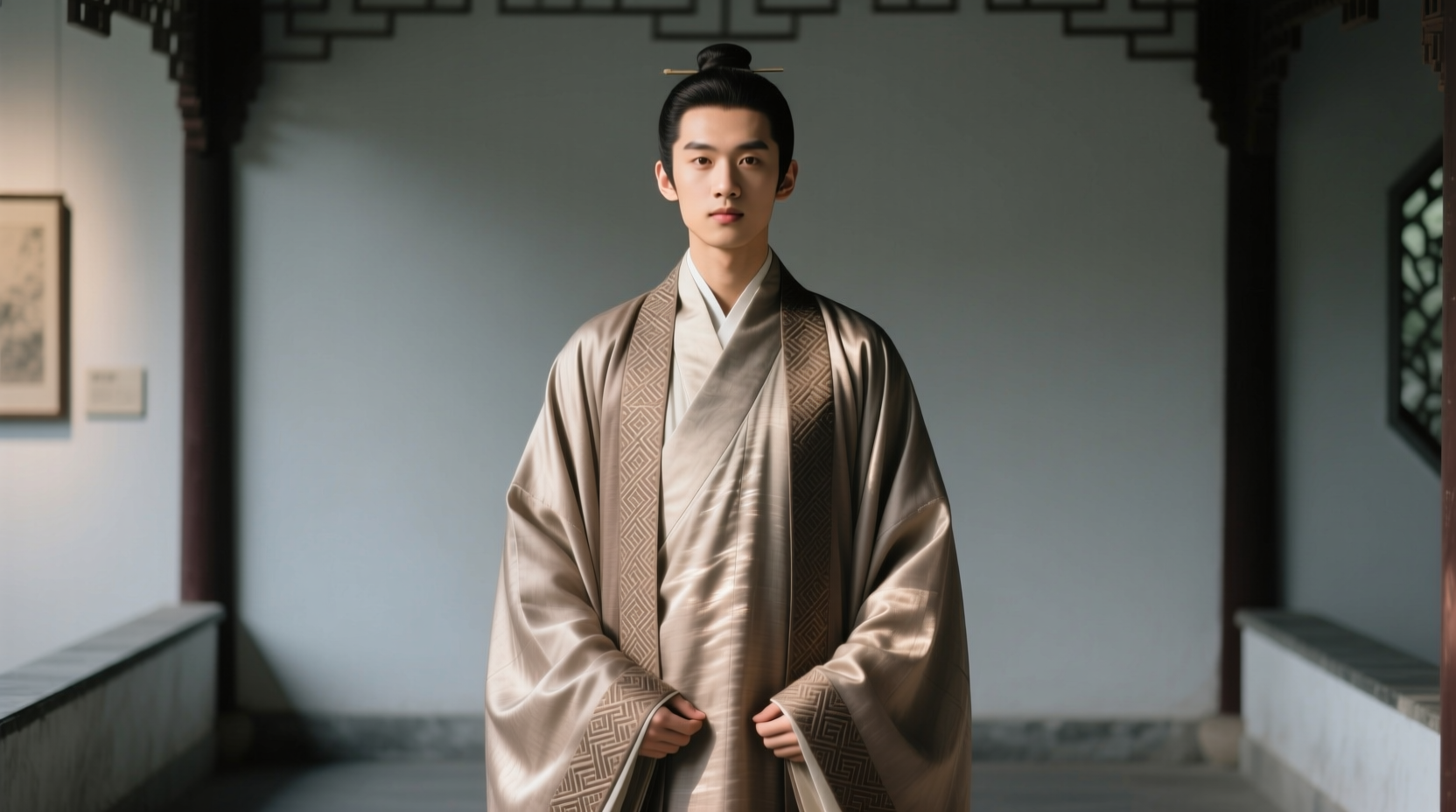
The defining feature of Central Plains ancient Chinese clothing is Jiaoling Youren (交领右衽), the cross-collar with the right lapel wrapping over the left. This construction was deeply philosophical:
- Cosmic Alignment: The left side was associated with Yang (life, the sun, the east), while the right was associated with Yin (death, the moon, the west). Wrapping the left over the right (from the wearer's perspective, the right lapel over the left) symbolized the triumph of life and civilization over death and barbarism.
- The 12-Panel Shenyi: The orthodox Shenyi of the Central Plains was constructed from exactly 12 panels of fabric, representing the 12 months of the lunar year. The round sleeves symbolized the heavens, while the square collar represented the earth, encapsulating the wearer within a microcosm of the universe.
Garments in the Zhongyuan region were typically dyed using plant-based mordants, with colors strictly regulated by sumptuary laws. Deep indigos, madder roots (for crimson), and weld (for yellow) were common, but the wearing of pure yellow or unblemished white was often restricted to royalty or specific mourning rites.
Regional Matrix: Climate, Fabric, and Silhouette in Antiquity
To synthesize the profound differences across these ancient civilizations, the following matrix outlines the primary variables that dictated regional garment construction.
| Region / State | Primary Climate | Dominant Garment | Key Textile Materials | Silhouette & Function |
|---|---|---|---|---|
| Northern Frontier (Zhao/Yan) | Cold, Arid, Steppe | Hufu (Trousers, Tunics) | Wool, Leather, Heavy Hemp | Fitted, tapered, layered for equestrian mobility and thermal retention. |
| Southern Chu State | Humid, Subtropical | Quju Shenyi (Curved Robe) | Ramie, Gauze Silk, Brocade | Flowing, wide-sleeved, spiraling hems for ventilation and ritual display. |
| Central Plains (Zhongyuan) | Temperate, Seasonal | Ruqun, Zhiju Shenyi | Mulberry Silk, Woven Hemp | Structured, cross-collared, 12-panel geometry reflecting Confucian order. |
Sourcing Museum-Grade Replicas: A Buyer’s Framework
For collectors, museums, and dedicated Hanfu practitioners seeking authentic representations of these ancient regional styles, the modern market requires careful navigation. Mass-market "ancient style" costumes often conflate dynasties and ignore regional tailoring rules. To acquire historically accurate garments, one must engage with specialized artisan cooperatives and bespoke tailors.
Price Tiers and Artisan Cooperatives
- Entry-Level Commercial Hanfu ($50 - $150 USD): Usually mass-produced using polyester blends. While they may mimic the silhouette of a Central Plains Ruqun, they lack the precise 12-panel geometry and historical dyeing techniques. Suitable for casual wear, but not for historical study.
- Bespoke Artisan Reproductions ($300 - $800 USD): Studios specializing in Warring States and Han Dynasty replicas will weave custom ramie or heavyweight silk. They adhere strictly to Jiaoling Youren proportions and utilize traditional flat-cutting techniques where the sleeve and body are cut from a single piece of loom-width fabric, eliminating shoulder seams.
- Museum-Grade Commission ($1,200 - $3,500+ USD): For exact replicas of Chu embroidery or Northern Hufu leatherwork, buyers must commission master artisans. This tier involves hand-loomed silk, natural plant dyeing (such as indigo fermentation vats), and hand-embroidery using ancient chain-stitch techniques. The Victoria and Albert Museum's Asian Collections frequently collaborates with such master weavers to preserve these endangered textile methodologies.
Buyer's Tip: When commissioning a Shenyi, always ask the tailor about the "loom width" (Fu 幅). Ancient looms produced fabric roughly 50-60 cm wide. Authentic ancient construction relies on piecing these narrow panels together rather than cutting into wide, modern synthetic bolts, which fundamentally alters the drape and movement of the garment.
Curating the Past: Final Thoughts on Regional Heritage
The study of ancient Chinese clothing is an exercise in historical geography as much as it is in fashion. The heavy, gusseted trousers of the Zhao cavalry, the ethereal, spiraling ramie robes of the Chu shamans, and the mathematically precise Shenyi of the Confucian scholars all tell the story of a civilization adapting to its environment while striving to impose meaning upon the world. By recognizing and respecting these regional substyles, modern enthusiasts do more than wear a costume; they drape themselves in the living, breathing history of the Asian continent.