Tang Dynasty Hanfu: The Ultimate Event & Occasion Styling Guide
The Golden Age of Silk: Reintroducing Tang Dynasty Hanfu
The Tang Dynasty (618–907 CE) is universally celebrated as the zenith of Chinese cosmopolitanism, artistic flourishing, and sartorial innovation. When modern enthusiasts and cultural practitioners speak of Tang Dynasty hanfu, they are referencing a silhouette defined by sweeping elegance, vibrant color palettes, and an openness to Silk Road influences. Unlike the structured, modest layers of later dynasties, Tang fashion celebrated fluidity, volume, and a bold expression of femininity and status. Today, wearing these garments is not merely an act of historical cosplay; it is a living engagement with one of Asia's most dynamic cultural epochs. Whether you are attending a formal banquet, a traditional tea ceremony, or a vibrant Lantern Festival, understanding the nuances of Tang dress is essential for curating a look that is both historically respectful and aesthetically breathtaking.
Anatomy of the Tang Silhouette: Core Garments Explained
To dress appropriately for an event, one must first understand the foundational architecture of the Tang wardrobe. The era's clothing was modular, allowing wearers to adapt to shifting seasons and varying degrees of formality.
Qixiong Ruqun (齐胸襦裙)
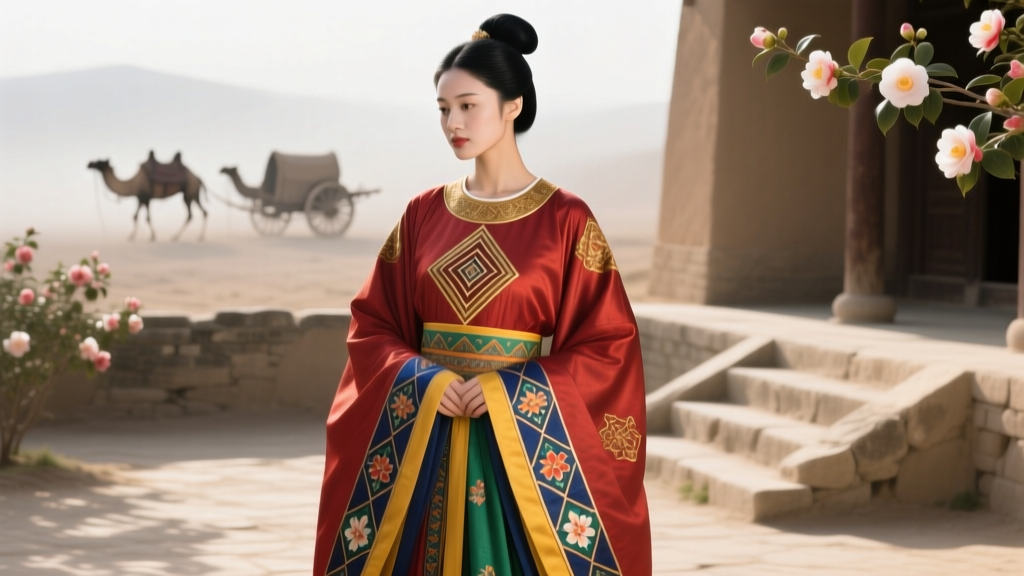
The quintessential image of Tang women's fashion is the Qixiong Ruqun, a chest-high skirt ensemble. It consists of a Shan (a lightweight, often unlined blouse) and a Qun (skirt) that is tied high above the bust rather than at the natural waist. The skirts were frequently constructed as Poqun (panel skirts), utilizing multiple trapezoidal fabric panels to create a dramatic, flared bell shape that pooled elegantly on the floor without adding excessive bulk at the chest.
Daxiushan (大袖衫)
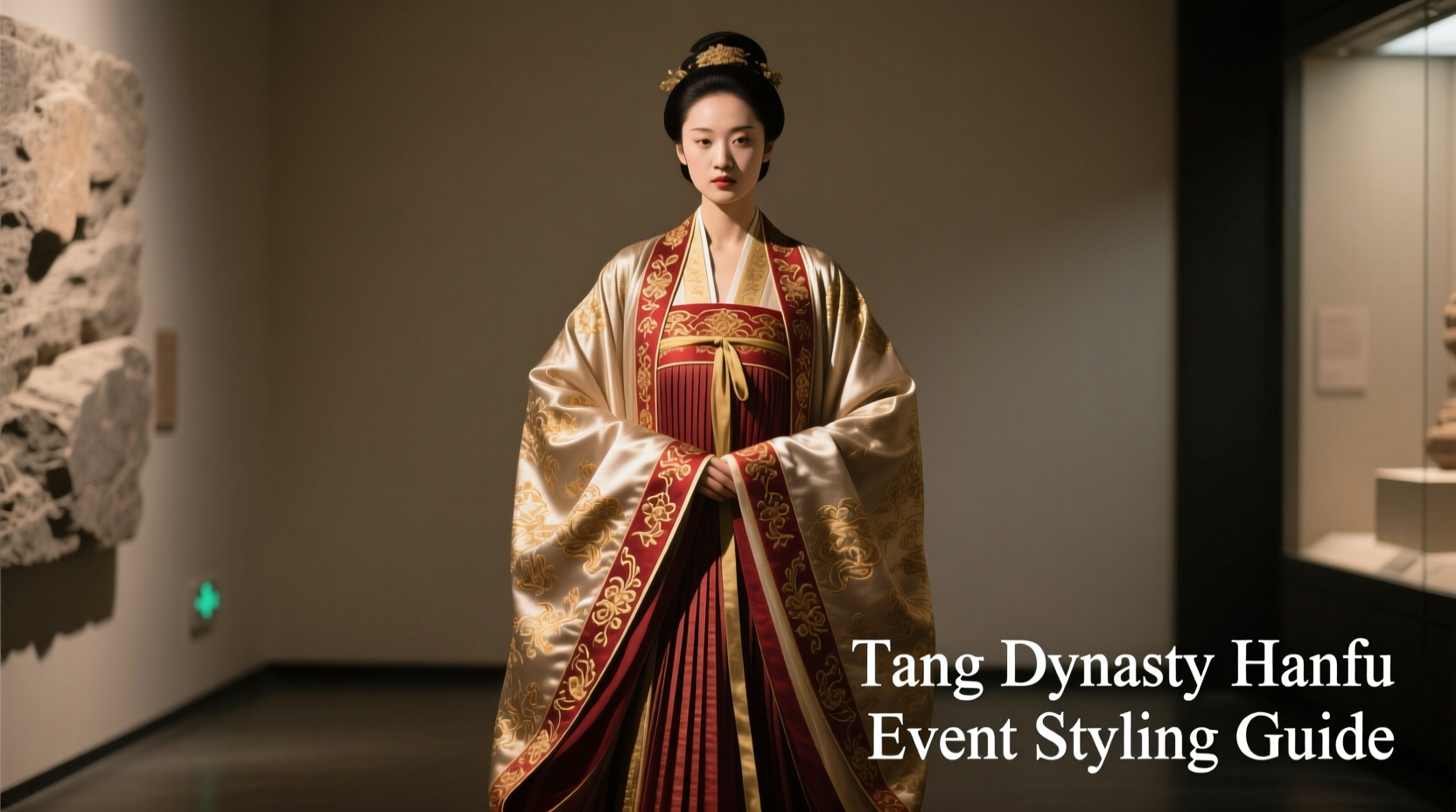
For high-formality events, the Daxiushan (large-sleeved robe) was worn over the base layers. Characterized by sleeves that could measure over a meter in width, this sheer or lightly woven outer robe created an ethereal, trailing effect. According to curatorial records from the Palace Museum in Beijing, the Daxiushan was heavily favored by court ladies and nobility, often woven with intricate gold-leaf threads or delicate Luo (gauze) to catch the light during evening banquets.
Banbi (半臂) and Pibo (披帛)
The Banbi is a short-sleeved, cropped vest worn over the blouse, providing a striking layer of contrasting color and textile weight. Completing the silhouette is the Pibo, a long, flowing silk shawl draped over the arms or looped through the skirt ties. The Victoria and Albert Museum's textile archives note that the Pibo likely drew inspiration from Central Asian and Buddhist celestial iconography (Apsaras), symbolizing the Tang era's deep integration of Silk Road aesthetics.
The Occasion Matrix: Selecting the Right Tang Hanfu
Matching the correct garment to your specific event ensures cultural appropriateness and personal comfort. Use the following matrix to guide your sartorial choices.
| Event Type | Recommended Garment | Fabric & Motif | Formality Level |
|---|---|---|---|
| Wedding / Formal Banquet | Daxiushan over Qixiong Ruqun | Heavy Silk Damask (Qi), Baoxianghua (treasure flower) motifs, deep reds and golds | High |
| Lantern Festival / Night Market | Banbi over Ruqun with Pibo | Silk Organza, jacquard weaves, Lianzhu (paired pearl roundel) motifs | Medium |
| Tea Ceremony / Art Exhibition | Jiaoling Ruqun (cross-collar) or simple high-waisted Shan and Qun | Matte Silk, Linen blends, subtle botanical embroidery | Low-Medium |
| Historical Photoshoot / Gala | Full Court Lady Regalia (including heavy hairpieces and Huadian makeup) | Kesi (silk tapestry), heavily embroidered brocade (Jin) | Very High |
Market Realities: Pricing and Sourcing Authentic Pieces
The modern Hanfu market has exploded, but quality varies wildly. Understanding price tiers helps you invest in pieces that honor the garment's heritage.
- Entry-Level / Mass Market ($40 – $90 USD / 250 – 650 RMB): Widely available on global e-commerce platforms. These pieces typically utilize polyester blends and basic machine jacquards. While accessible for casual festivals or first-time wearers, they lack the breathability and drape of authentic fibers.
- Mid-Tier / Specialty Brands ($150 – $350 USD / 1,000 – 2,500 RMB): Brands specializing in historical reproduction use genuine mulberry silk, silk-cotton blends, and accurate historical patterns. The drape of a real silk Poqun at this tier transforms the silhouette, offering the fluid movement seen in Tang dynasty murals.
- Artisan / Haute Couture ($800 – $3,000+ USD): Commissioned pieces featuring authentic Kesi (silk tapestry weaving) or hand-loomed Zhuanghua brocade. These are investment-grade garments meant for heirloom preservation, weddings, or high-end cultural exhibitions.
'The silk is like the clouds of autumn, the dye like the flowers of spring.' — Adapted from Tang Dynasty poetic descriptions of the imperial weaving workshops, reflecting the era's obsession with textile fluidity and vibrant naturalism.
Layering and Construction: A Practical Dressing Guide
One of the most common challenges for modern wearers of the Qixiong Ruqun is securing the chest-high skirt without it slipping. Tang women utilized complex knotting techniques, but modern practitioners can use the following step-by-step protocol for a secure, historically inspired fit:
- The Base Layer: Begin with a modern, skin-toned strapless tube top or a traditional Moxiong. This provides friction and modesty, preventing the silk from slipping against bare skin.
- The Blouse (Shan): Don your Shan, ensuring the sleeves are properly aligned. If wearing a Banbi (half-sleeve vest), layer it over the blouse now.
- Wrapping the Skirt (Qun): Hold the skirt against your back, bringing the two front panels around to your chest, just above the bust line.
- The Securing Knot: Cross the dual straps tightly over your chest, wrap them around your back, and bring them to the front again. Tie a firm double-square knot. Pro-tip: Tuck the trailing strap ends neatly into the top hem of the skirt to hide them and add structural friction.
- Draping the Pibo: Drape the silk shawl over your forearms, allowing the ends to trail behind you, or loop it once through the front skirt ties to keep it secure while walking.
Cultural Etiquette and Aesthetic Harmony
Wearing Tang Dynasty hanfu extends beyond the textiles; it requires a holistic approach to grooming and etiquette. The Metropolitan Museum of Art's archives on Silk Road exchanges highlight how Tang cosmetics were heavily influenced by Central Asian and Persian trends, resulting in bold, highly stylized makeup protocols.
Makeup and Adornment
To complete a formal Tang look, practitioners often apply Huadian (floral appliques made of gold leaf, pearl, or silk) to the center of the forehead. This is paired with Ehuang, a delicate dusting of goose-yellow powder on the forehead, and Xiehong, sweeping red crescent lines at the temples. While full court makeup may be too avant-garde for a casual tea gathering, a simplified Huadian adds a touch of historical authenticity to banquet attire.
Hair and Footwear
Tang women favored voluminous, elaborate updos known as Gaoji (high buns). Because achieving this with modern hair lengths is difficult, the use of Yifa (traditional faux hairpieces) is historically accurate and widely accepted. Secure the bun with jade, gold, or enamel Zan (hairpins) and Buyao (step-shake swaying pins). For footwear, avoid modern heels. Opt for flat, silk-embroidered cloud-toe shoes (Yuntouxie), which historically peeked out from beneath the sweeping hem of the Poqun.
Curating Your Legacy
Engaging with Tang Dynasty hanfu is a profound way to connect with a period of history that celebrated global exchange, artistic mastery, and the unapologetic beauty of silk. By understanding the specific construction of the Qixiong Ruqun, investing in appropriate natural fibers, and respecting the cultural protocols of the era, you do more than wear a beautiful garment—you become a steward of a magnificent Asian tradition. Whether you are walking through a modern botanical garden or attending a formal cultural gala, the sweeping sleeves and vibrant roundels of the Tang Dynasty will ensure your presence is both unforgettable and deeply rooted in history.