Traditional Dresses of Different Countries With Names: A Global Style Guide
Clothing is far more than a mere necessity; it is a woven tapestry of history, identity, and artistry. Across the globe, traditional garments serve as a visual language, communicating a wearer's heritage, social standing, and regional roots. For fashion enthusiasts and cultural historians alike, exploring the traditional dresses of different countries with names offers a fascinating journey into the sartorial soul of humanity. Whether you are looking to incorporate global pieces into your wardrobe, attend a cultural festival, or simply expand your fashion knowledge, understanding the nuances of these iconic garments is essential. This comprehensive guide explores iconic global attire, offering practical styling tips, accessory pairings, and ethical buying advice to help you navigate the world of cultural fashion with respect and elegance.
Iconic Traditional Dresses of Different Countries With Names
To truly appreciate global fashion, one must first understand the foundational garments that have shaped various cultures. Here are some of the most recognizable and historically significant traditional dresses from around the world.
The Saree (India)
The saree is an iconic unstitched drape, typically ranging from six to nine yards in length. Worn predominantly in India, Sri Lanka, and Bangladesh, this garment is a masterclass in versatility. It can be draped in over a hundred different regional styles, from the elegant Nivi drape of Andhra Pradesh to the intricate Bengali style. Crafted from materials ranging from everyday cotton to opulent Banarasi silk, the saree is a testament to the subcontinent's rich textile history. For those interested in mastering the art of the drape, our detailed guide to saree draping techniques provides step-by-step instructions for various regional styles.
The Kimono (Japan)
Translating literally to 'thing to wear,' the kimono is a T-shaped, straight-lined robe with attached collars and long, wide sleeves. Historically worn by both men and women, the kimono is wrapped around the body with the left side over the right and secured by a wide sash called an obi. The fabrics, colors, and motifs of a kimono are deeply symbolic, often reflecting the wearer's age, marital status, and the specific season. The meticulous art of dressing in a kimono is a revered cultural practice. Discover more about the symbolism and history of this garment in our cultural heritage archive on the kimono.
The Hanbok (South Korea)
Characterized by its vibrant colors and simple lines without pockets, the traditional Korean hanbok consists of a jeogori (a cropped jacket) and a chima (a full, high-waisted skirt) for women, or baji (baggy trousers) for men. The silhouette is designed to allow for ease of movement while creating a beautiful, bell-like shape. Modern interpretations of the hanbok have gained immense popularity globally, blending historical elegance with contemporary wearability.
The Dirndl (Austria & Germany)
Originating in the alpine regions of Central Europe, the dirndl is a feminine, traditional dress consisting of a close-fitting bodice, a blouse, a full skirt, and an apron. Once the everyday uniform of working-class women, it has evolved into a celebrated garment worn during festivals, weddings, and cultural events. The placement of the apron bow is a fascinating sartorial code, traditionally indicating the wearer's marital status.
The Huipil (Mexico & Central America)
The huipil is a loose-fitting, heavily embroidered tunic worn by Indigenous women across Mexico and Central America. Woven on a backstrap loom, each huipil is a unique work of art, featuring motifs that represent the wearer's village, personal beliefs, and cosmic worldview. The intricate embroidery and brocade techniques used in creating a huipil are passed down through generations, making it a profound symbol of Mesoamerican identity. Explore the rich weaving traditions behind these garments in our Mesoamerican textiles guide.
The Ao Dai (Vietnam)
The ao dai is a stunning, form-fitting silk tunic worn over flowing trousers. Featuring a high collar and long, dramatic slits on the sides, the ao dai is celebrated for its ability to flatter the figure while maintaining an air of modest grace. It is widely worn as a school uniform, office attire, and ceremonial dress, symbolizing Vietnamese beauty and national pride.
Styling Tips & Modern Adaptations
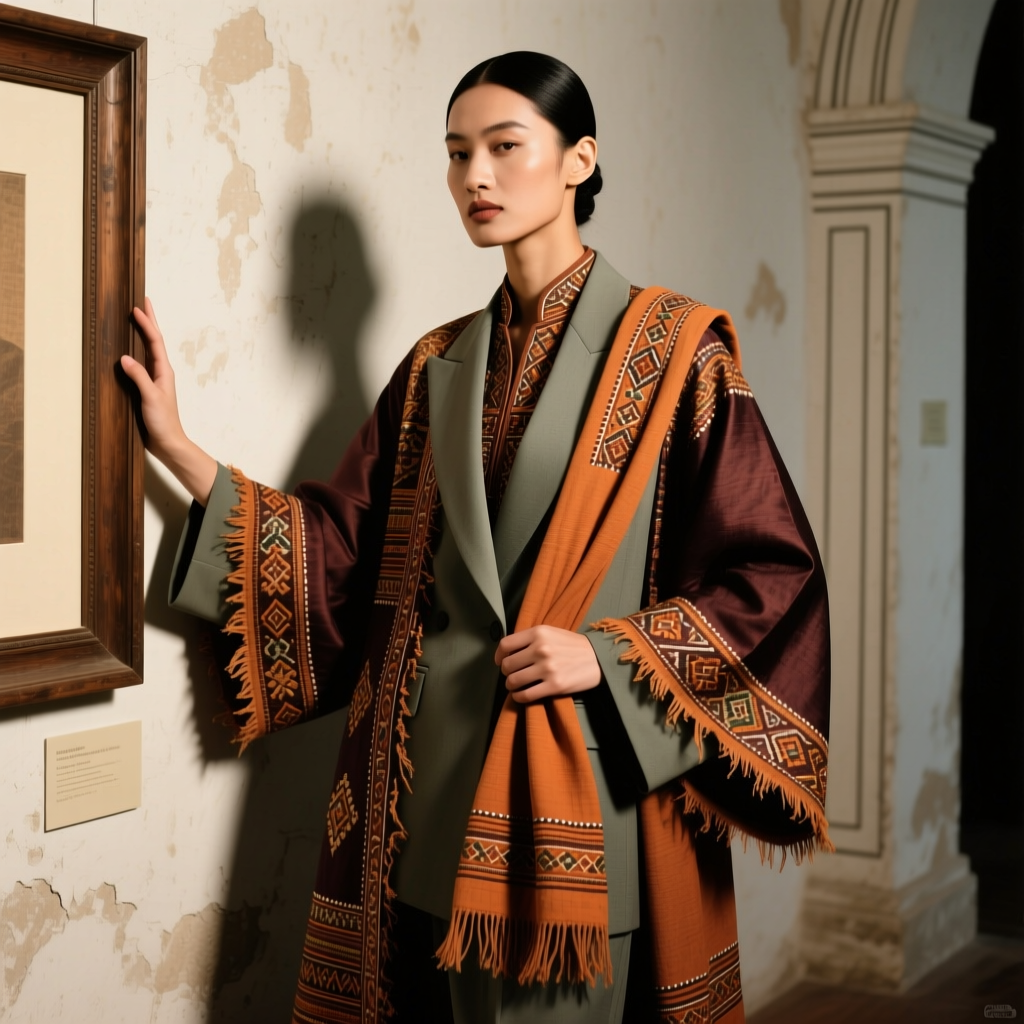
Incorporating traditional dresses into a contemporary wardrobe requires a delicate balance of respect for the garment's origins and a keen eye for modern styling. Fusion fashion—the blending of traditional cultural pieces with Western or contemporary silhouettes—has become a powerful way to keep heritage garments relevant in everyday life.
When styling a traditional piece like a Hanbok skirt or a heavily embroidered Huipil, consider pairing it with minimalist, modern basics. A crisp white button-down shirt or a sleek, fitted turtleneck can ground the ornate patterns of a traditional garment, allowing the craftsmanship to take center stage. For the saree, contemporary stylists often experiment with unconventional blouses, such as structured corsets, off-the-shoulder tops, or even tailored blazers, creating a striking juxtaposition of old and new.
Layering is another excellent technique for adapting cultural attire to different climates and settings. A lightweight, sheer kimono-style jacket (haori) can be worn over a simple slip dress and ankle boots for an effortless, bohemian-chic look. Similarly, the dirndl bodice can be repurposed as a statement corset over a flowing maxi skirt or paired with high-waisted denim for a festive, avant-garde ensemble.
However, when engaging in fusion fashion, it is crucial to maintain the structural integrity and modesty requirements inherent to certain cultural garments. For instance, altering the fundamental draping of a sacred or highly traditional garment to make it more revealing can be seen as disrespectful. Always research the cultural significance of a piece before modifying its silhouette. For more inspiration on blending global styles, read our feature on contemporary fusion fashion trends.
Essential Accessories & Perfect Occasions
No traditional ensemble is complete without its accompanying accessories. Footwear, jewelry, and hair ornaments are not mere afterthoughts; they are integral components that complete the cultural narrative of the outfit.
When wearing a saree, traditional footwear like embellished juttis or mojris adds an authentic touch, while delicate gold jewelry, such as a maang tikka (forehead pendant) and jhumkas (bell-shaped earrings), elevates the look for formal events. For the kimono, the ensemble is anchored by tabi socks and zori or geta sandals, while the hair is often adorned with intricate kanzashi (hair ornaments) that reflect the changing seasons. The dirndl is traditionally accessorized with a delicate silver or gold chain necklace, a small felt hat, and a woven basket or leather pouch.
Understanding the appropriate occasions for wearing these garments is just as important as knowing how to style them. Traditional dresses are typically reserved for significant life events, cultural festivals, and religious ceremonies. The saree and lehenga are staples at Indian weddings, while the hanbok is traditionally worn during Chuseok (the Korean harvest festival) and Seollal (Lunar New Year). The dirndl is the undisputed star of Oktoberfest and alpine folk festivals, and the ao dai is a popular choice for Vietnamese weddings and Tet (Lunar New Year) celebrations.
In recent years, there has also been a movement to reclaim traditional garments for everyday wear, pushing back against the notion that cultural attire is merely a costume reserved for special occasions. Wearing a simplified, everyday version of a huipil or a cotton saree to the office or a casual gathering is a beautiful way to honor one's heritage daily.
Buying Guide: Sourcing Authentic Traditional Dresses
As global fashion becomes increasingly accessible, the market for traditional dresses has expanded. However, this accessibility brings the risk of mass-produced, culturally appropriated knockoffs that undermine the artisans who have preserved these textile traditions for centuries. Sourcing authentic, ethically made garments is paramount.
When purchasing a traditional dress, prioritize buying directly from artisans, cooperatives, or verified boutiques that specialize in specific cultural textiles. For example, if you are seeking a genuine silk saree, look for sellers who provide certification for handloom weaving and natural dyeing processes. Our guide to identifying authentic silk offers essential tips on distinguishing genuine handwoven fibers from synthetic imitations.
Be wary of fast-fashion retailers that mass-produce tribal prints or kimono-style robes without acknowledging or compensating the source communities. True appreciation involves investing in the craftsmanship. Authentic huipils, for instance, take months to weave by hand on a backstrap loom; a price tag that seems too good to be true is a strong indicator of machine-made exploitation.
Additionally, consider the vintage and antique market. Many traditional garments, such as mid-century kimonos or vintage dirndls, can be found in excellent condition through specialized vintage dealers and estate sales. Purchasing vintage not only guarantees authenticity but also promotes sustainable fashion practices by giving a beautiful, historical garment a second life.
Frequently Asked Questions
What is the difference between cultural appreciation and appropriation in fashion?
Cultural appreciation involves taking the time to learn about a culture's history, understanding the significance of its traditional garments, and purchasing ethically from creators within that community. It is rooted in respect and a desire to honor the culture. Cultural appropriation, conversely, occurs when elements of a marginalized culture are adopted by members of a dominant culture without understanding, respect, or credit, often reducing sacred or significant garments to mere costumes or fleeting trends for profit.
How do I properly care for delicate traditional fabrics like silk and brocade?
Traditional fabrics require specialized care to maintain their structural integrity and vibrant colors. Silk garments, such as kimonos and sarees, should generally be dry-cleaned by professionals who have experience handling delicate heritage textiles. Avoid hanging heavy, embroidered garments on wire hangers, as the weight of the embroidery can distort the fabric over time. Instead, store them folded in breathable cotton bags, layered with acid-free tissue paper to prevent creasing and moisture buildup.
Can I wear a traditional dress if I am not from that culture?
In most cases, yes, provided it is done with deep respect and in the appropriate context. Many cultures actively encourage the sharing of their traditional attire, especially when visitors are attending cultural festivals, weddings, or local ceremonies. The key is to wear the garment correctly, adhere to its modesty guidelines, and avoid treating it as a novelty or costume. When in doubt, consult with friends or guides from that culture to ensure you are honoring the garment properly.
Where can I find ethically made traditional garments online?
To find ethically made traditional garments, look for online platforms that partner directly with artisan cooperatives, fair-trade organizations, and independent weavers. Websites dedicated to preserving global textile heritage often provide detailed biographies of the artisans and transparent breakdowns of their pricing. Avoid massive e-commerce platforms that feature vague descriptions and suspiciously low prices, as these are often indicative of mass-produced, culturally exploitative items.