Tongan Ngatu: Tapa Ceremony Cloth Guide
Tom Renshaw·Published

Ngatu: Tonga's Ceremonial Bark Cloth
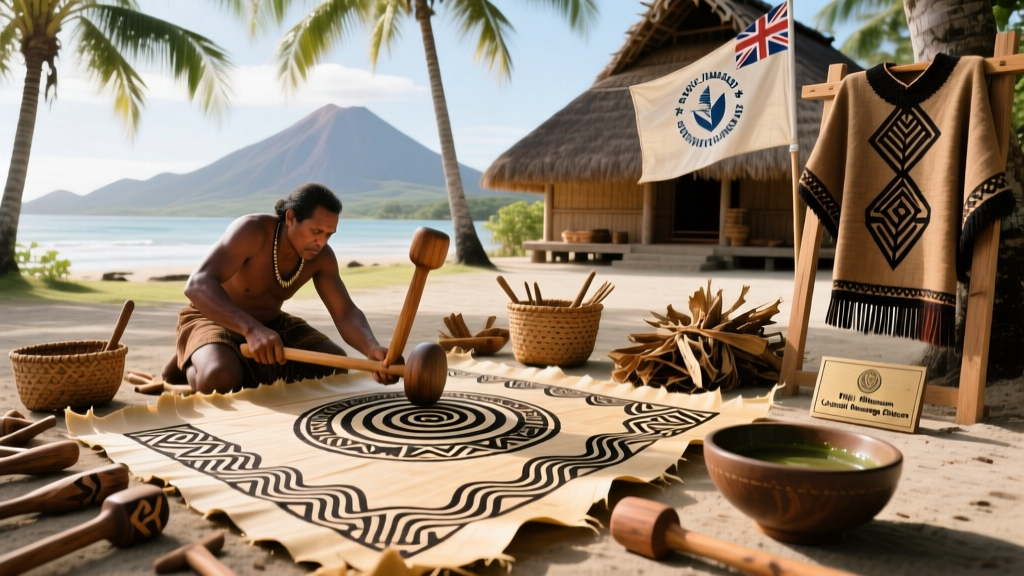
Ngatu is the Tongan word for tapa cloth — bark cloth beaten from the paper mulberry tree and decorated with distinctive Tongan designs. In Tongan culture, ngatu is far more than fabric: it is a store of value, a ceremonial essential, and a medium for expressing social relationships through gift exchange.
Production Process
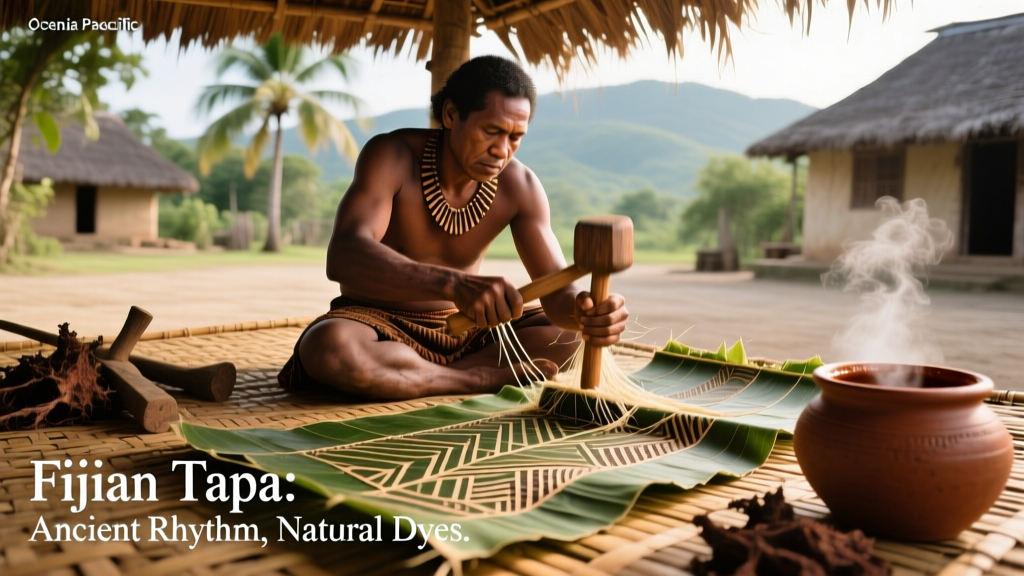
- Bark preparation: Paper mulberry saplings (hiapo) are harvested, stripped, and the inner bark is soaked overnight.
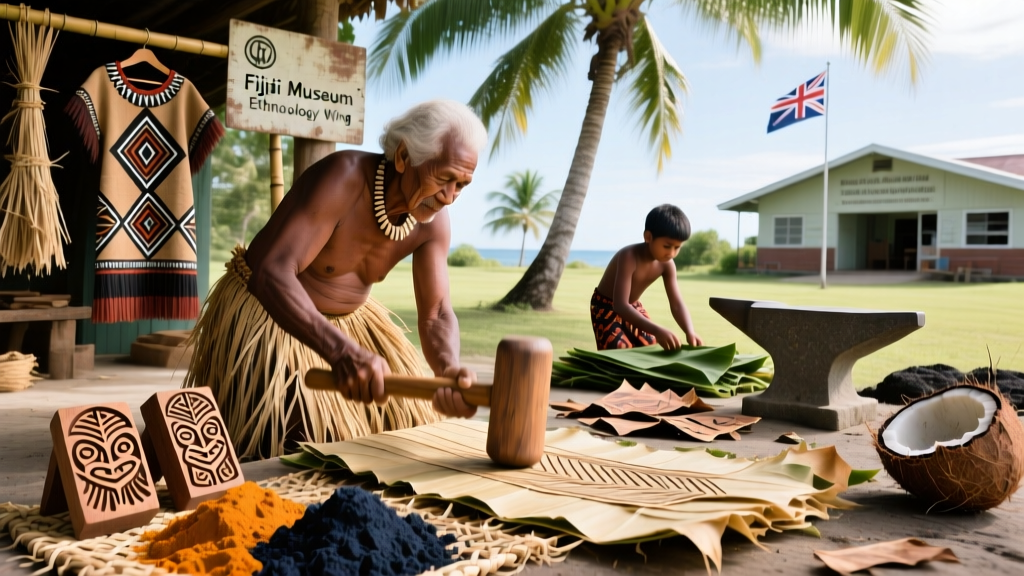
- Beating: Women beat the bark with a wooden mallet (ike) on a stone anvil, gradually widening it from a strip to a sheet. The rhythmic beating is a communal activity accompanied by singing.
- Joining: Multiple sheets are glued together with arrowroot starch to create large panels — some ngatu reach 30+ meters in length for royal ceremonies.
Design Application
Tongan ngatu uses a unique rubbing technique called toki ngatu:
- Design tablets (kupesi) are carved from coconut midrib, featuring raised geometric patterns.
- The cloth is laid over the kupesi and rubbed with brown pigment (from the koka tree bark), transferring the pattern.
- Additional freehand painting fills in details and adds color variation.
Ceremonial Functions
Ngatu is essential at every major Tongan life event:
- Weddings: The bride's family presents ngatu as dowry — the quantity and quality reflects family status
- Funerals: Ngatu wraps the deceased and lines the burial site
- Royal coronations: Enormous ngatu are displayed and distributed as gifts
- Church openings: Ngatu decorates the interior and is gifted to attendees
Economic Value
Ngatu functions as a form of wealth storage in Tongan society. Large, fine-quality ngatu can be worth thousands of pa'anga (Tongan currency). Families accumulate ngatu over generations, and the exchange of ngatu at ceremonies creates and reinforces social bonds and obligations.