Tapa Cloth: Pacific Island Bark Fabric Traditions
From Bark to Beautiful Cloth
Tapa, also known as ngatu in Tonga, masi in Fiji, and siapo in Samoa, is a bark cloth central to Pacific Island cultures for thousands of years. Made from the inner bark of the paper mulberry tree, tapa represents one of the most widespread textile traditions in Oceania.
The Making Process
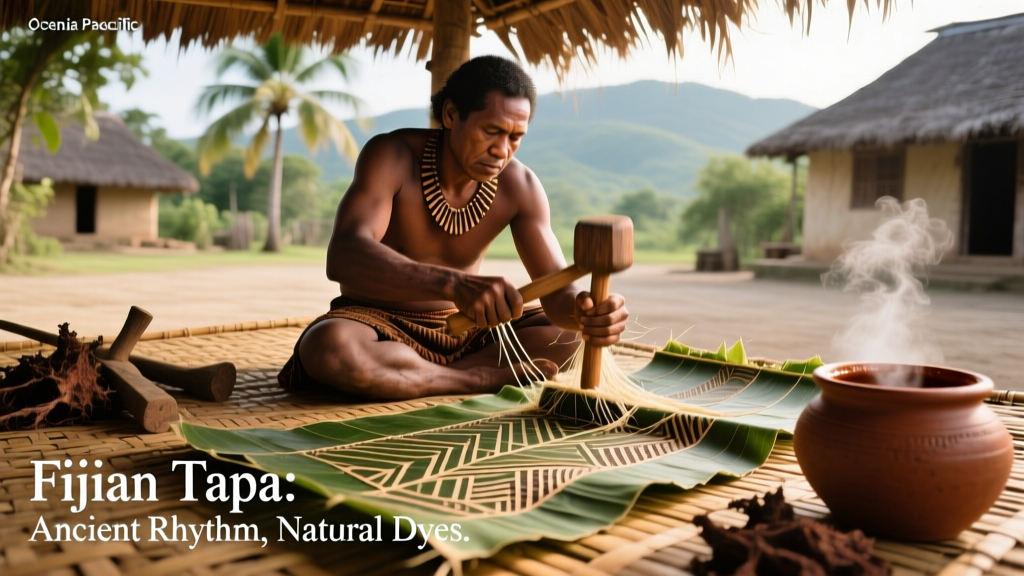
Women strip the bark from paper mulberry saplings, separate the inner from outer bark, and beat the fibers on wooden anvils using carved beaters. The rhythmic pounding flattens and spreads the fibers, which are then joined with natural adhesives to create large sheets.
Design and Decoration
Each island group has distinctive decorative styles. Tongan ngatu features bold geometric patterns applied with brown koka tree pigment. Samoan siapo uses a more freehand approach with plant-based dyes. Fijian masi often employs stencils made from banana leaves.
Cultural Significance
Tapa cloth plays essential roles in births, marriages, funerals, and political exchanges. In Tonga, a large ngatu can be the most valuable item in a wedding exchange, representing the families social standing.