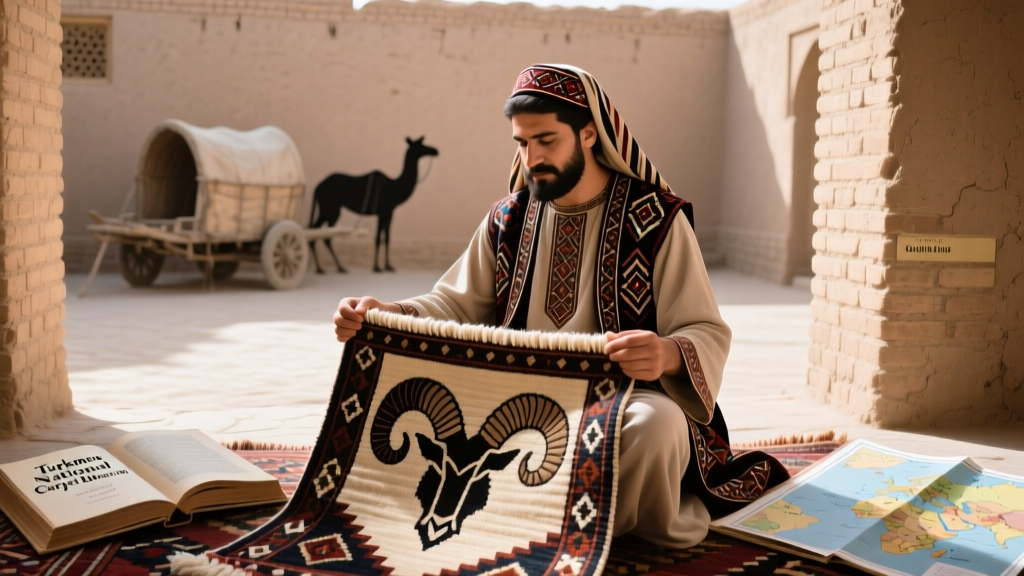
Turkmen Carpets: Heritage in Wool

Carpet Heritage of the Turkmen
Turkmen carpets are among the finest handwoven textiles in Central Asia. Each tribe — Tekke, Yomut, Salor, Chodor, and Ersari — maintains distinctive patterns that function as tribal identifiers, much like Scottish tartans.
The Gül Motif
The gül (flower medallion) is the signature design element of Turkmen carpets. Each tribe's gül is unique: the Tekke gül is octagonal with quartered internal design, while the Yomut gül features a diamond shape with hook motifs. These patterns have remained remarkably consistent over centuries.
Materials and Technique
Traditional Turkmen carpets use wool from local sheep, dyed with natural pigments — madder root for red, indigo for blue, and pomegranate for yellow. The asymmetric (Persian) knot creates dense, detailed patterns. Quality carpets can contain 200+ knots per square inch.
Cultural Significance
Carpets are central to Turkmen life — used as tent furnishings, prayer rugs, horse trappings, and dowry items. The Turkmen flag features five carpet güls representing the major tribes. UNESCO recognizes Turkmen carpet-making as Intangible Cultural Heritage.