Turkmen Chapan: Silk Road Striped Coats

What Is a Chapan?
The chapan is a long, quilted coat worn across Central Asia, with Turkmenistan producing some of the most striking examples. These coats feature bold vertical stripes created through ikat dyeing—a resist-dye technique applied to warp threads before weaving.
The Ikat Process
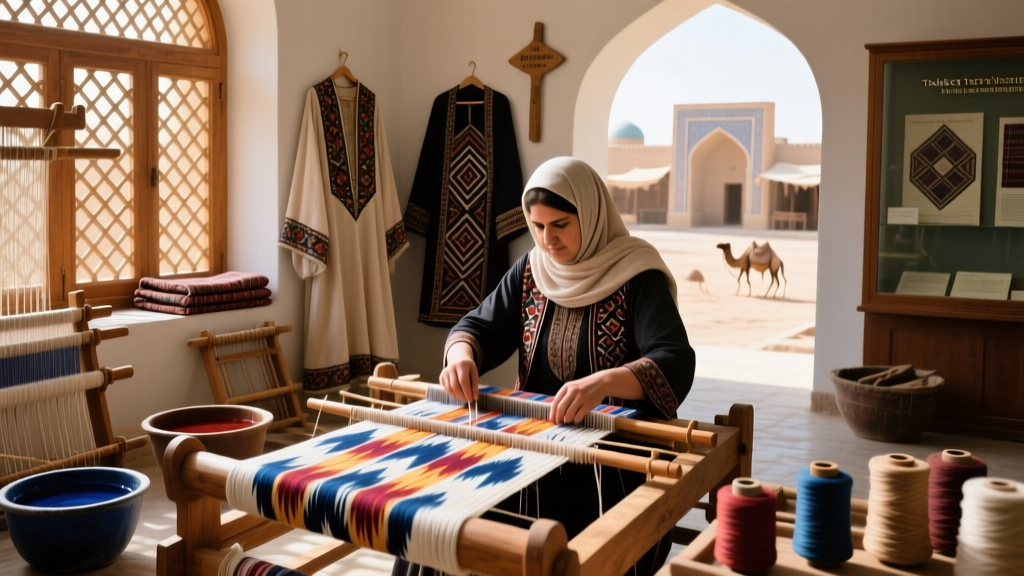
Creating Turkmen ikat involves bundling silk warp threads, binding sections with waxed cotton to resist dye, and immersing them in sequential color baths. The result is a feathered, cloud-like pattern along each stripe. A single chapan might use five to seven colors.
Social Significance
- Wedding gifts — families presented chapans to honored guests
- Diplomatic exchanges — khans gifted elaborate chapans to foreign envoys
- Layered display — wealthy men wore multiple chapans simultaneously to show status
Construction Details
Traditional chapans are quilted with cotton batting between the ikat outer shell and a Russian-print cotton lining. The quilting follows diamond or chevron patterns, adding both warmth and visual interest.
Chapans in Contemporary Fashion
Western fashion houses have drawn heavily on Central Asian ikat patterns. Vintage Turkmen chapans now command high prices at auction, while modern weavers in Mary and Ashgabat continue producing them for local markets.