The Spanish Mantilla: A Heritage of Lace, Silk, and Craftsmanship
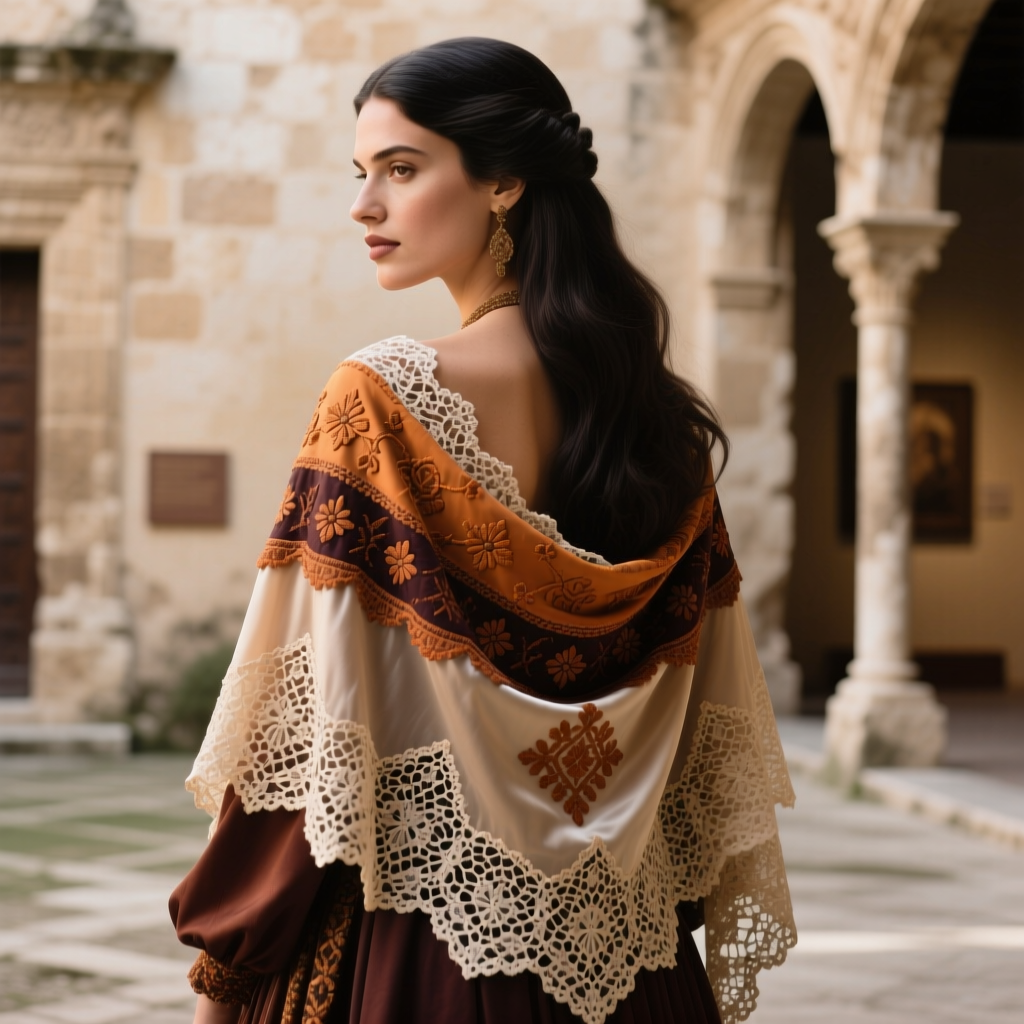
The Spanish mantilla is far more than a simple garment; it is a profound symbol of cultural identity, artisanal mastery, and historical continuity. Draped elegantly over the head and shoulders, this iconic lace veil has transcended its practical origins to become an enduring emblem of Spanish heritage. From the sun-drenched plazas of Andalusia to the solemn religious processions of Castile, the mantilla commands a presence that is simultaneously modest and deeply alluring. Its creation represents a pinnacle of European textile heritage, weaving together centuries of sartorial evolution, religious protocol, and unparalleled craftsmanship.
Historically, the origins of the mantilla can be traced back to the Iberian Peninsula, where early iterations served as practical head coverings designed to protect women from the harsh elements. Over the centuries, however, this utilitarian garment evolved into a sophisticated marker of social status and regional pride. Influenced by the complex tapestry of Moorish, Roman, and indigenous Iberian cultures, the mantilla gradually shed its heavy, opaque fabrics in favor of gossamer-thin silks and intricate laces. By the time it was immortalized in the paintings of Francisco de Goya, adorning the heads of the enigmatic majas, the mantilla had firmly established itself as a cornerstone of Spanish fashion history. To understand the mantilla is to understand a deeply rooted cultural narrative, one that speaks to the artistry of the hands that weave it and the grace of the women who wear it.
The Cultural Significance of the Mantilla in Spanish Society
In Spanish society, the mantilla occupies a unique space where fashion, religion, and social protocol intersect. Unlike many historical garments that have faded into obscurity or been relegated to museum archives, the mantilla remains a living, breathing element of Spanish cultural life. It is most prominently featured during Semana Santa (Holy Week), where the sight of women wearing black mantillas and high combs, walking in solemn silence behind religious floats, is one of the most striking and emotive images of the Spanish spring. In this context, the veil serves as a symbol of mourning, reverence, and spiritual devotion, casting a shadow of solemnity over the wearer while simultaneously highlighting her dignity.
Beyond religious observance, the mantilla is deeply intertwined with the spectacle of the bullring and the vibrant traditions of regional festivals. In the realm of bullfighting, the mantilla is a staple of the aristocratic and formal spectator experience, representing a connection to the romanticized, historicized vision of Spain. The garment demands a specific posture and carriage; the weight of the lace and the height of the comb require the wearer to hold her head high, projecting an aura of regal confidence and quiet strength. This physical transformation is a key component of the garment's cultural power, embodying the Spanish concept of duende—a heightened state of emotion, expression, and authenticity.
The mantilla also plays a fascinating role in international diplomatic and religious protocol, most notably within the Vatican. The Privilège du Blanc (Privilege of the White) is a papal protocol that dictates the dress code for women attending private audiences with the Pope. While the general rule requires women to wear black dresses and black mantillas, Catholic queens, princesses, and duchesses are granted the privilege of wearing white silk mantillas and white gowns. This strict sartorial code underscores the mantilla's enduring status as a garment of immense formal and diplomatic weight, proving that its significance extends far beyond the borders of the Iberian Peninsula.
Furthermore, the mantilla represents a complex duality in the historical perception of Spanish women. In the eighteenth and nineteenth centuries, foreign travelers often wrote of the mantilla's unique ability to both conceal and reveal. The delicate lace obscures the features just enough to create an air of mystery, while the intricate patterns and the framing of the face draw the eye and enhance the wearer's allure. This interplay between modesty and magnetism is central to the garment's enduring mystique, making it a favorite subject of poets, painters, and fashion historians alike.
The Art of Craftsmanship: Silk and Lace Making
The true soul of the mantilla lies in its craftsmanship. A genuine, heirloom-quality mantilla is a masterpiece of textile engineering, requiring hundreds of hours of painstaking manual labor. While modern iterations may utilize machine-made tulle or synthetic fibers, the traditional mantilla is crafted using the ancient technique of bobbin lace, known in Spain as encaje de bolillos. This method is a cornerstone of global types of lace and represents one of the most demanding and mathematically precise of all textile arts.
The creation of a traditional silk mantilla, specifically the highly prized blonda lace, begins with the selection of the finest silk threads. Blonda is characterized by its use of unspun, lustrous silk for the floral motifs, which contrasts beautifully with the finer, tightly spun silk used for the net-like background, or réseau. This contrast in texture and light reflection gives the blonda mantilla its signature shimmering quality, allowing the floral patterns to appear almost three-dimensional as they catch the light. The connection to broader silk weaving traditions is evident in the deep understanding of the fiber's natural properties required to manipulate it into such delicate structures.
The artisan, or encajera, works over a large, cylindrical pillow called a mundillo. A parchment pattern, pricked with thousands of tiny holes, is pinned to the pillow. The artisan uses dozens, sometimes hundreds, of wooden bobbins (bolillos), each wound with a single thread. By crossing, twisting, and weaving these threads together and securing the intersections with brass pins (alfileres), the lace is built stitch by stitch. The rhythmic clatter of the wooden bobbins is the soundtrack of the lace-making villages, a sound that has echoed through the workshops of Castile-La Mancha and Catalonia for generations.
The design of a traditional mantilla is highly specific. It typically features a central motif, often a large floral bouquet, a crest, or a geometric medallion, positioned to rest at the crown of the head or cascade down the center of the back. The borders, or puntas, are heavily scalloped and feature dense, elaborate patterns of roses, carnations, pomegranates, and acanthus leaves. These motifs are not merely decorative; they carry deep symbolic weight, representing fertility, resilience, and the natural beauty of the Spanish landscape. The scalloped edges are finished with a delicate silk thread that adds weight, ensuring the veil drapes perfectly over the shoulders without fluttering uncontrollably in the wind.
The sheer scale of a mantilla makes its creation an act of immense physical and mental endurance. Unlike a small lace collar or handkerchief, a mantilla can measure over two meters in length and a meter in width. Maintaining the tension, pattern alignment, and structural integrity across such a vast expanse of fragile silk requires a masterful command of the craft. It is this unparalleled dedication to artisanal excellence that elevates the mantilla from a simple accessory to a wearable work of art, securing its place in the annals of haute couture and historical preservation.
Regional Variations and Styling Traditions
While the mantilla is universally recognized as a symbol of Spain, its styling, dimensions, and the customs surrounding its wear vary significantly across the country's diverse regions. The most critical element in the styling of a mantilla is the peineta, the high, decorative comb that provides the garment with its distinctive, elevated silhouette. Historically carved from carey (the shell of the hawksbill sea turtle), the peineta was a luxury item that signaled wealth and status. Due to modern conservation efforts and the protection of endangered species, contemporary combs are masterfully crafted from acetate, carved wood, or synthetic resins, mimicking the mottled, translucent beauty of tortoiseshell while adhering to ethical standards. For more on the evolution of such accessories, explore our guide to traditional headwear.
In Andalusia, the heartland of flamenco and deeply passionate cultural expressions, the mantilla is often worn with a distinctive flair. The peineta may be slightly lower or more curved, and the lace is frequently styled to frame the face closely, accentuating the wearer's features. The Andalusian approach to the mantilla is inherently tied to the region's festive calendar, including the Feria de Abril, where the garment is worn with a sense of joyous pride and vibrant elegance. The lace here may feature bolder, more dramatic floral motifs, reflecting the exuberant spirit of the southern landscape.
Conversely, in the more austere and historically conservative regions of Castile and Madrid, the mantilla takes on a more solemn and structured appearance. The peineta is often exceptionally high, sometimes reaching up to thirty centimeters, creating a striking, statuesque profile. The styling is meticulous, with the lace draped smoothly over the comb and falling in uninterrupted, elegant lines down the back. This Castilian style is deeply associated with religious solemnity, royal protocol, and formal state occasions, where the garment serves as a uniform of respect and tradition.
The color of the mantilla is governed by strict, unwritten rules of etiquette that have been passed down through generations. White or ivory silk mantillas are traditionally reserved for unmarried women, or for specific joyous occasions such as weddings, where they serve as an alternative to standard bridal veils. Black mantillas, on the other hand, are worn by married women, during periods of mourning, or for solemn religious events like Semana Santa. The black silk lace, particularly when crafted in the blonda technique, possesses a deep, absorbing richness that conveys a profound sense of dignity and respect. Deviating from these color codes in formal or religious settings is still considered a significant breach of etiquette in traditional Spanish society.
Modern Preservation and the Future of the Mantilla
In the modern era, the daily wear of the mantilla has largely vanished, replaced by contemporary fashion and the practicalities of modern life. However, its ceremonial and cultural importance has only been magnified. The mantilla has been elevated from a common garment to a sacred artifact of Spanish identity, worn during the most significant moments of a woman's life and during events of national and religious importance. This shift has sparked a vital movement dedicated to the preservation of the artisanal techniques required to create authentic, hand-made mantillas.
The threat to this heritage comes primarily from the influx of cheap, machine-made imitations produced overseas. These mass-produced veils, often made from synthetic polyester or nylon, lack the weight, drape, and lustrous sheen of genuine silk blonda. They cannot replicate the intricate, raised textures of hand-worked bobbin lace, nor do they carry the historical soul of the garment. In response, cultural institutions, artisanal guilds, and fashion historians in Spain have launched initiatives to protect the encaje de bolillos tradition. Workshops in towns like Almagro and Camariñas have become vital centers for education, where master artisans pass down the complex patterns and techniques to a new generation of lace-makers.
Furthermore, the mantilla has found a renewed audience within the world of haute couture and avant-garde fashion. Designers, both within Spain and internationally, frequently draw upon the mantilla's dramatic silhouette and intricate textures to inform their collections. By reinterpreting the veil through a contemporary lens, these designers ensure that the aesthetic language of the mantilla continues to evolve, preventing it from becoming a static relic of the past. The integration of traditional lace-making techniques into modern bridal and evening wear highlights the timeless versatility of the craft.
Preserving the mantilla also involves the meticulous care of antique pieces. Vintage silk lace is incredibly fragile, susceptible to degradation from light, humidity, and the natural acids in human skin. Collectors and museums employ specialized conservation techniques to stabilize the silk, ensuring that these historical garments survive for future generations to study and admire. The ongoing dedication to preserving both the physical garments and the intangible knowledge of their creation guarantees that the Spanish mantilla will remain a towering achievement of textile heritage, continuing to captivate and inspire long into the future.
Frequently Asked Questions About the Spanish Mantilla
What is the difference between a mantilla and a regular veil?
While both are head coverings, a mantilla is distinctly different from a standard bridal or fashion veil in its construction, styling, and cultural purpose. A regular veil is typically gathered at the crown or attached directly to a tiara or hairstyle, often featuring layers of tulle or illusion netting. A mantilla, however, is a single, large piece of lace, usually oval or circular, designed to be draped over a high peineta (comb). The mantilla relies on the structural support of the comb to achieve its elevated silhouette, and its heavy, scalloped lace edges are meant to drape over the shoulders and back, framing the face without being gathered or bunched. Furthermore, the mantilla carries specific cultural, religious, and diplomatic connotations in Spanish society that a standard veil does not possess.
How is a traditional mantilla worn correctly?
Wearing a traditional mantilla correctly requires attention to detail and the proper use of a peineta. First, the hair is typically gathered into a low bun or chignon at the nape of the neck to provide a stable base. The peineta is then inserted securely into the hair, positioned at the crown of the head so that it stands tall and straight. The mantilla is draped over the comb, with the central motif or the front edge resting just above the forehead or slightly back on the hairline, depending on personal preference and regional style. The lace is then pinned discreetly to the comb and the hair using ornamental pins or simple hairpins to prevent it from slipping. The sides of the mantilla should fall gracefully over the shoulders, with the elaborate scalloped edges hanging evenly down the back.
Why are Spanish mantillas traditionally black or white?
The color of a Spanish mantilla is dictated by strict traditional etiquette, marital status, and the nature of the event being attended. White or ivory mantillas are traditionally worn by unmarried women, or by women attending joyous celebrations such as weddings, where the white lace symbolizes purity and celebration. Black mantillas are the standard for married women, and they are exclusively worn during periods of mourning, solemn religious ceremonies like Semana Santa (Holy Week), and formal audiences with the Pope (unless the wearer holds the Privilège du Blanc). This binary color code is deeply ingrained in Spanish culture, serving as a visual language that communicates the wearer's status and the solemnity of the occasion.
What is a peineta and why is it essential?
A peineta is a tall, decorative comb that serves as the structural foundation for the mantilla. Without the peineta, the mantilla would simply lie flat against the head, losing its iconic, elevated silhouette and dramatic drape. The comb lifts the heavy silk lace, allowing it to cascade elegantly down the back and shoulders while keeping the delicate fabric away from the face. Historically, peinetas were carved from tortoiseshell, prized for its durability and beautiful mottled patterns. Today, to protect endangered marine life, they are crafted from high-quality acetate, wood, or synthetic resins. The height and curvature of the peineta can vary, allowing the wearer to customize the dramatic impact of her silhouette according to regional traditions and personal style.
Can a mantilla be worn as a bridal veil?
Yes, a mantilla is a highly popular and deeply traditional choice for a bridal veil, particularly in Spain and among those of Hispanic heritage. When chosen for a wedding, the mantilla is typically crafted from white or ivory silk lace, often featuring intricate floral motifs that complement the bride's gown. Unlike traditional gathered tulle veils, a bridal mantilla offers a romantic, vintage-inspired silhouette that frames the face beautifully and provides a striking, elegant train. It is usually worn over a modest peineta to ensure it remains secure throughout the ceremony. For brides seeking a connection to historical craftsmanship and a departure from conventional bridal wear, the silk mantilla offers an unparalleled blend of heritage, elegance, and timeless beauty.