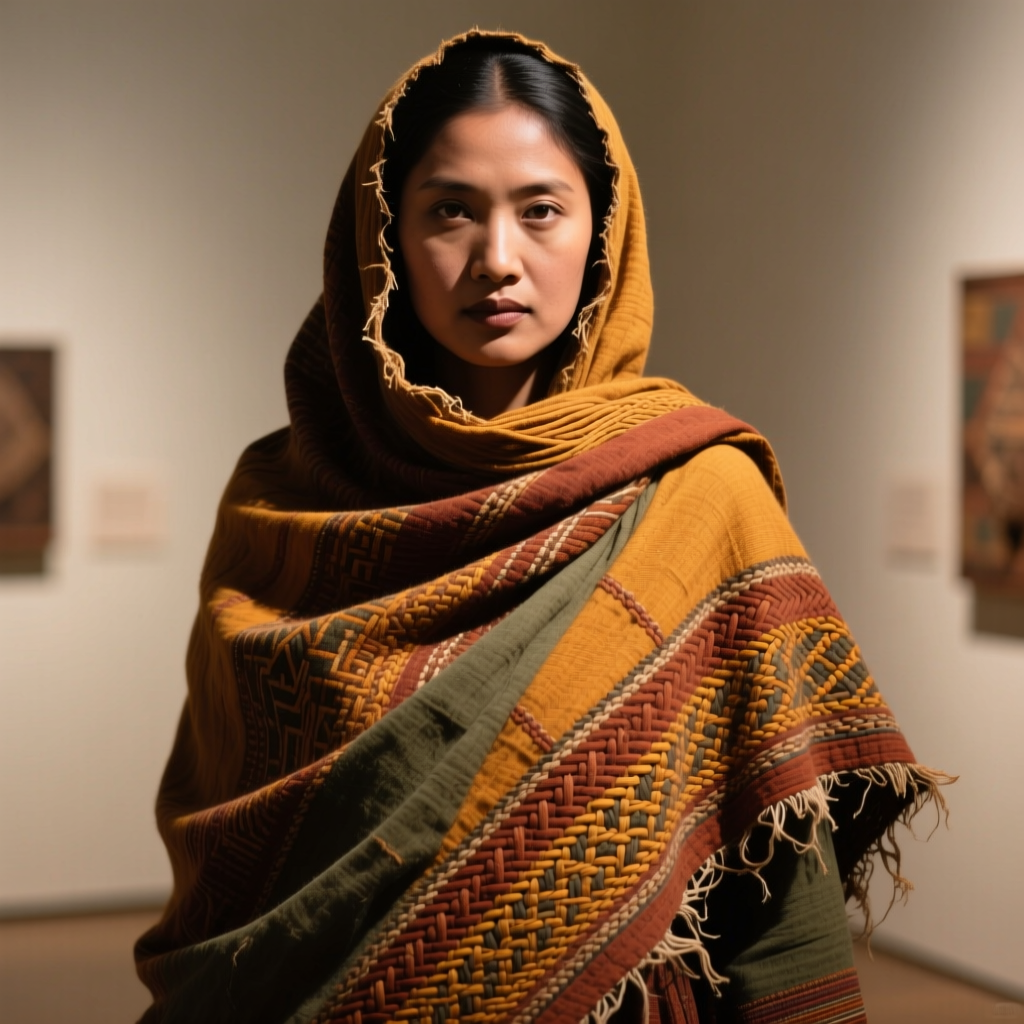
The Heritage of Palestinian Tatreez: Decoding the Cross-Stitch Thobe
Long before the advent of modern fashion, clothing served as a profound visual language, a wearable archive of history, geography, and personal identity. In the Levant, nowhere is this more evident than in the rich heritage of Palestinian Tatreez, the intricate cross-stitch embroidery that adorns the traditional thobe. To understand the Palestinian thobe is to read a map woven in thread, where every motif, color choice, and stitch tells a story of ancestral lands, social status, and enduring resilience. As we explore the broader scope of Middle Eastern garment heritage, the Palestinian thobe stands out as a masterclass in textile storytelling, preserving the cultural memory of a people through the meticulous art of needle and thread.
The tradition of Tatreez (which translates simply to embroidery in Arabic) has been passed down from mother to daughter for countless generations. Historically, young girls would begin learning the intricate cross-stitch techniques as early as seven years old, spending years perfecting their craft to prepare their bridal trousseaus. The resulting garments were not merely articles of clothing; they were deeply personal canvases that reflected the wearer’s village, her marital status, and her family’s economic standing. Today, the traditional embroidered thobe remains a powerful symbol of Palestinian identity, celebrated globally for its breathtaking beauty and profound cultural significance.
The Cultural Significance of Tatreez
Tatreez is far more than a decorative embellishment; it is a complex system of semiotics. In historical Palestinian society, where rural communities were often geographically isolated by hills and valleys, the embroidery on a woman’s thobe acted as an immediate identifier. The specific arrangement of motifs on the chest panel, known as the qabbeh, could instantly communicate a woman’s village of origin to anyone familiar with the regional lexicon of stitches. This visual dialect fostered a deep sense of community and belonging, linking the wearer inextricably to her ancestral soil.
Beyond geography, Tatreez also communicated vital social information. The density of the embroidery, the quality of the silk threads, and the presence of specific protective motifs all conveyed messages about the wearer’s life stage. For instance, the colors and patterns on a young, unmarried woman’s dress would differ significantly from those of a married woman or a widow. In many villages, widows would either wear dresses with muted colors or deliberately leave sections of the embroidery unfinished as a sign of mourning. To dive deeper into how garments communicate social cues, our textile symbolism guide explores these fascinating historical codes across various cultures.
Furthermore, the motifs themselves are deeply rooted in the natural environment and the spiritual beliefs of the region. Common geometric and stylized natural motifs include the saru (cypress tree), representing longevity and eternity; the najma (star), symbolizing guidance and protection; and the shajarat al-hayat (tree of life), denoting fertility and interconnectedness. These symbols were believed to offer protection against the evil eye and misfortune, transforming the thobe into a spiritual armor as much as a garment of beauty.
The cultural weight of Tatreez extends into the realms of economics and social cohesion. Historically, embroidery circles were vital social hubs where women gathered to share news, sing traditional folk songs, and support one another through the arduous process of creating these masterpieces. The collective nature of the craft reinforced community bonds, ensuring that the cultural heritage was not just preserved in the fabric, but lived and breathed in the shared experiences of the women who created it.
The Craftsmanship Behind the Cross-Stitch
The creation of a traditional Palestinian thobe is a testament to extraordinary patience, mathematical precision, and artisanal skill. The primary technique used in Tatreez is the counted-thread cross-stitch, known locally as fallahi (peasant) stitch. Unlike free-form embroidery, the fallahi stitch requires the artisan to count the warp and weft threads of the underlying fabric to ensure that every cross is perfectly uniform in size and tension. This mathematical exactitude results in the crisp, pixelated geometric patterns that define the aesthetic of Palestinian cross-stitch.
The foundation of the garment is typically an even-weave fabric, historically handwoven linen or cotton, which provides the necessary grid for counting threads. In the nineteenth and early twentieth centuries, the introduction of commercially produced cotton and linen fabrics from Europe and neighboring regions expanded the options available to embroiderers. The fabric was usually dyed using natural materials, with indigo, madder root, and pomegranate rinds yielding the deep blues, rich reds, and earthy yellows that form the backdrop of many vintage pieces.
The threads used for the embroidery were traditionally spun from local silk or cotton, dyed with vibrant, colorfast natural pigments. The most prized threads were brilliant silks that caught the light, creating a striking contrast against the matte background of the linen dress. The embroiderer would work without a pre-drawn pattern, relying entirely on her memory and her mental library of regional motifs. This required an astonishing level of spatial awareness and foresight, as a single miscounted thread could throw off the symmetry of an entire panel. For those interested in the technical execution of these stitches, our comprehensive breakdown of hand embroidery techniques offers a closer look at counted-thread methods.
The anatomy of the thobe itself is designed specifically to showcase this craftsmanship. The garment is constructed from multiple rectangular panels to minimize fabric waste, but it is the placement of the embroidery that dictates its structure. The qabbeh (chest panel) is often the most densely embroidered section, sometimes created on a separate piece of fabric and then stitched onto the dress. The banayiq (side panels) feature vertical columns of motifs that elongate the silhouette, while the dail (skirt) and shinyar (lower back panel) provide sweeping canvases for larger, more expansive geometric designs. The sleeves, or akmin, may also feature intricate bands of cross-stitch or triangular inserts that allow for ease of movement.
Regional Variations: A Map Woven in Thread
To study Palestinian Tatreez is to study the diverse topography and micro-cultures of historical Palestine. Because villages were often separated by rugged terrain, distinct regional styles evolved, each with its own preferred color palettes, motif arrangements, and fabric choices. These regional variations are so distinct that textile historians and enthusiasts can often identify the exact origin of a vintage thobe simply by examining its embroidery.
Ramallah: The Elegance of Red and Black
The region of Ramallah is renowned for some of the most iconic and highly sought-after thobes in Palestinian heritage. The embroidery here is characterized by a striking palette of deep crimson reds and stark blacks, set against pristine white or natural linen. The motifs are highly geometric and densely packed, often featuring the roumi (Roman) cross-stitch pattern, tall cypress trees, and intricate star formations. The chest panel of a Ramallah thobe is typically a masterpiece of symmetry, showcasing the artisan’s mastery over complex, interlocking designs.
Bethlehem: Royal Influences and Couching
While Bethlehem is famous for its cross-stitch, it is equally renowned for the malak (queen) dress, which heavily incorporates tahriri (couching) techniques using gold and silver metallic threads. Influenced by the ornate vestments of local churches and the opulent styles of the Ottoman elite, Bethlehem thobes often feature rich velvet or broadcloth fabrics in deep blues, purples, and reds. The cross-stitch motifs here tend to be more floral and curvilinear compared to the strict geometry of other regions, reflecting the city’s historical role as a cosmopolitan center of trade and artisan crafts.
Jaffa: Coastal Lightness and Citrus Motifs
Reflecting its coastal geography and agricultural abundance, the embroidery of Jaffa and the surrounding central plains is notably lighter and more vibrant. The color palette frequently includes bright oranges, yellows, and greens, paying homage to the region’s famous citrus groves. The motifs are often less dense, allowing the underlying fabric to breathe, and feature stylized floral patterns, vines, and geometric interpretations of orange blossoms. The thobes of Jaffa were often made from lighter cotton fabrics, suited to the warmer, more humid Mediterranean climate.
Hebron: Heavy Geometry and Protective Symbols
In the southern hills of Hebron, the thobes are characterized by their heavy, protective aesthetic. The embroidery is incredibly dense, often covering almost the entirety of the front and back panels of the dress. The color palette leans toward darker, earthier tones, including deep maroons, dark browns, and heavy blacks. The motifs are highly geometric and repetitive, creating a visual armor that was believed to protect the wearer from the harsh elements and the evil eye. The sheer weight of the thread on a traditional Hebron dress is a testament to the months, or even years, of labor invested in its creation.
Gaza and Majdal: Indigo Stripes and Sparse Stitching
The coastal and southern regions around Gaza, particularly the town of Majdal, were famous for their unique woven fabrics known as Majdalawi. This fabric was woven on handlooms using indigo-dyed cotton threads interspersed with vibrant magenta or fuchsia silk stripes. Because the fabric itself was so visually striking and highly valued, the cross-stitch embroidery applied to it was often more sparse and deliberate than in other regions. Embroiderers would use contrasting threads to highlight the woven stripes, creating a harmonious balance between the woven textile and the stitched embellishment.
Galilee: Floral Influences and Neighboring Ties
In the northern region of Galilee, the proximity to Syrian and Lebanese borders influenced the local embroidery styles. Galilean thobes often feature lighter, more delicate cross-stitch work, with a preference for pastel colors and intricate floral motifs. The qabbeh might be smaller or less densely packed, and the overall silhouette of the garment sometimes incorporated elements of Levantine urban fashion, blending rural cross-stitch traditions with the cosmopolitan trends of nearby trading cities.
The Evolution and Modern Preservation of the Thobe
The trajectory of the Palestinian thobe was profoundly altered by the geopolitical upheavals of the mid-twentieth century. The mass displacement of Palestinians resulted in the scattering of communities, the loss of ancestral villages, and the disruption of traditional ways of life. In the refugee camps and diaspora communities that followed, the thobe transformed from a piece of everyday rural wear into a potent symbol of national identity, memory, and resistance. Women continued to embroider, not just to clothe themselves, but to preserve the geographic and cultural memory of the villages they had been forced to leave behind.
Today, the preservation of Tatreez is a multifaceted endeavor involving grassroots organizations, digital archives, and a new generation of designers. Cooperatives across the region and in the diaspora work tirelessly to document vintage motifs, teach the fallahi stitch to younger generations, and provide economic opportunities for female artisans. These initiatives ensure that the craft remains a living tradition rather than a static museum artifact. The global recognition of Palestinian embroidery as an intangible cultural heritage has further galvanized efforts to protect the craft from cultural appropriation and mass-produced imitation.
In the realm of contemporary fashion, there has been a beautiful resurgence of interest in integrating Tatreez into modern wardrobes. Designers are reimagining the traditional thobe, adapting its motifs for modern silhouettes, jackets, and accessories while maintaining a deep respect for the craft’s origins. For those looking to incorporate these beautiful textiles into their modern lives, our guide on styling traditional embroidery offers thoughtful advice on blending heritage pieces with contemporary fashion. This modern evolution ensures that the visual language of Palestinian Tatreez continues to be spoken, understood, and celebrated on the global stage.
Frequently Asked Questions
What is the difference between Tatreez and other embroidery styles?
While many cultures practice cross-stitch, Palestinian Tatreez is distinguished by its specific counted-thread technique (fallahi), its unique lexicon of regional motifs, and its function as a geographic and social identifier. Unlike free-form embroidery or surface stitching, Tatreez relies on the mathematical grid of the underlying woven fabric, resulting in highly structured, pixelated geometric patterns. Furthermore, the cultural narrative embedded in the motifs—where a specific star or cypress tree can identify a woman’s exact village of origin—sets it apart from purely decorative embroidery traditions found elsewhere in the world. For a broader comparison, explore our archive of global embroidery traditions.
How long does it take to embroider a traditional Palestinian thobe?
The creation of a fully embroidered, traditional thobe is a monumental undertaking that requires immense dedication. Depending on the density of the design, the size of the garment, and the number of hours the artisan can dedicate daily, a single thobe can take anywhere from several months to over two years to complete. The chest panel (qabbeh) alone might require hundreds of hours of meticulous counting and stitching. Historically, this work was done during the winter months or in the evenings by oil lamp, making the finished garment a profound investment of time, vision, and physical labor.
Can Tatreez motifs be worn by people outside the culture?
The global appreciation of Palestinian Tatreez has sparked important conversations about cultural appreciation versus appropriation. Wearing or purchasing authentic, ethically sourced Tatreez directly from Palestinian artisans and cooperatives is widely viewed as a supportive act that helps sustain the craft and the livelihoods of the women who create it. However, mass-produced, cheap imitations that strip the motifs of their cultural context and deny credit to the originating culture are problematic. When engaging with heritage garments, it is always best to understand the history behind the piece, respect its origins, and ensure that the economic benefits flow back to the source community.
How should I care for and preserve a vintage embroidered thobe?
Vintage thobes are delicate historical artifacts that require specialized care to ensure their survival. The heavy silk threads and natural dyes can be sensitive to harsh chemicals and agitation. It is highly recommended to avoid machine washing or dry cleaning. Instead, gently hand wash the garment in cold water using a pH-neutral textile detergent, and never wring or twist the fabric. To dry, lay the thobe flat on a clean towel away from direct sunlight, which can fade the natural dyes. For long-term storage, fold the garment with acid-free tissue paper to prevent permanent creases and store it in a breathable cotton bag in a cool, dry environment. Our detailed vintage textile care guide provides further instructions on preserving antique fabrics.
Where can I learn traditional Palestinian cross-stitch techniques?
For those inspired to learn the fallahi stitch, there are numerous resources available both in person and online. Many Palestinian cultural centers and diaspora community organizations worldwide offer workshops and classes taught by master artisans. Additionally, several non-profit organizations and digital archives have published comprehensive pattern books and video tutorials that break down the counting methods and motif constructions. Engaging with these educational resources not only builds your technical skills but also connects you to the rich, ongoing narrative of Palestinian heritage and the global community dedicated to its preservation.
The heritage of Palestinian Tatreez is a vibrant, living testament to the power of textile arts. Through every carefully counted stitch, the traditional thobe continues to narrate the history, resilience, and enduring beauty of the Palestinian people, ensuring that their stories remain vividly woven into the fabric of time.