The Art of Yuzen: Japanese Silk Dyeing & Kimono Craftsmanship Heritage
The Art of Yuzen: Japanese Silk Dyeing & Kimono Craftsmanship Heritage
The Japanese kimono is universally recognized not merely as a garment, but as a wearable canvas that reflects the profound intersection of nature, poetry, and artisanal mastery. Among the myriad techniques developed to adorn these silk garments, Yuzen dyeing stands as the pinnacle of Japanese textile artistry. Originating in the late seventeenth century during the Edo period, Yuzen revolutionized the way fabrics were decorated, shifting the focus from intricate woven brocades to free-flowing, pictorial dyeing. This transition was largely catalyzed by strict sumptuary laws that prohibited commoners from wearing ostentatious woven silks. In response, artisans developed Yuzen, a resist-dyeing method that allowed for breathtaking, painterly designs that bypassed these restrictions while elevating textile craftsmanship to high art.
The technique is named after Miyazaki Yuzensai, a Kyoto fan painter whose innovative methods of applying resist paste to silk allowed for unprecedented detail and color separation. Today, the heritage of Japanese Yuzen silk dyeing remains a vital component of the nation’s intangible cultural heritage. It represents a meticulous, multi-generational craft that demands years of apprenticeship, an intimate understanding of natural dyes, and a deep reverence for the changing seasons. To explore the world of Yuzen is to delve into the very soul of traditional Japanese garments, where every brushstroke and dye bath tells a story of cultural endurance and aesthetic perfection.
The Cultural Significance of the Yuzen Kimono
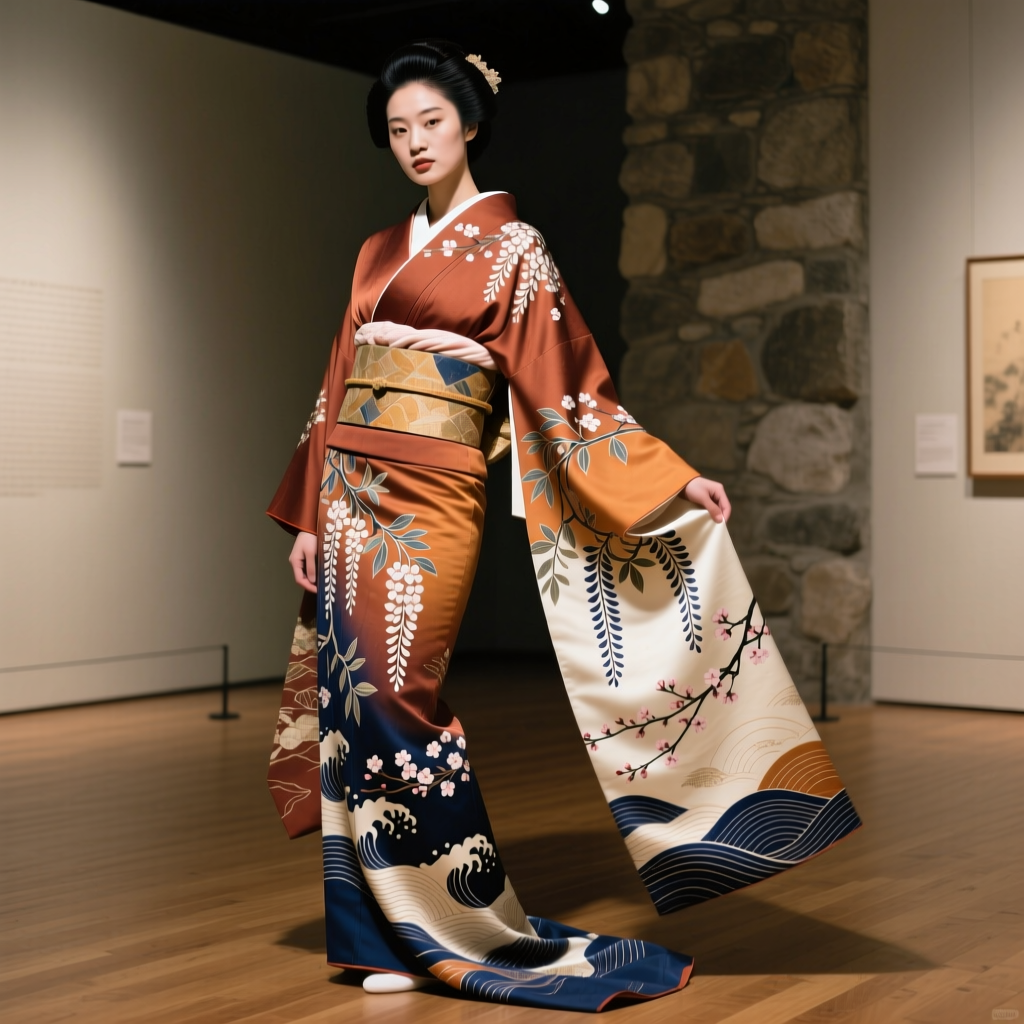
In Japanese culture, a kimono is far more than a protective layer against the elements; it is a complex system of visual communication. The Yuzen technique, with its ability to render highly detailed, sweeping landscapes and delicate flora, became the primary medium for expressing the wearer’s identity, social standing, and seasonal awareness. The concept of kisetsukan (seasonal feeling) is paramount in Japanese aesthetics, and Yuzen kimonos are designed to anticipate the natural world. A garment featuring budding plum blossoms and flowing water motifs is worn in late winter to invite the arrival of spring, while designs of cascading maple leaves and autumn grasses are reserved for the crisp months of fall.
The motifs chosen for a Yuzen kimono are deeply symbolic, drawing from classical literature, folklore, and the natural environment. Cranes and turtles signify longevity and good fortune, making them popular choices for wedding garments. Pine, bamboo, and plum—the auspicious trio known as shochikubai—represent resilience, prosperity, and vitality. For those looking to decode these intricate designs, our comprehensive guide to kimono motifs and symbolism offers a deeper exploration of the visual language woven into these silk masterpieces. The placement of the design is equally significant; in formal Yuzen kimonos, the most elaborate artwork is often concentrated on the lower half and the left sleeve, ensuring the design is visible when the wearer sits or bows.
Furthermore, the type of Yuzen kimono dictates its formality. The furisode, characterized by its long, swinging sleeves, is adorned with vibrant, continuous Yuzen patterns that wrap around the seams, signaling the wearer’s status as an unmarried young woman. In contrast, the kurotomesode, a black kimono with Yuzen designs restricted only to the lower hem, is the most formal garment for married women. Understanding these distinctions is essential for anyone studying understanding kimono silhouettes and their societal roles. Through Yuzen dyeing, the silk becomes a mirror of the wearer’s life stage, celebrating milestones with unparalleled elegance.
The Meticulous Craftsmanship of Yuzen Dyeing
The creation of a single Yuzen kimono is a staggering feat of engineering and artistry, often requiring the collaborative efforts of a dozen specialized artisans. Unlike Western textile painting, where colors are applied directly and allowed to blend, Yuzen relies on a complex system of resist-dyeing to achieve its crisp, vibrant lines. The process begins with shitae, the initial design sketching. An artisan uses a delicate brush and a special ink derived from spiderwort flowers (tsuyukusa) to draw the pattern directly onto the stretched silk. This ink is water-soluble and will vanish completely during the final washing stages, leaving no trace of the guidelines.
Once the design is sketched, the master artisan applies itome-nori, a thick, glutinous resist paste made from rice bran, pine resin, and lime. Using a specialized cone-shaped tool called a tsutsu, the artisan extrudes the paste in fine, continuous lines along the sketched borders. This paste acts as a dam, preventing the dyes from bleeding into adjacent areas when they are later applied. This step is the defining characteristic of Yuzen, allowing for the intricate, stained-glass-like separation of colors that makes the technique so revered among global textile resist techniques.
Following the application of the resist paste, the silk is coated with a soybean juice solution (gojiru) to prepare the fibers and ensure the dyes adhere evenly. The next phase, irosashi, is the meticulous hand-painting of the colors. Artisans use a variety of brushes to apply natural and synthetic dyes within the resist borders, employing shading techniques (bokashi) to create depth and three-dimensionality in petals, leaves, and water currents. The precision required here is absolute; a single stray drop of dye can ruin months of preparatory work.
After the colors are applied, the garment undergoes mushi, a steaming process that forces the dye molecules deep into the silk fibers, ensuring colorfastness. The background areas are then dyed, often using a technique called jizome, which requires immense skill to achieve an even, flawless tone across the expansive canvas of the kimono. Finally, the kimono is subjected to mizumoto, the traditional river washing. Historically, bolts of silk were tethered to wooden frames and submerged in the cold, rushing waters of Kyoto’s Kamo River. The flowing water washes away the rice paste resist and the spiderwort ink, revealing the breathtaking, crisp design beneath. Today, while modern facilities often use large washing tanks to conserve water and protect the environment, the revelation of the final pattern remains a moment of profound magic for the artisans involved.
The final stages of Yuzen craftsmanship often involve embellishments that elevate the garment to a true luxury item. Artisans may apply gold or silver leaf (haku), metallic embroidery, or delicate lacquer accents to highlight specific elements of the design, such as the stamen of a flower or the crest of a wave. This multi-tiered approach to creation ensures that every Yuzen kimono is a unique masterpiece, reflecting the pinnacle of Japanese silk fabrics and decorative arts.
Regional Variations: Kyo-Yuzen vs. Kaga-Yuzen
While Yuzen dyeing is practiced throughout Japan, the craft is dominated by two distinct regional styles that reflect the historical and cultural landscapes of their respective cities: Kyo-Yuzen from Kyoto, and Kaga-Yuzen from Kanazawa. Understanding the nuances between these two traditions is essential for collectors, historians, and enthusiasts of regional Japanese garments.
Kyo-Yuzen, born in the imperial capital of Kyoto, is deeply influenced by courtly aesthetics and the refined tastes of the aristocracy. The designs are often highly stylized, elegant, and somewhat abstract, drawing inspiration from classical poetry, traditional fans, and the opulent interiors of the imperial palace. Kyo-Yuzen is characterized by its extensive use of luxurious embellishments. It is common to see Kyo-Yuzen kimonos heavily adorned with gold and silver leaf, intricate silk embroidery, and metallic threadwork. The color palettes tend to feature soft pastels, rich crimsons, and deep indigos, creating a sense of aristocratic grandeur and formal opulence. The overall effect is one of stylized beauty, where the garment serves as a symbol of high status and refined cultural literacy.
In stark contrast, Kaga-Yuzen, which developed in the prosperous castle town of Kanazawa, reflects the sensibilities of the wealthy merchant and samurai classes. Kaga-Yuzen is celebrated for its hyper-realistic, botanical depictions of nature. Rather than stylized motifs, Kaga artisans paint flowers, birds, and landscapes exactly as they appear in the wild. A hallmark of Kaga-Yuzen is the inclusion of mushikui (insect bites) and withered leaves in the designs, reflecting the Japanese aesthetic of wabi-sabi and the acceptance of natural imperfection and the passage of time. Furthermore, Kaga-Yuzen strictly adheres to the Kaga Gosai, a specific palette of five colors: indigo, crimson, ochre, green, and purple. Unlike its Kyoto counterpart, Kaga-Yuzen eschews gold leaf and embroidery entirely, relying solely on the masterful application of dye and the bokashi (shading) technique to create depth, volume, and breathtaking realism.
Modern Preservation & the Future of Yuzen Artisans
Despite its unparalleled beauty, the heritage of Yuzen silk dyeing faces significant challenges in the contemporary era. The widespread adoption of Western clothing in daily life has led to a steep decline in the everyday wearing of kimonos, transforming them from essential wardrobe staples into garments reserved primarily for weddings, coming-of-age ceremonies, and tea ceremonies. This shift has drastically reduced the demand for hand-painted Yuzen kimonos, placing immense economic pressure on traditional workshops.
Compounding this issue is the aging demographic of Japan’s master artisans. The rigorous apprenticeship required to master the myriad steps of Yuzen dyeing can take a decade or more, and the financial uncertainties of the craft make it difficult to attract young apprentices. Recognizing the precarious state of this heritage, the Japanese government and various cultural preservation societies have designated master Yuzen dyers as Living National Treasures, providing them with stipends and resources to train the next generation. These initiatives are crucial for safeguarding the preservation of traditional crafts against the tide of mass production and digital printing.
However, the survival of Yuzen also relies on adaptation. Contemporary artisans are increasingly applying Yuzen techniques to modern garments, such as silk scarves, blouses, and interior decor, making the craft accessible to a global audience that may not wear traditional kimonos. Furthermore, the rise of sustainable fashion and a renewed global appreciation for slow, artisanal craftsmanship has sparked a renaissance of interest in authentic, hand-dyed textiles. By bridging the gap between ancient techniques and modern aesthetics, a new generation of dyers is ensuring that the legacy of Miyazaki Yuzensai continues to flow, much like the rivers that once washed their silks, into the future.
Frequently Asked Questions
What is the difference between Yuzen dyeing and other textile methods?
Yuzen dyeing is distinct from other Japanese textile methods like shibori (tie-dye) or katazome (stencil dyeing) due to its use of hand-applied rice paste resist (itome-nori) and freehand brush painting. While shibori relies on physical binding and folding to create geometric or organic patterns, and katazome uses paper stencils for repeating motifs, Yuzen allows for continuous, pictorial, and highly detailed designs that mimic traditional brush painting. It offers a level of color separation and artistic freedom that woven brocades and stencil methods cannot achieve, making it the most painterly of all Japanese textile arts.
How long does it take to create a single Yuzen kimono?
The creation of a high-quality, hand-painted Yuzen kimono is an extraordinarily time-consuming process that typically takes anywhere from three to six months, and sometimes up to a year for the most elaborate formal garments. Because the process is highly specialized, a single kimono may pass through the hands of ten or more different artisans, including the designer, the paste-applier, the colorist, the steamer, and the finisher. Each stage requires precise environmental conditions, drying times, and meticulous attention to detail, ensuring that the final garment is a flawless work of art.
Can Yuzen kimonos be worn for everyday occasions?
Generally, hand-painted Yuzen kimonos are considered formal or semi-formal attire and are not worn for everyday, casual occasions. Garments like the homongi (visiting wear) or tsukesage feature elegant Yuzen designs and are worn to tea ceremonies, weddings, and formal parties. For everyday wear, Japanese women traditionally opt for komon (kimonos with small, repeating patterns) or tsumugi (woven pongee silk), which are more durable and less ostentatious. However, modern adaptations of Yuzen dyeing on smaller accessories or casual silk blouses allow enthusiasts to incorporate the artistry into daily life.
How should a vintage Yuzen silk kimono be cared for?
Caring for a vintage Yuzen silk kimono requires specialized knowledge to preserve both the delicate silk fibers and the intricate dyes. The garment should never be washed in water or dry-cleaned using standard chemicals, as this can dissolve the dyes or damage the gold leaf embellishments. Instead, it should be professionally cleaned by a specialist in Japanese garments using traditional arai-hari methods (where the kimono is taken apart, washed, and restitched). For storage, the kimono must be folded along its original seam lines and wrapped in acid-free tato paper to protect it from moisture and light. It should be stored in a cool, dry, cedar chest, and aired out periodically in the shade to prevent mold and musty odors.
Where can one observe Yuzen artisans at work today?
Travelers and textile enthusiasts can observe Yuzen artisans at work in several dedicated workshops and museums in Kyoto and Kanazawa. In Kyoto, the Nishijin Textile Center and various private ateliers in the Higashiyama district offer demonstrations of the dyeing process, from paste application to hand-painting. In Kanazawa, the Kaga Yuzen Kimono Center provides comprehensive exhibitions and live demonstrations of the Kaga Gosai dyeing techniques. Additionally, during specific seasons, the banks of the Kamo River in Kyoto still host traditional mizumoto (river washing) events, offering a rare and breathtaking glimpse into the historical practices of the craft.