Japanese Kimono Silk Weaving History: A Living Heritage of Craft & Culture
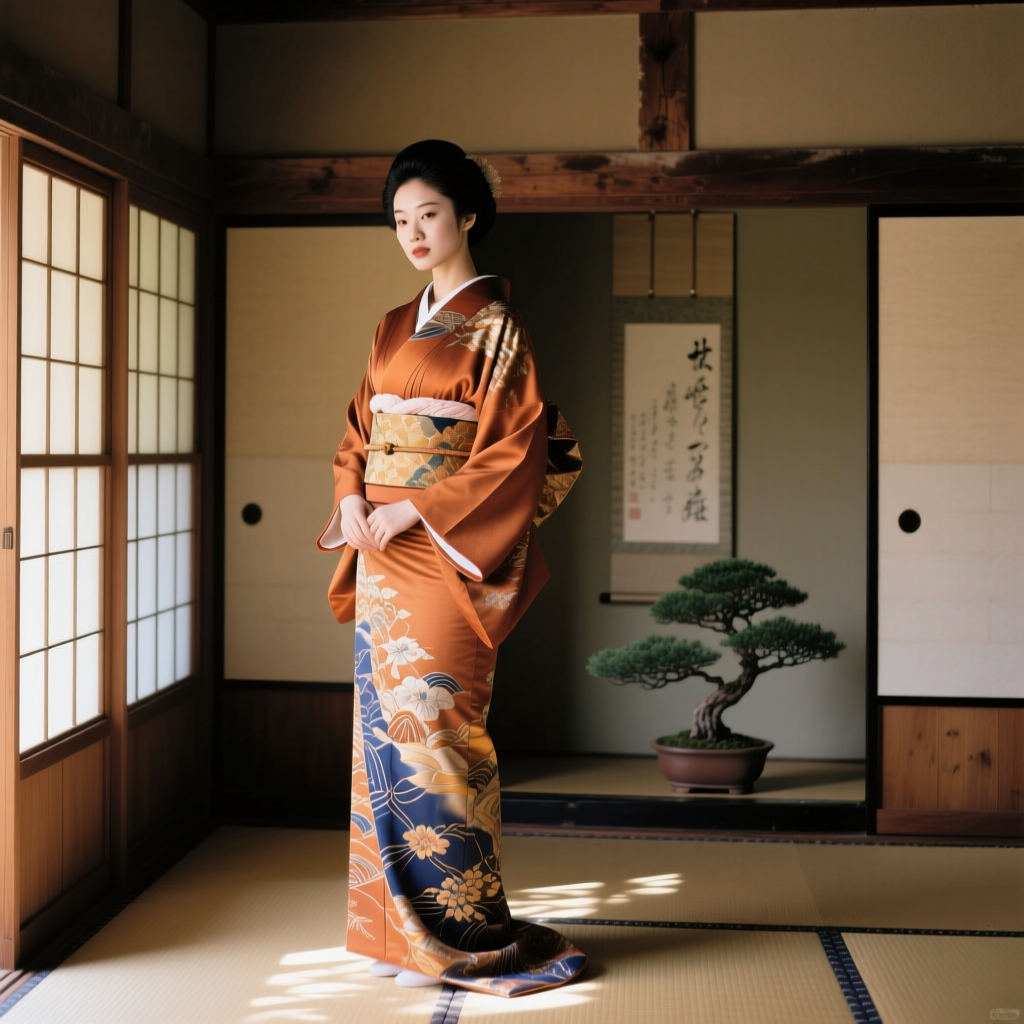
The story of Japanese silk weaving is one of humanity's most enduring artistic achievements—a narrative woven thread by thread across more than a millennium of cultural evolution, spiritual devotion, and technical mastery. Long before the kimono became the iconic garment recognized around the world, the art of transforming raw silk into breathtaking textiles was already flourishing in the hands of Japanese artisans who treated their craft as both a sacred duty and a profound form of creative expression.
Silk arrived in Japan from China during the early centuries of the first millennium, carried along trade routes that connected empires and exchanged not only goods but ideas, aesthetics, and technologies. Yet what Japanese weavers did with this imported knowledge was entirely their own. Over generations, they developed techniques, patterns, and philosophies of textile production that were unmistakably Japanese—rooted in a deep reverence for nature, an embrace of seasonal change, and an understanding that clothing could serve as a canvas for storytelling, social identity, and spiritual meaning.
Today, the heritage of Japanese kimono silk weaving stands at a fascinating crossroads. Centuries-old techniques are preserved by dedicated artisans and cultural institutions, while contemporary designers reinterpret traditional methods for modern audiences. To understand this living tradition is to understand something essential about Japanese culture itself—its patience, its precision, and its belief that beauty resides in the careful, deliberate work of human hands.
For those exploring the broader world of traditional garments, our heritage collection offers a comprehensive look at textile traditions from around the globe, each with its own remarkable story to tell.
The Historical Evolution of Japanese Silk Weaving
The origins of silk weaving in Japan can be traced to the Yayoi period, when early forms of sericulture and textile production began to take root. However, it was during the Nara period that Japanese silk weaving truly began to develop its own character, influenced heavily by the cultural exchanges with Tang Dynasty China and the Korean peninsula. The imperial court established weaving bureaus, and silk textiles became markers of rank, ceremony, and spiritual significance within the rapidly stratifying society.
The Heian period marked a transformative era for Japanese textile arts. As the court culture in Kyoto blossomed into one of history's most refined aesthetic civilizations, the demand for exquisite silk fabrics grew enormously. Court ladies famously layered multiple silk garments—sometimes as many as twelve—creating cascading color combinations known as kasane no irome, where the interplay of overlapping silk layers created visual poetry that changed with movement and light. This practice demanded weavers of extraordinary skill, capable of producing silks in subtle gradations of color that evoked specific seasons, flowers, and emotional states.
During the Kamakura and Muromachi periods, the rise of the warrior class introduced new aesthetic sensibilities. While courtly elegance remained valued, a more restrained and disciplined approach to textile design emerged, reflecting Zen Buddhist influences and the samurai emphasis on understated strength. Silk weaving techniques adapted accordingly, with greater attention to structural integrity and more subdued but technically sophisticated patterns.
The Edo period proved to be perhaps the most dynamic era in the history of Japanese silk weaving. The relative peace and prosperity of this long period allowed merchant classes to accumulate wealth and develop their own sartorial traditions, often in creative tension with sumptuary laws designed to restrict displays of luxury. This tension paradoxically fueled innovation: unable to wear overtly lavish garments, wealthy merchants invested in extraordinarily fine weaving techniques and hidden details—subtle patterns visible only upon close inspection, or exquisite linings concealed beneath plain outer fabrics. The concept of iki—a refined, understated elegance—became a driving philosophy in textile design, and its influence persists in Japanese aesthetics to this day.
The Meiji period brought rapid modernization and Western influence, challenging traditional silk weaving industries to adapt or face extinction. Many workshops closed, but others found new markets by exporting their wares or by supplying silk for Western-style garments. Through periods of war, economic upheaval, and sweeping social change, the core techniques of Japanese silk weaving survived—preserved by families who passed their knowledge from generation to generation, treating each loom and each pattern as a living inheritance.
Master Techniques & Craftsmanship of Kimono Silk Production
The creation of silk for kimono involves a constellation of techniques so complex and interdependent that mastering even one can require a lifetime of dedicated practice. Japanese silk weaving encompasses dozens of distinct methods, each producing fabrics with unique textures, patterns, and visual qualities that serve different aesthetic and functional purposes.
Nishijin-ori, originating from the famous weaving district of Kyoto, represents one of Japan's most celebrated weaving traditions. This technique involves pre-dyeing silk threads before weaving, allowing artisans to create elaborate multicolored patterns directly on the loom. The process demands extraordinary precision: a single Nishijin obi—the wide sash worn with a kimono—can require months of work and incorporate thousands of individually positioned colored threads. The resulting textiles are renowned for their density, durability, and the almost painterly quality of their designs, which frequently feature motifs drawn from nature, classical literature, and seasonal imagery.
Yuzen dyeing, while technically a dyeing rather than weaving technique, is inseparable from the story of kimono silk production. Developed in Kyoto during the Edo period, Yuzen allows artisans to apply intricate, multicolored designs to finished silk fabric using resist-dyeing methods. The artisan first sketches a design onto the silk, then applies a rice-paste resist along the outlines before painting individual colors into each section by hand. The result is a level of detail and color complexity that rivals the finest paintings, with designs that can depict entire landscapes, seasonal gardens, or abstract geometric patterns with breathtaking precision.
Tsumugi silk represents a different philosophy entirely—one that finds beauty in the imperfect and the humble. Made from silk floss rather than continuous filaments, tsumugi fabrics have a slightly nubby, textured quality that distinguishes them from the smooth, lustrous silks of formal wear. Historically associated with rural production and everyday garments, tsumugi has gained appreciation among connoisseurs who value its understated elegance and the extraordinary skill required to spin and weave short silk fibers into cohesive, beautiful cloth. Regions like Oshima and Yuki are famous for their distinctive tsumugi traditions, each with characteristic patterns and finishing techniques.
Kasuri (ikat) weaving involves dyeing threads in specific patterns before weaving, so that the design emerges from the intersection of warp and weft threads on the loom. Japanese kasuri is distinguished by its remarkable precision—master weavers can align dyed sections of thread to within fractions of a millimeter, creating crisp, detailed patterns that appear almost printed rather than woven. The technique is practiced in several regions, with Kurume kasuri from Kyushu and Bingata-influenced kasuri from Okinawa representing particularly distinguished traditions.
Rinzu and sha represent the Japanese mastery of figured satin weaves and gauze weaves respectively. Rinzu produces a damask-like effect where patterns appear through subtle shifts in the weave structure rather than through color, creating textiles of extraordinary sophistication that reveal their designs only as light plays across the surface. Sha and related open-weave techniques produce lightweight, breathable fabrics ideal for summer kimono, requiring exceptional skill to maintain consistent tension across threads that are deliberately spaced apart.
For those interested in understanding how these exquisite textiles are transformed into finished garments, our kimono style guide explores the complete art of wearing and appreciating these remarkable creations.
Regional Variations & Distinctive Weaving Centers
Japan's geography—its varied climate, local materials, and distinct regional cultures—has given rise to an extraordinary diversity of silk weaving traditions. Each major weaving center developed techniques and aesthetic sensibilities shaped by local conditions, creating a rich tapestry of regional identities within the broader tradition of Japanese silk textiles.
Kyoto remains the spiritual and technical heart of Japanese silk weaving. The Nishijin district, with its centuries of accumulated expertise, continues to produce some of the world's most elaborate woven textiles. Kyoto's weaving traditions were shaped by its role as the imperial capital, where the demands of court ceremony, tea culture, and the refined tastes of aristocratic patrons drove constant innovation. The city's weavers developed an unmatched repertoire of techniques, from the most complex brocade weaves to the subtlest figured silks, and their influence on Japanese textile aesthetics cannot be overstated. Kyoto is also the birthplace of Kyo-yuzen dyeing, which transformed plain woven silk into wearable works of art through hand-painted designs of unparalleled beauty and complexity.
Kanazawa, on the Sea of Japan coast, developed its own distinguished silk weaving tradition centered on Kaga-yuzen dyeing. Influenced by the region's warrior culture and its distinctive natural environment—characterized by heavy snowfall and dramatic seasonal changes—Kaga-yuzen tends toward bolder, more naturalistic designs than its Kyoto counterpart, often featuring realistic depictions of local flora and fauna rendered in a distinctive palette of five traditional colors. The region is also known for its production of high-quality silk crepe, or chirimen, whose characteristic crinkled texture is achieved through a specialized twisting technique applied to the weft threads before weaving.
Okinawa offers a dramatically different chapter in the story of Japanese silk weaving. The island chain's subtropical climate, its historical position as the independent Ryukyu Kingdom, and its cultural connections to Southeast Asia and China produced textile traditions unlike anything found on the main islands. Okinawan bingata dyeing uses stencils to apply vibrant, rhythmic patterns to silk, drawing on motifs of tropical plants, ocean waves, and indigenous mythology. The region's bashofu and kumejima tsumugi traditions represent distinctive approaches to textile production that reflect the islands' unique cultural heritage and their historical role as a crossroads of maritime trade.
Gumma Prefecture and the surrounding Kanto region became major centers of silk production during the Edo period and beyond, with the city of Kiryu developing particular renown for its woven textiles. Kiryu weavers specialized in techniques like ome and futsu-ori, producing fabrics prized for their durability and subtle elegance. The region's proximity to Edo (modern Tokyo) meant that its weavers were closely attuned to the fashions and demands of the growing urban population, and they developed efficient production methods that balanced quality with accessibility.
Niigata Prefecture, particularly the area around Ojiya, became famous for its production of echigo-jofu and related textiles. The region's heavy snowfall played an unexpected role in textile production: bleaching fabrics by laying them on snowfields, a technique called yukizarashi, produced whites of remarkable purity. While echigo-jofu is traditionally made from ramie rather than silk, the region's textile expertise extended to silk production as well, and the aesthetic sensibility shaped by this snow-bleaching tradition—valuing clean whites, crisp patterns, and cool visual qualities—influenced local silk weaving in distinctive ways.
Each of these regional traditions contributes to the extraordinary richness of Japan's silk weaving heritage. Understanding these variations deepens one's appreciation for the kimono not as a monolithic garment but as a canvas upon which diverse local cultures have expressed their unique identities. Our traditional garments guide explores how regional textile traditions connect to broader patterns of cultural expression across Japan and beyond.
Cultural Significance & Symbolism in Woven Silk
To wear a silk kimono is to participate in one of the world's most elaborate systems of visual communication. Every element of a kimono's design—its colors, patterns, weaving technique, and the specific motifs chosen—carries layers of meaning that would have been immediately legible to historically informed observers. This symbolic language, developed and refined over centuries, transformed silk weaving from a mere manufacturing process into a medium of profound cultural expression.
Seasonal awareness, or kisetsukan, lies at the heart of kimono aesthetics and profoundly influences silk weaving traditions. A properly dressed person in historical Japan would wear garments whose patterns and colors anticipated the coming season rather than merely reflecting the current one. Cherry blossom motifs appeared on silk kimono in late winter, expressing longing for spring's arrival, while autumn grasses and maple leaves began appearing in late summer. This practice required weavers and dyers to maintain vast repertoires of seasonal motifs and to understand the subtle distinctions between early, mid, and late season expressions of each natural theme.
Color symbolism in Japanese silk weaving draws on multiple overlapping traditions—Chinese five-element theory, Buddhist iconography, indigenous Shinto associations, and the accumulated conventions of court culture. Purple, historically produced from the rare and expensive murasaki root, was reserved for the highest ranks of nobility and carried associations of refinement and spiritual attainment. Red, associated with vitality and protection against evil, appeared frequently in garments for young women and children. The subtle gradations of indigo blue, achievable through repeated dyeing, expressed a range of meanings from rustic simplicity to profound sophistication depending on context and combination.
Specific motifs carried their own rich symbolic vocabularies. Cranes and turtles, both symbols of longevity, appeared on kimono for celebratory occasions. Pine, bamboo, and plum—the shochikubai trio—represented resilience, integrity, and perseverance, and were considered appropriate for virtually any auspicious occasion. Waves and water patterns evoked both the beauty of nature and the Buddhist concept of impermanence. Even geometric patterns carried meaning: the asanoha hemp-leaf pattern, with its radiating triangular forms, symbolized growth and vitality, while the seigaiha wave pattern represented calm seas and peaceful fortune.
The social dimensions of silk kimono were equally significant. Specific weaving techniques, pattern scales, and color combinations were associated with particular social roles, ages, and occasions. The furisode, with its dramatically long sleeves and bold, colorful designs, was the formal garment of unmarried young women, while the more subdued tomesode served married women at formal events. The weaving technique itself communicated status: a Nishijin-woven brocade obi conveyed wealth and formality, while a hand-spun tsumugi ensemble suggested cultivated taste and an appreciation for understated quality.
Silk kimono also played essential roles in Japan's spiritual and ceremonial life. Garments were offered to Shinto shrines, used to dress sacred images, and worn during rituals marking life's major transitions—from the shichi-go-san celebrations of childhood to coming-of-age ceremonies, weddings, and ultimately funeral rites. In each context, the silk weaver's art contributed to the spiritual and emotional weight of the occasion, creating garments that helped participants feel the significance of life's passages.
The deep connection between textile arts and cultural identity is explored further in our Silk Road textile traditions feature, which traces how silk weaving connected cultures across continents while allowing each to develop its own distinctive voice.
Modern Preservation & the Future of Traditional Weaving
The survival of Japan's silk weaving heritage in the contemporary era represents both a remarkable achievement and an ongoing challenge. As daily life in Japan has modernized and Western-style clothing has become the norm, the practical demand for silk kimono has diminished dramatically. Yet this decline in everyday use has, paradoxically, intensified the cultural value placed on traditional weaving techniques, transforming them from practical crafts into treasured forms of intangible cultural heritage worthy of active preservation.
The Japanese government's designation of Living National Treasures—officially known as Holders of Important Intangible Cultural Properties—has played a crucial role in sustaining traditional silk weaving. Master weavers and dyers recognized under this system receive financial support and public recognition, enabling them to continue their work and, critically, to train successors. The program acknowledges that the knowledge embodied in these artisans—their understanding of materials, techniques, and aesthetic judgment—constitutes a form of cultural wealth as valuable as any physical artifact, and one that can only be preserved through active practice and transmission.
Apprenticeship remains the primary mode of knowledge transfer in traditional silk weaving, and the demands of this system reflect the depth of expertise required. A weaver learning Nishijin techniques may spend years simply mastering the preparation of threads before being allowed to operate a loom independently. Dyeing apprentices learn to judge color by eye with extraordinary precision, developing sensitivities that cannot be reduced to formulas or measurements. This slow, embodied form of learning is difficult to reconcile with modern expectations of efficiency and career flexibility, making recruitment of new artisans a persistent challenge.
Several organizations and initiatives have emerged to address these challenges. Weaving cooperatives in traditional production centers like Nishijin and Kiryu offer training programs, maintain shared equipment, and collectively market their products to new audiences. Museums and cultural centers throughout Japan provide public education about textile traditions, offering visitors hands-on experiences with looms and dyeing techniques that foster appreciation for the skill involved. Some forward-thinking artisans have embraced digital tools—not to replace handwork but to document techniques, share knowledge, and reach global audiences who might otherwise never encounter these traditions.
The global appreciation for artisanal craftsmanship and sustainable fashion has created new opportunities for Japanese silk weavers. International designers and consumers increasingly value the story, the human skill, and the environmental sustainability of traditionally produced textiles. Japanese silk, woven on handlooms using techniques refined over centuries, represents an alternative to mass-produced, environmentally destructive fast fashion—a reminder that clothing can be made slowly, carefully, and with deep respect for both materials and makers.
Contemporary Japanese designers have also found ways to bridge tradition and modernity. Some create kimono using traditional techniques but with unconventional patterns and color palettes that appeal to younger wearers. Others apply traditional weaving skills to new product categories—fashion accessories, interior textiles, and art pieces—that provide economic sustainability for workshops while keeping core techniques alive. These innovations are not departures from tradition but rather expressions of the same creative adaptability that has always characterized Japanese textile arts.
For those who wish to incorporate elements of this rich heritage into their own wardrobes, our heritage-inspired fashion guide offers thoughtful approaches to wearing traditionally crafted garments in contemporary contexts, honoring the artisans whose work makes such beauty possible.
Frequently Asked Questions
What makes Japanese silk weaving different from other silk traditions around the world?
Japanese silk weaving is distinguished by its extraordinary diversity of techniques, its deep integration with seasonal aesthetics and symbolic communication, and the cultural emphasis on continuous refinement over centuries. While Chinese silk traditions tend toward bold, large-scale patterns and European silk weaving developed primarily in the context of royal patronage and industrial production, Japanese weaving maintained a strong connection to handcraft even as it achieved remarkable technical sophistication. The Japanese approach uniquely values the subtle and the understated—fabrics whose beauty reveals itself gradually through close attention—alongside more overtly decorative traditions. The integration of weaving with dyeing techniques like yuzen and kasuri, where design is conceived across both processes rather than within weaving alone, also sets Japanese silk production apart from most other global traditions.
How long does it take to weave silk fabric for a single kimono?
The time required varies enormously depending on the technique and complexity of the design. A relatively simple solid-color silk kimono fabric might be woven in a matter of days on a modern loom. However, a hand-woven Nishijin brocade obi can require several months of continuous work, with additional months needed for thread preparation, dyeing, and loom setup. A fully handcrafted kimono ensemble—including woven fabric, dyed designs, and a hand-woven obi—can represent a year or more of combined artisan labor. This investment of time is precisely what gives traditional silk kimono their value and their status as heirloom garments meant to be treasured across generations. The time-intensive nature of production also explains the significant cost of authentic handwoven silk kimono, which reflects the true value of skilled human labor rather than arbitrary luxury pricing.
Are traditional Japanese silk weaving techniques still practiced today?
Yes, traditional Japanese silk weaving techniques continue to be practiced, though the number of active artisans has declined significantly from historical peaks. Major weaving centers like Nishijin in Kyoto still host hundreds of workshops, and designated Living National Treasures continue to practice and teach the most specialized techniques. However, many regional traditions face genuine threats of extinction as aging artisans retire without successors. Preservation efforts by government agencies, cultural organizations, and dedicated individuals have prevented the loss of several endangered techniques, and growing international interest in artisanal textiles has provided new economic incentives for young craftspeople to enter the field. The situation varies by technique: widely practiced methods like basic chirimen weaving remain relatively secure, while highly specialized traditions like certain forms of hand-loom kasuri or specific regional tsumugi styles depend on small numbers of dedicated practitioners.
How can one identify authentic handwoven Japanese silk?
Identifying authentic handwoven Japanese silk requires attention to several characteristics. Hand-woven fabrics typically display slight irregularities in thread spacing and tension that distinguish them from machine-produced textiles—these are not flaws but evidence of human craftsmanship. The selvage edges of handwoven fabric often show distinctive characteristics, and the overall hand-feel tends to be more supple and alive than that of machine-woven equivalents. Specific techniques leave identifiable marks: kasuri patterns will show characteristic blurriness at pattern edges where dyed threads align imperfectly, tsumugi fabrics have a distinctive nubby texture, and hand-woven brocades have a depth and dimensionality difficult to achieve mechanically. Purchasing from reputable dealers who can provide information about the weaving center, artisan, and technique is the most reliable approach. Many authentic pieces now come with certification from weaving cooperatives or cultural preservation organizations. Our fabric identification guide provides additional detail on recognizing quality textiles from various traditions.
What is the best way to care for and preserve a vintage silk kimono?
Proper care of vintage silk kimono requires understanding both the material properties of silk and the specific construction techniques used in Japanese garments. Silk kimono should be stored flat or rolled rather than hung, as the weight of the garment can distort the fabric over time when suspended. Acid-free tissue paper should be used to cushion folds and prevent creasing. Storage environments should be cool, dry, and dark, with stable temperature and humidity levels to prevent the silk fibers from becoming brittle or developing mold. Cleaning should be entrusted only to specialists experienced with Japanese textiles—traditional araihari cleaning involves disassembling the kimono into flat panels, washing each panel individually, and then reassembling the garment, a process that preserves the fabric far better than conventional dry cleaning. When wearing vintage kimono, avoid direct contact with perfumes, cosmetics, and perspiration, all of which can damage silk fibers and dyes. With proper care, a well-made silk kimono can survive for a century or more, continuing to display the artistry of its weavers for future generations to appreciate.