The Andean Chullo: A Deep Dive into Earflap Hat Knitting Heritage
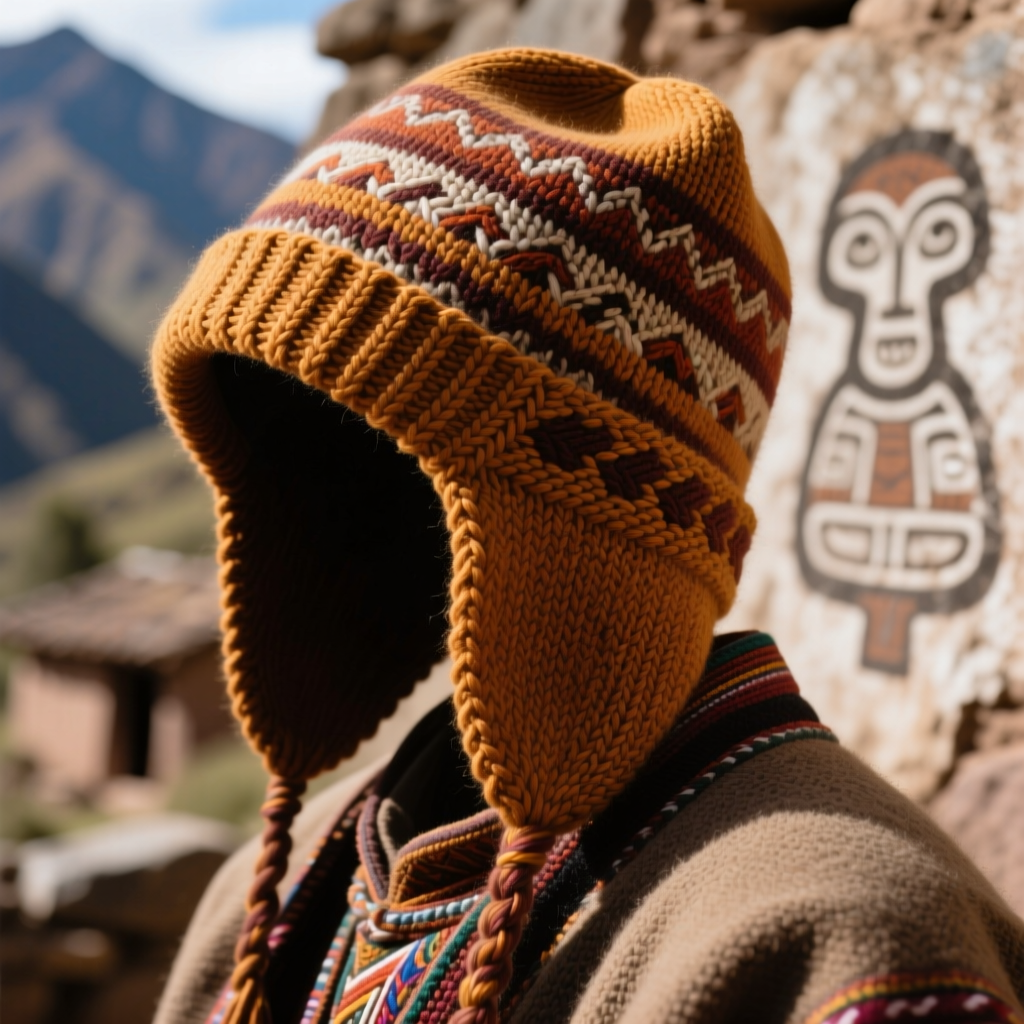
High in the Andean mountains, where the air grows thin and the winds carry the biting chill of the altiplano, survival requires more than mere resilience. It demands ingenuity, adaptation, and a profound understanding of the natural world. For centuries, the indigenous peoples of the Andes have met the harsh demands of their environment through the creation of extraordinary textiles. Among the most iconic and culturally significant of these garments is the chullo, the traditional Andean earflap hat. Far more than a simple accessory designed to ward off the cold, the chullo is a vibrant canvas of cultural identity, social status, and ancestral memory.
To understand the chullo is to understand the heartbeat of Andean communities. Every stitch, color, and geometric motif tells a story that has been passed down through countless generations. As we explore the heritage of Andean chullo earflap hat knitting, we uncover a fascinating intersection of pre-Columbian traditions and post-colonial adaptations, resulting in a textile art form that remains deeply relevant in contemporary society. For those interested in the broader context of cold-weather garments, our comprehensive winter headwear guide offers further insights into how different cultures have historically combated the elements.
The Historical Roots and Cultural Significance of the Chullo
The origins of Andean textiles stretch back thousands of years, long before the rise of the Inca Empire. Textiles in the Andes were historically considered more valuable than gold or silver; they were used as currency, diplomatic gifts, and sacred offerings to the gods. However, the specific technique of knitting was not native to the pre-Columbian Andes. Indigenous weavers had mastered the backstrap loom, creating complex, interlocking tapestries and twill weaves that astounded early European observers. Knitting, specifically the use of interlocking loops of yarn with needles, was introduced to the region by Spanish colonizers in the sixteenth century.
Rather than abandoning their indigenous textile traditions, the Andean people masterfully adapted this new European technique, infusing it with their own profound aesthetic and symbolic vocabulary. The chullo emerged from this cultural synthesis. The word itself is derived from the Aymara language, reflecting the deep indigenous roots of the garment. The basic structure of the hat—a dome covering the crown, with earflaps to protect against the fierce mountain winds and high-altitude sun—was a highly practical response to the extreme climate of the Andes.
Culturally, the chullo quickly became an indispensable marker of identity. In a region characterized by deep valleys and towering peaks, communities were often isolated from one another. This geographical separation led to the development of highly localized styles. To this day, the specific patterns, colors, and shapes of a chullo can immediately identify the wearer’s home village, their marital status, and their social standing within the community. It is a wearable map of the Andes, a testament to the fact that in these high altitudes, clothing is a language of its own.
The Craftsmanship: Spinning, Dyeing, and Knitting Techniques
The creation of an authentic chullo is a labor-intensive process that begins long before the knitting needles are picked up. It starts with the shearing of camelids—primarily alpacas and llamas—and sheep, which were introduced by the Spanish. The fleece is meticulously sorted by hand, separating the coarse outer guard hairs from the incredibly soft, insulating undercoat. For a deeper dive into the luxurious fibers used in these garments, explore our extensive archive on alpaca wool textiles.
The spinning of the yarn is traditionally done by women using a pushka, or drop spindle. This ancient tool allows the spinner to twist the fibers into a continuous, strong thread while walking, tending to livestock, or engaging in daily chores. The direction and tightness of the spin are crucial; Andean spinners often create a high-twist yarn that is exceptionally durable and resistant to pilling, ensuring the finished chullo can withstand years of rigorous daily wear.
Once spun, the yarn is dyed using a spectacular array of natural materials, a practice that connects the artisan directly to the local ecology. The natural dyeing processes utilized in the Andes are among the most sophisticated in the world. The vibrant reds and pinks are derived from cochineal, a tiny scale insect that lives on prickly pear cacti. Deep blues and purples come from indigo and various local berries, while yellows, greens, and browns are extracted from native plants, lichens, and minerals. The use of natural mordants, such as alum or mineral-rich mud, ensures that these brilliant colors remain fast and vibrant despite prolonged exposure to the intense high-altitude ultraviolet radiation.
The knitting of the chullo is typically performed in the round using a set of four or five double-pointed needles. Artisans employ a stranded colorwork technique, carrying multiple colors of yarn across the back of the work. This not only creates the intricate, multi-colored patterns on the exterior but also results in a double-thick layer of yarn that provides unparalleled insulation and windproofing. The tension is kept remarkably tight, a hallmark of Andean knitting that ensures the hat is virtually impermeable to the biting mountain winds and driving rain & snow.
Symbolism in Every Stitch: Decoding Andean Motifs
The visual language of the chullo is rooted in the Andean cosmovision, a worldview that emphasizes the interconnectedness of all living things and the cyclical nature of time and agriculture. The geometric patterns, known as pallay in Quechua, are not merely decorative; they are a complex system of symbols that record history, mythology, and the natural environment. While weaving traditions often feature highly abstracted, stepped motifs, knitting allows for a different kind of geometric expression, often featuring sharp diamonds, zigzags, and stylized representations of flora & fauna.
Three animals hold particular sacred significance in Andean cosmology, and they frequently appear in the motifs of high-quality chullos. The condor represents the Hanan Pacha, the upper world of the gods and the heavens. The puma represents the Kay Pacha, the earthly realm of the living. The snake, or amaru, represents the Uku Pacha, the inner world or underworld of the ancestors and the seeds of new life. When these motifs are incorporated into a chullo, the wearer is symbolically wrapping themselves in the protection and balance of the entire cosmos.
Agricultural motifs are also prevalent, reflecting the deep reliance of Andean communities on the land. Stylized representations of the sun, rain, rivers, and terraced mountainsides serve as both a celebration of the harvest and a petition for favorable weather. Other patterns might depict local wildlife, such as the vicuña, the fox, or the hummingbird, as well as cultivated crops like quinoa and potatoes. To read the motifs of a chullo is to read a love letter to the harsh but beautiful landscape of the Andes.
Regional Variations Across the Andes
Because the Andes stretch across several modern-day countries, including Peru, Bolivia, Ecuador, Chile, and Argentina, the chullo exhibits remarkable regional diversity. In the Cusco region of Peru, chullos often feature a more structured crown and intricate, tightly packed geometric bands. The earflaps are typically long and finished with heavy, braided ties that can be secured under the chin or tied up out of the way when the weather is mild.
One of the most fascinating regional variations is found on the islands of Lake Titicaca, particularly Taquile Island. Here, a unique gender reversal in textile production occurs: while women are the primary weavers, men are the sole knitters. On Taquile, a man’s ability to knit a fine, tight, and beautifully patterned chullo is a crucial test of his maturity and suitability for marriage. A young man will often knit his own chullo to wear during courtship, and the quality of his knitting is heavily scrutinized by the community. The Taquile chullo is famous for its exceptionally fine gauge and complex, multi-layered patterns that can take months to complete.
In the Puno region and the Bolivian Altiplano, the styles shift again. Bolivian chullos, particularly those from the Charazani and Jalq'a regions, often feature darker, richer earth tones and heavily textured stitches. They frequently incorporate elaborate, multi-colored tassels or pompoms on the crown and the ends of the earflaps. These tassels are not just decorative; in some communities, the number, size, and color of the tassels can indicate the wearer's age, the number of children they have, or their specific role in local festivals and rituals.
Modern Preservation and the Global Evolution of the Chullo
In the modern era, the chullo has transcended its Andean origins to become a globally recognized symbol of winter fashion. However, this widespread popularity has brought significant challenges. Mass-produced, machine-knit imitations manufactured in overseas factories have flooded global markets, often appropriating indigenous designs without providing any economic benefit to the communities that created them. This phenomenon threatens the survival of traditional, hand-knit chullos by undercutting the artisans who rely on their craft for their livelihoods.
Preserving the heritage of the Andean chullo requires a concerted effort to support ethical, fair-trade cooperatives and to educate consumers about the value of authentic, hand-crafted textiles. Organizations and artisan collectives across the Andes are working tirelessly to protect their intellectual property, secure geographical indications, and ensure that the next generation of knitters sees their cultural heritage as a viable and respected profession. When integrating these beautiful pieces into your wardrobe, it is important to consider sustainable winter layering practices, prioritizing quality, ethically sourced garments over fast-fashion alternatives.
Furthermore, the preservation of the chullo is intrinsically linked to the preservation of the Andean environment and the Andean weaving traditions. As climate change threatens the delicate high-altitude ecosystems where alpacas graze and natural dye plants grow, supporting indigenous land management and sustainable agricultural practices becomes a vital part of protecting this textile heritage. By choosing to invest in authentic, hand-knit chullos, consumers can play a direct role in sustaining the cultural and ecological landscape of the Andes for generations to come.
Frequently Asked Questions
What is the difference between a chullo and a standard winter beanie?
While both serve the primary function of keeping the head warm, a chullo is distinctly characterized by its earflaps and the cultural specificity of its construction. A standard winter beanie is typically a simple, ribbed or stockinette dome made from commercially spun yarn. A chullo, conversely, features earflaps with ties, is traditionally knit in the round using stranded colorwork with high-twist, naturally dyed alpaca or sheep wool, and incorporates specific, culturally significant geometric motifs. The tight gauge and double-layer effect of the stranded colorwork also make an authentic chullo significantly more windproof and insulating than a standard mass-market beanie.
How do you properly care for an authentic alpaca chullo?
An authentic, hand-knit alpaca chullo requires gentle care to maintain its shape, color, and water-resistant properties. It should never be machine washed or dried, as the agitation and heat will cause the natural fibers to felt and shrink irreparably. Instead, hand wash the hat in cool water using a mild, pH-neutral soap specifically designed for wool or delicate fibers. Gently press the water through the garment without wringing or twisting. Rinse thoroughly in cool water, roll the hat in a clean towel to press out excess moisture, and lay it flat on a drying rack away from direct sunlight or heat sources to air dry.
Are chullos only worn by men in Andean culture?
Historically and in many traditional communities today, the chullo is predominantly worn by men, while women often wear different types of headwear, such as the montera (a type of woven hat) or wide-brimmed bowler hats, depending on the specific region. However, this is not a universal rule across the entire Andes. In some communities, women and children also wear knitted earflap hats, though the styles, colors, and motifs may differ from those worn by men. In contemporary, urban, and global contexts, the chullo is worn by people of all genders as a practical and stylish winter accessory.
What do the colors and patterns on a chullo signify?
The colors and patterns on a chullo act as a complex visual language. The specific combination of colors and motifs can identify the wearer's home village, their marital status, and their social or political standing within the community. For example, certain geometric patterns might represent local mountains, rivers, or agricultural terraces, while animal motifs like the condor or puma hold deep spiritual significance. The colors, derived from natural dyes, also carry meaning; red from cochineal might represent the earth or life force, while yellow could symbolize the sun or energy. Reading these symbols requires an intimate knowledge of the specific community's cultural lexicon.
Where can I ethically source a hand-knit Andean chullo?
To ethically source an authentic chullo, look for fair-trade certified organizations, artisan cooperatives, and specialized textile galleries that work directly with indigenous communities in Peru, Bolivia, and Ecuador. These organizations ensure that the artisans are paid a living wage, work in safe conditions, and retain the rights to their traditional designs. Avoid purchasing mass-produced "tribal" or "Andean-style" hats from large fast-fashion retailers, as these are almost always machine-made imitations that appropriate indigenous patterns without supporting the source communities. Seeking out direct-to-consumer platforms that highlight the stories and names of the individual artisans is the best way to ensure your purchase supports the preservation of this incredible heritage.