Traditional Irish Clothing Stores Online: A Complete Cultural Guide
From the windswept cliffs of the Aran Islands to the rolling green hills of County Donegal, Ireland has long produced garments that are as resilient and storied as the land itself. Traditional Irish clothing is more than mere fashion — it is a woven tapestry of history, identity, and craftsmanship passed down through generations of artisans. Today, the digital age has made it possible to acquire these heritage pieces from anywhere in the world, connecting global admirers of Celtic culture with the small workshops, family-run mills, and independent makers who keep these traditions alive.
Whether you are searching for a hand-knitted Aran sweater, a tailored Donegal tweed jacket, or a flowing Brat cloak, the internet has opened a gateway to authentic Irish garments that once required a pilgrimage to the Emerald Isle. This comprehensive guide explores the rich cultural heritage behind traditional Irish clothing, the characteristics that define these timeless pieces, and the best ways to find genuine, high-quality Irish apparel through online stores.
The Origins & Heritage of Traditional Irish Clothing
To understand what makes traditional Irish clothing so distinctive, one must first journey into Ireland's deep sartorial past. Long before the modern fashion industry, the Irish dressed according to the rhythms of rural life, the demands of a harsh Atlantic climate, and the cultural values of their communities. The earliest recorded Irish garments include the léine — a long, saffron-dyed linen tunic worn by both men and women — and the Brat, a heavy woolen cloak that served as protection against rain, wind, and cold. These garments were practical, locally sourced, and deeply symbolic of Irish identity.
During the medieval period, Irish dress was so distinct from English fashion that sumptuary laws were enacted to discourage the Anglo-Irish from adopting native Irish clothing styles. The léine and Brat became symbols of Gaelic resistance and cultural pride. Over the centuries, as Ireland experienced colonization, famine, and mass emigration, traditional clothing practices evolved but never disappeared entirely. Instead, they transformed — absorbing new influences while retaining core elements of Irish textile heritage.
The nineteenth and twentieth centuries saw a remarkable revival of interest in traditional Irish crafts. The Gaelic Revival movement of the late 1800s encouraged a renewed appreciation for Irish language, music, and material culture, including clothing. Artisan cooperatives and rural industries were established to preserve handcrafts like weaving, knitting, and lace-making. Many of these cooperatives still operate today, and their products form the backbone of what we now recognize as traditional Irish clothing available through online stores.
If you are fascinated by how clothing reflects cultural identity, you may also enjoy exploring our broader guide to Celtic heritage garments and their influence on modern fashion.
Defining Characteristics of Authentic Irish Garments
Traditional Irish clothing is distinguished by several key characteristics that set it apart from mass-produced alternatives. Understanding these hallmarks will help you identify genuine, high-quality pieces when shopping at traditional Irish clothing stores online.
The Aran Sweater: Ireland's Most Iconic Export
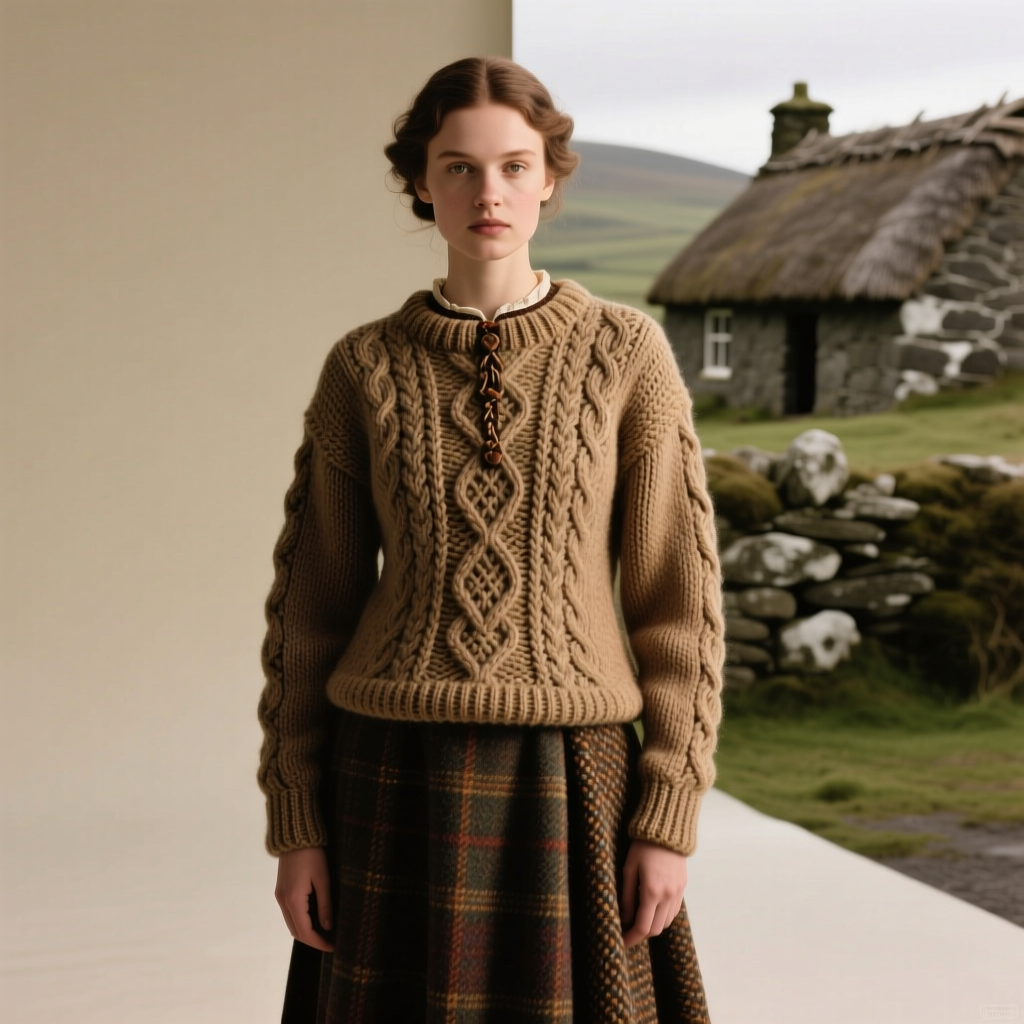
No discussion of traditional Irish clothing is complete without the Aran sweater. Originating from the Aran Islands off the coast of County Galway, these heavy, cream-colored wool sweaters are renowned for their intricate cable, diamond, and honeycomb stitch patterns. Each pattern carries symbolic meaning — the cable stitch represents the fisherman's ropes and a wish for safety at sea, the diamond reflects the small fields of the islands and a hope for wealth, and the honeycomb signifies the hard work of the bee and the rewards of an industrious life.
Authentic Aran sweaters are knitted from 100% merino wool or báinín (undyed, natural sheep's wool), which retains its natural lanolin and provides exceptional water resistance. When shopping online, look for sellers who specify hand-knitted or hand-loomed construction and who source their wool from Irish or British Isles sheep. Machine-made imitations may replicate the patterns but lack the density, warmth, and character of a genuine Aran.
Donegal Tweed: Woven from the Landscape
Donegal tweed is another cornerstone of traditional Irish clothing. Handwoven in County Donegal using wool dyed with natural pigments derived from local plants, lichens, and berries, this fabric is characterized by its distinctive flecked appearance — small nubs of contrasting color scattered throughout the weave. The landscape itself is said to be woven into the cloth: the russet of heather, the grey of stone walls, and the green of mossy hillsides.
Genuine Donegal tweed is produced on traditional hand looms, often in the homes of independent weavers. The Donegal Yarns mill in Ardara and the Studio Donegal Weavers in Kilcar are among the most respected producers. When browsing Irish clothing stores online, seek out retailers who clearly identify the origin and composition of their tweed products, and who maintain transparent relationships with the weavers.
For a deeper dive into the world of handwoven textiles, visit our guide on handwoven textiles from around the world.
Irish Linen: The Fabric of Royalty and Revolution
Ireland has been producing world-class linen for centuries, particularly in the northern province of Ulster. Irish linen is prized for its exceptional softness, durability, and natural cooling properties. Historically, it was used for everything from undergarments to sailcloth, and the industry once employed tens of thousands of workers across Northern Ireland. Today, a handful of mills continue this tradition, producing linen that meets the exacting standards of the Irish Linen Guild.
When purchasing Irish linen garments online, look for the Guild's certification mark and verify that the fabric was woven in Ireland. Many online stores offer linen shirts, dresses, tablecloths, and scarves that carry this heritage, but provenance matters — not all products labeled "Irish linen" are genuinely produced on the island.
Celtic Knotwork, Claddagh & Symbolic Embellishments
Beyond the fabrics themselves, traditional Irish clothing often features symbolic embellishments drawn from Celtic art. Knotwork borders, Claddagh motifs (representing love, loyalty, and friendship), and Trinity Knot designs appear on shawls, capes, brooches, and accessories. These decorative elements connect the wearer to Ireland's ancient artistic traditions and are particularly popular among members of the Irish diaspora seeking to honor their heritage.
Occasions & Everyday Wear: When to Wear Traditional Irish Clothing
One of the most appealing aspects of traditional Irish clothing is its versatility. Unlike some national costumes that are reserved exclusively for ceremonial occasions, Irish heritage garments transition seamlessly between everyday wear and special events.
Everyday & Casual Wear
Aran sweaters, tweed caps (known as paddy caps or flat caps), and linen shirts are perfectly suited for daily wear, particularly in cooler climates. Their natural fibers provide excellent temperature regulation, and their timeless designs pair well with modern wardrobes. A well-made Aran sweater, for instance, can be worn with jeans for a casual outing or layered over a collared shirt for a smart-casual look. Donegal tweed jackets and waistcoats add a touch of rustic elegance to any outfit without feeling costumey.
Weddings, Ceilidhs & Celebrations
Traditional Irish clothing plays a prominent role in weddings, ceilidhs (traditional Gaelic social gatherings), and cultural celebrations. Brides may incorporate Irish lace veils or shawls into their attire, while grooms often opt for tweed suits or waistcoats woven from Donegal or Connemara tweed. At Irish music festivals and dance competitions — particularly those associated with Comhaltas Ceoltóirí Éireann — participants frequently wear garments that reflect regional traditions, from hand-knitted sweaters to woven sashes and Celtic brooches.
Irish Dance Costumes
The world of Irish step dancing, popularized globally by productions like Riverdance, has its own rich tradition of elaborate costumes. Solo dance dresses feature intricate Celtic embroidery, sequins, and velvet panels, while céilí dance costumes tend to be simpler and more uniform. Many specialized online stores cater exclusively to the Irish dance community, offering custom-made dresses, ghillies (soft shoes), and hard shoes alongside accessories like wig bands and sock flashes.
Heritage & Diaspora Gatherings
For members of the Irish diaspora — particularly those in the United States, Canada, Australia, and the United Kingdom — traditional Irish clothing serves as a powerful symbol of ancestral connection. Events like St. Patrick's Day parades, clan gatherings, and heritage festivals provide opportunities to wear Aran sweaters, Celtic jewelry, tweed garments, and other items that celebrate Irish identity. Online stores have made it easier than ever for diaspora communities worldwide to access authentic Irish-made clothing.
Interested in how other cultures use clothing to express identity at celebrations? Explore our collection of traditional garments for celebrations from around the world.
Regional Variations in Irish Traditional Dress
Ireland may be a small island, but its textile traditions vary significantly from region to region. Understanding these regional differences will enrich your appreciation of the garments you discover at traditional Irish clothing stores online.
The Aran Islands & the West Coast
The Aran Islands — Inis Mór, Inis Meáin, and Inis Oírr — are the spiritual home of the Aran sweater. Each island developed slightly different pattern traditions, and experienced knitters could once identify a fisherman's home island by the stitch patterns on his sweater. The west coast of Ireland, including Connemara in County Galway, is also known for its báinín (undyed wool) garments and for the distinctive red and grey flannel skirts traditionally worn by women in the region.
County Donegal & the Northwest
Donegal is synonymous with tweed weaving and hand-knitting. The county's rugged terrain and Atlantic climate demanded warm, durable clothing, and its artisans responded with some of the finest wool textiles in the world. Donegal tweed is distinguished by its colorful flecks, while the county's knitters produce sweaters, socks, and shawls using patterns unique to the region. The village of Ardara has long been considered the tweed capital of Ireland, hosting annual weaving festivals and housing several heritage mills.
The Blasket Islands & Kerry
The Blasket Islands, off the coast of County Kerry, had their own distinctive clothing traditions before the islands were evacuated in the mid-twentieth century. Islanders wore heavy woolen garments dyed with local plants, including a distinctive type of woven waistcoat and a practical oilskin outer layer for fishermen. While the islands are no longer inhabited, their textile heritage lives on through the work of Kerry-based weavers and knitters who have preserved and adapted these traditions.
Ulster & the Linen Country
The province of Ulster, encompassing much of Northern Ireland, has a textile heritage centered on linen production. Towns like Lisburn, Banbridge, and Belfast were once home to vast linen mills, and the region's artisans developed specialized techniques for spinning, weaving, and finishing linen fabric. Today, Ulster's linen tradition continues through boutique mills and independent designers who produce luxury garments and home textiles for a global market.
Discover more about how geography shapes clothing traditions in our guide to regional textile traditions across the British Isles and beyond.
Cultural Significance of Traditional Irish Clothing
Traditional Irish clothing carries a weight of meaning that extends far beyond aesthetics. These garments are vessels of cultural memory, embodying the skills, stories, and values of the communities that created them.
Preservation of Language & Oral Tradition: Many knitting patterns and weaving techniques were transmitted orally, from mother to daughter, in the Irish language. The act of preserving these crafts is inseparable from the broader effort to maintain Ireland's linguistic and cultural heritage. When you purchase a hand-knitted Aran sweater from a traditional Irish clothing store online, you are supporting a chain of knowledge that stretches back centuries.
Resistance & Identity: Throughout Ireland's history, clothing has been a site of cultural resistance. The English administration's attempts to suppress Irish dress only strengthened the symbolic power of native garments. In the twentieth century, figures like Douglas Hyde and the Gaelic League championed the wearing of Irish-made clothing as an act of national pride. Today, choosing authentic Irish garments over fast fashion is a continuation of that tradition — a conscious decision to value craftsmanship, locality, and heritage.
Sustainability & Slow Fashion: Traditional Irish clothing aligns naturally with the modern slow fashion movement. Garments made from natural fibers, produced by hand using time-honored techniques, and designed to last for decades stand in stark contrast to the disposable clothing that dominates the global market. Many online stores specializing in traditional Irish clothing emphasize their commitment to sustainable practices, from sourcing organic wool to using natural dyes and minimizing waste.
Community & Livelihood: For rural Irish communities, textile production has long been a vital source of income. Knitting cooperatives, weaving mills, and lace-making circles provided economic opportunities — particularly for women — in areas where agricultural land was poor and industrial employment scarce. By purchasing from traditional Irish clothing stores online, consumers directly support these communities and help ensure that traditional crafts remain viable livelihoods for future generations.
Diaspora & Belonging: For the estimated 70 million people worldwide who claim Irish ancestry, traditional clothing offers a tangible connection to a homeland they may never have visited. An Aran sweater, a piece of Irish lace, or a tweed cap becomes more than a garment — it becomes a bridge between past and present, between the old country and the new. Online stores have democratized access to these meaningful objects, allowing anyone with an internet connection to participate in Ireland's living textile heritage.
Learn more about the intersection of clothing and cultural identity in our feature on clothing and cultural identity.
Finding Authentic Traditional Irish Clothing Stores Online
With the growing popularity of heritage fashion, numerous online retailers now offer traditional Irish clothing. However, not all stores are created equal. Here are some guidelines for identifying authentic, trustworthy sellers:
- Look for Irish-based businesses: The most authentic online stores are typically based in Ireland and ship internationally. Check the store's "About Us" page for information about their location, history, and relationships with local artisans.
- Verify provenance: Genuine stores provide detailed information about where and how their garments are made, including the names of mills, cooperatives, or individual craftspeople.
- Check for certifications: Look for marks like the Irish Linen Guild certification, the Handknitted Aran certification, or membership in organizations like Craft & Design in Ireland.
- Read product descriptions carefully: Authentic listings specify fiber content, construction methods (hand-knitted vs. machine-knitted), and country of origin. Vague descriptions may indicate mass-produced imports.
- Support small makers: Platforms like Etsy host many independent Irish artisans who sell directly to consumers. These sellers often provide the most personalized service and the most authentic products.
Whether you are building a heritage wardrobe or searching for a single meaningful piece, the online marketplace offers unprecedented access to Ireland's finest textile traditions. By choosing authentic, ethically produced garments, you become part of a global community that values craftsmanship, culture, and the enduring beauty of traditional Irish clothing.
Continue your journey through global garment heritage by exploring our complete library of cultural clothing guides at The Garment Atlas.
Frequently Asked Questions
What is the most iconic piece of traditional Irish clothing?
The Aran sweater is widely considered the most iconic piece of traditional Irish clothing. Originating from the Aran Islands off the coast of County Galway, these cream-colored, cable-knit wool sweaters feature intricate stitch patterns that carry deep symbolic meaning. Each pattern — from the cable stitch representing fishermen's ropes to the diamond stitch symbolizing the island's small fields — tells a story of island life. Authentic Aran sweaters are hand-knitted from pure merino or báinín wool and are available from numerous traditional Irish clothing stores online.
How can I tell if an Aran sweater is genuinely hand-knitted?
A genuine hand-knitted Aran sweater will have slight irregularities in the stitching that distinguish it from machine-made versions. The stitches will feel denser and more three-dimensional, and the overall garment will be heavier and more structured. Reputable online stores will clearly label their sweaters as "hand-knitted" and provide information about the knitter or cooperative. Be cautious of prices that seem too low — a genuine hand-knitted Aran sweater requires dozens of hours of skilled labor and typically costs significantly more than a machine-knitted alternative.
Is Donegal tweed always handwoven?
Not all tweed labeled "Donegal" is handwoven, though the most authentic and prized versions are. Traditional Donegal tweed is woven on hand looms, often in the homes of independent weavers in County Donegal. The distinctive flecked appearance — small nubs of color woven into the base fabric — is a hallmark of genuine Donegal tweed and is achieved by adding dyed wool fragments during the carding process. When shopping online, look for retailers who specify handwoven construction and who can trace their tweed back to specific weavers or mills in Donegal.
What should I look for when buying Irish linen online?
When purchasing Irish linen online, look for the Irish Linen Guild certification mark, which guarantees that the fabric was spun and woven in Ireland. Genuine Irish linen is made from flax that has been processed to exacting standards, resulting in a fabric that is remarkably soft, strong, and naturally lustrous. Pay attention to the weight of the fabric — lighter linens are ideal for shirts and blouses, while heavier weights are better suited for trousers and jackets. Reputable online stores will provide detailed information about the mill of origin and the specific characteristics of their linen.
Can traditional Irish clothing be worn in modern, everyday settings?
Absolutely. One of the greatest strengths of traditional Irish clothing is its adaptability to modern life. An Aran sweater paired with dark jeans is a timeless, casual look. A Donegal tweed jacket can be dressed up for the office or dressed down for a weekend outing. Irish linen shirts are ideal for warm-weather smart-casual occasions. The key is to choose well-made pieces in classic cuts and neutral colors that complement your existing wardrobe. Traditional Irish garments are designed to be lived in — they improve with age and wear, developing a patina that reflects the life of the wearer.