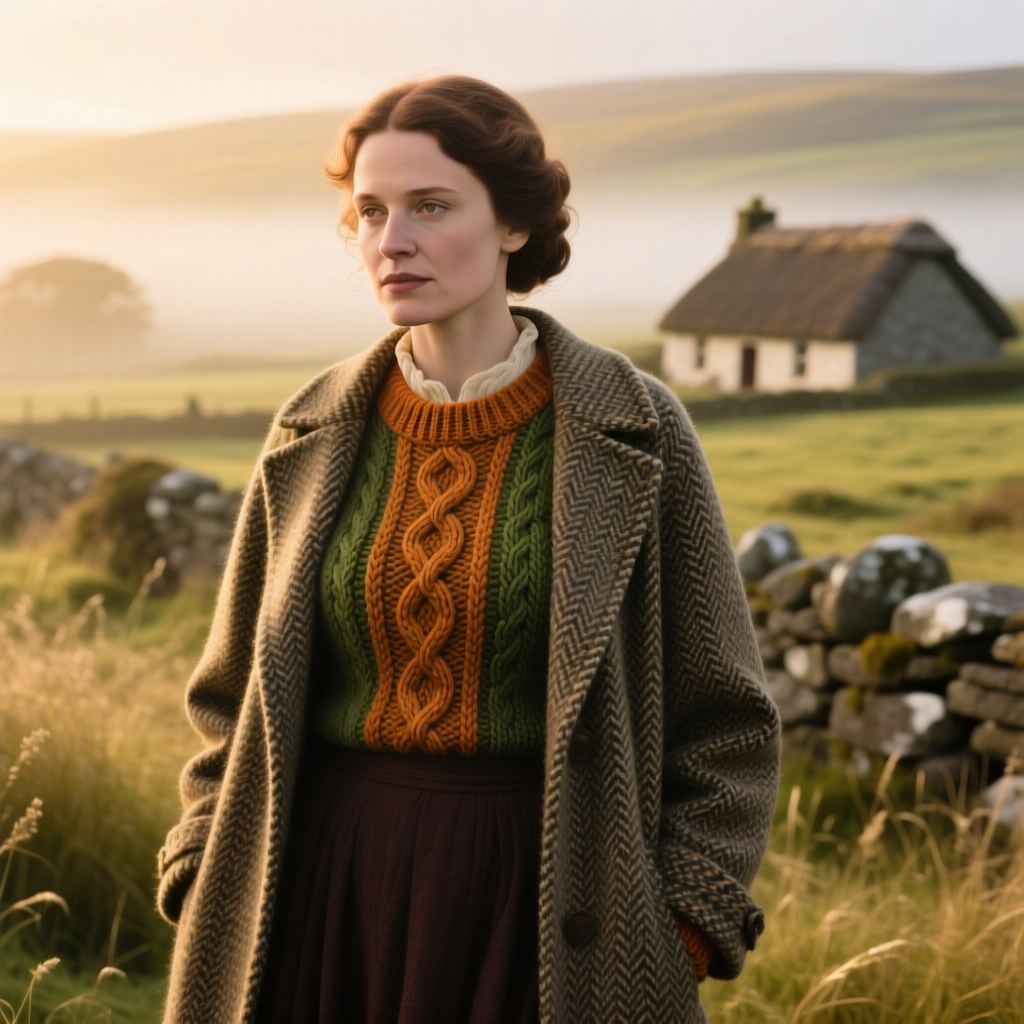
Traditional Irish Clothing for Men: A Complete Guide to Heritage Garments
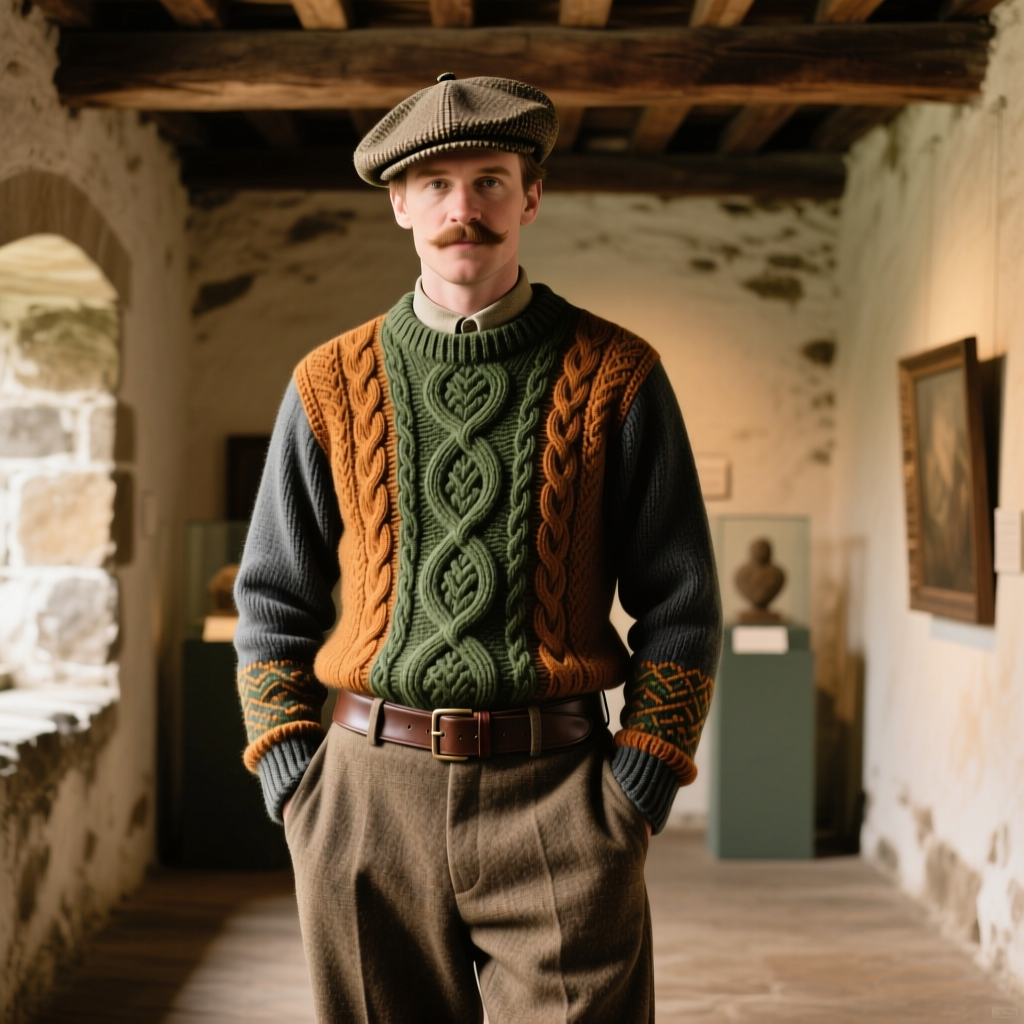
From the windswept cliffs of the Wild Atlantic Way to the rolling green hills of the countryside, Ireland's landscape has shaped a rich tradition of clothing that is as functional as it is beautiful. Traditional Irish clothing for men is more than a fashion statement — it is a living tapestry of heritage, craftsmanship, and cultural identity that has been passed down through countless generations. Whether you are searching for an authentic Aran sweater, a finely woven Donegal tweed jacket, or a handcrafted flat cap, understanding the stories woven into these garments adds immeasurable depth to every piece you choose to wear.
For centuries, Irish men dressed in garments born from necessity, climate, and community. The rugged Atlantic coast demanded warm, water-resistant wool. The peat bogs and farmlands called for durable fabrics that could withstand long days of labor. And the gathering places — pubs, churches, and crossroads dances — inspired a sense of pride in one's appearance that persists to this day. Today, traditional Irish clothing for men enjoys a remarkable global revival, with buyers around the world seeking out authentic, heritage-quality pieces that connect them to the Emerald Isle's storied past.
In this comprehensive guide, we will walk you through the most iconic garments of Irish men's traditional dress, explore their origins and cultural significance, highlight regional variations, and help you navigate the landscape of authentic Irish clothing available for purchase. If you are also interested in broader Celtic dress traditions, our guide to Celtic traditional clothing offers a wider perspective on the garments of the Gaelic world.
The Origins and Evolution of Traditional Irish Men's Clothing
The story of Irish men's clothing stretches back thousands of years, long before the island was known to the outside world. In ancient Gaelic Ireland, men typically wore a léine (pronounced "lay-nuh"), a long linen tunic that was often dyed a deep saffron yellow. This garment was gathered at the waist with a belt called a crios, and it served as the foundation of everyday dress for commoners and nobility alike. Over the léine, a man might drape a brat, a large woolen cloak that could be wrapped around the body for warmth or used as a blanket during travel.
The brat was a garment of considerable significance. Its color, quality, and number of folds could indicate a man's social standing. Chieftains and warriors wore brats of rich colors — deep crimsons, royal blues, and vivid greens — often fastened at the shoulder with an ornate brooch. The ancient Irish legal texts, known as the Brehon Laws, even specified the colors and styles permitted for different social ranks, making clothing one of the earliest visible markers of identity in Irish society.
With the arrival of the Normans in the twelfth century and the subsequent centuries of English influence, Irish dress began to evolve. The léine gradually gave way to trousers, waistcoats, and shirts more typical of broader European fashion. However, Irish clothing never fully abandoned its distinctive character. Rural communities, particularly in the west and along the coast, retained unique textile traditions that would eventually give rise to the iconic garments we recognize today — the Aran sweater, Donegal tweed, and the ubiquitous flat cap among them.
The nineteenth and twentieth centuries saw a remarkable period of cultural revival. The Gaelic Revival movement, which sought to celebrate and preserve Irish language, music, and traditions, also rekindled interest in native dress. Artisans and weavers in rural communities became custodians of techniques that might otherwise have been lost, and their work laid the foundation for the thriving market in traditional Irish clothing for men that exists today.
Iconic Traditional Irish Garments for Men
When you begin exploring traditional Irish clothing for men, a handful of garments stand out as truly iconic. Each one carries its own history, its own regional roots, and its own set of craftsmanship traditions that make it unique. Understanding these pieces will help you make informed, meaningful choices when shopping for authentic Irish menswear.
The Aran Sweater
No garment is more synonymous with Ireland than the Aran sweater. Originating from the Aran Islands — Inis Mór, Inis Meáin, and Inis Oírr — off the coast of County Galway, these sweaters are masterpieces of hand-knitting tradition. Traditionally made from unscoured wool that retained its natural lanolin, Aran sweaters were prized by fishermen for their water-resistant properties and extraordinary warmth.
What truly sets the Aran sweater apart is its intricate cable patterns, each of which carries symbolic meaning. The cable stitch represents the fisherman's ropes and a wish for safety at sea. The honeycomb stitch symbolizes the rewards of hard work. The diamond stitch reflects the small fields of the islands and a hope for wealth and success. The tree of life stitch speaks to the importance of family and clan unity. These patterns were often unique to individual families, and a persistent — though debated — legend holds that fishermen lost at sea could be identified by the stitch patterns in their sweaters.
Today, Aran sweaters are available in a wide range of styles, from traditional hand-knitted pieces made by island artisans to machine-knitted versions produced at scale. For those seeking authentic garments, look for sweaters made from 100% merino or báinín (undyed natural) wool, preferably hand-knitted or hand-loomed in Ireland. Our complete guide to Aran sweaters delves deeper into stitch patterns, care instructions, and how to identify genuine hand-knitted pieces.
Donegal Tweed
Donegal tweed is a fabric born from the landscape itself. Woven in County Donegal in the northwest of Ireland, this distinctive tweed is characterized by its flecked appearance — small, colorful neps of dyed yarn scattered throughout a base of natural, undyed wool. The colors of Donegal tweed are drawn directly from the surrounding environment: heather purples, moss greens, bracken browns, and the grey-blue of Atlantic skies.
The tradition of tweed weaving in Donegal dates back centuries, with hand-weaving on narrow looms being the standard method for generations. Each weaver developed their own signature patterns and color combinations, creating a rich diversity within the tradition. Donegal tweed was used to make jackets, waistcoats, caps, and trousers — essentially the complete wardrobe of the rural Irishman.
When shopping for Donegal tweed garments, look for the Donegal Tweed trademark, which certifies that the fabric was woven in County Donegal. Authentic pieces include sport coats, flat caps, waistcoats, and overcoats. A well-made Donegal tweed jacket is a versatile investment piece that can be dressed up or down and will last for decades with proper care. For more on tweed traditions across the British Isles, see our heritage guide to tweed jackets.
The Irish Flat Cap
The flat cap — also known as a newsboy cap, paddy cap, or scally cap — is perhaps the most universally recognized piece of Irish headwear. Its origins in Ireland can be traced to a 1571 English statute that required all males over the age of six to wear woolen caps on Sundays and holidays, a law intended to support the wool trade. Though the statute was eventually repealed, the cap became deeply embedded in Irish working-class culture and remained a staple of men's dress well into the modern era.
Traditional Irish flat caps are typically made from wool tweed, herringbone, or houndstooth fabric, with a rounded crown and a short, stiff brim at the front. The newsboy variant features a fuller, puffier crown with a button at the top and is often made from eight panels of fabric sewn together. Both styles remain enormously popular and are available from a number of Irish mills and manufacturers.
A quality flat cap is an accessible entry point into traditional Irish clothing. Look for caps made from genuine Irish tweed — Donegal or otherwise — with a satin or cotton lining for comfort. Many Irish hatters and mills offer these caps at approachable price points, making them excellent gifts or personal additions to any wardrobe.
The Kilt and Irish Tartans
While kilts are more commonly associated with Scotland, Ireland has its own rich tradition of kilt-wearing, particularly within the context of Irish nationalism and cultural revival. The saffron kilt — a solid mustard-yellow or saffron-colored garment — became popular among Irish pipe bands and cultural organizations in the late nineteenth and early twentieth centuries as a deliberate expression of Gaelic identity.
In more recent decades, a number of Irish tartans have been designed and registered, representing Irish counties, clans, and districts. These include tartans for counties such as Cork, Dublin, Galway, and Kerry, as well as tartans associated with prominent Irish family names like Murphy, O'Brien, and Fitzgerald. Irish tartans tend to feature softer, more muted color palettes than their Scottish counterparts, often incorporating greens, golds, and deep blues.
Kilts for men are popular choices for weddings, formal events, and cultural celebrations such as St. Patrick's Day parades. A complete Irish kilt outfit typically includes the kilt itself, a sporran, knee-high socks with flashes, a sgian dubh (small knife), and a jacket — often in a style known as a Brian Boru or Kilkenny jacket. For a deeper exploration of tartan traditions, our guide to understanding tartan patterns covers both Irish and Scottish traditions.
The Grandfather Shirt and Irish Linen
The grandfather shirt — also known as a henley shirt or collarless shirt — is a staple of traditional Irish men's dress. Characterized by its band collar (or no collar at all) and a buttoned placket at the neckline, this shirt was everyday wear for Irish working men throughout the nineteenth and early twentieth centuries. Made from sturdy cotton or linen, these shirts were practical, comfortable, and easy to launder.
Ireland has a long and celebrated tradition of linen production, particularly in the northern province of Ulster. Irish linen is renowned worldwide for its exceptional quality, softness, and durability. The flax plant from which linen is made thrives in Ireland's cool, damp climate, and the processing techniques developed by Irish weavers over centuries produce a fabric that is both luxurious and remarkably long-lasting.
Today, grandfather shirts made from Irish linen are available in a range of colors and weights, from lightweight summer shirts to heavier brushed cotton versions for cooler weather. They pair beautifully with tweed waistcoats, Aran cardigans, or simply a good wool sweater, making them a versatile foundation piece for any traditional Irish wardrobe.
Occasions and Settings for Traditional Irish Menswear
One of the most appealing aspects of traditional Irish clothing is its versatility. These garments were designed for real life — for work, worship, celebration, and everyday wear — and they remain appropriate for a remarkably wide range of occasions.
Weddings and formal events are among the most popular occasions for wearing traditional Irish clothing. An Irish kilt outfit makes a striking choice for a groom or groomsmen, while a Donegal tweed suit or sport coat offers a sophisticated alternative to conventional formalwear. Many couples with Irish heritage choose to incorporate traditional elements into their wedding attire as a way of honoring their roots, and the market for Irish formal menswear has grown substantially to meet this demand.
Cultural celebrations and festivals — particularly St. Patrick's Day, Fleadh Cheoil (Irish music festivals), and Highland Games — are natural settings for traditional Irish dress. Kilts, Aran sweaters, tweed caps, and sash-wearing are all common sights at these events, and wearing heritage clothing is a powerful way to participate in and celebrate Irish culture.
Everyday wear is where many traditional Irish garments truly shine. An Aran sweater paired with jeans and boots is a timeless, rugged look that works in virtually any casual setting. A Donegal tweed flat cap adds character to a simple overcoat and scarf combination. Grandfather shirts layered under waistcoats create a smart-casual aesthetic that is equally at home in a pub or a restaurant. The beauty of these garments lies in their ability to be both distinctive and understated — they make a statement about heritage and quality without being costume-like.
Outdoor pursuits are another natural fit for traditional Irish clothing. Tweed jackets and waistcoats have long been favored for hunting, shooting, fishing, and hiking, thanks to their durability, weather resistance, and natural camouflage patterns. The same qualities that made these garments essential for rural Irish life make them ideal for anyone who spends time outdoors.
Regional Variations in Irish Men's Traditional Dress
Ireland may be a small island, but its regional textile and clothing traditions are remarkably diverse. Understanding these variations can enrich your appreciation of the garments you purchase and help you choose pieces that reflect specific aspects of Irish heritage.
The Aran Islands and the West Coast are the undisputed heartland of Irish knitting tradition. The sweaters produced here are among the most sought-after in the world, and the island communities of Inis Mór, Inis Meáin, and Inis Oírr maintain active knitting traditions that are central to their cultural identity. The Galway region is also known for its distinctive style of tweed and for the Galway shawl — though the shawl is primarily a women's garment, the weaving traditions that produced it influenced men's textiles as well.
County Donegal and the Northwest are synonymous with tweed. The hand-weaving tradition here is one of the oldest continuously practiced textile crafts in Ireland, and Donegal tweed is prized for its unique flecked texture and earthy color palette. The weavers of Donegal have historically worked from small workshops and home looms, and many continue to do so today, producing fabrics of extraordinary character and quality.
Ulster and the North have a deep association with linen production. The area around Belfast and the Lagan Valley was once the linen capital of the world, and while the industry has diminished from its peak, a number of mills and weavers continue to produce world-class Irish linen. This region also has strong traditions of shirt-making, and the grandfather shirt style is particularly associated with northern Irish dress.
Munster and the South have their own textile traditions, including the production of heavy woolen fabrics used for overcoats and working garments. The city of Cork was historically an important center for wool trading, and the surrounding countryside supported numerous small-scale weavers and knitters. Kerry, in particular, has a tradition of producing heavy, weatherproof garments suited to the exposed Atlantic coastline of the Dingle and Iveragh peninsulas.
Connemara and the Gaeltacht regions — Irish-speaking areas along the western seaboard — have maintained some of the most unbroken clothing traditions on the island. In these communities, the practice of hand-knitting, weaving, and natural dyeing persisted longer than in more anglicized areas, and garments from these regions often carry a particular authenticity and cultural resonance. For more on how regional identity shapes clothing traditions, our exploration of clothing and cultural identity offers further insight.
The Cultural Significance of Traditional Irish Clothing
Traditional Irish clothing for men is far more than a collection of garments — it is a language of identity, belonging, and cultural continuity. In a nation whose history has been marked by colonization, famine, emigration, and cultural suppression, the preservation and celebration of native dress has taken on a significance that extends well beyond aesthetics.
During periods of English rule, Irish dress was at times actively suppressed. Statutes were passed prohibiting the wearing of traditional garments such as the léine and the saffron-colored brat, in efforts to anglicize Irish society and erase visible markers of Gaelic identity. The very act of wearing Irish-made clothing became, at various points in history, a form of quiet resistance — a declaration that Irish culture and Irish ways of life were worth preserving.
The Gaelic Revival of the late nineteenth and early twentieth centuries brought a renewed pride in Irish traditions of all kinds, including dress. Organizations such as the Gaelic League promoted the wearing of Irish-made fabrics and traditional styles as part of a broader project of cultural reclamation. This movement laid the groundwork for the modern market in traditional Irish clothing, establishing the idea that buying and wearing these garments was an act of cultural participation.
For the Irish diaspora — the tens of millions of people around the world who claim Irish ancestry — traditional clothing serves as a tangible connection to a homeland that may be separated by oceans and generations. An Aran sweater gifted from a grandmother, a tweed cap purchased on a visit to Donegal, or a county tartan kilt worn at a family wedding are not simply items of clothing. They are heirlooms, conversation starters, and bridges across time and distance.
Today, the purchase of traditional Irish clothing also supports a network of artisans, weavers, knitters, and small businesses that form a vital part of Ireland's rural economy. Many of these craftspeople work in communities that have been affected by emigration and economic change, and the global demand for authentic Irish garments provides essential income and helps sustain traditions that might otherwise disappear. When you buy a hand-knitted Aran sweater or a length of hand-woven Donegal tweed, you are investing not just in a garment, but in the continuation of a living cultural heritage.
The sustainability angle is equally compelling. Traditional Irish garments are typically made from natural, renewable fibers — wool, linen, and cotton — using techniques that prioritize durability over disposability. A well-made Aran sweater or tweed jacket can last for decades, even generations, and can be repaired, re-knitted, or passed down. In an era of fast fashion and environmental concern, the values embedded in traditional Irish clothing — quality, longevity, natural materials, and local production — are more relevant than ever. Our guide to sustainable heritage clothing explores this topic in greater depth.
Where to Find Authentic Traditional Irish Clothing for Men
The market for traditional Irish men's clothing is robust and growing, with options ranging from small artisan producers to established mills and international retailers. Here is what to look for when seeking authentic pieces.
Irish mills and direct-from-maker purchases offer the highest level of authenticity. Mills such as Donegal Tweed producers, Aran knitting cooperatives, and Irish linen weavers often sell directly to consumers through their own websites or on-site shops. Purchasing directly from a mill ensures that you are getting a genuine Irish-made product and that the craftspeople are receiving fair compensation for their work.
Specialty retailers — both online and brick-and-mortar — that focus on Celtic or Irish heritage goods are another excellent option. These retailers typically curate their selections carefully and can provide detailed information about the provenance and materials of each garment. Look for retailers that are transparent about where and how their products are made.
Heritage and craft markets in Ireland itself offer the most immersive shopping experience. Markets in towns such as Galway, Killarney, Kilkenny, and Ardara (the tweed capital of Donegal) allow you to meet makers, feel fabrics, and hear the stories behind the garments firsthand. If you are planning a trip to Ireland, dedicating time to visiting mills and craft shops is an experience that will deepen your connection to every piece you bring home.
Online marketplaces can also be a source of authentic Irish clothing, but they require more discernment. Look for sellers who provide specific details about the origin of the garment, the materials used, and the production methods employed. Be wary of items described as "Irish style" or "Celtic inspired" without clear information about where they were actually made — these are often mass-produced imitations that bear little connection to genuine Irish textile traditions.
When evaluating any traditional Irish garment, pay attention to fiber content (natural fibers like wool and linen are hallmarks of authenticity), country of origin (genuinely Irish-made products will be clearly labeled as such), certification marks (such as the Donegal Tweed trademark or the Irish Linen Guild mark), and construction quality (hand-finished details, reinforced seams, and quality linings are indicators of a well-made garment).
Frequently Asked Questions
What is the most iconic piece of traditional Irish clothing for men?
The Aran sweater is widely considered the most iconic piece of traditional Irish men's clothing. Originating from the Aran Islands off the coast of County Galway, these cable-knit wool sweaters are recognized around the world as symbols of Irish heritage. Their intricate stitch patterns carry deep symbolic meanings — from the cable stitch representing fishermen's ropes to the honeycomb stitch symbolizing the rewards of honest labor. An authentic Aran sweater, whether hand-knitted or hand-loomed from pure merino wool, is both a practical garment and a wearable piece of Irish history. It pairs effortlessly with jeans, chinos, or tweed trousers and is suitable for casual and smart-casual occasions alike.
Are Irish kilts the same as Scottish kilts?
While Irish and Scottish kilts share a similar basic structure — a pleated, knee-length garment worn around the waist — they have distinct histories and traditions. The Scottish kilt is associated with specific clan tartans that have been recognized for centuries, whereas the Irish kilt tradition developed more recently, largely during the Gaelic Revival of the late nineteenth century. The saffron kilt, a solid-colored garment in mustard or saffron yellow, is the most traditionally Irish style and is widely worn by Irish pipe bands and at cultural events. Irish tartans, representing counties and family names, are a more modern development but have gained significant popularity. The accessories worn with Irish kilts also differ in some respects, with the Brian Boru jacket being a distinctly Irish formal option.
How can I tell if an Aran sweater is authentically Irish?
Authentic Aran sweaters are made in Ireland, typically from 100% wool — often merino or báinín (natural, undyed) wool. Hand-knitted Aran sweaters will have slight irregularities in the stitchwork that distinguish them from machine-made versions, and they are generally heavier and more substantial. Look for labels that specify "Made in Ireland" or "Hand-knitted in the Aran Islands." Some authentic sweaters come with a certificate of authenticity or a clan pattern card that identifies the specific stitch patterns used. Be cautious of sweaters labeled as "Aran style" that are made from synthetic fibers or manufactured outside Ireland — while these may be attractive garments, they do not carry the same heritage value or quality as genuine Irish-made pieces.
Is Donegal tweed suitable for everyday wear?
Absolutely. Donegal tweed is one of the most versatile fabrics in traditional Irish menswear and is well-suited to everyday wear. A Donegal tweed flat cap, for example, is a practical and stylish accessory that works with casual outfits year-round. Tweed waistcoats can be layered over shirts or sweaters for a smart-casual look, while a tweed sport coat can serve as a go-to jacket for everything from country walks to dinner out. The fabric is naturally durable, weather-resistant, and breathable, making it comfortable in a range of climates. The subtle flecked patterns of Donegal tweed are understated enough to integrate into a modern wardrobe without appearing costumey, and the fabric actually improves with age, developing a soft patina that adds to its character.
What should I wear for an Irish-themed wedding?
For an Irish-themed or Irish heritage wedding, there are several excellent options depending on the formality of the event. For a formal wedding, a complete Irish kilt outfit — including a saffron or county tartan kilt, a Brian Boru or Kilkenny jacket, a sporran, knee socks with flashes, and a sgian dubh — makes a striking and culturally authentic choice. For a semi-formal or rustic wedding, a Donegal tweed suit or a tweed sport coat paired with an Irish linen shirt and a wool tie offers a sophisticated yet relaxed aesthetic. Groomsmen might wear matching tweed waistcoats or Aran sweaters for a cohesive look. Accessories such as Celtic knot cufflinks, a Claddagh ring, or a pocket square in Irish tartan can add subtle touches of heritage to any wedding outfit. For more ideas on incorporating heritage textiles into formal occasions, explore our heritage formalwear guide.