The Ultimate Guide to Traditional Dress for Indian Girls: Heritage, Styles & Cultural Significance
The sartorial landscape of India is a vibrant kaleidoscope of colors, textures, and intricate craftsmanship. When it comes to the traditional dress for an Indian girl, clothing is far more than mere fabric; it is a profound expression of cultural identity, regional heritage, and familial bonds. From the swirling ghagras of Rajasthan to the elegant silk pavadais of the southern states, the ethnic wear designed for young girls encapsulates centuries of artisanal mastery and evolving social customs. Dressing a child in traditional Indian attire is a rite of passage, a way to connect the younger generation with their ancestral roots while celebrating the joyous, festive spirit that permeates Indian society.
Exploring the Indian textiles heritage reveals a world where every thread tells a story. For young girls, these garments are often their first introduction to the complexities of regional weaves, the brilliance of natural dyes, and the meticulous artistry of hand embroidery. Whether it is a toddler taking her first steps in a miniature salwar kameez or a teenager participating in a coming-of-age ceremony draped in a half-saree, the evolution of a girl’s wardrobe mirrors her journey through the rich tapestry of Indian culture. This comprehensive guide delves deep into the origins, defining characteristics, regional variations, and enduring cultural significance of traditional Indian girls’ clothing.
The Origins & Evolution of Traditional Indian Girls’ Clothing
The history of children’s clothing in the Indian subcontinent is deeply intertwined with the broader evolution of Indian fashion, which dates back to the Indus Valley Civilization. In ancient times, clothing was predominantly unstitched. Young children, regardless of gender, often wore simple, breathable cotton wraps or were left bare-chested in the tropical climate, adorned only with intricate gold or silver jewelry meant to ward off evil spirits. As the child grew, modesty and social norms dictated the gradual introduction of draped garments.
The advent of the stitched garment is largely attributed to the Kushan and Gupta periods, alongside subsequent Islamic influences that introduced tailored silhouettes like the tunic and trousers. However, it was during the Mughal era that the foundations of modern traditional girls’ wear were truly solidified. The Mughal courts were patrons of extraordinary textile arts, and the royal children were dressed in miniature versions of adult court attire. This era popularized the angarkha (a wrapped tunic) and the early iterations of the salwar kameez. You can explore more about this fascinating transition in our detailed salwar kameez history guide.
For young girls, the transition from simple cotton wraps to elaborate, stitched ensembles was also a marker of social status and regional identity. In rural agrarian societies, girls wore practical, handwoven cotton skirts and tunics that allowed for ease of movement. In contrast, royal and affluent families dressed their daughters in opulent silks, brocades, and muslins adorned with precious metals. Over centuries, these distinct styles merged and evolved, creating a diverse repository of traditional dresses that remain relevant and cherished in the contemporary era.
Defining Characteristics & Essential Garments
The traditional dress for an Indian girl is characterized by its modesty, vibrant color palettes, and an emphasis on intricate surface ornamentation. Unlike Western children’s fashion, which often prioritizes utilitarian designs, Indian ethnic wear balances aesthetic grandeur with cultural symbolism. The garments are designed to be heirloom pieces, often passed down from mother to daughter, and are constructed using techniques that allow for alterations as the child grows.
The Lehenga Choli & Ghagra
Perhaps the most iconic traditional dress for an Indian girl is the lehenga choli, also known as a ghagra choli in various regions. This three-piece ensemble consists of a flared skirt (lehenga), a fitted blouse (choli), and a draped scarf (dupatta). For young girls, the lehenga is often crafted with an adjustable drawstring or a stretchable waistband to accommodate growth spurts. The skirts are heavily embellished with traditional embroidery techniques such as Gota Patti, Zardozi, or mirror work. To understand the deeper nuances of this garment, our lehenga choli guide offers a thorough exploration of its silhouettes and styling.
The Salwar Kameez
Ubiquitous across North and Central India, the salwar kameez is a staple of everyday and festive wear for girls. The kameez is a long tunic, paired with salwar (tapered trousers) or churidar (tightly fitted trousers that gather at the ankles). For children, the salwar kameez is favored for its comfort and practicality. It allows for unrestricted play while maintaining a traditional aesthetic. Fabrics range from breathable mulmul cotton for summer to rich velvet and silk for winter festivities.
The Pattu Pavadai & Langa Voni
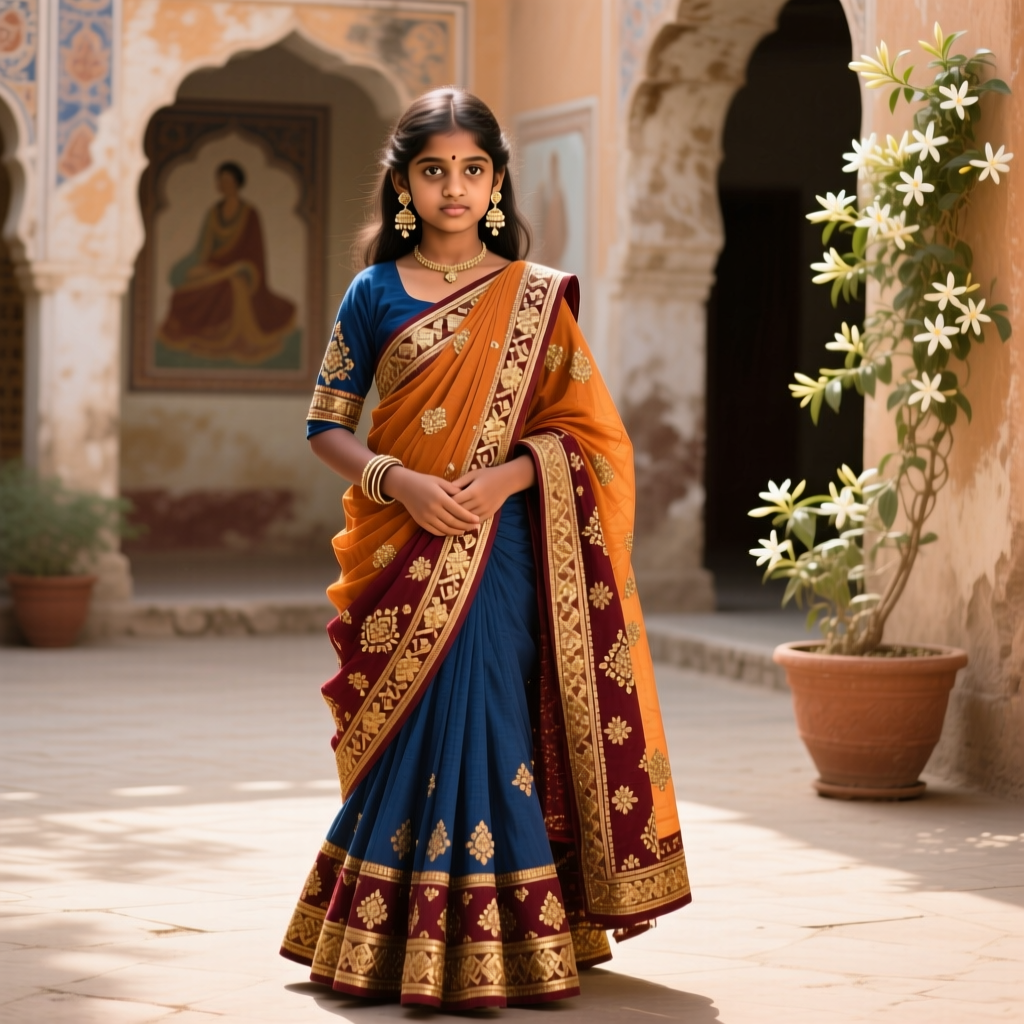
In South India, the traditional dress for young girls is the Pattu Pavadai (or Langa Voni). This is a two-piece garment consisting of a cone-shaped silk skirt (pavadai) and a matching blouse, often accompanied by a contrasting silk scarf or half-saree drape for older girls. The silk used is typically Kanjeevaram or Kanchipuram silk, renowned for its durability, vibrant contrasting borders, and intricate zari (gold thread) motifs. This garment is a cornerstone of South Indian cultural identity and is worn during temple visits and classical dance recitals.
Embellishments & Textiles
What truly sets these garments apart is the textile and the embellishment. Artisans utilize handloom weaving traditions to create fabrics that are not only beautiful but also carry historical weight. Embellishments like Phulkari (floral thread work from Punjab), Chikankari (shadow work from Lucknow), and Bandhani (tie-dye from Gujarat) add layers of texture and meaning. Colors are chosen with intent; red and gold signify auspiciousness, yellow represents knowledge and learning, and green denotes new beginnings and harvest.
Regional Variations Across the Subcontinent
India’s vast geographical and cultural diversity ensures that the traditional dress for an Indian girl varies dramatically from state to state. These regional variations are a testament to the local climate, indigenous raw materials, and the unique historical influences that have shaped each area.
North India: Phulkari & Pahari Elegance
In the northern states of Punjab, Haryana, and Himachal Pradesh, the traditional wardrobe is heavily influenced by the agrarian lifestyle and the chilly winters. Young girls often wear the Patiala salwar, characterized by its numerous pleats and draped silhouette, paired with a short kameez and a Phulkari dupatta. Phulkari, which translates to “flower work,” involves vibrant silk threads embroidered on coarse cotton, creating geometric and floral patterns that are visually striking. In the hilly regions of Himachal, girls wear the Pahari dress, which includes a long tunic, tight trousers, and a distinctive draped shawl pinned at the chest for warmth and modesty.
West India: Bandhani & Mirror Work
The western states of Gujarat and Rajasthan are famous for their exuberant and heavily ornamented children’s wear. In Rajasthan, young girls wear the ghagra, a voluminous skirt made of up to ten meters of fabric, allowing for the swirling movements required during traditional folk dances like Ghoomar. The fabrics are often dyed using the Bandhani technique, where thousands of tiny dots are created by tying the fabric before dyeing. In Gujarat, the Chaniya Choli is the preferred festive wear, heavily adorned with abhla (mirror work) and colorful tassels, reflecting the vibrant, celebratory spirit of the region.
South India: Silk & Temple Borders
As mentioned, the South relies heavily on pure silks and cottons suited for the humid, tropical climate. In Kerala, the traditional attire for young girls during the Onam festival is the Kasavu Mundum Neriyathum, a miniature version of the adult saree featuring an off-white cotton base with a striking gold zari border. In Karnataka and Andhra Pradesh, the Langa Voni is prevalent, with the silk skirts featuring traditional temple borders and motifs inspired by local flora and fauna, such as mangoes (paisley) and peacocks.
East & Northeast India: Handlooms & Tribal Weaves
In East India, particularly West Bengal and Odisha, young girls are often dressed in lightweight cottons and silks like Tant, Baluchari, and Sambalpuri. These fabrics are renowned for their intricate ikat patterns and mythological motifs woven directly into the fabric. Moving to the Northeast, the traditional dress for an Indian girl shifts towards the exquisite handwoven textiles of the indigenous tribes. In Assam, girls wear the Mekhela Sador, a two-piece cylindrical garment woven from Muga or Eri silk, known for its natural golden hue and exceptional warmth. In states like Meghalaya and Nagaland, girls wear handwoven wraparound skirts and shawls that denote their specific tribal identity and clan lineage.
Occasions & Festive Wear
The traditional dress for an Indian girl is intrinsically linked to the calendar of festivals, religious ceremonies, and family milestones. The choice of garment, color, and fabric weight is carefully curated to match the significance of the occasion.
Festivals: Diwali, Navratri & Eid
During Diwali, the festival of lights, girls are dressed in their finest silks and heavily embroidered lehengas, predominantly in auspicious colors like crimson, marigold, and emerald. Navratri, a nine-night festival celebrating the divine feminine, calls for the Chaniya Choli in Gujarat, with each day often associated with a specific color. For Eid, young girls wear exquisite Anarkali suits or Sharara sets, crafted from flowing georgettes, chiffons, and organzas, embellished with delicate thread work and sequins to reflect the joyous, communal nature of the holiday.
Weddings & Sangeet Ceremonies
Indian weddings are multi-day extravaganzas, and young girls play pivotal roles as flower girls, ring bearers, or junior bridesmaids. For the main wedding ceremony, girls typically wear miniature replicas of the bride’s attire, often featuring heavy Zardozi embroidery and real gold jewelry. During the Sangeet (the musical night preceding the wedding), the attire shifts to lighter, more comfortable lehengas or indo-western fusion gowns that allow the girls to participate in choreographed dance performances without being weighed down by heavy fabrics.
Coming-of-Age Ceremonies
One of the most significant sartorial milestones for an Indian girl is her coming-of-age ceremony, known in South India as the Ritu Kala Samskara or Half-Saree function. During this ceremony, the girl transitions from wearing a childhood Pattu Pavadai to a Langa Voni (half-saree). This event marks her entry into young adulthood, and the traditional dress she wears is often a family heirloom or a newly commissioned silk garment that signifies her new status within the family and society. Similarly, in Bengal, the Aashirwad ceremony involves draping the young girl in her first traditional red and white saree, a practice that requires mastering complex saree draping styles.
The Cultural Significance & Modern Adaptations
The traditional dress for an Indian girl is a powerful vessel for cultural transmission. When a mother helps her daughter tie the drawstring of a ghagra or pin the pleats of a half-saree, she is passing down generational knowledge, aesthetic sensibilities, and a sense of belonging. These garments serve as a tangible link to the past, reminding the younger generation of the artisanship and labor that goes into creating their heritage wear.
In an era dominated by fast fashion, there is a growing movement among Indian parents to invest in sustainable, handwoven traditional clothing for their children. By choosing handloom cottons and naturally dyed silks, parents are not only ensuring that their children wear breathable, skin-friendly fabrics but are also actively supporting rural artisan communities and preserving ancient handloom weaving traditions from extinction.
Furthermore, the contemporary era has seen the rise of fusion wear, where traditional elements are blended with modern silhouettes to suit the active lifestyles of young girls. Designers are creating lehenga skirts with elasticated waists paired with crop-top cholis, or salwar kameez sets with pre-stitched, pant-style bottoms. These modern adaptations ensure that the traditional dress for an Indian girl remains relevant, comfortable, and appealing to a generation that values both cultural pride and everyday practicality. The essence of the garment remains untouched, even as its form adapts to the modern world.
Frequently Asked Questions
What is the most common traditional dress for a young Indian girl?
The most common and versatile traditional dress for a young Indian girl is the salwar kameez. It is widely worn across the country for both everyday activities and festive occasions due to its comfort, modesty, and ease of movement. For more formal or highly festive events, such as weddings and major religious festivals, the lehenga choli (or ghagra choli) is the preferred choice. In South India, the Pattu Pavadai (silk skirt and blouse) holds the same level of ubiquity and cultural importance for young girls.
At what age do Indian girls typically start wearing a saree?
There is no strict age mandate, but Indian girls typically begin experimenting with the saree during their mid-to-late teenage years, often coinciding with their coming-of-age ceremonies or high school graduations. Before transitioning to a full saree, girls in many regions wear the “half-saree” (Langa Voni or Ghagra Choli with a dupatta drape), which serves as a transitional garment. Mastering the pleats and the pallu (the loose end of the saree) takes time, and many young women fully adopt the saree as regular wear only in their early twenties or upon marriage, though it is always kept in the wardrobe for major festivals.
How do you choose the right fabric for a child’s traditional outfit?
Choosing the right fabric is crucial for a child’s comfort, especially given the length of Indian festivals and the often warm climate. For summer events and daytime functions, lightweight, breathable fabrics like mulmul cotton, Chanderi, and linen are ideal. They prevent overheating and are gentle on sensitive skin. For winter weddings or evening festivities, richer fabrics like velvet, raw silk, and brocade are appropriate. It is highly recommended to ensure that the inner lining of the outfit is made of pure, soft cotton to prevent any scratching or irritation from heavy zari work, sequins, or stiff synthetic outer fabrics.
What accessories complement traditional Indian girls’ clothing?
Accessories are integral to completing the traditional look. For young girls, jewelry is usually kept lightweight and comfortable. Common pieces include small gold or silver jhumkas (bell-shaped earrings), delicate bangles, and a simple pendant necklace. Hair accessories are also prominent; fresh flowers, particularly jasmine garlands (gajra), are woven into braids or buns, adding a fragrant and classic touch. For the feet, comfortable juttis (traditional leather flats) or mojaris are preferred over heels, ensuring the child can run and play safely while maintaining a cohesive ethnic aesthetic.
How has traditional girls’ clothing evolved in the contemporary era?
In the contemporary era, traditional girls’ clothing has evolved to prioritize comfort and functionality without sacrificing cultural aesthetics. Modern parents and designers favor pre-stitched garments, such as saree-gowns or lehengas with concealed zippers and elastic waists, which allow young girls to dress themselves independently. There is also a significant shift towards sustainable fashion, with a renewed appreciation for organic cottons, natural dyes, and handloom textiles over mass-produced, synthetic alternatives. Additionally, the blending of Western silhouettes with Indian textiles—such as pairing a denim jacket with a cotton salwar kameez—has created a dynamic, Indo-western fusion style that resonates with the modern, globalized youth.