Traditional Clothing at Indian Weddings: A Comprehensive Cultural Guide
Traditional Clothing at Indian Weddings: A Comprehensive Cultural Guide
An Indian wedding is a symphony of color, texture, and symbolism woven into every thread of the garments worn by the bride, groom, and their guests. Far more than mere attire, traditional Indian wedding clothing carries centuries of cultural meaning, regional identity, and artisanal heritage. From the shimmering silk sarees of South India to the heavily embroidered lehengas of the North, each piece tells a story that stretches back through generations of craftsmanship and devotion.
India's wedding traditions are as diverse as its landscape, with each region contributing its own distinctive sartorial language. The subcontinent's history as a crossroads of civilizations — from the Mughal Empire's opulent textile patronage to the ancient Dravidian weaving traditions — has created one of the most varied and magnificent wedding wardrobes in the world. Understanding these garments is not simply an exercise in fashion; it is a window into the values, beliefs, and artistic legacy of one of humanity's oldest living cultures.
This guide explores the origins, characteristics, regional variations, and enduring cultural significance of traditional Indian wedding clothing, offering a thorough reference for anyone planning an Indian wedding, attending one, or simply fascinated by the artistry of heritage garments. For a broader look at South Asian textiles, explore our guide to South Asian textiles and their global influence.
Origins & Evolution of Indian Wedding Attire
The roots of Indian wedding clothing extend deep into the subcontinent's ancient history. Archaeological evidence from the Indus Valley Civilization suggests that draped garments were the norm, with elaborate ornamentation signifying social status and ceremonial importance. The Rigveda, composed thousands of years ago, contains references to fine woven fabrics and the significance of adorning oneself for sacred rituals, including marriage ceremonies.
The evolution of Indian wedding attire accelerated dramatically during the Mughal period, when Persian and Central Asian influences merged with indigenous textile traditions. The Mughal courts introduced structured garments like the angarkha and sherwani, along with sophisticated embroidery techniques such as zardozi (gold thread work), chikankari (shadow work embroidery from Lucknow), and gota patti (ribbon appliqué). These techniques remain cornerstones of Indian bridal and groom wear to this day.
The saree, perhaps the most iconic Indian garment, has been continuously worn for over five millennia, making it one of the oldest surviving garments in human history. Its evolution from a simple three-piece drape described in ancient Sanskrit texts to the elaborately woven, regionally distinct masterpieces seen at modern weddings reflects India's extraordinary textile heritage. Similarly, the salwar kameez and lehenga evolved through centuries of cultural exchange, each iteration adding new dimensions of artistry and meaning.
During the colonial era, Indian wedding clothing became an act of cultural assertion. While Western fashion influenced everyday dress among certain classes, weddings remained a stronghold of traditional attire, with families investing heavily in handwoven silks, hand-embroidered ensembles, and heirloom jewelry. This commitment to heritage garments ensured the survival of countless weaving and embroidery traditions that might otherwise have been lost. Learn more about the preservation of these techniques in our handloom weaving traditions guide.
Essential Bridal Garments: Sarees, Lehengas & Beyond
The Indian bride's wardrobe is among the most elaborate in the world, with multiple outfit changes across several days of ceremonies. Each garment carries specific cultural weight, and the choices a bride makes reflect her family's regional roots, personal aesthetic, and the symbolic language of color and motif.
The Bridal Saree
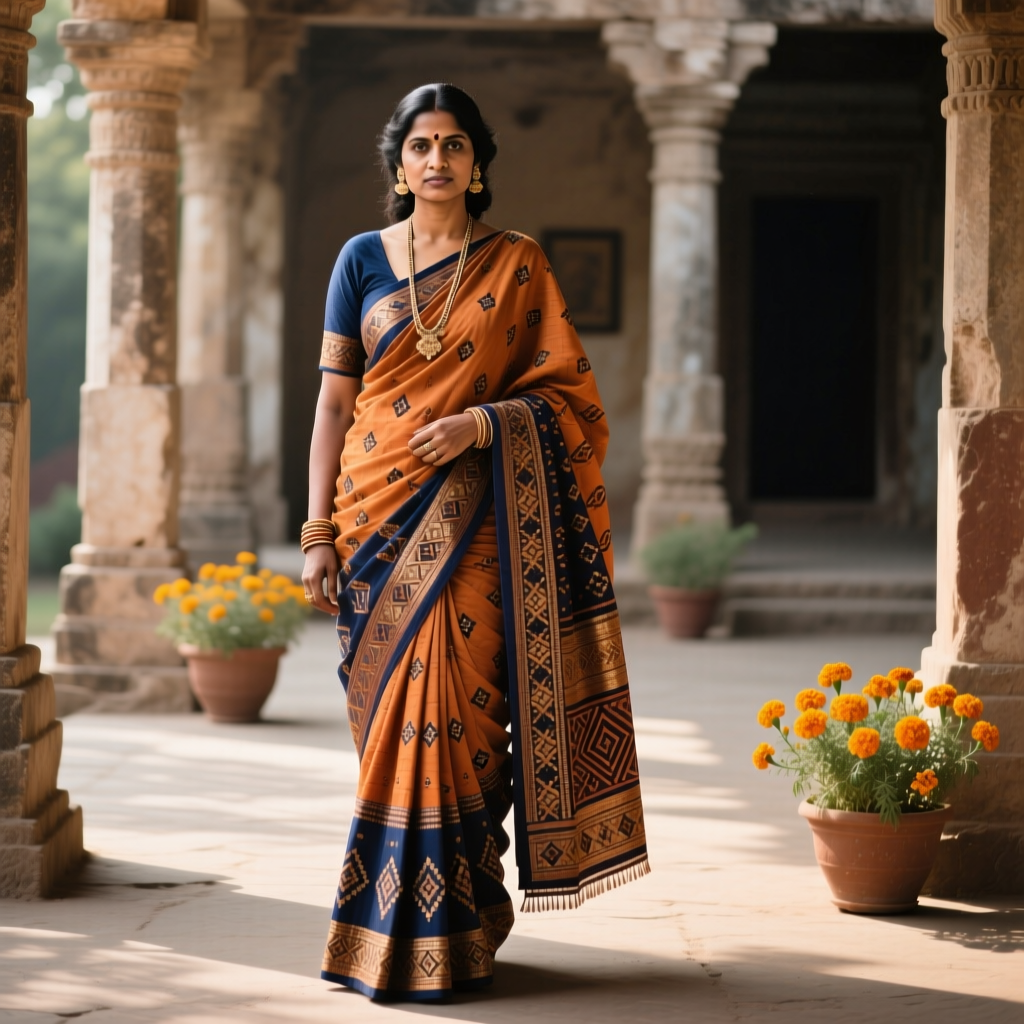
The saree remains the quintessential bridal garment across much of India, particularly in the southern, eastern, and western regions. A bridal saree is distinguished from everyday versions by its weight, the richness of its fabric, and the complexity of its embellishment. Key varieties include:
- Banarasi Silk Saree: Woven in Varanasi, these sarees feature intricate brocade work with gold and silver zari threads. They are considered among the most auspicious bridal garments in Hindu tradition and are prized for their luminous quality and durability. A genuine Banarasi saree can take anywhere from several weeks to over a year to weave by hand.
- Kanjeevaram Silk Saree: Originating from Kanchipuram in Tamil Nadu, these sarees are renowned for their thick silk body, contrasting borders, and temple-inspired motifs. The body and border are woven separately and interlocked with extraordinary precision, creating a seam so strong that even if the saree tears, the border will not separate.
- Paithani Saree: Hailing from Maharashtra, Paithani sarees feature a distinctive peacock motif on the pallu (the decorative end piece) and are woven with a tapestry technique that creates identical patterns on both sides of the fabric.
- Bandhani Saree: Popular in Gujarat and Rajasthan, these sarees employ an intricate tie-dye technique where thousands of tiny dots are created by tying individual points of fabric before dyeing. A bridal Bandhani can contain hundreds of thousands of these dots, arranged in elaborate patterns.
For an in-depth exploration of draping styles across regions, visit our saree draping styles guide.
The Bridal Lehenga
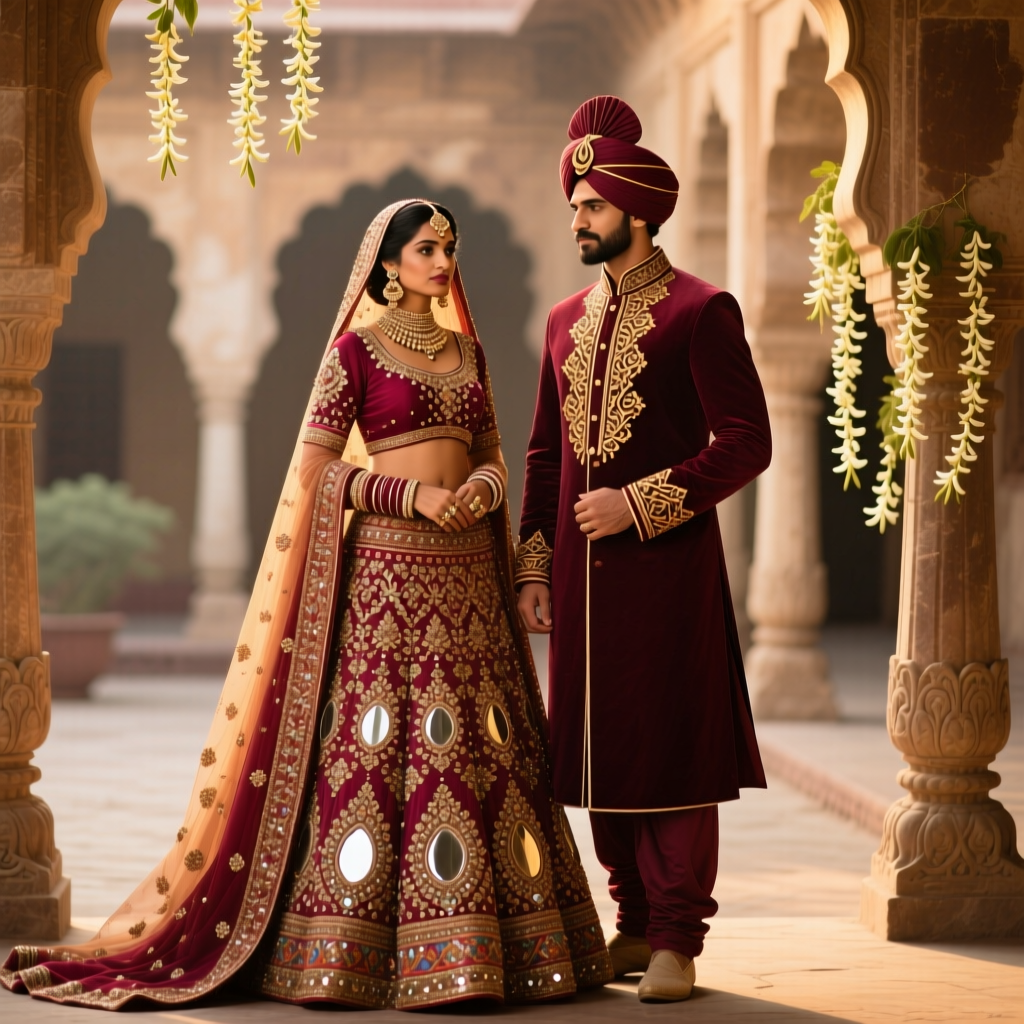
The lehenga — a three-piece ensemble consisting of a flared skirt (lehenga), a fitted blouse (choli), and a draped scarf (dupatta) — has become the dominant bridal outfit in North India and among many contemporary brides worldwide. Its popularity stems from its versatility, comfort during long ceremonies, and the expansive canvas it provides for embroidery and embellishment.
Bridal lehengas are typically crafted from rich fabrics such as raw silk, velvet, organza, or georgette, and are adorned with techniques including zardozi, dabka (spring-like coil embroidery), kundan (stone setting), sequin work, and thread embroidery. The skirt alone can require hundreds of hours of handwork. Design silhouettes range from the traditional A-line and circular cuts to contemporary mermaid and panel styles.
The Salwar Kameez & Anarkali
For pre-wedding ceremonies and certain regional traditions, the salwar kameez and its more formal variant, the Anarkali suit, serve as important bridal garments. The Anarkali, named after the legendary Mughal courtesan, features a long, flowing frock-style top that flares dramatically from the waist or chest, paired with fitted bottoms and a dupatta. It is particularly popular for mehendi and sangeet ceremonies, where the bride needs freedom of movement for dancing and rituals.
Traditional Groom Attire: Sherwanis, Kurtas & Dhotis
The Indian groom's wardrobe is equally rich in tradition and symbolism, though it tends toward a more structured silhouette compared to the flowing drapes of bridal wear. The groom's attire communicates his family's heritage, regional identity, and the formality of the occasion.
The Sherwani
The sherwani is the most formal and widely recognized Indian groom's garment. A long coat-like piece that buttons to the neck and falls to the knees or below, the sherwani evolved from the Mughal court dress and carries an inherent regal quality. Bridal sherwanis are typically made from silk, brocade, or velvet and feature embroidery along the front placket, collar, cuffs, and hem. Common embellishment techniques include zardozi, resham (silk thread embroidery), and stone work.
The sherwani is traditionally paired with a churidar (tightly fitted trousers that gather at the ankle) or a salwar, and is often accessorized with a dupatta draped across the shoulders, an embroidered mojari (traditional footwear), and a sehra (a veil of flowers or beads attached to the turban that covers the groom's face).
The Kurta & Dhoti
For ceremonies that emphasize tradition and simplicity — particularly in South Indian weddings — the groom may wear a kurta (a long tunic) paired with a dhoti (an unstitched garment draped around the lower body). In Tamil Nadu and Kerala, the groom often wears a veshti or mundu (regional variants of the dhoti) with an angavastram (a ceremonial stole) draped over the shoulder. These garments are typically made from fine cotton or silk with gold zari borders.
The Bandhgala & Jodhpuri Suit
The bandhgala, also known as the Jodhpuri suit, originated in the royal courts of Rajasthan and offers a more tailored, structured alternative to the sherwani. Featuring a closed collar and a shorter length, it bridges the gap between traditional Indian and Western formal wear. It is often chosen for reception events or by grooms who prefer a more contemporary silhouette while maintaining cultural authenticity. Discover more about structured traditional menswear in our guide to traditional Indian menswear.
Regional Variations Across India
India's enormous geographic and cultural diversity means that wedding attire varies dramatically from state to state, community to community, and even between neighboring villages. Understanding these regional distinctions is essential for anyone seeking to appreciate the full breadth of Indian wedding clothing.
North India
North Indian weddings — encompassing Punjab, Delhi, Uttar Pradesh, Rajasthan, and surrounding states — are characterized by opulent, heavily embellished garments. Brides typically wear red or maroon lehengas with extensive zardozi work, while grooms favor ornate sherwanis. Rajasthani brides may wear poshak, a traditional ensemble with a specific draping style, and borla jewelry on the forehead. Punjabi brides often wear a salwar kameez or lehenga with a distinctive phulkari (flower embroidery) dupatta, often an heirloom piece embroidered by female relatives over months or years.
South India
South Indian weddings favor silk sarees above all else. Tamil brides wear Kanjeevaram silk sarees in rich jewel tones — deep reds, greens, and golds — with heavy gold jewelry including the iconic temple jewelry set. Kerala brides traditionally wear the Kasavu saree, a cream-colored cotton or silk saree with a gold border, reflecting the state's aesthetic of understated elegance. Karnataka brides may wear the Navari saree, a nine-yard drape that allows for freedom of movement during rituals. South Indian grooms typically wear a silk dhoti with an angavastram, often in coordinating colors with the bride's saree.
East India
In West Bengal, the bride wears a red or white-and-red Banarasi or Baluchari silk saree, with the distinctive mukut (crown) made from pith or shola. The Bengali bridal look includes elaborate alata (red dye) on the hands and feet and the shakha-pola bangles (conch shell and coral). Odisha brides wear red sarees with intricate ikat patterns, while Assamese brides don the mekhela chador, a two-piece garment woven from the region's distinctive muga (golden) silk. Explore the unique textile heritage of Eastern India in our Eastern Indian textiles guide.
West India
Gujarati brides traditionally wear a panetar saree (white with a red border) for the wedding ceremony and a gharchola saree (a bandhani saree with woven grid patterns filled with zari motifs) for post-wedding rituals. Rajasthani bridal wear is among the most colorful in India, with vivid oranges, pinks, and yellows featuring prominently alongside mirror work, gota patti, and lac jewelry. Maharashtrian brides wear a nine-yard Paithani or Nauvari saree draped in the kasta style, resembling a dhoti, and adorn themselves with the distinctive nath (nose ring) and mundavalya (a string of pearls across the forehead).
Northeast India
The eight states of Northeast India each possess unique wedding attire that reflects their distinct tribal and cultural identities. Manipuri brides wear the potloi, a stiff cylindrical skirt decorated with sequins and mirrors, paired with a kumin potloi blouse. Naga brides wear handwoven shawls with patterns specific to their clan, while Mizo brides don the puan, a intricately woven wraparound skirt with vibrant stripes and motifs.
Cultural Significance & Symbolism of Wedding Garments
Every element of traditional Indian wedding clothing carries layers of meaning that extend far beyond aesthetics. Color, fabric, motif, and draping style all communicate specific messages about the couple's identity, aspirations, and the blessings invoked upon their union.
The Language of Color
Red is the most auspicious color for Hindu brides across much of India, symbolizing prosperity, fertility, and the divine feminine energy of Shakti. However, the specific shade and its significance vary by region. In Bengal, the combination of red and white (lal paar) represents purity and prosperity. In South India, turmeric yellow and kumkum red dominate, reflecting the ceremonial use of these sacred substances. Green holds special significance in Muslim and some South Indian wedding traditions, representing paradise and new beginnings. White, while traditionally associated with mourning in many Hindu communities, is the preferred bridal color in Kerala and among Christian Indian brides.
Sacred Motifs & Patterns
Indian wedding garments are adorned with motifs drawn from a vast symbolic vocabulary. The mango or paisley pattern (ambi) represents fertility and abundance. Peacocks signify beauty, love, and the divine. Lotus flowers represent purity and spiritual awakening. Elephants symbolize strength, royalty, and good fortune. Temple borders on Kanjeevaram sarees invoke divine protection. These motifs are not merely decorative; they function as a visual prayer, embedding blessings directly into the fabric of the garment.
Heirloom Traditions
In many Indian families, wedding garments are passed down through generations, creating a tangible link between ancestors and the new couple. A grandmother's Kanjeevaram saree, a mother's phulkari dupatta, or a father's embroidered shawl may be worn or incorporated into the bride or groom's outfit, carrying the emotional weight and blessings of previous unions. This practice reflects the Indian cultural understanding of marriage not as an individual event but as a continuation of a family's story across time.
The Role of Handloom & Artisan Communities
Indian wedding clothing sustains an enormous ecosystem of artisan communities whose skills have been honed over centuries. From the silk weavers of Kanchipuram and Varanasi to the zardozi artisans of Lucknow, the bandhani tie-dyers of Kutch, and the chikankari embroiderers of Lucknow, these craftspeople are the living custodians of traditions recognized by UNESCO and other heritage organizations. Choosing handwoven and handcrafted wedding garments is not only a cultural statement but a direct investment in the survival of these irreplaceable artisanal traditions. Learn more about these communities in our guide to artisan communities in India.
Guest Attire & Etiquette
Understanding what to wear as a guest at an Indian wedding is equally important. Guests are encouraged to wear traditional or semi-traditional Indian clothing — women may opt for sarees, lehengas, or Anarkali suits, while men may wear kurtas, bandhgalas, or sherwanis. It is customary to avoid wearing red (reserved for the bride) and black (considered inauspicious in many communities). Dressing modestly, covering shoulders and legs, is expected, particularly during temple ceremonies. The vibrant palette of an Indian wedding is a collective celebration, and guests contribute to the visual splendor through their own thoughtfully chosen attire.
Frequently Asked Questions
What is the difference between a lehenga and a saree for a wedding?
A lehenga is a three-piece stitched ensemble consisting of a flared skirt, fitted blouse, and dupatta, while a saree is an unstitched length of fabric (typically five to nine yards) draped around the body. Lehengas are generally preferred in North Indian weddings and offer more ease of movement, while sarees dominate South, East, and West Indian bridal traditions and carry deeper ceremonial significance in those regions. Many brides incorporate both into their wedding wardrobe, wearing a lehenga for the main ceremony or reception and a saree for religious rituals.
Why do Indian brides wear red?
Red is considered the most auspicious color in Hindu tradition, associated with the goddess Durga and representing power, prosperity, fertility, and marital bliss. In Vedic astrology, red is linked to Mars, the planet that governs marriage. The color is also believed to ward off evil and attract positive energy. However, not all Indian brides wear red — Kerala brides favor white and gold, Assamese brides wear golden muga silk, and Christian Indian brides often choose white. The choice of color is deeply personal and influenced by regional, religious, and family traditions.
What should a groom wear to different Indian wedding ceremonies?
Indian weddings typically span multiple days, each with its own dress code. For the sangeet (musical evening), a groom might wear a lighter kurta with embroidered details or an Indo-Western outfit. The haldi ceremony calls for simple cotton kurtas, often in yellow, as turmeric paste is applied during the ritual. The main wedding ceremony demands the most formal attire — a sherwani, bandhgala, or traditional dhoti-kurta depending on regional customs. The reception allows for slightly more contemporary choices, including a bandhgala or a well-tailored Indo-Western ensemble. Coordinating with the bride's outfit in terms of color palette is traditional and creates a harmonious visual narrative.
How do I choose the right fabric for an Indian wedding garment?
Fabric choice depends on the season, ceremony type, and regional tradition. For summer weddings, lighter fabrics like georgette, chiffon, organza, and fine cotton provide comfort without sacrificing elegance. Winter weddings allow for richer fabrics such as velvet, raw silk, brocade, and heavy Kanjeevaram or Banarasi silks. Consider the venue as well — outdoor ceremonies in warm weather call for breathable fabrics, while indoor, air-conditioned venues accommodate heavier materials. Always prioritize the quality of the weave and the authenticity of the textile; a genuine handloom silk will drape, feel, and age far better than a power-loom imitation. For guidance on identifying quality textiles, see our guide to identifying authentic handloom fabrics.
Can non-Indian guests wear traditional Indian clothing to a wedding?
Absolutely — and it is generally appreciated and welcomed. Indian hosts are typically delighted when guests from other cultures embrace traditional attire, as it reflects respect for and engagement with the culture. Women can opt for a pre-stitched saree (which eliminates the complexity of draping), a lehenga, or an Anarkali suit. Men can wear a kurta-pajama set or a bandhgala. The key is to choose garments that are modest, well-fitted, and in appropriate colors (avoiding red and black). Purchasing from authentic Indian designers or artisans not only ensures quality but also supports the craft communities that sustain these traditions. If you are unsure, asking the hosts for guidance is perfectly acceptable and often leads to a wonderful exchange of cultural knowledge.
Traditional Indian wedding clothing is a living art form — one that connects the present moment to millennia of cultural wisdom, artistic mastery, and human celebration. Whether you are a bride selecting your trousseau, a groom honoring your heritage, or a guest stepping into this vibrant world for the first time, understanding the depth and meaning behind these garments transforms the experience from simply wearing clothes to participating in one of humanity's most beautiful and enduring traditions.