Traditional Clothing for Chinese Men: A Comprehensive Cultural Guide
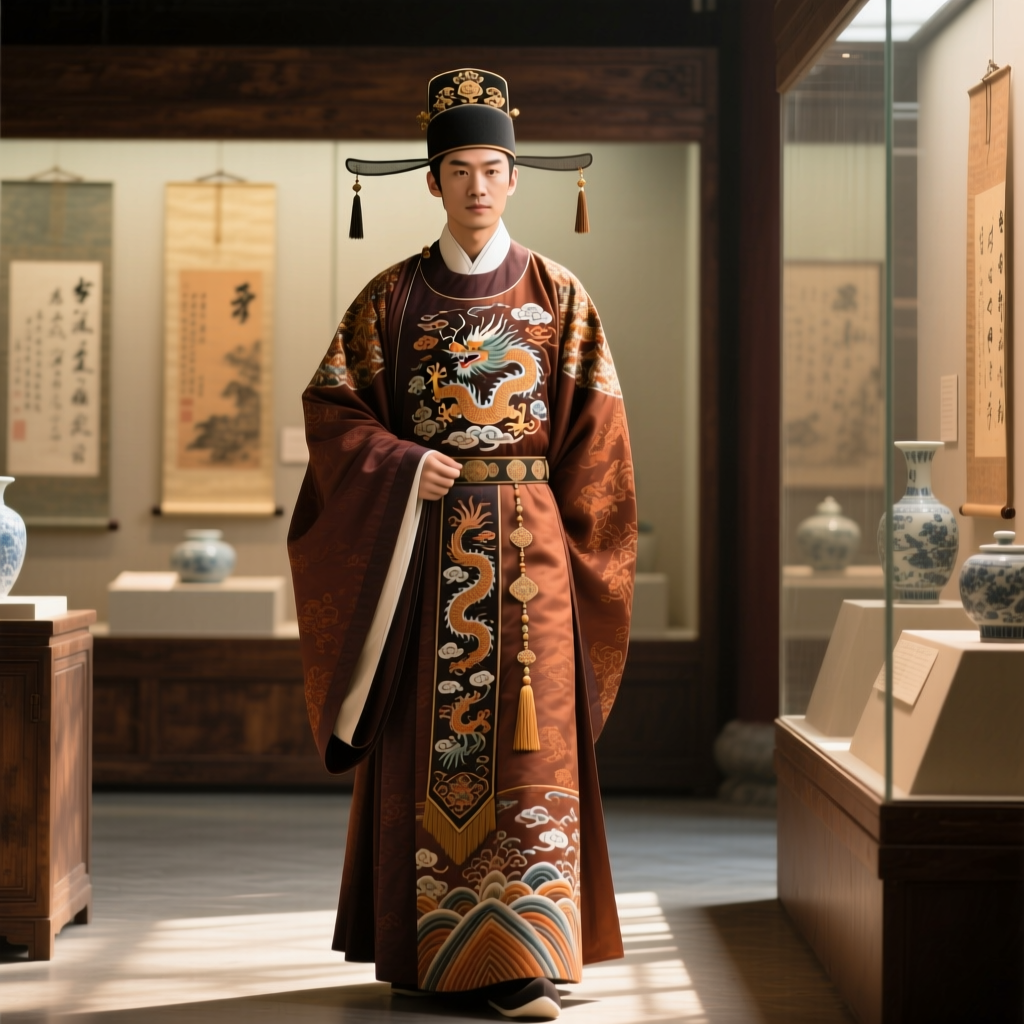
For thousands of years, the clothing worn by Chinese men has served as far more than mere protection from the elements. Each fold of silk, each carefully chosen color, and every embroidered motif has carried deep cultural meaning — signaling social rank, philosophical beliefs, regional identity, and the wearer's place within the cosmic order. From the flowing robes of ancient scholars to the refined changshan of the Qing Dynasty, traditional Chinese men's clothing represents one of the most sophisticated and symbolically rich sartorial traditions in human history.
Understanding these garments requires more than a surface-level appreciation of their aesthetics. It demands an exploration of the dynasties that shaped them, the philosophies that informed their design, and the cultural values they were created to express. Whether you are a student of fashion history, a cultural enthusiast, or someone seeking to reconnect with heritage, this guide offers a thorough journey through the world of traditional clothing for Chinese men.
Origins and Historical Evolution of Chinese Men's Traditional Clothing
The story of traditional Chinese men's clothing stretches back over three millennia, weaving through the rise and fall of dynasties, the influence of competing philosophies, and the constant interplay between native Han traditions and the dress of conquering or neighboring peoples. To understand what Chinese men wore — and why — we must travel through the major eras that defined these garments.
The Foundations: Shang and Zhou Dynasties
The earliest recognizable forms of Chinese men's clothing emerged during the Shang Dynasty (c. 1600–1046 BCE) and were codified during the Zhou Dynasty (c. 1046–256 BCE). Men typically wore a narrow-cuffed, knee-length tunic called a yi paired with a long, narrow skirt known as a chang. A wide sash held the ensemble together at the waist. This basic two-piece construction — top and bottom — reflected the early Chinese philosophical principle of duality: heaven and earth, upper and lower, yang and yin.
During the Zhou period, clothing became deeply intertwined with ritual and social hierarchy. The li (rites) system prescribed specific garments for specific occasions, ranks, and ceremonies. Jade pendants, elaborate caps, and the length of one's robe all communicated precise social information. Confucius himself championed the idea that proper dress was essential to moral order, a belief that would influence Chinese sartorial culture for centuries.
The Han Dynasty and the Birth of Hanfu
The Han Dynasty (206 BCE – 220 CE) gave its name to China's majority ethnic group and to their most iconic garment: the hanfu. This period saw the full development of the cross-collared robe (jiaoling youren), in which the left side of the garment crossed over the right and was secured with a sash. This right-over-left closure became a defining marker of Han civilization — reversing it was associated with barbarian peoples and the dead.
Han Dynasty men's robes were expansive and flowing, often featuring wide sleeves that conveyed a sense of dignity and leisure. The fabric, color, and ornamentation of these robes were strictly regulated. High-ranking officials wore silk in prescribed colors, while commoners were generally restricted to hemp or ramie cloth in muted tones. The guan (cap) was equally important — a man's headwear identified his profession, rank, and social standing with remarkable precision.
Tang, Song, and Ming: Refinement and Renaissance
The Tang Dynasty (618–907 CE) introduced an era of cosmopolitan openness. Men's clothing became more varied, incorporating influences from Central Asian and Persian cultures through the Silk Road. The round-collar robe (yuanlingpao) gained popularity among officials and noblemen, often worn with a leather belt and boots — a departure from the purely Han tradition of sashes and cloth shoes.
The Song Dynasty (960–1279 CE) brought a return to more conservative, understated elegance. Men's robes became simpler in cut and more restrained in color, reflecting the influence of Neo-Confucianism. Scholars and literati favored the lan shan, a long, straight-hemmed robe with a straight collar that projected intellectual refinement.
The Ming Dynasty (1368–1644 CE) represented a conscious revival of Han traditions after the Mongol-led Yuan Dynasty. Ming emperors reestablished classical Han clothing codes, and the era produced some of the most elaborate and finely crafted men's robes in Chinese history. The daopao, a long robe with side slits and flowing sleeves, became a signature garment for scholars and gentlemen. For more on how different cultures approached robe construction, see our guide on traditional robes across cultures.
The Qing Dynasty and the Changshan
When the Manchu-led Qing Dynasty (1644–1912 CE) took power, they imposed their own dress codes on Han Chinese men. The changshan (long shirt) and magua (riding jacket) replaced the flowing Han robes. These garments were more fitted, with Mandarin collars and frog button fastenings — design elements that remain iconic in Chinese fashion today. The queue hairstyle, in which the front of the head was shaved and the back hair grown long and braided, was mandated as well.
Over time, the changshan evolved into a garment embraced across ethnic lines, eventually becoming a symbol of Chinese masculine elegance in its own right. By the late Qing and early Republican periods, the changshan paired with a magua jacket was considered standard formal wear for Chinese men.
Key Garments and Their Defining Characteristics
Traditional Chinese men's clothing encompasses a diverse wardrobe of garments, each with distinct construction methods, silhouettes, and symbolic elements. Understanding these individual pieces is essential to appreciating the tradition as a whole.
The Hanfu
The hanfu is the ancestral clothing of the Han Chinese people and the oldest continuous clothing tradition associated with Chinese men. Its defining features include:
- Cross collar (jiaoling): The left panel wraps over the right, forming a Y-shaped neckline that is perhaps the single most recognizable element of traditional Han dress.
- Wide sleeves: Sleeves are cut generously, often extending beyond the hands, creating an elegant, flowing silhouette that conveys dignity and refinement.
- Sash closure: Rather than buttons, hanfu garments are secured with fabric sashes tied at the waist, allowing for adjustable fit and graceful draping.
- Flat cutting: Unlike Western tailoring, which shapes fabric to the body's curves, hanfu is cut from flat panels of fabric, honoring the integrity of the textile and creating a more fluid drape.
A complete hanfu ensemble for men typically includes an inner garment (zhongyi), a main robe or jacket-and-skirt combination, and various accessories such as jade pendants, a folding fan, and a formal cap. The depth and complexity of a hanfu outfit can be explored further in our complete guide to hanfu.
The Changshan (Long Shirt)
The changshan is a long, straight-cut shirt or robe that falls to the knees or below. Originating from Manchu dress, it features:
- Mandarin collar: A short, unfolded stand-up collar that frames the neck cleanly.
- Frog buttons (pankou): Decorative knotted closures made from fabric or cord, serving both functional and ornamental purposes.
- Side slits: Openings along the side seams that allow for ease of movement, a practical feature inherited from horseback-riding culture.
- Straight silhouette: The changshan hangs straight from the shoulders, creating a lean, vertical line that elongates the figure.
The changshan is typically worn with straight-legged trousers and cloth shoes. For formal occasions, it is paired with a magua — a short, hip-length jacket with a Mandarin collar that adds a layer of formality and warmth.
The Tangzhuang (Tang Suit)
Despite its name, the tangzhuang is not a garment from the Tang Dynasty. It is a modern jacket style that blends Manchu-era design elements with Western tailoring techniques. The tangzhuang features a Mandarin collar, frog button closures, and a relaxed, boxy fit. It is commonly made from silk brocade and is popular for festive occasions, particularly Lunar New Year celebrations. The tangzhuang gained international recognition when world leaders wore matching versions at an Asia-Pacific Economic Cooperation summit, sparking renewed interest in Chinese-inspired menswear.
The Shenyi (Deep Robe)
The shenyi is a one-piece robe that connects the upper and lower garments into a single piece, symbolizing the unity of heaven and humanity. Historically worn by scholars and officials, the shenyi features a cross collar, wide sleeves, and a deep, enveloping cut. It was considered the most formal and philosophically significant garment in the Confucian dress code, embodying the virtues of propriety, restraint, and moral cultivation.
Occasions and Contexts for Wearing Traditional Garments
Traditional Chinese men's clothing was never a one-size-fits-all affair. Different garments were prescribed for different occasions, and wearing the wrong clothing to a particular event could be a serious social faux pas — or worse, a violation of imperial law.
Court and Official Dress
Throughout Chinese history, court dress represented the pinnacle of sartorial regulation. Officials were assigned specific robes based on their rank, with distinctions encoded in color, fabric, embroidery motifs, and accessories. During the Ming Dynasty, for example, civil officials wore robes embroidered with birds (cranes, golden pheasants, peacocks) to denote rank, while military officials wore animal motifs (lions, tigers, leopards). These embroidered badges, known as buzi or rank badges, were sewn onto the front and back of official robes and served as instantly readable insignia of authority.
The emperor's ceremonial robes were the most elaborate of all, adorned with the twelve symbols of sovereignty — including dragons, the sun, the moon, mountains, and sacred grains — each representing a facet of imperial virtue and cosmic authority.
Scholarly and Everyday Wear
Outside the court, educated men — scholars, poets, and literati — cultivated a distinctive style that emphasized simplicity, natural fabrics, and understated elegance. The ideal scholar's wardrobe reflected Confucian and Daoist values: restraint, harmony with nature, and an emphasis on inner virtue over outward display. A scholar might wear a plain cotton or silk daopao in muted earth tones, accessorized with a jade pendant, a folding fan, and a carefully chosen cap. This aesthetic of cultivated simplicity remains influential in East Asian fashion philosophy today.
Ceremonial and Festival Clothing
Weddings, ancestral rites, religious ceremonies, and seasonal festivals each called for specific traditional garments. At weddings, grooms traditionally wore red or crimson robes — red being the color of joy, prosperity, and good fortune in Chinese culture. Dragon motifs were common on wedding garments, symbolizing masculine power and imperial energy. For ancestral worship and Confucian rites, men wore formal dark-colored robes with restrained ornamentation, reflecting the solemnity and reverence of the occasion.
During the Lunar New Year and other festivals, men would wear their finest clothing, often in auspicious colors and patterns. The tangzhuang has become particularly popular in modern times as festive wear, bridging the gap between historical tradition and contemporary celebration.
Mourning Dress
Mourning clothing in traditional Chinese culture was governed by an extraordinarily detailed system known as the wufu (five degrees of mourning). Depending on the mourner's relationship to the deceased, men wore coarse hemp robes of varying roughness for prescribed periods ranging from three months to three years. The roughest, most unrefined fabric was reserved for a son mourning his father, reflecting the depth of grief through the deliberate rejection of comfort and beauty. This system underscored the centrality of filial piety in Chinese culture and demonstrated how clothing could serve as a visible language of emotion and social obligation.
Regional Variations and Ethnic Influences
China's vast geography and extraordinary ethnic diversity have produced significant regional variations in men's traditional clothing. What holds true for one province or ethnic group may not apply to another, and these differences enrich the broader tapestry of Chinese sartorial heritage.
Northern China
In the colder northern regions, traditional men's clothing tended to be heavier, more layered, and constructed from thicker fabrics such as wool and padded cotton. The influence of nomadic peoples — Mongols, Manchus, and various Turkic groups — is evident in the adoption of boots, trousers designed for horseback riding, and fitted jackets with narrow sleeves. The changshan and magua combination, which originated from Manchu culture in the northeast, is in many ways a northern contribution that became nationally adopted.
Southern China
Southern Chinese men's traditional clothing reflected the warmer, more humid climate. Garments were lighter, often made from fine silk, ramie, or cotton, with looser fits that promoted airflow. In regions like Guangdong and Fujian, shorter jackets and wider trousers were common for working men, while scholars and merchants adopted lighter versions of the standard literati robes. The influence of maritime trade also introduced Southeast Asian and European textile influences into southern coastal dress.
Ethnic Minority Traditions
China's 55 officially recognized ethnic minorities each maintain distinctive clothing traditions. Tibetan men's traditional dress includes the chuba, a long, thick robe worn with one sleeve draped off the shoulder — a practical adaptation to the extreme temperature fluctuations of the Tibetan plateau. Mongolian men wear the deel, a long robe secured with a wide sash, often made from richly colored silk or brocade and designed for life on horseback. Miao, Yi, and Zhuang men each have their own traditional garments, often featuring intricate embroidery, silver ornaments, and indigo-dyed fabrics that carry deep symbolic meaning within their respective cultures.
These regional and ethnic variations remind us that "Chinese traditional clothing" is not a monolith but a rich mosaic. For more on how geography shapes dress, explore our article on how geography influences traditional clothing.
Cultural Significance and Modern Revival
Traditional Chinese men's clothing carries layers of cultural meaning that extend far beyond aesthetics. Every element — from the direction of the collar fold to the number of claws on an embroidered dragon — was historically laden with significance.
Philosophical Underpinnings
Confucianism, Daoism, and Buddhism have each left their mark on Chinese men's dress. Confucian thought emphasized that clothing was a visible expression of moral order and social harmony. Proper dress was not vanity — it was virtue made visible. The li (rites) system dictated that a man's clothing should reflect his role, relationships, and responsibilities. Daoism contributed an appreciation for natural materials, flowing forms, and the beauty of simplicity — values expressed in the scholar's preference for unadorned robes in natural tones. Buddhism introduced the kasaya robe and influenced the development of more austere, contemplative styles of dress among monks and devout laymen.
Color Symbolism
Color in traditional Chinese men's clothing was never arbitrary. Red symbolized fire, joy, and good fortune — making it the color of weddings and celebrations. Yellow was reserved for the emperor, representing the center of the cosmos and the earth element. Black was associated with water and the north, and was often worn by officials in certain dynasties. White, contrary to Western associations, was the color of mourning and death. Green and blue represented wood, spring, and growth. These associations were not merely decorative — they connected the wearer to the Five Elements (wuxing) cosmological system and were believed to influence fortune and harmony.
The Modern Hanfu Movement
In recent decades, a remarkable cultural phenomenon has emerged: the hanfu revival movement. Young Chinese men and women have begun wearing traditional hanfu in daily life — on city streets, in universities, at workplaces, and across social media. This movement represents a desire to reconnect with pre-Qing Han cultural identity and to reclaim a clothing tradition that was largely abandoned during the upheavals of the 20th century.
The revival is not without debate. Questions about historical accuracy, cultural appropriation versus appreciation, and the relationship between tradition and modernity are actively discussed within the community. Nonetheless, the sight of young men wearing cross-collared robes and flowing sleeves in modern urban settings demonstrates that traditional Chinese clothing is not a museum relic but a living, evolving tradition. Learn more about how traditional garments are being reimagined in our piece on the revival of traditional garments.
Traditional Clothing in Contemporary Formal Settings
Today, traditional Chinese men's garments occupy a special place in formal and ceremonial contexts. The changshan and tangzhuang are widely worn at weddings, cultural festivals, and diplomatic events. Martial arts practitioners often wear simplified traditional garments during practice and performance. In the performing arts — Chinese opera, traditional music, and dance — historically accurate costumes are essential to the art form. The continued presence of these garments in public life ensures that the knowledge, craftsmanship, and cultural memory they embody are passed to future generations.
Frequently Asked Questions
What is the difference between hanfu and changshan?
The hanfu is the traditional clothing of the Han Chinese people, characterized by cross collars, wide sleeves, and sash closures, with a history spanning over three thousand years. The changshan, by contrast, originated from Manchu dress during the Qing Dynasty and features a Mandarin collar, frog button closures, and a straighter, more fitted silhouette. While the hanfu represents the indigenous Han clothing tradition, the changshan reflects the sartorial influence of the Manchu rulers and has become a widely recognized symbol of Chinese men's formal wear in modern times.
Is it appropriate for non-Chinese people to wear traditional Chinese clothing?
Generally, wearing traditional Chinese clothing is welcomed as an expression of cultural appreciation when done respectfully and with understanding. Many Chinese people are pleased to see others taking an interest in their cultural heritage. The key is to approach these garments with genuine respect — learning about their significance, wearing them appropriately for the context, and avoiding caricature or mockery. Attending a Chinese cultural festival, participating in a traditional ceremony at the invitation of hosts, or studying Chinese martial arts are all contexts where wearing traditional garments is appropriate and appreciated.
Where can I buy authentic traditional Chinese men's clothing?
Authentic traditional Chinese men's clothing can be sourced from several types of vendors. Specialized hanfu retailers — both online and in major Chinese cities — offer historically informed reproductions in a range of price points. For changshan and tangzhuang, many Chinatown districts around the world have tailors and shops that produce these garments. Online marketplaces also carry a wide selection, though buyers should research sellers carefully to ensure quality fabrics and construction. For the best results, seek out vendors who specialize specifically in traditional Chinese clothing rather than general costume suppliers. Our guide to finding traditional Asian garments provides additional sourcing tips.
What fabrics are traditionally used in Chinese men's clothing?
Silk has always been the most prestigious fabric in Chinese clothing, reserved historically for the wealthy and high-ranking. Different types of silk — including brocade, damask, satin, and gauze — were used for different seasons and occasions. For common people, hemp, ramie, and later cotton were the standard fabrics. Wool was used primarily in northern regions. The choice of fabric was not merely practical but deeply symbolic: silk represented civilization, refinement, and China itself (which was known to the ancient world as the land of silk). Today, traditional garments are available in both authentic natural fabrics and modern synthetic blends, allowing wearers to balance tradition, comfort, and budget.
How did traditional Chinese men's clothing influence neighboring cultures?
Chinese men's clothing had a profound influence on the traditional dress of neighboring East Asian cultures. The Japanese kimono evolved from Tang Dynasty Chinese robes, retaining the cross-collar closure and flat-cut construction. Korean hanbok shares structural similarities with Chinese garments, particularly in the cross-collar upper robe and the use of silk sashes. Vietnamese áo dài, while distinctly Vietnamese, reflects centuries of Chinese sartorial influence in its Mandarin collar and front-closure design. These connections illustrate how Chinese clothing traditions served as a foundational reference point for an entire cultural sphere — a legacy that continues to shape East Asian fashion identity. For a deeper look at these connections, visit our exploration of East Asian clothing connections.