Anatomy of a Typical German Outfit: Materials and Craft

The Myth of the "Typical" German Outfit
When the global public searches for a "typical german outfit," the mind often conjures images of mass-produced, synthetic Oktoberfest costumes. However, true German folk dress—known collectively as Tracht—is a living, breathing testament to regional identity, historical craftsmanship, and masterful material science. To understand the anatomy of authentic German Tracht, particularly the world-renowned Bavarian and Alpine styles, one must look past the caricature and examine the meticulous artisanship of the Säckler (leatherworker) and the Miedermeister (bodice maker).
Unlike static historical costumes (Kostüm), authentic Tracht evolves while strictly adhering to traditional construction methods and natural materials. From the brain-tanned leathers of the Alps to the hand-pleated linens of the Black Forest, every stitch of a genuine typical German outfit carries profound cultural and geographical significance.
Lederhosen: Tanning, Embroidery, and Alpine Leathercraft
The cornerstone of traditional men’s Alpine wear is the Lederhose (plural: Lederhosen). Authentic pairs are not merely leather shorts; they are masterpieces of the Säckler trade, a guild with roots stretching back to the Middle Ages. The craftsmanship begins with the selection of the hide.
The Art of Sämischleder
Genuine Lederhosen are crafted from Hirschleder (deer leather) or Gamsleder (chamois). These hides undergo a traditional chamois tanning process known as Sämischgerbung. This involves using emulsified animal fats or fish oils to cure the leather, followed by a meticulous smoking process over pine or beechwood. This ancient technique yields a leather that is incredibly soft, breathable, and naturally water-resistant. Unlike chrome-tanned commercial leathers, Sämischleder develops a rich patina over time, absorbing the oils and wear of its owner, making each pair entirely unique.
The Säcklernaht and Regional Embroidery
The structural hallmark of authentic Lederhosen is the Säcklernaht, a raised, overlapping seam stitched by hand using heavily waxed linen thread. This technique ensures the seams are virtually indestructible, a necessity for the hunters and woodsmen who originally wore them.
The embroidery, or Stickerei, is never arbitrary. It serves as a regional signifier. The Latze (front drop-flap) and the side panels feature motifs native to the wearer’s specific valley. Common motifs include the Edelweiss (alpine star), Enzian (gentian), and Eichenlaub (oak leaves). Master artisans use the Plattstich (satin stitch) with silk or heavy cotton thread, ensuring the embroidery stands proud against the supple leather.
The Dirndl: Textile Weights, Tailoring, and Regional Signifiers
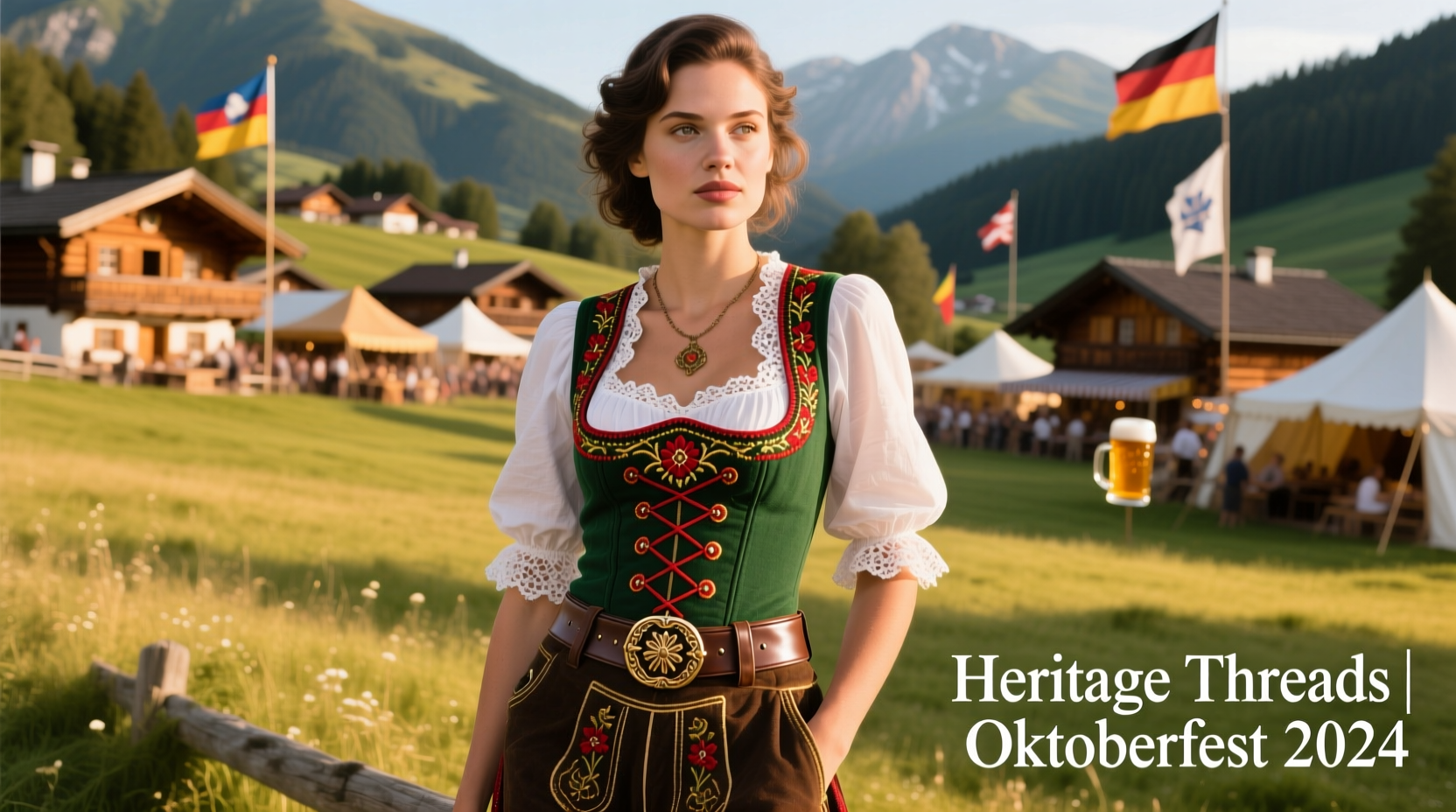
The women’s counterpart, the Dirndl, is frequently misunderstood as a simple peasant dress. In reality, a true Dirndl is a complex, four-piece ensemble consisting of the Mieder (bodice), Bluse (blouse), Rock (skirt), and Schürze (apron). The craftsmanship required to tailor a high-quality Dirndl is immense, requiring an intimate understanding of textile behavior and structural tailoring.
The Mieder: Boning and Structure
The Mieder is the architectural core of the outfit. Historically crafted by specialized Miedermeister, the bodice is heavily structured to provide support and create the traditional silhouette. Authentic bodices utilize spiral steel bones encased in cotton twill channels, rather than the rigid plastic boning found in commercial costumes. The front closure is traditionally fastened with a silver chain laced through silver or horn hooks (Haken), or secured with a row of cast pewter buttons. The neckline—whether round, square, or heart-shaped—is often finished with a hand-piped edge or delicate Froschgoschl (frog-mouth) pleating.
The Rock (skirt) is where the mastery of fabric manipulation truly shines. Authentic Dirndl skirts are constructed from high-quality natural fibers: mid-weight linen for summer, fine merino wool for winter, or silk brocade for festive occasions. The skirt is attached to the bodice using cartridge pleating (Kellerfalten or Patronenfalten), a technique that gathers a massive circumference of fabric (often 3 to 4 meters) into a tight, structured waistband without adding bulk. This allows the skirt to swing dynamically while maintaining a crisp, tailored drape.
Material Comparison: Authentic Tracht vs. Fast-Fashion Costumes
To truly appreciate the craftsmanship of a typical German outfit, one must contrast genuine artisanal Tracht with the mass-produced costumes exported globally. The differences in material integrity and construction are stark.
| Feature | Authentic Artisan Tracht | Commercial Fast-Fashion Costume |
|---|---|---|
| Leather (Lederhosen) | Brain/Fat-tanned Deer or Chamois (Sämischleder); smoked; breathable. | Chrome-tanned cowhide or synthetic PU leather; stiff; non-breathable. |
| Seams | Hand-stitched Säcklernaht with waxed linen; raised and reinforced. | Machine lockstitch using polyester thread; flat and prone to tearing. |
| Bodice Structure | Spiral steel bones; natural cotton twill channels; tailored to the individual. | Rigid plastic boning; synthetic mesh; generic sizing causing buckling. |
| Textiles (Dirndl) | 100% Linen, Wool, or Silk; woven in European mills; natural dyes. | 100% Polyester or cheap cotton blends; printed patterns; synthetic sheen. |
| Hardware | Cast silver, pewter, carved stag horn, or antique brass. | Stamped aluminum, painted plastic, or cheap zinc alloys. |
| Embroidery | Hand-embroidered silk/cotton; regional motifs; raised satin stitch. | Machine-embroidered polyester; generic alpine motifs; flat stitch. |
Accessories and Hardware: The Unsung Heroes of Tracht
No typical German outfit is complete without its accompanying hardware and accessories, which are themselves products of specialized regional crafts.
- Charivari: Worn by men across the Latze of the Lederhosen, the Charivari is a silver chain adorned with hunting trophies (such as boar tusks or eagle claws), silver coins, and talismans. Historically, it served as a hunter's resume and a protective amulet. Today, it is cast by specialized Alpine silversmiths.
- Haferlschuhe: The traditional Alpine shoe, characterized by a distinctive side-lacing system and a robust, nailed leather sole. Originally designed for navigating steep, rocky mountain terrain, authentic Haferlschuhe are hand-lasted by cobblers using heavy, waxed calf leather.
- Tirolerhut: The iconic felt hat, shaped over wooden blocks using steam and pressure. Made from high-grade rabbit or hare fur felt, it is trimmed with a braided cord and a Gamsbart (a tuft of chamois hair), the size and color of which historically denoted the wearer's wealth and hunting prowess.
Sourcing Authentic Garments: Price Guides and Artisan Cooperatives
Investing in authentic German Tracht is an investment in heritage craftsmanship. Because these garments are made using labor-intensive, traditional methods, they command a premium. However, they are designed to last a lifetime and are often passed down through generations.
Price Tiers for Authentic Tracht (EUR)
- Einsteiger (Entry-Level Authentic): €350 – €600. Machine-assisted but using genuine Sämischleder and natural fibers. Ideal for those attending their first traditional Trachtenfest.
- Mittelklasse (Mid-Tier Artisan): €700 – €1,200. Hand-embroidered, featuring premium deer leather, hand-forged hardware, and tailored Dirndl bodices with steel boning.
- Maßgeschneidert (Bespoke / Mastercrafted): €1,500 – €3,500+. Fully bespoke garments crafted by master Säckler and Miedermeister. Includes multiple fittings, exclusive regional embroidery patterns, and heirloom-quality silver hardware.
When sourcing authentic pieces, buyers should seek out established Bavarian and Austrian manufactories such as Lodenfrey, Meindl, or regional artisan cooperatives in Mittenwald and Berchtesgaden, which are renowned for their leather and woodcraft guilds.
Preserving the Craft: Museums and Living Traditions
The survival of these intricate craftsmanship techniques is heavily supported by cultural institutions and regional associations. The Bayerisches Nationalmuseum (Bavarian National Museum) in Munich houses one of the most comprehensive collections of historical Tracht in Europe, providing vital reference material for modern artisans studying 18th and 19th-century construction techniques.
Furthermore, organizations like the Bayerischer Trachtenverband (Bavarian Tracht Association) actively work to preserve living traditions. They organize workshops, certify master craftsmen, and educate the public on the distinction between respectful cultural dress and commercialized costumes.
"Tracht is not a disguise we put on for a festival; it is the sartorial expression of our Heimat (homeland). Every stitch connects us to the landscape and the generations of artisans who shaped it." — Adage from the Alpine Trachtenvereine
Understanding the materials and craftsmanship behind a typical German outfit transforms the way we view these garments. They are not mere costumes, but triumphs of European textile and leatherworking heritage, demanding respect, preservation, and an appreciation for the masterful hands that bring them to life.