Cultural Significance of German Outfits
The Misconception of Tracht: More Than Just Festival Wear
When the global public envisions traditional German outfits, the imagination almost exclusively defaults to the beer tents of Munich. However, reducing German folk dress to mere festival wear ignores centuries of complex social coding, regional pride, and artisanal mastery. In Germany, there is a strict linguistic and cultural distinction between a Kostüm (a costume, implying disguise or theatricality) and Tracht (traditional dress, derived from the verb tragen, meaning 'to wear' or 'to carry'). True Tracht is not a costume; it is a living garment that carries the weight of regional identity, marital status, and historical continuity.
To understand the cultural significance of traditional German outfits, one must look beyond the Bavarian borders and examine the intricate construction, material sourcing, and unspoken rules that govern these garments. From the Alpine valleys to the windswept North Sea coast, German Tracht serves as a textile map of the nation's diverse heritage.
Anatomy of Identity: Decoding the Dirndl
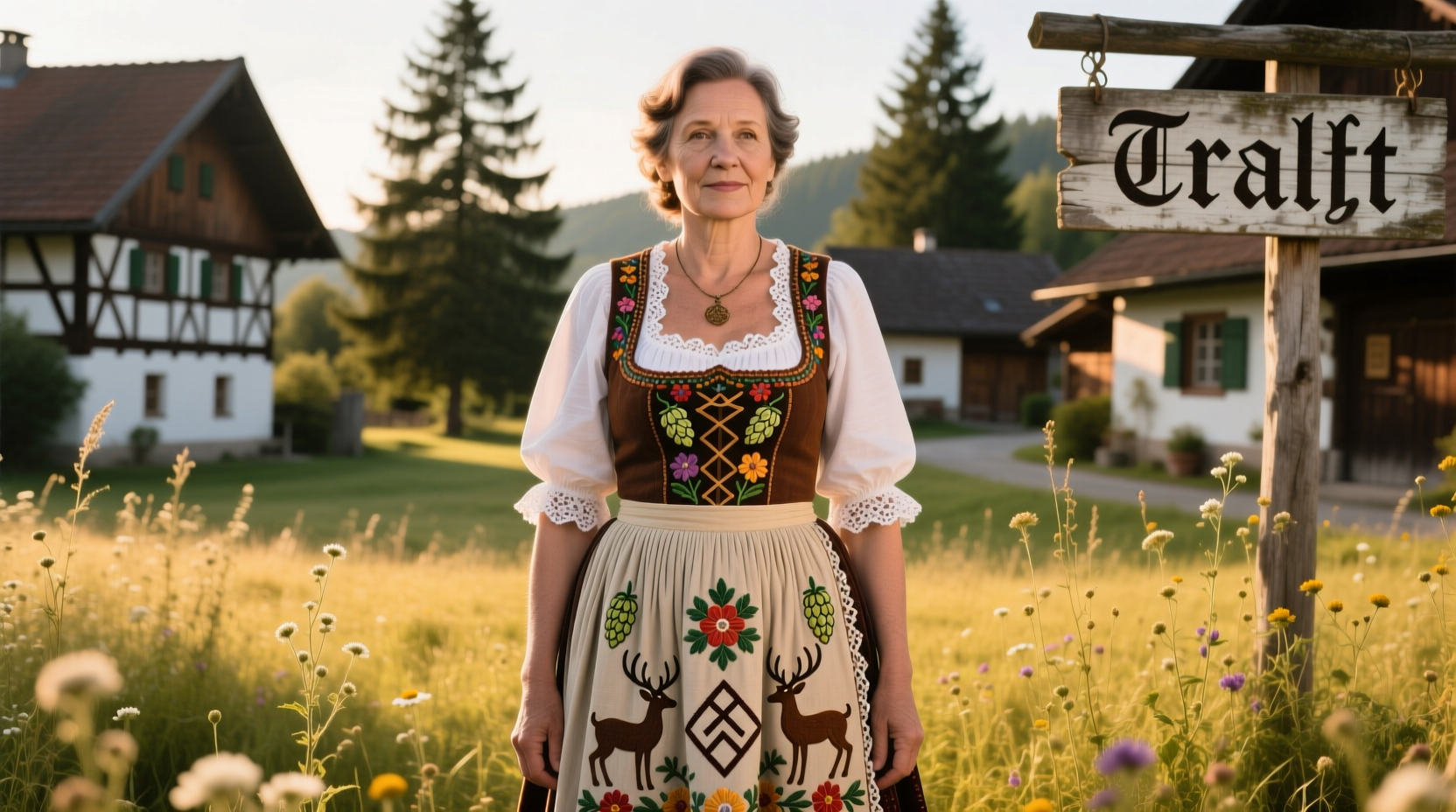
The Dirndl is arguably the most recognized piece of German folk dress, yet its anatomy is frequently misunderstood and heavily commercialized. A genuine Dirndl is not a single dress, but a four-part ensemble consisting of the Mieder (bodice), Rock (skirt), Schürze (apron), and Bluse (blouse). Each element communicates specific cultural data.
The Apron Bow (Schleife) Protocol
Perhaps the most famous piece of sartorial communication in traditional German outfits is the placement of the apron bow, or Schleife. While often treated as a fun trivia fact by tourists, in traditional rural communities, this protocol is taken seriously as a marker of relationship status:
- Bow on the Left: The wearer is single and potentially open to courtship.
- Bow on the Right: The wearer is married, engaged, or in a committed relationship.
- Bow in the Center (Front): Historically indicates virginity, though today it is often worn by young, unmarried women.
- Bow in the Center (Back): Indicates that the wearer is widowed, or in some regions, signifies that she is a waitress working the event.
Fabric and Class: From Cotton to Silk
The material of a Dirndl immediately signals the occasion and the wearer's economic standing. Everyday historical Dirndls were crafted from durable, washable cotton or linen (Baumwolle or Leinen). However, for church festivals, weddings, and high holidays, women wear the Seidendirndl (silk Dirndl). These feature bodices made of silk brocade, velvet, or heavy damask, often adorned with hand-stitched floral motifs specific to the wearer's home valley. According to the archives at the Bayerisches Nationalmuseum, the inclusion of silver or gold thread in the bodice embroidery was historically restricted by sumptuary laws to wealthy farming families and local nobility.
Lederhosen and the Masculine Alpine Identity
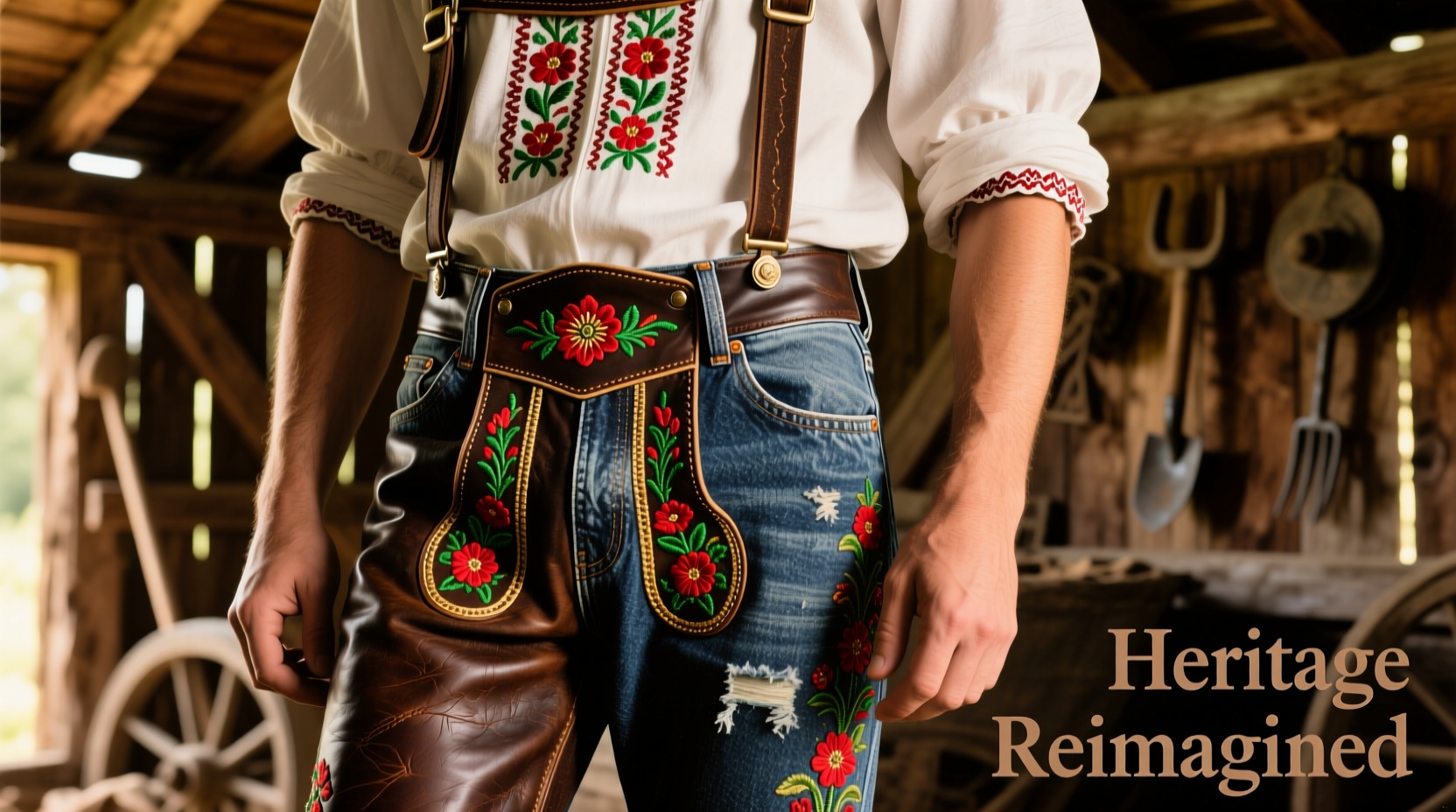
While the Dirndl dominates female folk dress, the Lederhosen (leather breeches) represent the masculine Alpine identity. Originally developed in the 18th century as durable workwear for hunters, foresters, and farmers, Lederhosen evolved into a symbol of Bavarian and Tyrolean pride during the Romantic era of the 19th century.
Hirschleder and the Art of Sämischgerbung
Authentic Lederhosen are never made from cowhide or synthetic materials. True traditional outfits utilize Hirschleder (deer leather) or Gamsleder (chamois leather). The leather is processed using Sämischgerbung, an ancient brain-tanning method using fish oil and animal fats. This results in a leather that is remarkably soft, breathable, and capable of being washed without losing its shape. A high-quality pair of knee-length Bundlederhosen is designed to last a lifetime, molding to the wearer's body and developing a unique patina that tells the story of their experiences.
Reading the Embroidery (Stickerei)
The embroidery on the front flap and suspenders (Hosenträger) is not merely decorative. The motifs, known as Hirschfänger (deer hunter motifs), often feature edelweiss, oak leaves, and alpine roses. The specific color palette and motif arrangement can identify the wearer's home region. For instance, the intricate white-on-white embroidery of the Miesbach region differs vastly from the vibrant green and yellow stitching found in the Werdenfelser Land.
Beyond Bavaria: Germany’s Hidden Regional Trachten
Focusing solely on Bavarian Tracht erases the rich diversity of Germany's broader cultural landscape. The Germanisches Nationalmuseum in Nuremberg houses extensive archives proving that nearly every historical German region possessed a distinct folk dress, shaped by local climate, religion, and trade routes.
| Region | Garment Name | Key Visual Feature | Cultural & Historical Context |
|---|---|---|---|
| Black Forest | Bollenhut Tracht | Wide-brimmed straw hat topped with 14 large red pom-poms (Bollen). | The red pom-poms are strictly reserved for unmarried Protestant women. Married women wear black pom-poms. Documented extensively by the Schwarzwälder Freilichtmuseum Vogtsbauernhof. |
| North Friesland | Friesische Tracht | Dark, heavy fabrics paired with massive, intricate silver filigree jewelry. | Reflects the maritime wealth of whaling and seafaring communities. The silver jewelry (often featuring talers and clasps) served as a portable bank account for women whose husbands were at sea. |
| Lusatia (Saxony) | Sorbische Tracht | Elaborate white lace, floral silk ribbons, and heavily embroidered black bodices. | Worn by the Sorbs, a West Slavic ethnic minority in Germany. The dress is a vital tool for preserving their distinct language and cultural identity against centuries of assimilation pressures. |
| Hesse | Schwälmer Tracht | Striking red stockings, black bodices, and small embroidered caps. | One of the oldest and most distinct regional dresses in Germany. The vibrant red stockings historically signaled the wealth and health of the rural farming communities in the Schwalm region. |
The Modern Revival: Authentic Tracht vs. Fast Fashion
In recent years, there has been a massive resurgence in the wearing of traditional German outfits among younger generations, driven by a desire to reconnect with regional roots. However, this has created a bifurcated market: the booming 'Fast Fashion Tracht' sector and the protected, artisanal 'Authentic Tracht' sector.
Investment Guide: What to Expect When Buying Authentic Pieces
For those looking to invest in culturally significant, authentic garments, it is crucial to understand the price brackets and material expectations. Authentic Tracht is an investment in heritage craftsmanship.
- Authentic Dirndl (Mid-Range to High): Expect to pay between €250 and €800. These are made from natural fibers (cotton, linen, silk), feature horn or metal buttons (never plastic), and have adjustable hooks. Brands like Gössl or Angermaier offer accessible entry points into quality Landhausmode and traditional cuts.
- Bespoke / Master-Crafted Dirndl: Ranging from €1,000 to €3,500+. These involve custom tailoring, hand-woven silk brocades from historic European mills, and hand-embroidered bodices.
- Authentic Lederhosen: A genuine pair of knee-length Bundlederhosen made from brain-tanned Hirschleder will cost between €600 and €1,500. If the embroidery is done by hand rather than machine, the price easily exceeds €2,000.
- Accessories: A genuine Gamsbart (hat tuft made from chamois hair) can cost €150 to €400 depending on the density and length of the hair. Hand-knitted wool stockings (Loferer Stutzen) typically cost around €80 to €120.
Preserving the Thread: Institutions and Living Heritage
The survival of traditional German outfits is not left to chance; it is actively maintained by a network of cultural institutions, local Trachtenvereine (folk dress associations), and master tailors. These associations do not merely wear the clothes for parades; they research historical patterns, teach traditional embroidery techniques to younger generations, and enforce quality standards for regional garments.
When you wear a genuine piece of Tracht, you are not putting on a costume. You are participating in a living, breathing cultural dialogue that respects the artisans of the past while adapting to the present. Understanding the deep cultural significance of traditional German outfits transforms the experience from a superficial tourist activity into a profound appreciation of European textile heritage.