German Clothing Men: Modern Guide
The Evolution of Männertracht: Beyond the Beer Tent
When examining the landscape of traditional German clothing men wear today, a distinct bifurcation has emerged. On one side stands the authentic, historically rooted Tracht—a living heritage governed by regional customs, meticulous craftsmanship, and centuries-old sartorial rules. On the other sits the commercialized, mass-produced 'festival wear' that floods global Oktoberfest celebrations. For the modern gentleman seeking to honor Germanic heritage, understanding the chasm between these two worlds is essential.
The term Tracht (derived from the Old High German traht(a), meaning 'that which is worn') is not merely a costume; it is a regional identifier. According to the Bayerisches Nationalmuseum, historical menswear in the Alpine regions was originally dictated by strict sumptuary laws and rural necessity. Today, navigating the market for traditional German clothing men requires an educated eye for material provenance, construction techniques, and cultural etiquette. This guide deconstructs the anatomy of authentic men’s Tracht, contrasting it with modern commercial interpretations to help you build a wardrobe that commands respect at any Schützenfest or cultural gathering.
Core Components of Authentic Men's Alpine Dress
To master the traditional silhouette, one must understand the foundational garments that comprise a complete Männertracht. Each piece serves a historical function, transitioning from 18th-century workwear to formal cultural attire.
The Lederhosen: Hirschleder vs. Rindsleder
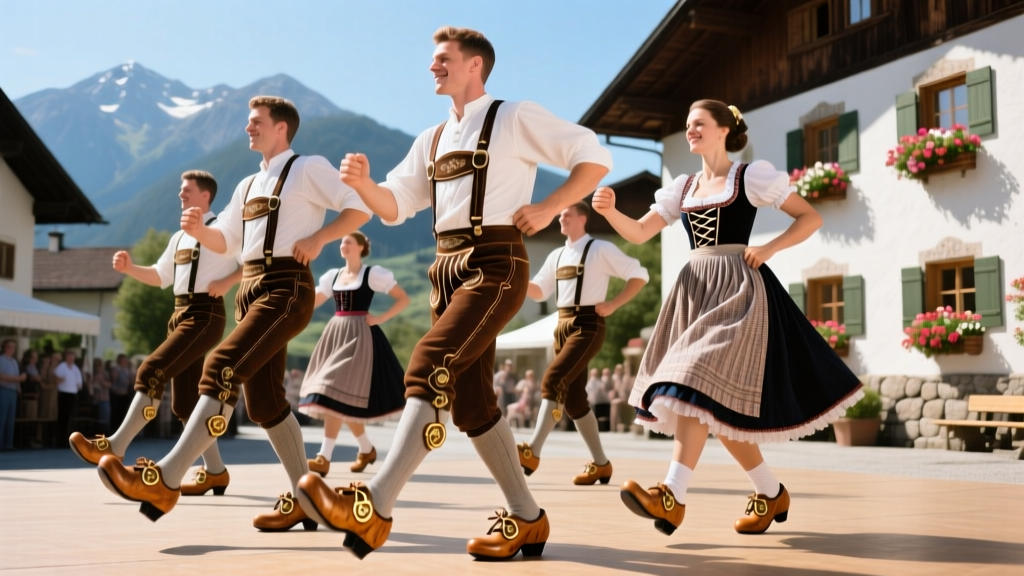
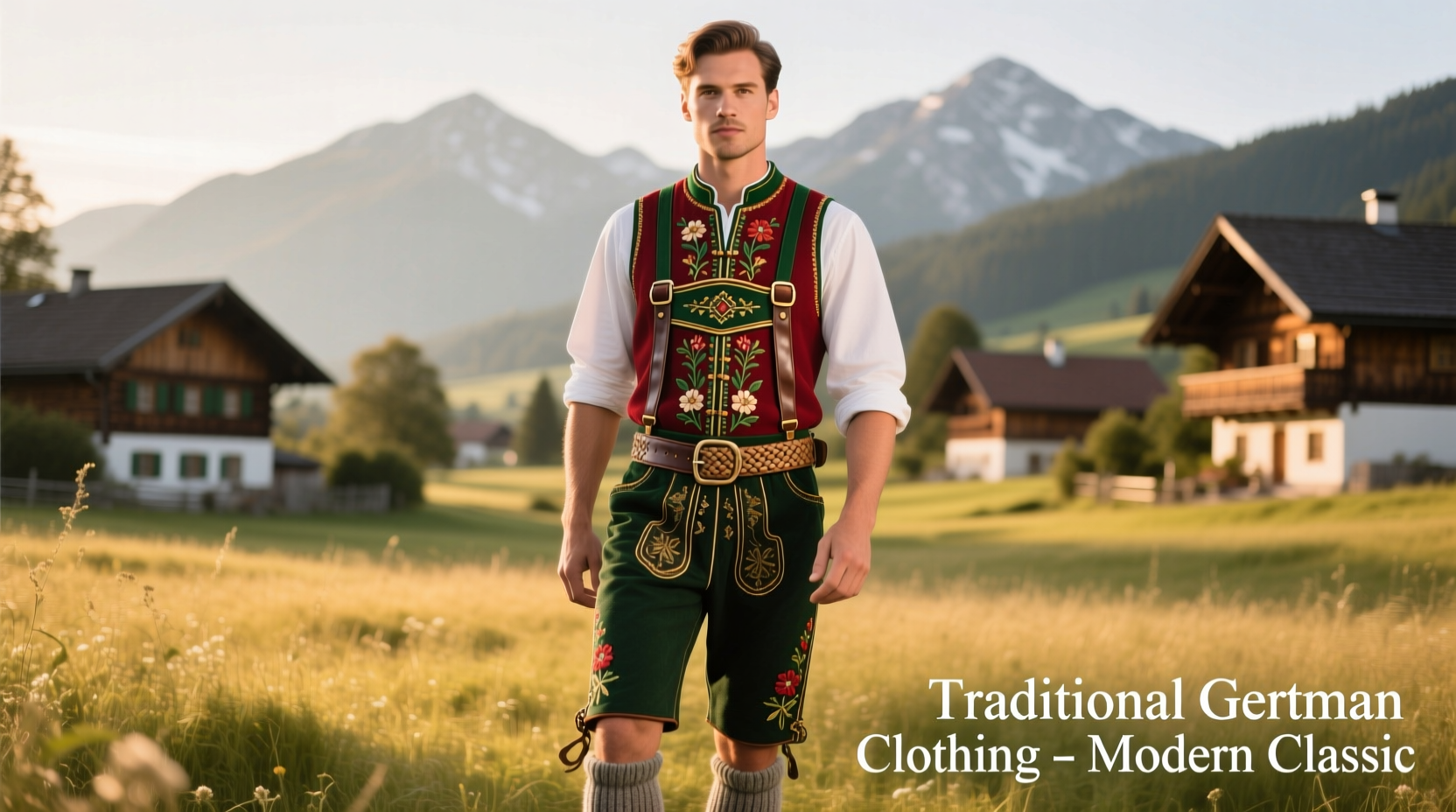
The cornerstone of Bavarian and Tyrolean menswear is the Lederhose (leather breeches). Authentic traditional pairs are crafted from Hirschleder (deerskin) or Gamsleder (chamois). The critical differentiator in quality is the tanning process. Genuine heritage Lederhosen utilize Sämischgare, an ancient brain-and-smoke tanning method that leaves the leather incredibly soft, breathable, and uniquely washable. As documented by the Deutsches Ledermuseum, this labor-intensive process gives the leather a distinct, slightly velvety nap and a rich, uneven patina that improves with age.
Modern commercial alternatives typically rely on Rindsleder (cowhide) treated with heavy chrome tanning and artificial dyes. These are stiff, prone to cracking, and lack the historical Weißstickerei (white thread embroidery) that denotes specific regional origins, such as the intricate floral motifs of the Miesbacher Tracht.
The Pfoad and Hosenträger
The traditional shirt, or Pfoad, is historically made from unbleached or lightly bleached linen, featuring a band collar and mother-of-pearl or horn buttons. Modern styling often substitutes this with mass-produced cotton or polyester blends, sometimes in loud checkered patterns. Authentic Tracht favors subtle, natural tones. The Hosenträger (suspenders) are equally vital; traditional sets feature a crosspiece (Steg) at the chest, heavily embroidered with alpine flora, whereas modern versions often omit the crosspiece or use cheap, stamped faux-leather.
Haferlschuhe: The Alpine Footwear
Proper footwear consists of Haferlschuhe, a robust shoe characterized by side-lacing and a heavily studded, nailed sole originally designed for gripping alpine scree. While modern festival-goers might pair Lederhosen with sneakers or generic loafers, wearing authentic Haferlschuhe with thick, calf-high wool socks (Loferl or Stutzen) is non-negotiable for formal traditional events.
Traditional vs. Modern Styling: A Comparative Analysis
To illustrate the stark differences between heritage preservation and modern commercialization, consult the breakdown below. This framework is invaluable when evaluating traditional German clothing men are sold in boutiques versus online fast-fashion retailers.
| Feature | Authentic Heritage Tracht | Modern Commercial / Festival Tracht |
|---|---|---|
| Leather Type | Hirschleder (Deer) or Gamsleder (Chamois) | Rindsleder (Cow) or Pigskin splits |
| Tanning Process | Sämischgare (Smoke/Brain-tanned, washable) | Chrome-tanned, chemically dyed, stiff |
| Embroidery | Hand-stitched Weißstickerei (White thread) | Machine-embroidered, often multi-colored |
| Buttons | Genuine horn, antler, or carved bone | Plastic, resin, or stamped metal |
| Suspenders | Includes embroidered chest crosspiece (Steg) | Straight straps, no crosspiece, thin leather |
| Price Range (EUR) | €600 – €1,500+ (Bespoke/Artisan) | €90 – €250 (Mass-produced) |
The Charivari: History and Modern Wearing Etiquette
No discussion of men’s Tracht is complete without the Charivari (pronounced shari-vari). Originally, this silver chain draped across the drop-front (Latz) of the Lederhosen served as a hunter’s trophy display, adorned with the teeth of stags, claws of eagles, and antler tips. It was believed to bring luck on the hunt and served as a status symbol of a man's prowess in the forest.
Today, the Charivari remains a centerpiece of formal Tracht. Authentic pieces are crafted from solid 925 silver and feature genuine, ethically sourced animal trophies or carved antler replicas. Modern, mass-market versions are often made from nickel-plated base metals with plastic 'bones.' When styling a Charivari for contemporary events, cultural etiquette dictates that it should never be worn with a belt; the drop-front of the Lederhosen must remain visible, and the chain should rest elegantly just below the waistband.
Regional Variations Across the Germanic Lands
A common misconception is that all German Tracht looks like the Bavarian Alpine stereotype. The Trachtenkulturzentrum highlights the immense diversity in regional menswear across German-speaking territories.
- Bavaria (Bayern) & Tyrol: The most globally recognized style, featuring the Kniebundlederhose (knee-breeches), colorful embroidery, and the iconic Trachtenhut adorned with a Gamsbart (a tuft of chamois hair, bound in silver or alpaca, graded by size and color).
- The Black Forest (Schwarzwald): Men’s Tracht here is notably more conservative and somber. It typically features long, dark trousers, a tailored dark vest (West), and a wide-brimmed black hat with a red-lined crown. Lederhosen are far less common in this heavily forested, non-alpine region.
- Swabia (Schwaben): Traditional Swabian menswear often incorporates a distinct, long blue smock (Bluuse) or tailored wool coats with standing collars, reflecting the region's agrarian and weaving history rather than alpine hunting culture.
Sourcing Authentic Tracht: Price Ranges and Artisans
Investing in authentic traditional German clothing men can wear for a lifetime requires knowing where to look and what to budget. True Trachtenmode is an investment in artisanal labor.
For a complete, high-quality ensemble, expect the following price ranges in the current market:
- Authentic Sämischgare Lederhosen: €600 to €1,200. Renowned makers like Lodenfrey in Munich or bespoke saddlers in Garmisch-Partenkirchen offer made-to-measure services.
- Hand-Embroidered Hosenträger: €120 to €250.
- Genuine Gamsbart (Chamois Beard): €150 to €400+, depending on the diameter and the darkness of the hair (the prized Melange color commands the highest prices).
- Trachtenhut (Wool Felt Hat): €80 to €180.
When shopping, always inspect the inside of the leather. Authentic smoke-tanned deer leather will have a slightly suede-like interior and a distinct, pleasant smoky scent. If the leather is perfectly uniform, stiff, and smells heavily of chemical processing agents, it is a modern commercial product.
Final Thoughts on Preserving Living Heritage
The modern resurgence of interest in traditional German clothing men embrace is a double-edged sword. While global festivals have popularized the silhouette, they have also diluted its meaning. By choosing authentic materials, respecting regional variations, and understanding the historical weight of accessories like the Charivari and Gamsbart, modern wearers can elevate their style from mere costume to a profound expression of living European heritage. Whether attending a local Maibaumaufstellen (Maypole raising) or a formal cultural gala, wearing true Tracht is an act of preservation, honoring the artisans and ancestors who wove their identities into every stitch and seam.