Lederhosen at Oktoberfest 2026: Styles & Guide

Beyond the Beer Tents: Understanding Authentic Tracht
When millions descend upon Munich's Theresienwiese for Oktoberfest, the sea of traditional dress is one of the festival's most striking visual elements. However, a common misconception among international visitors is treating these garments as mere 'costumes' (Kostüme). In Bavaria and the broader Alpine region, traditional dress is known as Tracht—a living, breathing cultural heritage with strict regional codes, historical lineage, and masterful craftsmanship. If you are planning to wear lederhosen at Oktoberfest 2026, understanding the profound difference between a mass-produced party outfit and authentic Tracht is essential for cultural respect and personal comfort.
Authentic lederhosen are not just garments; they are heirlooms designed to last a lifetime, often passed down through generations. The Bavarian National Museum (Bayerisches Nationalmuseum) houses extensive collections of 18th and 19th-century Alpine workwear, documenting the evolution of leather breeches from practical forestry and hunting gear to symbols of regional pride. Today, wearing proper Tracht at Oktoberfest signals an appreciation for this rich history and a rejection of the cheap, synthetic approximations that flood tourist shops.
Decoding the Leather: Materials and Construction Standards
The soul of authentic lederhosen lies in the leather and the tanning process. True artisan breeches are crafted using Sämischleder, a traditional brain-tanning and smoke-tanning method that utilizes cod oil and wood smoke. This meticulous process leaves the natural fats within the hide, resulting in a leather that is incredibly soft, breathable, and, remarkably, washable with water and mild soap.
Hirschleder vs. Wildbock: The Great Leather Debate
When commissioning or purchasing high-end lederhosen, you will primarily encounter two types of leather:
- Hirschleder (Deerskin): The gold standard for premium Tracht. Deer leather is exceptionally soft, supple, and lightweight. It molds perfectly to the wearer's body over time, developing a unique patina. It is highly prized for its comfort during long days at the festival.
- Wildbock or Ziegenleder (Wild Boar/Goatskin): Slightly thicker and more robust than deerskin. Goatskin offers excellent durability and a distinct grain, making it a favorite for rugged, everyday Alpine wear and hunting. It is generally more affordable than Hirschleder but still maintains high artisan standards.
Construction details are equally vital. Authentic pairs feature a Latz (the buttoned drop-front flap), which historically allowed for easy repair and adjustment. The seams are finished with a raised Sattlernaht (saddle stitch) using thick, waxed linen thread, and the buttons are carved from genuine deer antler or cow horn, never plastic.
Regional Variants: A Comparative Guide to Bavarian and Alpine Styles
Tracht is highly localized. The embroidery patterns, leather colors, and cuts of lederhosen change significantly as you cross from one valley or district to the next. The Trachtenkulturzentrum Bezirk Oberbayern works tirelessly to preserve these micro-regional distinctions, ensuring that modern wearers respect historical boundaries.
Miesbacher, Werdenfelser, and Steireranzug Traditions
The most iconic styles seen at Oktoberfest generally hail from Upper Bavaria and neighboring Austria. The Miesbacher Tracht is perhaps the most recognizable, characterized by dark brown or black deerskin and elaborate, light-green floral embroidery (Rankenstickerei) featuring oak leaves and edelweiss. In contrast, the Werdenfelser Tracht from the Garmisch-Partenkirchen region often utilizes lighter, greyish-brown leather with embroidery that incorporates alpine roses and thistles.
Crossing the border into Austria, the Steireranzug (Styrian suit) offers a different silhouette. While Bavarian styles often favor the Kurze (short lederhosen ending above the knee), Styrian and Tyrolean traditions frequently feature the Bundlederhosen, a longer style that reaches just below the knee, fastened with a side-buttoning waistband and featuring much more subdued, geometric embroidery.
| Region / Style | Standard Length | Primary Leather | Embroidery Motif & Color | Cultural Context |
|---|---|---|---|---|
| Miesbacher (Upper Bavaria) | Kurze (Above knee) | Hirschleder (Deer) | Oak leaves, Edelweiss (Light Green) | Festive, highly formal Tracht |
| Werdenfelser (Garmisch) | Kurze (Above knee) | Hirsch or Ziege | Alpine Rose, Thistle (Green/White) | Everyday and festive mountain wear |
| Steireranzug (Styria, AT) | Bund (Below knee) | Wildbock or Hirsch | Geometric, minimal (Green/Grey) | Hunting, formal rural events |
| Tiroler (Tyrol, AT) | Bund (Below knee) | Ziegenleder (Goat) | Edelweiss, Enzian (White/Blue) | Traditional valley-specific dress |
Navigating Oktoberfest 2026: Etiquette, Pricing, and Sourcing
If you intend to wear lederhosen at Oktoberfest 2026, budgeting and sourcing are critical. The market is heavily saturated with 'Dirndl & Bua' fast-fashion shops selling glued-on embroidery and split-leather garments. True Tracht is an investment in European artisan craftsmanship.
Price Tiers: What to Expect from Authentic Artisans
- Mass-Market / Tourist Grade (€80 - €200): Made from split cowhide or synthetic blends, featuring machine-glued polyester embroidery and plastic horn-look buttons. Verdict: Avoid these entirely if you wish to respect the culture.
- Entry-Level Authentic (€400 - €750): Produced by established Munich outfitters (e.g., Lodenfrey or Angermaier). These use genuine Sämisch-tanned goat or deer leather, real horn buttons, and high-quality machine-assisted hand embroidery. Verdict: Excellent for first-time buyers seeking authenticity.
- Master Artisan / Bespoke (€900 - €1,800+): Hand-cut and hand-stitched by a certified Trachten-Säckler (master leatherworker). Fully bespoke measurements, premium Hirschleder, and 100% hand-embroidered motifs. Verdict: A lifetime heirloom piece.
The Complete Ensemble: Shirts, Suspenders, and Footwear
Lederhosen are only one part of the Buam (men's) Tracht ensemble. To wear them correctly at Oktoberfest, you must complete the look with culturally accurate accessories:
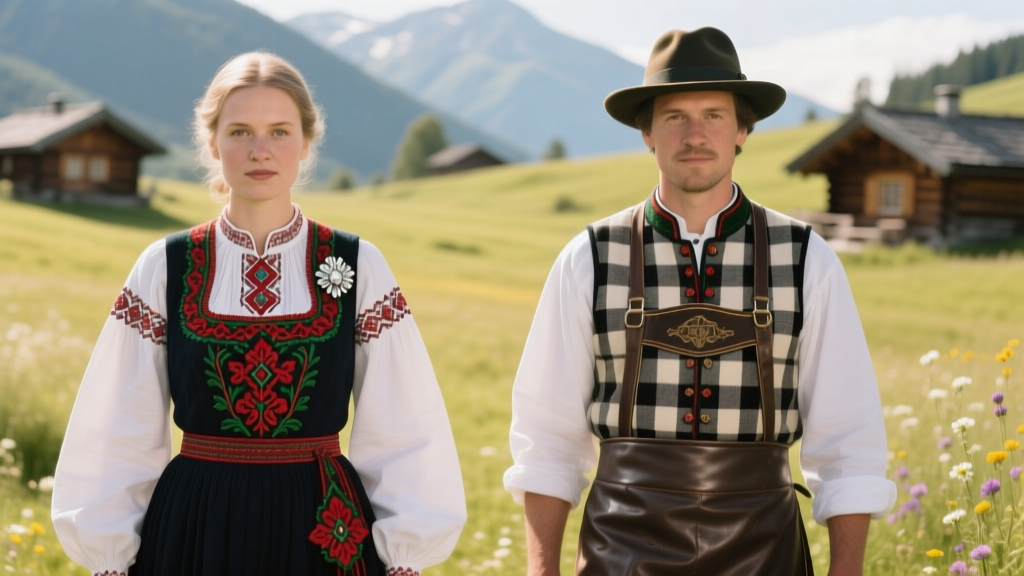
- Trachtenhemd (Shirt): Opt for a linen or cotton checkered shirt (Karo-Hemd) in subtle earth tones, or a crisp white linen shirt with horn buttons. Avoid loud, neon colors.
- Hosenträger (Suspenders): Authentic leather suspenders feature a Quersteg (crossbar) across the chest, often embossed or embroidered to match the lederhosen. Never wear a belt with traditional short lederhosen.
- Loferl (Calf Warmers): Worn with short lederhosen, these are two-piece knitted wool socks comprising a foot sock and a separate calf band. They are historically rooted in keeping the calves warm in alpine meadows.
- Haferlschuhe (Footwear): Traditional Bavarian shoes with a distinct side-lacing system and a rugged, cleated sole. They should be worn with natural grey or green wool socks that fold over the shoe.
Preserving the Craft: Where Heritage Meets Modernity
The survival of authentic lederhosen craftsmanship is intrinsically linked to the Trachtenvereine (traditional dress associations) and master artisans who refuse to compromise on materials. Institutions like the Tiroler Volkskunstmuseum in Innsbruck continue to research and exhibit the evolution of Alpine workwear, reminding us that these garments were born from the harsh realities of mountain life, not invented for a beer festival.
When you step onto the Theresienwiese in 2026 wearing a properly sourced, regionally accurate pair of Hirschleder breeches, you are doing more than just dressing for the occasion. You are participating in a centuries-old dialogue between the wearer, the artisan, and the Alpine landscape. Respect the craft, invest in quality, and wear your Tracht with the pride it deserves.