Chinese Hanfu: Symbolism & Silk Road Legacy

The Cosmology of the Thread: Decoding the Traditional Costume Chinese
When researchers and enthusiasts search for the traditional costume chinese heritage, they are often met with a flattened view of a deeply complex, multi-dynastic sartorial ecosystem. Far from being a monolithic 'ancient dress,' Chinese traditional clothing—primarily encompassing Hanfu (the historical dress of the Han majority) and later garments like the Qipao—is a profound expression of cosmology, philosophy, and social order. Unlike Western tailoring, which historically sought to sculpt fabric to the human form, traditional Chinese garment construction prioritized the preservation of the fabric's integrity, utilizing geometric cuts, draped silhouettes, and intricate woven motifs to map the universe onto the human body.
In the context of global textile history, the influence of Chinese traditional dress extends far beyond its borders. Through the Silk Road and subsequent maritime trade routes, Chinese silk weaving techniques, damask patterns, and structural motifs deeply influenced the folk dress and court costumes of Eastern Europe, Central Asia, and eventually the broader European continent. Understanding the traditional costume Chinese lineage requires examining both its internal philosophical architecture and its external global legacy.
Core Garments: Architectural Silhouettes of Hanfu
Jiaoling Youren (交领右衽): The Sacred Lapel
The most defining characteristic of classical Hanfu is the jiaoling youren, or the cross-collar worn with the left lapel over the right. This structural choice is not merely aesthetic; it is rooted in ancient Chinese philosophy. The left side is associated with Yang (life, the sun, and vitality), while the right is associated with Yin (death, the moon, and the underworld). Wrapping the left over the right symbolizes the triumph of life and civilization. Conversely, wrapping the right over the left (zuoren) was historically reserved for mourning dress or associated with 'barbarian' tribes outside the Central Plains. The sleeves of formal robes were often cut generously round to represent the heavens, while the collar was squared to represent the earth, embodying the ancient maxim of Tian Yuan Di Fang (a round heaven and a square earth).
Mamianqun (马面裙): The Horse-Face Skirt
Originating in the Song Dynasty and reaching its zenith during the Ming Dynasty, the Mamianqun, or 'horse-face skirt,' is a masterclass in kinetic textile engineering. The skirt features flat, unpleated front and back panels (the 'horse faces') flanked by deeply pleated side panels. This construction allowed for ease of movement, particularly for horseback riding, while maintaining a dignified, structured silhouette when standing. Today, the Mamianqun has experienced a massive revival in contemporary Chinese fashion, often paired with modern blouses or traditional ao (jackets). Authentic, hand-woven Ming-style reproductions using traditional loom techniques can range from $250 to over $800 USD, while modern mass-market adaptations are widely available for $40 to $120 USD.
Dynastic Silhouettes: A Comparative Guide
The traditional costume Chinese aesthetic shifted dramatically across dynasties, reflecting changing socio-political climates, foreign influences, and evolving philosophies. Below is a comparative overview of major historical silhouettes.
| Dynasty | Primary Silhouette | Key Characteristics & Cultural Context |
|---|---|---|
| Tang (618–907) | Yuanlingpao (Round Collar Robe) & Qixiong Ruqun | Characterized by bold colors, high waistlines, and wide sleeves. Influenced heavily by Silk Road trade, incorporating Central Asian motifs and relaxed, cosmopolitan gender norms in dress. |
| Song (960–1279) | Beizi (Long Outer Coat) & Ruqun | Reflected Neo-Confucian restraint. Silhouettes were slender, narrow-sleeved, and favored subdued, elegant colors like celadon, pearl white, and pale lotus. Emphasized intellectual refinement over ostentation. |
| Ming (1368–1644) | Aoqun (Jacket and Skirt) & Mamianqun | Marked a return to Han orthodoxy. Featured structured, voluminous jackets with standing collars, intricate woven brocades, and the highly pleated horse-face skirt. Heavy use of gold thread and auspicious motifs. |
The Silk Road Exchange: Chinese Textiles in European Folk Traditions
While the traditional costume chinese heritage is deeply rooted in East Asia, its material culture profoundly shaped the European folk dress and aristocratic wardrobes of the early modern period. The Silk Road was not merely a conduit for raw silk; it was a highway for complex weaving technologies and aesthetic paradigms.
One of the most striking examples of this cross-cultural pollination is found in the Kontusz sash (pas kontuszowy) of the Polish-Lithuanian Commonwealth. The nobility of Eastern Europe adopted these long, intricately woven silk sashes as a core component of their Sarmatian folk and court dress. The weaving techniques and floral-damask motifs used in the famed Słucki sashes were directly adapted from Chinese and Persian silk weavers who were brought to the region or whose goods were traded via the overland routes. Similarly, Chinese cloud motifs and peony brocades traveled through the Ottoman Empire and into the Balkans, eventually appearing in the heavy, gold-embroidered vests of traditional Bulgarian and Serbian folk costumes.
By the 17th and 18th centuries, the European fascination with Chinoiserie saw Chinese silk damasks and painted textiles integrated into regional European folk bodices and festival garments, particularly in Scandinavia and the Alpine regions, where imported silk ribbons and brocades became heirloom markers of wealth and status within rural communities.
Material Alchemy: Xiangyunsha and Yunjin Brocade
The cultural significance of Chinese dress is inextricably linked to its textile alchemy. Two fabrics stand out for their historical importance and staggering craftsmanship:
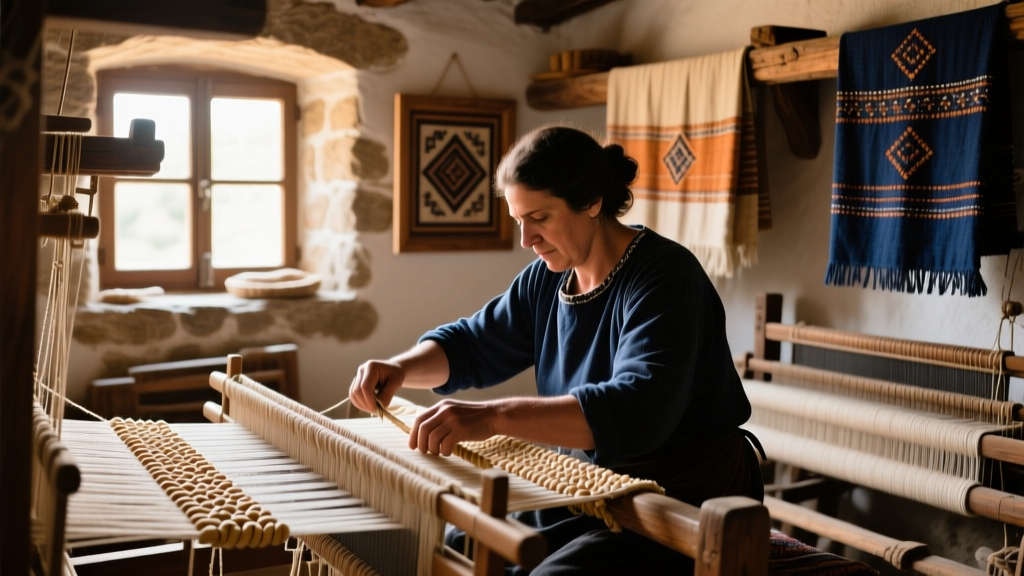
- Yunjin (云锦) Brocade: Originating from Nanjing, Yunjin translates to 'cloud brocade.' Woven on massive, two-person draw looms, it incorporates gold leaf, silver threads, and peacock feather filaments. A single inch of progress per day is common. Authentic Yunjin garments are museum-grade investments, often exceeding $3,000 USD.
- Xiangyunsha (香云纱):strong> Known as 'fragrant cloud silk,' this Cantonese textile is dyed using the tannin-rich juice of the薯莨 (shulang) yam, then coated with iron-rich river mud and baked in the sun. The result is a dual-toned fabric—deep brown on one side, glossy black on the other—that is naturally water-resistant, antimicrobial, and rustles softly when worn. A genuine Xiangyunsha Mamianqun typically retails between $300 and $600 USD.
Sourcing, Pricing, and Wearing Etiquette
For collectors, historians, and participants in the global Hanfu revival movement, navigating the market requires an understanding of both terminology and etiquette.
- Terminology: When sourcing, distinguish between Hanfu (historical Han clothing), Qipao/Cheongsam (the 1920s modernized Manchu-Han hybrid dress), and Xiuhefu (modern theatrical wedding garments that are not historically accurate).
- Evaluation: Check the fabric composition. Traditional garments should utilize natural fibers like silk, ramie, or linen. Avoid cheap polyester blends if seeking authentic drape and breathability.
- Etiquette: Always ensure the left lapel crosses over the right. Wearing a garment right-over-left in a non-mourning context is considered highly inauspicious and culturally disrespectful.
- Price Expectations: Entry-level, factory-made Hanfu sets (top and skirt) cost between $50 and $150 USD. Mid-tier, artisan-crafted sets with accurate historical patterning and natural dyes range from $200 to $500 USD. Bespoke, hand-woven ceremonial pieces command $1,000+ USD.
Institutional Archives and References
To further study the structural and historical evolution of the traditional costume chinese lineage, researchers are encouraged to consult the following authoritative archives:
- Victoria and Albert Museum (Chinese Textiles Collection) – Offers extensive documentation on Ming and Qing dynasty silk weaving, embroidery techniques, and the export of Chinese textiles to Europe.
- The Metropolitan Museum of Art (Silk Road History) – Provides academic insights into how Chinese textile motifs traveled across Central Asia and influenced global garment construction.
- China National Silk Museum (Hangzhou) – The premier institution for the preservation of ancient Chinese loom technologies, Xiangyunsha dyeing processes, and dynastic garment conservation.