Norwegian Bunad: Regional Variations

Norwegian Bunad: Regional Variations
The bunad is Norway's national folk costume, but it is far from a single uniform design. Over 200 distinct regional bunads exist, each reflecting the textile traditions, embroidery patterns, and silver jewelry styles of a specific Norwegian district. Wearing a bunad is a deeply personal act, typically connected to one's family origins.
What Defines a Bunad?
A bunad is not simply a costume — it is a reconstructed folk dress based on historical garments from a specific region. The Bunad- og folkedraktrådet (National Bunad and Folk Costume Council) oversees the authenticity of designs, ensuring that new bunads are based on documented historical sources rather than creative interpretation.
Notable Regional Styles
Hardangerbunad
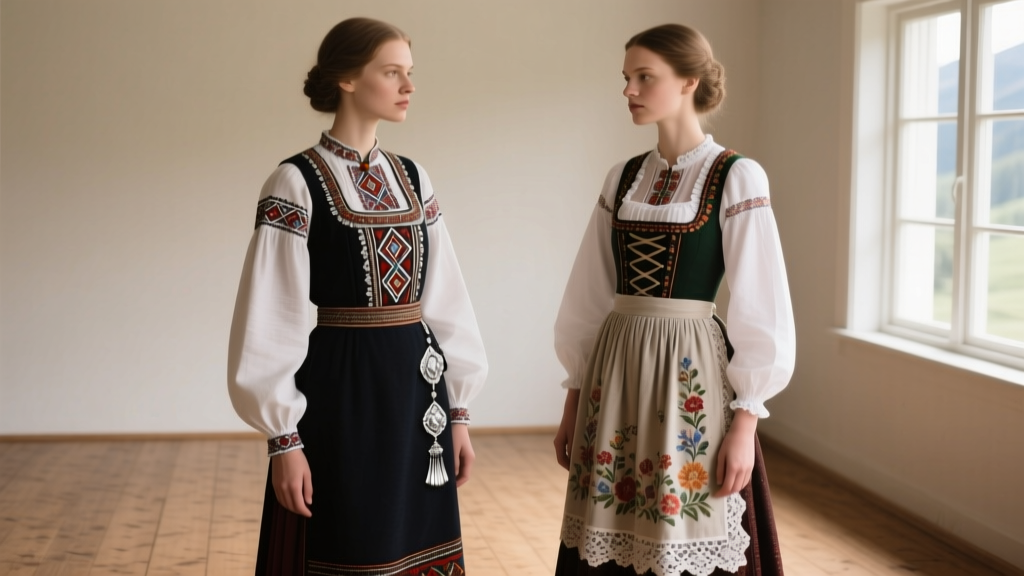
One of the oldest and most recognized bunads, from the Hardanger fjord region. Features cross-stitch embroidery in red, blue, and white on a black wool base, with elaborate silver brooches and crown-like headpieces for brides.
Bunad from Telemark
Known for its rich rose painting (rosemaling) inspired embroidery and dramatic color combinations of deep blue, red, and green. The Telemark bunad reflects the region's strong artistic traditions.
Nordlandsbunad
From northern Norway, featuring motifs inspired by the dramatic coastal landscape — waves, fish, and the midnight sun. The silver jewelry often incorporates Viking-age design elements.
Silver Jewelry
Every bunad is accompanied by region-specific sølje (silver jewelry), including brooches, cufflinks, belt buckles, and crowns. Some families pass down silver pieces through generations. The quantity and quality of silver traditionally indicated the wearer's wealth and social standing.
Modern Bunad Culture
Bunads are worn at weddings, confirmations, Constitution Day (May 17th), and other formal occasions. They are among the most expensive garments a Norwegian might own, with complete ensembles costing 30,000-50,000 NOK. Many Norwegians receive their bunad as a confirmation gift, beginning a lifelong relationship with this living tradition.