Trachten Coats: 2026 Alpine Festival & Event Guide
The Living Tradition of Alpine Outerwear
When the autumn air turns crisp in the Bavarian Alps and the Tyrolean valleys, the transition from summer dirndls and lightweight lederhosen to robust outerwear begins. For attendees of Europe’s most prestigious folk festivals, a trachten coat is not merely a practical necessity against the mountain chill; it is a profound expression of regional identity, artisanal heritage, and sartorial respect. Unlike mass-produced "costume" jackets sold in tourist traps, authentic Trachten outerwear is a masterclass in textile engineering and cultural continuity.
This comprehensive 2026 festival guide decodes the intricate world of Alpine trachten coats. From the water-resistant marvels of milled Loden wool to the strict etiquette of festival-specific styling, we provide the cultural context and practical frameworks necessary to navigate the Alpine event calendar with authenticity and grace.
The Anatomy of Trachten Outerwear: Janker, Mantel, and Wetterfleck
To speak of "trachten coats" is to generalize a highly categorized wardrobe. Traditional Alpine outerwear is divided into distinct silhouettes, each serving a specific historical and functional purpose.
The Trachtenjanker (Hip-Length Jacket)
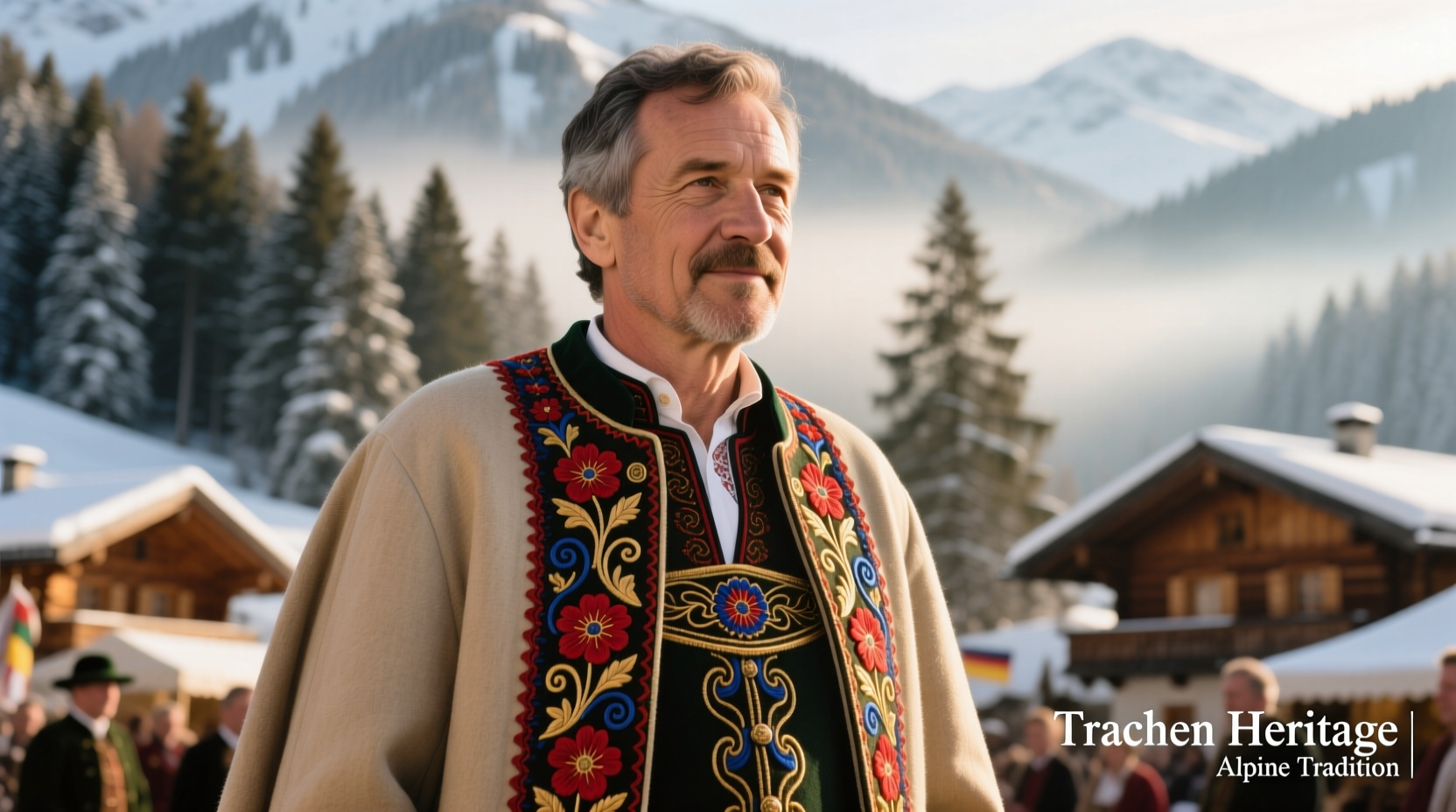
The Janker is the cornerstone of men’s and women’s Alpine formalwear. Falling just below the hip, it is characterized by a straight cut, fold-down lapels, and contrast piping (Kantenband) along the edges. Traditionally crafted from virgin wool, the Janker is worn over a waistcoat (Gilet) and is the standard outer layer for indoor festival tents and evening events.
The Lodenmantel (Long Overcoat)
For outdoor excursions and formal winter events, the Lodenmantel is indispensable. Reaching the knee or mid-calf, it provides substantial coverage. High-end models often feature a Pelerinkragen (a layered cape collar) that sheds rain and snow away from the shoulders, a design inherited from 19th-century foresters and carriage drivers.
The Wetterfleck (Weather Cape)
Originating as a working garment for Alpine shepherds, the Wetterfleck is a sleeveless or half-sleeved cape made from heavily fulled wool. While less common in modern urban settings, it remains a staple at rural heritage festivals and historical reenactments, prized for its unmatched freedom of movement and weather resistance.
The Textile Marvel: Understanding Walkloden
The soul of any premium trachten coat lies in its fabric: Walkloden. Unlike standard woven wool, Loden undergoes a rigorous mechanical and chemical process known as fulling or milling (Walken).
"The Walkloden process involves weaving loosely spun sheep's wool, then submerging and agitating it in warm, soapy water. This causes the wool fibers to shrink, interlock, and felt, creating a dense, windproof, and naturally water-repellent textile without the need for synthetic membranes." — Archives of the Tiroler Volkskunstmuseum
This ancient technique, perfected in the Alpine valleys of Austria and Southern Germany, results in a fabric that breathes naturally while repelling alpine sleet. A genuine Loden coat will emit a faint, natural lanolin scent when damp, a hallmark of unadulterated sheep’s wool.
The 2026 Festival Circuit: Event-Specific Styling
Wearing the correct weight, color, and style of trachten coat is dictated by the specific festival, the time of day, and the regional setting. Here is your 2026 event matrix.
Oktoberfest & Wiesn-Tracht (Munich, September/October)
While daytime in the Festhalle might only require a light cotton dirndl or linen shirt, the Munich evenings drop sharply in temperature. For Oktoberfest, the Trachtenjanker in charcoal grey (Anthrazit) or muted olive is the gold standard. Women often pair a tailored, cropped Loden jacket with velvet trim over a wool-blend autumn dirndl. Avoid long, sweeping Lodenmäntel inside the crowded beer tents, as they are cumbersome and prone to spills; reserve them for the walk to and from the Theresienwiese.
Almabtrieb & Kirchtag (Tyrol & Bavaria, Late September)
The Almabtrieb (the ceremonial driving of cattle down from high Alpine pastures) is a rugged, outdoor, daytime event. Spectators and participants alike should opt for heavy, knee-length Lodenmantel coats in traditional hunter green (Jägergrün) or rustic brown. Because you will be standing on damp grass and uneven terrain, a coat with a water-shedding cape collar is highly recommended. Footwear must be sturdy Haferlschuhe or leather mountain boots.
Christkindlmärkte (Salzburg, Vienna, Strasbourg, November/December)
Winter Christmas markets demand maximum thermal retention. A calf-length Lodenmantel with a silk or cupro lining is essential. For formal evening strolls through the Salzburg Christkindlmarkt, look for coats featuring subtle velvet lapels and genuine stag-horn buttons (Hirschhornknöpfe). Deep forest greens, midnight blues, and classic loden grey are the most culturally appropriate colors for these historic, candlelit settings.
Regional Variations: A Map of Alpine Tailoring
Trachten is not a monolith; it is deeply hyper-local. The piping, embroidery, and cut of a coat will immediately signal your regional allegiance or appreciation.
- Miesbacher Tracht (Upper Bavaria): Jankers from this region often feature distinct velvet piping on the lapels and pockets, with colors indicating the wearer's marital status or specific guild affiliation.
- Tiroler Tracht (Austrian Tyrol): Tyrolean coats frequently incorporate intricate, tone-on-tone floral or oak-leaf embroidery (Stickerei) on the collar and cuffs, reflecting the region's deep botanical heritage.
- Salzburger Tracht (Austria): Favoring elegance over ruggedness, Salzburg outerwear often utilizes lighter-weight Loden blends, featuring sleeker silhouettes and mother-of-pearl or polished horn buttons for evening theater and concert events.
Trachten Coat Buyer’s Matrix: Price Tiers & Artisans
Investing in a trachten coat is an exercise in buying heirloom-quality garments. Use this matrix to navigate the market and avoid synthetic imitations.
| Tier | Price Range (EUR) | Material & Construction | Best For | Notable Heritage Brands |
|---|---|---|---|---|
| Entry / Commercial | €150 - €290 | Wool-blend Loden, plastic horn-look buttons, synthetic lining. | Single-use festival attendees, casual tourists. | Mass-market Oktoberfest vendors |
| Heritage / Mid-Tier | €350 - €750 | 100% Virgin Wool Walkloden, genuine horn buttons, cupro/viscose lining. | Annual festival-goers, cultural enthusiasts, winter outerwear. | Steinbock, Lodenfrey, Giesswein |
| Bespoke / Master Tailor | €900 - €2,500+ | Custom-milled Alpine Loden, hand-stitched buttonholes, silk lining, personalized embroidery. | Lifelong investment, formal Alpine weddings, heritage preservation. | Maßschneiderei (Local Master Tailors) |
Cultural Etiquette & Wearing Protocols
Wearing a trachten coat carries implicit cultural responsibilities. To wear Tracht is to participate in a living tradition, not to wear a costume. Adhere to these protocols to show respect for the culture:
- The Buttoning Rule: Similar to classic menswear tailoring, the bottom button of a single-breasted Trachtenjanker should always be left undone. This preserves the drape of the heavy wool and prevents pulling when seated.
- Color Codes: Hunter green (Jägergrün) historically denotes forestry, hunting, and rural land stewardship. Charcoal and grey are considered versatile, everyday, and formal colors. Black Loden is traditionally reserved for mourning or highly formal evening church events, though modern fashion has relaxed this slightly.
- Respect the Embroidery: If your coat features regional embroidery (such as oak leaves or edelweiss), understand its origins. Wearing a highly specific Tyrolean guild jacket at a Bavarian Schützenfest may draw polite but knowing corrections from locals.
- Care and Maintenance: Never machine-wash a Loden coat. The agitation will destroy the milled finish. Instead, brush it with a natural bristle garment brush, air it out in a humid room to release odors, and rely on professional dry cleaners who specialize in traditional woolens.
Preserving the Craft: Museums and Heritage Institutions
The survival of the trachten coat is intrinsically linked to the artisanal cooperatives and museums that preserve the history of Alpine textiles. For those wishing to study the evolution of these garments beyond the commercial market, several institutions offer unparalleled archives.
The Bayerisches Nationalmuseum in Munich houses one of the most extensive collections of historical Bavarian Tracht, documenting the shift from 18th-century peasant workwear to the romanticized "Wiesn-Tracht" of the 19th-century bourgeois class. Their textile archives provide crucial insight into how natural dyes and regional loom patterns dictated the outerwear of early Alpine communities.
Similarly, the Tiroler Volkskunstmuseum in Innsbruck offers a profound look into the Tyrolean Loden industry. Their exhibits detail the grueling historical process of wool shearing, spinning, and the communal milling mills (Walkmühlen) that once dotted Alpine rivers. Furthermore, the Austrian Museum of Folk Life and Folk Art in Vienna frequently curates exhibitions on the socio-political impact of Tracht, exploring how traditional dress was utilized, and sometimes misappropriated, throughout the 20th century.
By understanding the deep roots of the trachten coat—from the river-powered milling mills of the 1700s to the master tailors of modern Munich—festival attendees can approach Alpine events not just as spectators, but as respectful participants in a rich, enduring European heritage.