Swiss Tracht: Regional Dress Variations
Cantonal Identity in Cloth
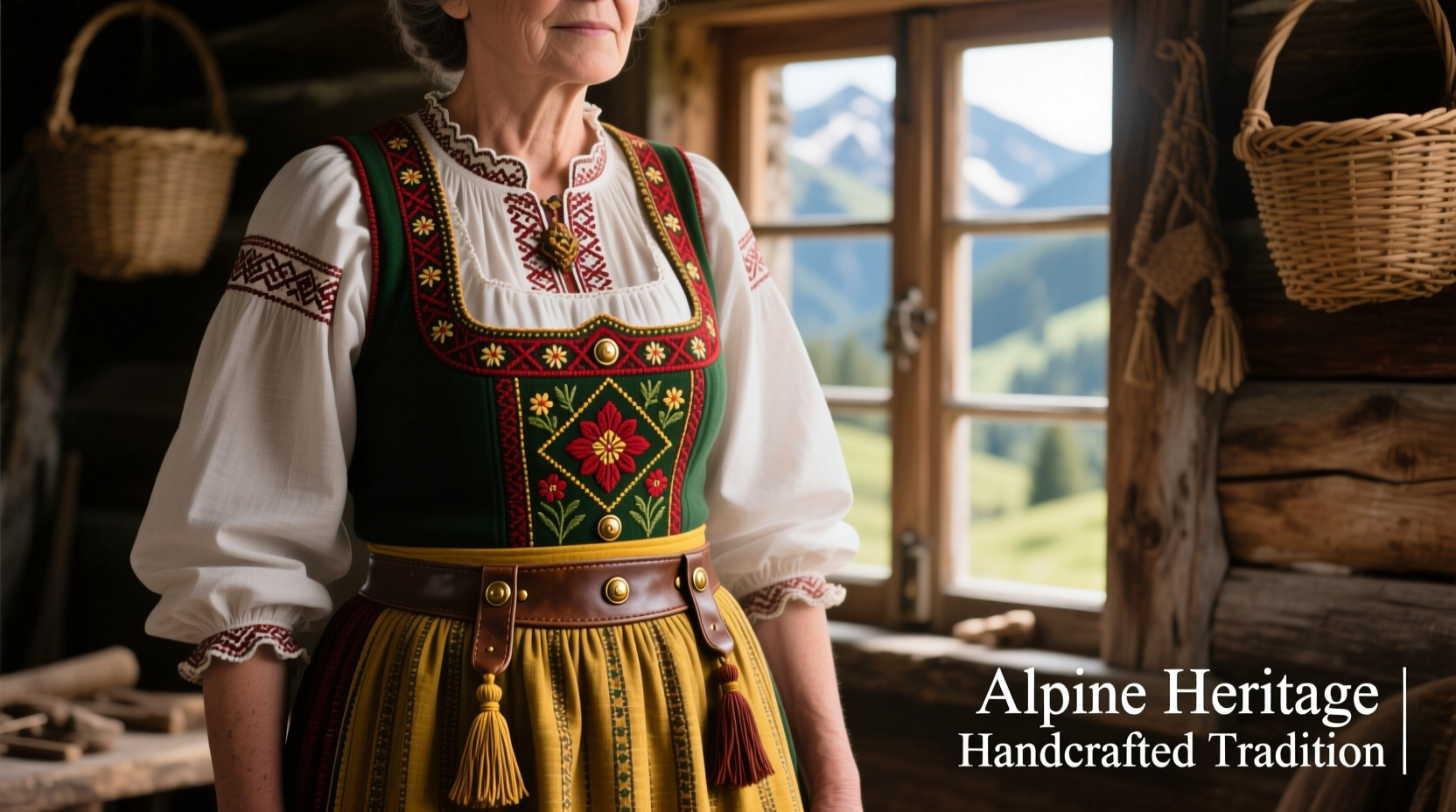
Switzerland's Tracht (traditional folk dress) tradition is remarkably diverse, reflecting the country's federal structure and linguistic diversity. Each of Switzerland's 26 cantons developed distinctive styles influenced by local geography, religious tradition, economic activity, and cross-border cultural exchange. The result is one of Europe's richest regional costume traditions.
Bernese Tracht
The most internationally recognized Swiss Tracht comes from the Bernese Oberland: a dirndl-style dress with black velvet bodice, white puffed-sleeve blouse, and red-and-white striped skirt. Men's Bernese Tracht features a blue smock (Berner Mutz) with distinctive silver buttons and embroidery. This style heavily influenced the romanticized "Swiss dress" image exported globally.
Appenzell Tradition
The canton of Appenzell maintains one of Switzerland's strongest living Tracht traditions. Women's Sunday Tracht features elaborate silver filigree headdresses (Flügelhaube) and finely embroidered bodices. Men's Tracht includes yellow knee-breeches and the distinctive Appenzeller Sennenchütteli (embroidered vest) depicting alpine life scenes.
Valais and Alpine Traditions
The French-speaking canton of Valais has Tracht traditions showing Savoyard influence: women wear black dresses with white aprons and distinctive lace caps, while men's Tracht includes a blue smock similar to those worn in French Alpine regions. The Valais tradition reflects the cultural bridge between Germanic and Francophone Switzerland.
Preservation and Revival
The Swiss Tracht movement experienced a major revival in the early 20th century, driven by concerns about industrialization eroding rural culture. The Schweizerische Trachtenvereinigung (Swiss Tracht Association) coordinates preservation efforts across cantons. Today, Tracht is worn at national holidays, folk festivals, yodeling competitions, and Schwingen (Swiss wrestling) events.