The National Dress of Europe: Historical Origins Guide

The Invention of Tradition: Defining the National Dress of Europe
When we examine the national dress of Europe, we are rarely looking at garments that have remained unchanged since antiquity. Instead, we are observing what historians like Eric Hobsbawm term "invented traditions." Across the continent, the transition from regional peasant workwear to codified national costume occurred primarily during the 18th and 19th centuries. This era of Romantic Nationalism saw urban intellectuals, monarchs, and cultural revivalists elevate rural, agrarian clothing into potent symbols of national identity, resistance, and heritage.
Understanding the historical origins of these garments requires separating living, continuous folk traditions (folkedrakt) from romanticized revivals (bunad or Victorian Highland dress). This guide explores the material culture, construction techniques, and historical catalysts that shaped the most iconic traditional garments in Europe, providing a framework for collectors, historians, and cultural enthusiasts to appreciate and source authentic pieces.
The Norwegian Bunad: Romantic Nationalism Woven in Wool
Nowhere is the distinction between continuous folk dress and revived national costume more rigorously policed than in Norway. The Norwegian bunad is a 20th-century revival based on 18th- and 19th-century rural clothing, championed by cultural figures like Hulda Garborg during Norway’s push for independence from Sweden (achieved in 1905).
Construction, Silver, and Regional Codes
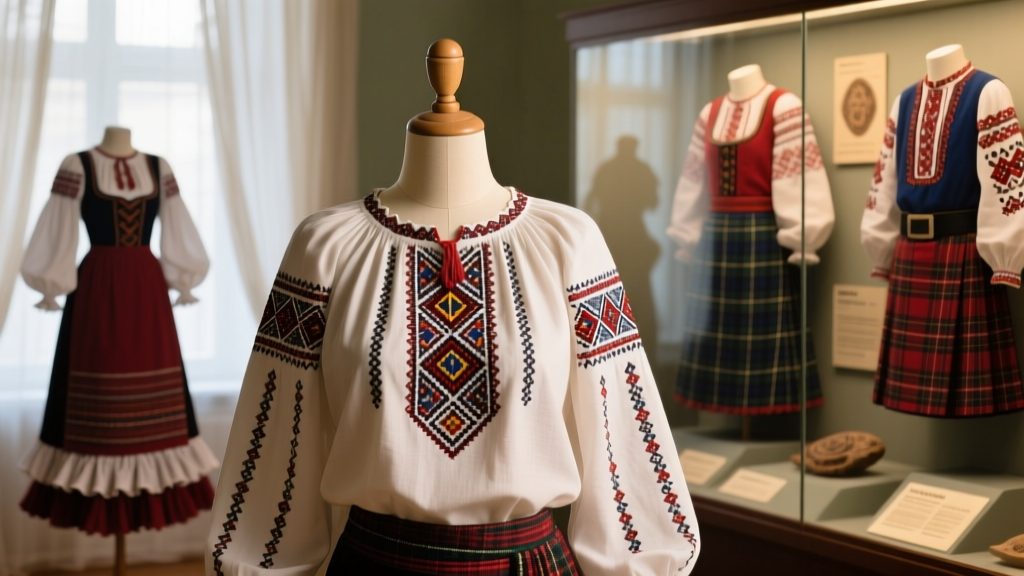
An authentic bunad is a masterclass in textile construction and regional specificity. Take the Hardangerbunad, often called the "first bunad." It features a bodice of black, red, or blue worsted wool, heavily embroidered with cross-stitch (korssting) and linen appliqué. The underlying shirt (skjorte) is made of white linen, featuring intricate Hardangersøm (drawn-thread whitework embroidery).
Crucial to the ensemble is the silver jewelry (sølje). A married woman’s Hardanger bunad requires an oxidized silver crown, a neck ring, and a large breastpiece featuring dangling silver leaves and spoons. According to the Norsk Folkemuseum, these silver pieces historically served as portable wealth and were often passed down through generations. Today, a custom-tailored bunad with hand-embroidery and sterling silver accessories costs between $3,500 and $6,500 USD, requiring months of labor by certified artisans.
The Scottish Kilt: Rebellion, Proscription, and Victorian Revival
The global perception of the Scottish kilt is heavily filtered through a Victorian lens, yet its origins are rooted in the practical needs of the Highland clans and the subsequent political suppression by the British Crown.
From Féileadh Mòr to the Modern Philibeg
Prior to the 18th century, Highlanders wore the féileadh mòr (great kilt or belted plaid)—an untailored length of woolen tartan, roughly 6 yards long and 60 inches wide, gathered into folds and belted at the waist. Following the Jacobite rising of 1745, the British government passed the Dress Act of 1746, banning the wearing of Highland dress to dismantle clan structures.
When the ban was repealed in 1782, the kilt had largely vanished from daily Highland life. Its revival was orchestrated in the 19th century by figures like Sir Walter Scott and the British monarchy, transforming it from a proscribed rebel garment into a romanticized symbol of a unified Scotland. The modern tailored kilt (féileadh beag) was actually developed in the late 18th century by an English Quaker industrialist, Thomas Rawlinson, for ease of movement in his ironworks. Authentic modern kilts are crafted from 13oz to 16oz worsted wool tartan, featuring 29 knife-pleats sewn down to the hip and falling free to the knee. The National Museums Scotland archives highlight how the assignment of specific tartans to specific clans was largely a Victorian commercial invention, though it is now fiercely protected as cultural heritage.
Alpine Tracht: Habsburg Sumptuary Laws and the Dirndl
The term Tracht encompasses the traditional folk dress of the German-speaking Alpine regions. Unlike the organic evolution of peasant wear, much of the Alpine Tracht was shaped by Kleiderordnungen (sumptuary laws) enacted by the Habsburg monarchy and local dukes in the 17th and 18th centuries. These laws dictated the colors, fabrics, and trims that different social classes and regions could wear, inadvertently creating the highly specific regional color palettes we see today.
The Evolution of the Dirndl
The dirndl evolved from the Dirndlgewand (maid’s dress), a utilitarian Alpine garment consisting of a bodice (Leibl), blouse, wide skirt (Rock), and apron (Schürze). In the 1870s, the Austrian upper classes adopted a romanticized, silk-and-lace version of the dirndl as fashionable summer resort wear in the Salzkammergut lake region.
The Ausseer Dirndl from the Styrian Salzkammergut remains one of the most historically intact variations. It strictly utilizes a specific color triad: a pink bodice, a green skirt, and a black apron, reflecting the colors of the local Alpine flora. Authentic Ausseer dirndls are made from high-grade silk or fine cotton and cost between $800 and $1,500 USD, contrasting sharply with the mass-produced polyester "Oktoberfest" costumes that dominate the global market.
Estonian Rahvariided: Linen, Wool, and the National Awakening
In the Baltic states, national dress served as a vital tool for cultural survival during periods of foreign domination. The Estonian rahvariided (folk clothing) is characterized by its striking geometric patterns and heavy use of locally sourced materials.
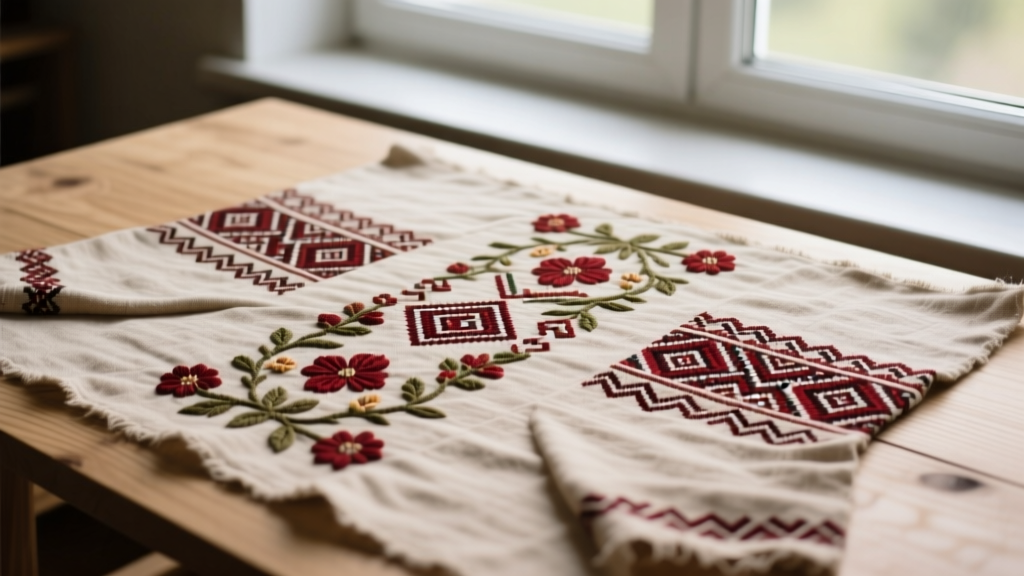
The foundational garment is the linen shift, worn beneath a heavy, striped woolen skirt (seelik). In regions like Muhu Island, the skirts feature vibrant, intricately woven stripes and elaborate floral embroidery. The ensemble is anchored by a wide, woven sash and a striking array of silver coin jewelry (hõbeehted) and conical brooches (sõlg). During the 19th-century Estonian National Awakening, intellectuals documented and preserved these regional variations, which were later standardized for use in the massive Song and Dance Festivals that fueled the push for independence. The Estonian National Museum houses over 10,000 textile fragments that inform the exact weave structures used by modern artisans.
Comparative Analysis: Codification Timelines and Material Costs
| Garment Name | Region / Culture | Era of Codification | Primary Materials | Authentic Price Range (USD) |
|---|---|---|---|---|
| Bunad (e.g., Hardanger) | Norway | 1920s (Revival) | Worsted wool, linen, sterling silver | $3,500 - $6,500 |
| Highland Kilt | Scotland | 1820s (Victorian) | 16oz worsted wool tartan, leather | $800 - $2,500 |
| Ausseer Dirndl | Austria (Styria) | 1870s (Resort Fashion) | Silk, fine cotton, linen | $800 - $1,500 |
| Rahvariided (Muhu) | Estonia | 1880s (National Awakening) | Woven wool, linen, silver coins | $1,200 - $3,000 |
Sourcing Authentic European Folk Dress Today
For those looking to acquire authentic pieces, it is imperative to bypass commercial costume manufacturers and engage directly with certified artisan cooperatives.
- Norway: Ensure your bunad maker is approved by the Bunad- og folkedraktrådet (The National Council for Bunad and Folk Costume). They regulate the historical accuracy of patterns, embroidery stitches, and silverwork.
- Scotland: Purchase kilts only from weavers and tailors registered with the Scottish Tartans Authority. Verify the wool is woven in Scotland (often by mills like Lochcarron or Marton Mills) and that the tartan is officially recorded in the Scottish Register of Tartans.
- Austria & Germany: Seek out Trachtenvereine (traditional costume associations) or specialized ateliers in regions like Bad Aussee or Miesbach, which prioritize natural fibers and historical tailoring techniques over modern synthetic blends.
Archival Sources and Further Reading
The historical data, textile analyses, and codification timelines referenced in this guide are drawn from the following premier cultural institutions:
- Norsk Folkemuseum (Norwegian Museum of Cultural History) - Archives on the transition from folkedrakt to bunad and the silverwork traditions of Telemark and Hardanger.
- National Museums Scotland - Extensive collections detailing the Dress Act of 1746, the evolution of the belted plaid, and the Victorian tartan revival.
- Austrian Museum of Folk Life and Folk Art (Volkskundemuseum Wien) - Research on Habsburg sumptuary laws and the socio-economic history of Alpine Tracht.
- Estonian National Museum - Textile archives documenting the weaving techniques and silver jewelry of the Estonian islands.