Womens Oktoberfest Lederhosen: History and Alpine Origins

When navigating the vibrant tents of the Theresienwiese during Munich’s legendary autumn festival, the sea of traditional Bavarian clothing is a sight to behold. While the Dirndl has long been the undisputed standard for female festival-goers, a modern sartorial shift has introduced a fascinating crossover: oktoberfest lederhosen womens styles. But from a historical and cultural perspective, did women in the Alpine regions actually wear leather breeches? To understand the contemporary phenomenon of women wearing Lederhosen, we must separate authentic historical Tracht (traditional regional dress) from modern Trachtenmode (fashion inspired by tradition).
The Myth vs. Reality of Women in Alpine Leather
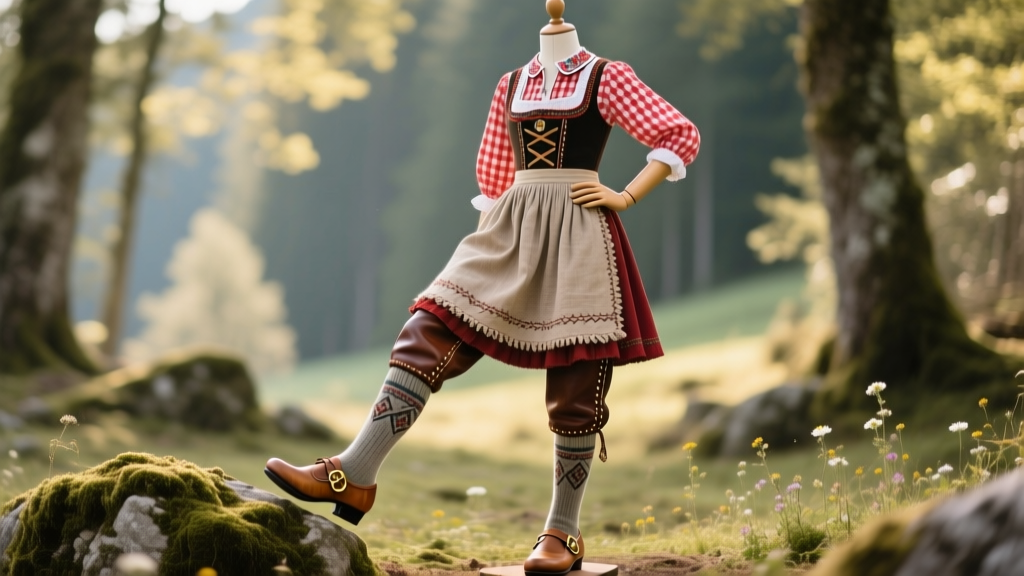
In strict historical terms, traditional Bavarian and Austrian Tracht is highly gendered. The Lederhose (singular) was exclusively a male garment, originating as the durable workwear of hunters, woodsmen, and foresters in the harsh Alpine environments of the 18th and 19th centuries. Conversely, women wore the Dirndl, which evolved from the practical cotton and linen dresses of Alpine maidservants (Dirn).
However, the historical record is not entirely black and white. According to the textile archives at the Bayerisches Nationalmuseum, the rigid codification of Bavarian Tracht was largely a late 19th-century bourgeois invention. Before the romanticization of Alpine dress by the aristocracy, rural poverty and extreme practicality sometimes blurred gender lines in high-altitude pastoral work.
The Sennerinnen and Rural Labor
The Sennerinnen (female alpine herders) who spent summers tending to cattle on remote, rugged mountain pastures required highly durable clothing. While they primarily wore heavy wool skirts and thick linen aprons, historical accounts from remote Tyrolean and Bavarian villages note that some women donned heavy woolen or canvas breeches for protection against brambles, freezing winds, and livestock. Leather, however, was an expensive, heavily taxed commodity reserved almost exclusively for male hunters and the aristocracy. Therefore, the concept of a historically accurate, traditionally embroidered women’s Lederhose is a modern fabrication, though the spirit of female alpine ruggedness is historically grounded.
The Rise of the Dirndl: The Authentic Female Tracht
To understand why women’s Lederhosen are a modern anomaly, one must look at the triumph of the Dirndl. In the 1870s and 1880s, Emperor Franz Joseph and his wife, Empress Elisabeth (Sisi), popularized the Alpine aesthetic as a fashionable summer retreat wardrobe. The humble servant’s dress was elevated with fine silks, intricate bodices (Mieder), and delicate lace aprons. By the time the first Oktoberfest tents were established in the late 19th and early 20th centuries, the Dirndl was firmly cemented as the authentic, culturally approved festive wear for women. For a deep dive into this transition, the Oktoberfest.de Historical Archives provide excellent documentation on how the Dirndl became the uniform of the Wiesn.
Modern Trachtenmode: The Birth of Womens Oktoberfest Lederhosen
The emergence of women wearing Lederhosen to Oktoberfest is a product of the late 20th and early 21st centuries, driven by the booming Trachtenmode industry. As traditional gender norms in fashion relaxed, Munich-based designers began experimenting with cross-pollinating male and female Alpine silhouettes.
Today, women’s Lederhosen are widely available, ranging from short kurze Lederhosen to knee-length Kniebundhosen. They are designed specifically for the female form, featuring a higher rise, a tapered waist, and wider hip allowances compared to the straight-cut male counterparts. While traditionalists and members of strict Trachtenvereine (traditional costume societies) may view them as a commercial novelty, they have become an accepted, albeit alternative, expression of Alpine appreciation for many modern festival-goers.
Material Guide: Deerskin vs. Goatskin in Womens Tracht
Whether crafting a traditional male garment or a modern women's adaptation, the authenticity of a Lederhose relies entirely on the leather and the tanning process. Mass-produced festival wear often utilizes cheap cowhide or synthetic alternatives, but true Alpine garments rely on two primary materials:
- Hirschleder (Deerskin): The gold standard of Bavarian leather. Deerskin is incredibly soft, breathable, and molds to the wearer's body over time. It is traditionally tanned using Sämischgerbung (brain and oil tanning), which gives the leather its signature velvety, suede-like finish on the inside.
- Ziegenleder (Goatskin): Slightly more robust and textured than deerskin, goatskin is highly durable and resistant to moisture. It is often used for garments intended for heavy outdoor wear and features a more pronounced grain.
- Wildbock (Wild Boar/Chamois): Rare and highly prized, chamois leather is exceptionally soft and usually reserved for bespoke, high-end commissions.
Construction and Tailoring Differences
Authentic women’s Lederhosen maintain the traditional construction techniques of their male counterparts, adapted for a feminine fit. Key features include:
- Raufnaht: A traditional raised seam technique where the edges of the leather are turned outward and stitched, creating a distinctive, textured ridge.
- Hirschhorn Knöpfe: Buttons carved from genuine deer antler, which are highly durable and age beautifully.
- Hosenträger: Suspenders featuring the iconic Lätzchen (the decorative chest piece), often embroidered with floral or hunting motifs using Plattstickerei (flat embroidery).
Comparison: Authentic Dirndl vs. Modern Womens Lederhosen
For those planning their Oktoberfest wardrobe, it is vital to understand the cultural and practical differences between the historical standard and the modern alternative.
| Feature | Traditional Dirndl | Modern Womens Lederhosen |
|---|---|---|
| Historical Authenticity | High (Rooted in 18th-century Alpine workwear) | Low (A late 20th-century Trachtenmode invention) |
| Primary Materials | Cotton, Linen, Silk, Wool, Lace | Hirschleder (Deer), Ziegenleder (Goat), Suede |
| Price Range (Authentic) | €350 - €1,200+ | €450 - €1,800+ |
| Footwear Pairing | Trachtenpumps, Haferlschuhe, or elegant flats | Haferlschuhe, Trachten sneakers, or rustic boots |
| Acceptance by Trachtenvereine | Strictly Regulated and Celebrated | Generally Rejected in Formal Traditional Circles |
Buying Guide: Sourcing Authentic Alpine Garments in Munich
If you are investing in women’s Lederhosen, avoiding mass-produced 'costume' shops is paramount. Authentic Trachtenmode requires skilled leatherworkers. In Munich, the epicenter of high-quality Alpine dress is the Sendlinger Straße and the Tal district.
Renowned heritage houses like Lodenfrey and Angermaier offer premium women’s leather breeches that balance modern tailoring with traditional tanning methods. For a truly bespoke experience, artisans like Meindl or local Säcklermeister (master leatherworkers) will take up to 30 individual measurements to craft a pair of maßgeschneidert (custom-tailored) Lederhosen. Expect to pay between €1,200 and €2,500 for bespoke deerskin, with a lead time of several months. For high-quality ready-to-wear options utilizing genuine goat or deer leather, budget between €450 and €800.
Cultural Etiquette for the Modern Wiesn
Wearing women's Lederhosen to Oktoberfest is a bold fashion statement that bridges historical menswear with contemporary female empowerment. To wear them respectfully and authentically, adhere to the following etiquette guidelines:
- Avoid Synthetic Fabrics: Never pair genuine leather with cheap, polyester 'costume' blouses. Opt for a high-quality Trachtenbluse made of cotton or linen, or a tailored silk shirt.
- Respect the Socks: The traditional pairing is Trachtenstutzen—thick, ribbed woolen calf socks. Avoid sheer nylons or modern athletic socks, which break the visual heritage of the garment.
- Footwear Matters: While high heels are common in the beer tents, the historically accurate choice is the Haferlschuh (a traditional Bavarian shoe with side lacing) or a high-quality leather Trachtensneaker.
- Understand the Context: Recognize that while you will be welcomed in any Oktoberfest tent, you are participating in Trachtenmode (fashion) rather than strict Tracht (historical tradition). Embrace the garment as a modern homage to the rugged Alpine spirit rather than a historical reenactment.
Preserving the Alpine Legacy
The evolution of Alpine dress is a testament to the living nature of cultural garments. While the Münchner Stadtmuseum continues to preserve the strict historical boundaries of 19th-century Bavarian clothing, the streets of Munich during Oktoberfest tell a different, evolving story. Whether you choose the historically rooted elegance of the Dirndl or the rugged, modern tailoring of women’s Lederhosen, the most important element of Alpine dress is the respect for the craftsmanship, the materials, and the rich heritage of the region that birthed it.