Modern Lederhosen vs Traditional: 2026 Styling Guide
The Evolution of Alpine Leather: From Workwear to Runway
To understand the contemporary landscape of Alpine dress, one must first recognize that Lederhosen (literally "leather breeches") were never originally intended as festival wear. Born in the 18th century as durable workwear for peasants, hunters, and woodsmen in the Bavarian and Tyrolean Alps, these garments were engineered for survival in rugged terrain. Today, the sartorial landscape of Southern Germany and Austria is defined by a fascinating dichotomy: the strict, heritage-bound Echte Tracht (authentic traditional costume) and the fluid, fashion-forward Moderne Tracht (modern tracht). As we navigate the 2026 Oktoberfest season and the rise of "Quiet Luxury" in European folk dress, understanding the nuances between modern lederhosen and their historical counterparts is essential for anyone looking to wear this iconic garment with cultural respect and stylistic precision.
Deconstructing the Echte Tracht: The Anatomy of Traditional Lederhosen
Authentic traditional lederhosen are masterclasses in functional craftsmanship. According to archival records from the Bayerisches Nationalmuseum, the golden age of rural leatherwork in Bavaria peaked in the late 19th century, driven by a romanticized bourgeois revival of Alpine culture. True traditional pieces are defined by uncompromising material standards and regional codes.
Materials and Tanning
The soul of a traditional Kurze (short breeches) or Kniebundlederhosen (knee-breeches) lies in the leather. Purists demand Hirschleder (deer leather) or Gamsleder (chamois leather), processed using Sämischgerbung (chamois tanning). This ancient method uses oxidized fish oils or animal fats to cure the hide, resulting in a suede-like finish that is remarkably soft, breathable, and naturally water-resistant. Unlike chrome-tanned commercial leathers, sämisch-tanned leather develops a rich patina over decades, often being passed down through generations.
Construction and Embroidery
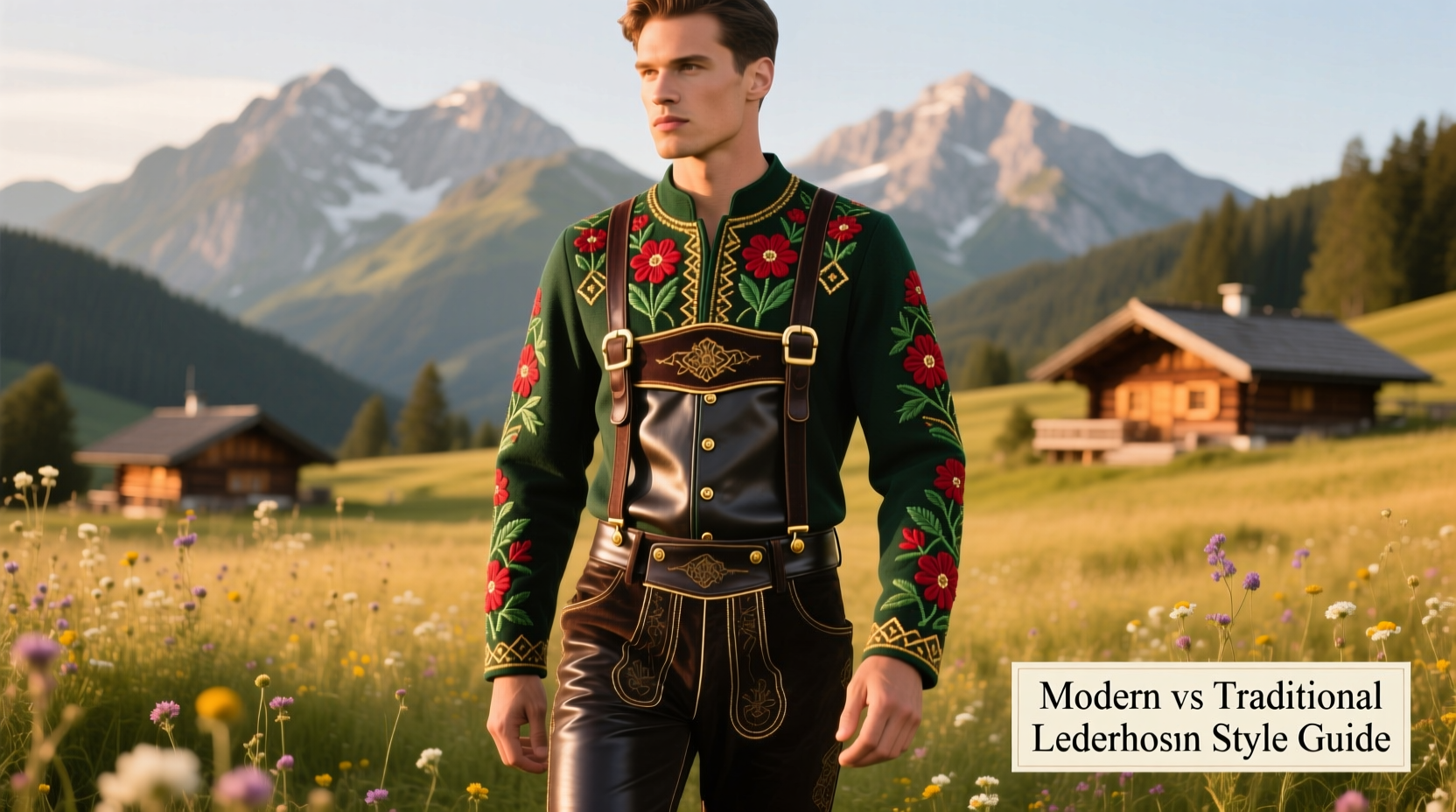
Traditional construction features the iconic Latze (the front drop-flap) secured by five carved horn buttons. The back is tailored with a Tellernaht (circular plate seam), an ingenious expansion pleat that accommodates weight fluctuations and allows for deep bending while hunting or chopping wood. The embroidery, or Stickerei, is strictly codified by region. The Tiroler Volkskunstmuseum notes that while Bavarian styles favor the oak leaf, edelweiss, and alpine rose motifs in vibrant silk threads (green, yellow, and pink), Tyrolean variations often feature geometric patterns and distinct floral arrangements unique to specific valleys.
The Rise of Moderne Tracht: Contemporary Interpretations
As Alpine dress transitioned into global pop culture, the demand for modern lederhosen surged. Today's Moderne Tracht or Landhausmode (country-house fashion) adapts the historical silhouette for contemporary urban aesthetics, weddings, and high-end hospitality environments. Designers in Munich, Salzburg, and Berlin are reimagining the garment through a modern lens.
Silhouettes and Dyes
While traditional cuts are generous and high-waisted to accommodate suspenders and rustic linen shirts, modern lederhosen often feature slimmer, tailored silhouettes with a lower rise. The color palette has also expanded dramatically. Beyond the traditional greys, browns, and olive greens, 2026 collections feature matte black, deep navy, charcoal, and even muted pastel tones for avant-garde summer weddings. Laser-cutting technology is increasingly used alongside hand-stitching to create intricate, tonal embroidery that appeals to a minimalist sensibility.
Material Innovations
While high-end modern brands still utilize deer and goat leather, the commercial market frequently employs cowhide or goatskin treated with modern chrome or vegetable tanning for durability and lower price points. There is also a growing movement of vegan lederhosen crafted from high-grade microfiber and mushroom leathers, catering to eco-conscious consumers, though these remain highly controversial among traditionalist circles.
Side-by-Side: Traditional vs. Modern Lederhosen
| Feature | Echte Tracht (Traditional) | Moderne Tracht (Modern) |
|---|---|---|
| Leather Type | 100% Hirschleder (Deer) or Gams (Chamois) | Cowhide, Goatskin, or Vegan Alternatives |
| Tanning Method | Sämischgerbung (Brain/Oil tanned, washable) | Chrome or Vegetable tanned (Stiffer, dry-clean only) |
| Cut & Silhouette | High-waisted, generous seat, Tellernaht pleating | Mid-to-low rise, slim/tailored leg, minimal pleating |
| Embroidery | Hand-stitched, vibrant regional motifs (oak, edelweiss) | Machine-assisted, tonal, minimalist, or laser-cut |
| Price Range (EUR) | €1,200 – €3,500+ (Bespoke/Artisan) | €250 – €800 (Premium Retail) |
| Primary Occasions | Trachtenvereine events, rural weddings, church holidays | Oktoberfest, urban weddings, modern hospitality |
The 2026 Styling Matrix: How to Wear Lederhosen Today
Styling lederhosen requires balancing heritage with contemporary menswear principles. Whether you are attending a traditional Zeltfest or a modern alpine-chic wedding, the supporting garments dictate the formality of the outfit.
1. Shirts: From Rustic to Refined
Traditional: The undisputed king of traditional styling is the Karo-Hemd (checkered flannel or linen shirt) in red/white or blue/white, or a crisp, heavy white linen Leinenhemd with horn buttons. These are worn untucked or slightly bloused over the waistband.
Modern: For a 2026 aesthetic, lean into "Quiet Luxury" Tracht. Pair slim-fit modern lederhosen with a fine-gauge merino wool turtleneck in charcoal or cream, a band-collar (grandad collar) linen shirt, or even an unstructured, soft-shouldered linen blazer. This elevates the garment from beer-tent attire to sophisticated evening wear.
2. Footwear: Grounding the Look
Traditional: Haferlschuhe (Bavarian half-shoes) with their distinctive side-lacing and thick, nailed soles are mandatory for authentic Tracht. They are worn with thick, calf-high wool socks (Wadenwärmer) featuring subtle folded cuffs.
Modern: While Haferlschuhe are always acceptable, modern styling frequently incorporates sleek Chelsea boots in dark brown suede, or high-end minimalist leather sneakers (like white Common Projects) for an avant-garde, streetwear-adjacent look favored by younger demographics in Munich and Berlin.
3. Accessories: The Finishing Touches
- Hosenträger (Suspenders): Traditional H-braces are heavily embroidered and crossed at the back with a Steg. Modern versions may be simpler, or omitted entirely if the breeches are tailored tightly enough to sit on the hips (though traditionalists consider wearing them without suspenders a faux pas).
- Charivari: A silver or alpaca chain draped across the Latze, adorned with hunting trophies (animal teeth, antlers) or silver coins. In modern styling, minimalist silver chain variations are used to add a subtle metallic accent without the rustic hunting connotations.
- The Hat: The traditional Gamsbarthut (felt hat adorned with a chamois beard) is reserved for formal traditional events. Modern interpretations often forgo the hat entirely, or opt for a high-quality fedora or flat cap in tweed.
Cultural Protocols and the Trachtenvereine
When navigating the world of Alpine dress, it is vital to understand the cultural weight these garments carry. The Bayerischer Trachtenverband (Bavarian Tracht Association) oversees over 2,000 local Trachtenvereine (costume preservation societies). For these members, Tracht is not a costume; it is a living, breathing regional identity governed by strict rules regarding color, embroidery, and length based on the wearer's specific village and marital status.
If you are a visitor or an international enthusiast, you are not expected to adhere to the hyper-local codes of a specific Bavarian valley. However, you are expected to respect the garment. Avoid "costume shop" lederhosen made of synthetic materials or featuring offensive, hyper-sexualized, or historically inaccurate motifs. Investing in a high-quality pair of modern lederhosen from a reputable Trachtenhaus (such as Lodenfrey or Angermaier) demonstrates a profound respect for Alpine craftsmanship. By understanding the deep historical roots of the Echte Tracht and the stylistic freedom of the Moderne Tracht, you can wear lederhosen not as a caricature, but as a genuine appreciation of one of Europe's most enduring sartorial traditions.