Long Sleeve Dirndl Buying & Sizing Guide: 2026 Edition

The Anatomy of the Langarmdirndl: Beyond the Festival Stereotype
When most people envision a dirndl, they picture the short-sleeved, beer-hall styles popularized by Oktoberfest. However, the Langarmdirndl (long sleeve dirndl) represents the historical, practical, and highly elegant root of Bavarian and Austrian Tracht (traditional folk dress). Originally designed for the alpine climate and conservative rural church settings, the long sleeve variation is a staple of winter celebrations, formal weddings, and high-end cultural events.
Understanding the anatomy of a genuine long sleeve dirndl is the first step in making an informed purchase. A traditional ensemble consists of four distinct components:
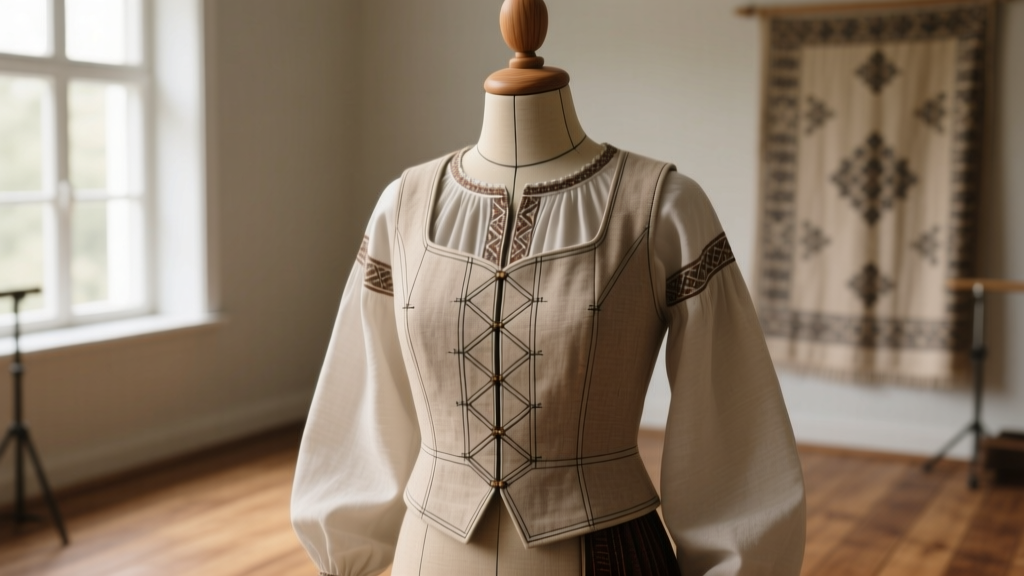
- The Mieder (Bodice): In a true winter Langarmdirndl, the sleeves are often integrated directly into the bodice, constructed from heavy wool, velvet, or brocade, and fastened with a front hook-and-eye closure (Haken und Ösen) or traditional horn buttons.
- The Rock (Skirt): Pleated and gathered at the waist, falling to the mid-calf or ankle.
- The Schürze (Apron): A separate piece tied at the front, historically indicating the wearer's marital status.
- The Trachtenbluse (Blouse): Alternatively, many modern long sleeve dirndls feature a sleeveless or short-sleeved bodice worn over a dedicated long-sleeved Trachtenbluse. These blouses often feature high Victorian-style collars, delicate lace cuffs, or subtle embroidery.
"The transition from the 19th-century alpine workwear to the refined Langarmdirndl of the early 1900s reflects a broader movement of urban elites romanticizing rural life, elevating heavy wools and modest sleeves into high-society fashion." — Textile Archives, Bayerisches Nationalmuseum.
The Sizing Matrix: Measuring for Traditional Fit
Sizing for authentic Tracht differs significantly from modern fast fashion. German and Austrian sizing is based on precise metric measurements, and the fit of the Mieder (bodice) is intentionally structured to provide support without the need for a separate corset. A common mistake international buyers make is ordering their standard US or UK dress size, which often results in a bodice that is too loose in the bust and too tight in the shoulders.
The "One-Finger" Rule for the Mieder
A properly fitted dirndl bodice should feel snug. The traditional tailor's rule is the "one-finger test": you should be able to slide exactly one index finger flat against your body under the bust and waistband. If two fingers fit, the bodice is too large and will wrinkle unflatteringly; if no fingers fit, the garment will restrict breathing and damage the seams over time.
| EU Size (DE/AT) | US Size | UK Size | Bust (cm) | Waist (cm) | Tracht Fit Notes |
|---|---|---|---|---|---|
| 34 | 4 | 6 | 78-82 | 62-65 | Petite frame; requires narrow shoulder straps. |
| 36 | 6 | 8 | 82-86 | 66-69 | Standard slim; most common sample size. |
| 38 | 8 | 10 | 86-90 | 70-73 | Average build; ensure Mieder has side boning. |
| 40 | 10 | 12 | 90-94 | 74-77 | Curvier; look for adjustable hook-and-eye fronts. |
| 42 | 12 | 14 | 94-98 | 78-81 | Fuller bust; integrated sleeves offer better support. |
| 44+ | 14+ | 16+ | 98-104+ | 82-88+ | Requires specialized plus-size Tracht tailors. |
Skirt Length Metrics: Midi vs. Maxi
While commercial festival brands sell "mini" dirndls (50cm), these are largely rejected by traditional Trachtenvereine (folk dress clubs). For cultural respect and elegance, buyers should focus on:
- Midi (60-70cm): Falls just below the knee. The most versatile and universally accepted length for weddings, church, and formal dinners.
- Maxi (80-95cm): Falls to the ankle. Reserved for highly formal events, winter balls, and historical reenactments.
Fabric Composition & Seasonal Weight
The primary advantage of a long sleeve dirndl is its suitability for autumn and winter wear. The fabric composition dictates both the price and the garment's longevity.
- Schurwolle (Virgin Wool) & Walkloden: Walkloden is a heavily milled, weather-resistant wool traditional to the Alps. It is the gold standard for winter Langarmdirndls, offering warmth, a beautiful drape, and natural stain resistance.
- Samt (Velvet): Often used for the bodice and integrated sleeves in high-end winter dirndls, usually paired with a silk or heavy cotton skirt. Velvet requires specialized dry cleaning.
- Leinen (Linen): While typically associated with summer, heavy-weight winter linen, often lined with cotton or flannel, is used in historical reproductions.
- Baumwolle (Cotton): Used primarily for the Trachtenbluse worn underneath. Look for 100% cotton with a slight stretch (2-4% elastane) for comfort across the shoulders and arms.
Regional Nuances: Ausseer, Miesbacher, and Tiroler Styles
Not all long sleeve dirndls are created equal. Regional variations dictate color palettes, sleeve cuts, and embroidery styles. According to the Tiroler Volkskunstmuseum, local geography heavily influenced the evolution of alpine dress.
- Das Ausseer Dirndl (Styria, Austria): Famous for its distinct three-color scheme (pink, green, and black). Long sleeve variations often feature delicate, hand-embroidered floral motifs on the cuffs and collar, reflecting the region's history of salt-mining wealth and artisan craftsmanship.
- Miesbacher Tracht (Bavaria, Germany): A highly formal, conservative style. The long sleeve bodice is typically dark (navy, forest green, or black velvet) with heavy silver or gold chain closures (Kettenschluss) rather than zippers.
- Tiroler Tracht (Tyrol, Austria): Often incorporates heavier wool blends and features a slightly higher neckline on the blouse to protect against harsh alpine winds. The aprons frequently display regional band-weaving techniques.
Investment Tiers: Where to Buy Authentic Tracht
The market is saturated with cheap, mass-produced "costumes" that degrade after one wear. Investing in authentic Tracht ensures you are buying a garment that can be passed down through generations. Below is a breakdown of what to expect across different price tiers in 2026.
| Tier | Price Range (EUR) | Materials & Hardware | Notable Brands / Artisans |
|---|---|---|---|
| Mass Market | €80 - €150 | Polyester blends, plastic buttons, hidden cheap zippers, machine-pressed pleats. | Amazon, generic festival shops, fast-fashion outlets. |
| Mid-Tier Specialty | €200 - €450 | 100% Cotton/Linen, real horn buttons, metal hook-and-eyes, reinforced seams. | Krüger Dirndl, Stockerpoint, Ludwig & Therese. |
| Couture & Bespoke | €600 - €1,800+ | Walkloden, pure silk, hand-embroidery, custom tailoring, antique silver closures. | Lola Paltinger, Angermaier, local Trachtenschneiderei (bespoke tailors). |
Buying Tip: When purchasing online from German or Austrian boutiques, always check if the Schürze (apron) and Bluse (blouse) are included. In the mid-to-high tiers, the skirt and bodice are often sold as a set, while the blouse and apron are purchased separately to allow for mix-and-match versatility.
Wearing Etiquette & Care Protocols
Owning a long sleeve dirndl comes with specific cultural responsibilities. The way you tie your apron communicates your relationship status—a living tradition still observed in rural Bavaria and Austria:
- Knot on the Left: Single and open to courtship.
- Knot on the Right: Married, engaged, or in a committed relationship.
- Knot in the Center (Front): Traditionally indicates a young, unmarried woman (though less commonly enforced today).
- Knot in the Back: Widowed, or practically, working as a waitress/staff.
Maintenance and Storage
Never machine wash a wool or velvet Langarmdirndl. The agitation will destroy the pleats of the Rock and shrink the Mieder. Always opt for professional dry cleaning with a cleaner experienced in handling traditional Tracht. For the cotton Trachtenbluse, a gentle hand wash or delicate machine cycle in a mesh laundry bag is acceptable. Store the ensemble on a wide, padded hanger in a breathable cotton garment bag to protect the natural fibers from moths and humidity.
By understanding the intricate construction, respecting the regional histories, and meticulously measuring for the perfect fit, your long sleeve dirndl will serve as a timeless, elegant tribute to alpine heritage for years to come.