Silk & Stitch: Chinese Clothing Craftsmanship

When exploring the vast tapestry of global heritage, the craftsmanship behind traditional clothing from China stands as a testament to millennia of textile innovation. Unlike Western tailoring, which historically relied on structured seaming and darting to mold fabric to the body, historic Chinese dress prioritized the integrity of the woven cloth. This explainer delves deep into the material science, structural anatomy, and artisanal techniques that define garments like the Hanfu and the Qipao.
The Foundation: Sericulture and Luxury Textiles
The soul of Chinese traditional dress lies in its silk. Recognized by UNESCO as an Intangible Cultural Heritage, Chinese sericulture involves highly specialized regional techniques that yield distinct fabrics.
Xiangyunsha (Gambiered Canton Gauze)
Originating in Guangdong, Xiangyunsha is a marvel of natural dyeing. The silk gauze is repeatedly soaked in the juice of the Dioscorea cirrhosa (Shoulang) tuber, then coated with iron-rich river mud. A chemical reaction between the tannins and the iron creates a unique, rustling, water-resistant fabric with a dark, metallic sheen on one side and a matte brown on the other. Authentic Xiangyunsha commands premium prices, often ranging from $150 to over $400 USD per meter, making it a favorite for luxury bespoke Qipao tailors.
The Three Great Brocades
Historically, brocade weaving required complex drawlooms. The most revered are:
- Yun Jin (Cloud Brocade): From Nanjing, incorporating real gold and silver threads, peacock feathers, and silk. It was exclusively used for imperial dragon robes.
- Shu Jin (Shu Brocade): Hailing from Sichuan, known for its vibrant colors and tight, durable weave, historically traded along the Silk Road.
- Song Jin (Song Brocade): From Suzhou, characterized by its soft texture, subdued elegance, and intricate geometric motifs, often used for mounting scrolls and high-end scholar robes.
The Four Great Embroideries: A Comparative Analysis
Surface ornamentation in traditional clothing from China is dominated by regional embroidery schools. The Metropolitan Museum of Art's textile archives highlight how these styles evolved to signify social rank, regional identity, and cosmological beliefs.
| Style | Region | Signature Technique & Motifs | Common Garment Application |
|---|---|---|---|
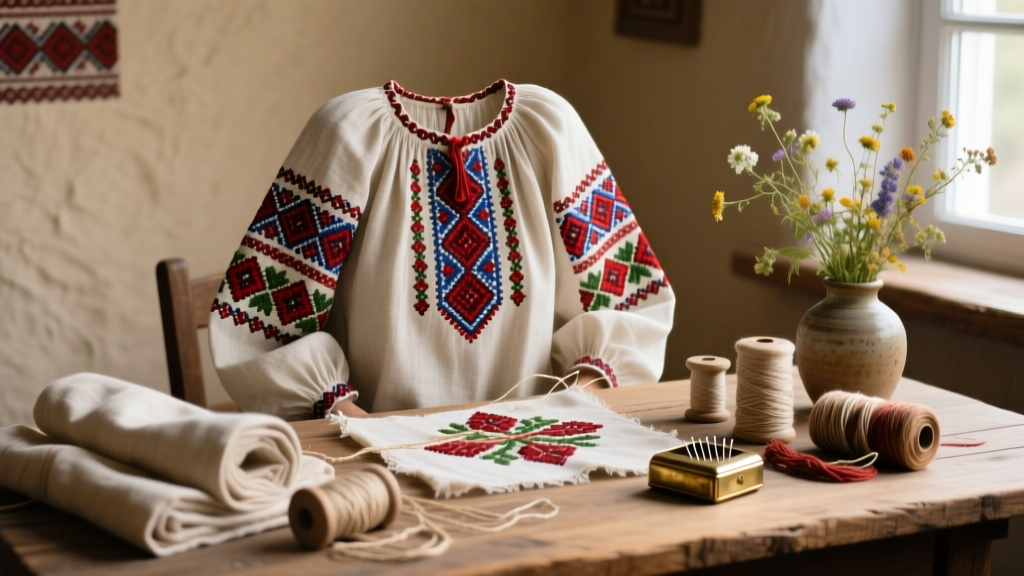
| Su Embroidery | Suzhou, Jiangsu | Double-sided stitching; splitting a single silk thread into 1/48th for hyper-realistic koi, peonies, and landscapes. | Scholar robes, high-end Qipao panels, ceremonial fans. |
| Xiang Embroidery | Hunan | Vibrant, contrasting colors; specialized in rendering the texture of lion and tiger fur using layered, slanted stitches. | Everyday folk wear, theater costumes, decorative home textiles. |
| Yue Embroidery | Guangdong | Heavy use of gold and silver couching; bold dragon, phoenix, and lychee motifs with a raised, 3D effect. | Bridal jackets (Kwa), ceremonial clan dress, temple festival wear. |
| Shu Embroidery | Sichuan | Soft satin base; tight, even stitches featuring pandas, bamboo, and lotus flowers with a distinct folk-art charm. | Quilted winter garments, minority festival sashes, shawls. |
Structural Anatomy: The Philosophy of Flat Cutting
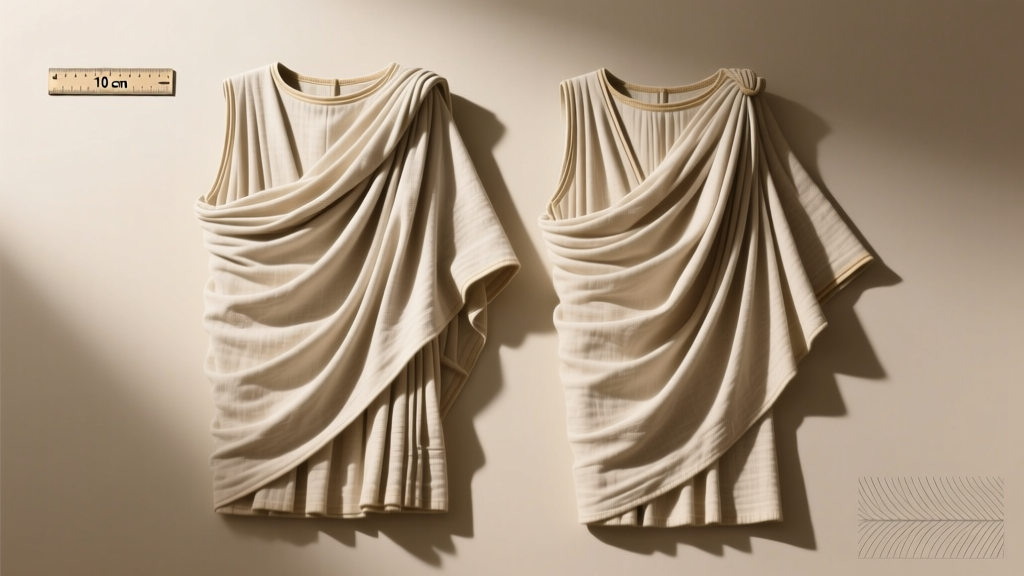
To understand historic Chinese garments, particularly the Hanfu, one must abandon the Western concept of tailoring. Traditional Chinese dress utilizes flat cutting. Fabric is woven on narrow looms (historically around 50-60 cm wide), and garments are constructed by joining these panels without cutting away excess fabric or adding darts.
Jiaoling Youren (Cross-Collar, Right Lapel)
The defining silhouette of the Hanfu is the jiaoling youren, where the left side of the robe crosses over the right and ties at the waist. This zero-waste construction relies on the drape of the silk and the placement of the sash to create volume. The sleeves, often cut in a continuous curve with the bodice (forming a T-shape when laid flat), range from the narrow zhixiu to the sweeping, floor-grazing guangxiu (broad sleeves) reserved for formal court occasions.
The Qipao: A Marriage of East and West
While the Hanfu represents ancient traditions, the Qipao (or Cheongsam) reflects the modernization of the 1920s and 30s. Originally a loose, A-line garment worn by Manchu women, the Shanghai Qipao evolved to incorporate Western darting, set-in sleeves, and shoulder seams. However, traditional master tailors still employ the guicai (paste-making) technique—using a wheat-based starch paste to mold the silk and wool fabrics over the curves of the body using a heavy iron, eliminating the need for excessive seaming and preserving the continuous canvas needed for elaborate embroidery.
Beyond the Han: Minority Textile Mastery
While Han and Manchu garments dominate global perceptions, China’s 55 recognized ethnic minority groups possess extraordinary, distinct textile traditions that heavily influence the broader scope of traditional clothing from China.
Miao Batik and Silverwork
The Miao people of Guizhou are renowned for their intricate batik (蜡染, laran) and pleated skirts. Using beeswax applied with specialized brass knives, artisans draw complex cosmological maps, butterfly mother myths, and river motifs onto hemp and cotton before dyeing them in deep indigo vats. The resulting ice crackle patterns are highly prized. Furthermore, Miao festival jackets are heavily weighted with hammered silver horn and butterfly motifs, serving as both spiritual armor and a display of familial wealth.
Dong Indigo and Glazed Cloth
In the Dong villages of Guangxi and Guizhou, women produce a unique glazed indigo cloth. After repeated dips in fermented indigo (Persicaria tinctoria), the fabric is beaten with wooden mallets and rubbed with egg whites or ox hide glue. This labor-intensive process compresses the fibers, resulting in a stiff, iridescent, dark-purple fabric that repels water and wind, perfectly suited for the damp mountainous climates.
Sourcing Authentic Garments: A Buyer's Framework
For collectors, cultural practitioners, and historians seeking authentic traditional clothing from China, navigating the market requires an understanding of material markers and artisanal pricing. The Victoria and Albert Museum's Asian collections serve as an excellent benchmark for evaluating the drape, weave density, and embellishment quality of historical pieces.
Price Tiers and Material Indicators
- Tier 1: Mass-Market / Synthetic ($30 - $100 USD): Typically made of polyester or rayon blends. While visually appealing for casual cosplay or photography, these lack the breathability, drape, and cultural authenticity of natural fibers. Machine embroidery is flat and lacks the sheen of hand-twisted silk floss.
- Tier 2: Artisan Ready-to-Wear ($200 - $600 USD): Garments crafted from mulberry silk, linen, or high-grade cotton. You will find accurate historical patterning (such as Ming Dynasty Mamianqun pleated skirts with woven metallic threads) and hand-finished details like traditional knotted buttons (pankou).
- Tier 3: Bespoke & Heritage Silks ($1,000 - $5,000+ USD): Commissioned pieces utilizing intangible heritage fabrics like Xiangyunsha or Nanjing Yun Jin. These involve consultations with master tailors, bespoke flat-pattern drafting, and hundreds of hours of hand-embroidery by certified Su or Yue artisans.
Preserving the Living Heritage
The appreciation of traditional clothing from China extends far beyond aesthetic admiration; it is an engagement with a living, breathing material science. Whether it is the mud-dyed resilience of Canton gauze or the mathematical precision of a Song brocade weave, these garments represent a profound harmony between human craftsmanship and the natural world. When acquiring or studying these pieces, prioritizing ethical artisan cooperatives and certified heritage weavers ensures that these ancient techniques survive to dress future generations.