How to Wear a Lederhosen: A Historical Origins Guide
The Peasant Roots: Why Lederhosen Were Born
To truly understand how to wear a lederhosen, one must first understand why it was created. The word Lederhosen translates simply to "leather breeches," but its origins are deeply tied to the harsh realities of 18th-century Alpine life. Unlike the silk and velvet culottes worn by the French and German aristocracy, Alpine peasants, hunters, and foresters required garments that could withstand the brutal conditions of the Bavarian and Tyrolean mountains.
Leather was a byproduct of the hunting and agricultural economy. Through a traditional tanning process known as Sämischgerbung (an oil-tanning method using fish oils and animal brains), artisans created leather that was incredibly supple, water-resistant, and durable. By the late 18th century, the garment caught the attention of the nobility. Prince Regent Luitpold of Bavaria and the Habsburg aristocracy began adopting finely embroidered leather breeches for hunting and country retreats, elevating a peasant workwear staple into a symbol of regional pride and romanticized Alpine identity.
Anatomy of Authentic Tracht: Regional Variations
When researching how to wear a lederhosen correctly, it is vital to recognize that Tracht (traditional dress) is not a monolith. Authentic garments are deeply regional. The embroidery patterns (Stickerei), the cut of the breeches, and the type of leather used will immediately signal to a knowledgeable Bavarian exactly which valley or district you are representing.
| Region | Primary Leather | Embroidery Style | Distinctive Features |
|---|---|---|---|
| Miesbach | Hirschleder (Deer) | Intricate floral vines, heavy shading | Darker patina, longer cut, highly formal |
| Werdenfels | Ziegenleder (Goat) | Geometric motifs, oak leaves | Lighter grey/brown tones, slightly shorter |
| Tirol (Austria) | Various (Deer/Cow) | Bold contrast, colorful silk threads | Shorter inseam, wider suspenders, vibrant |
| Salzkammergut | Hirschleder (Deer) | Delicate, light-colored floral | Often paired with specific green wool jackets |
According to the Trachteninformationszentrum (Tracht Information Center) in Benediktbeuern, the preservation of these specific regional patterns is a matter of intense cultural pride, with local Trachtenvereine (traditional dress clubs) strictly regulating what is considered historically accurate for their specific district.
Step-by-Step: How to Wear a Lederhosen with Historical Accuracy
Dressing in authentic Tracht is a deliberate process. Modern costume shops sell one-piece, polyester approximations that violate the fundamental construction of the garment. Here is the historically accurate method for assembling your attire.
1. The Base Layer: The Pfoad (Shirt)
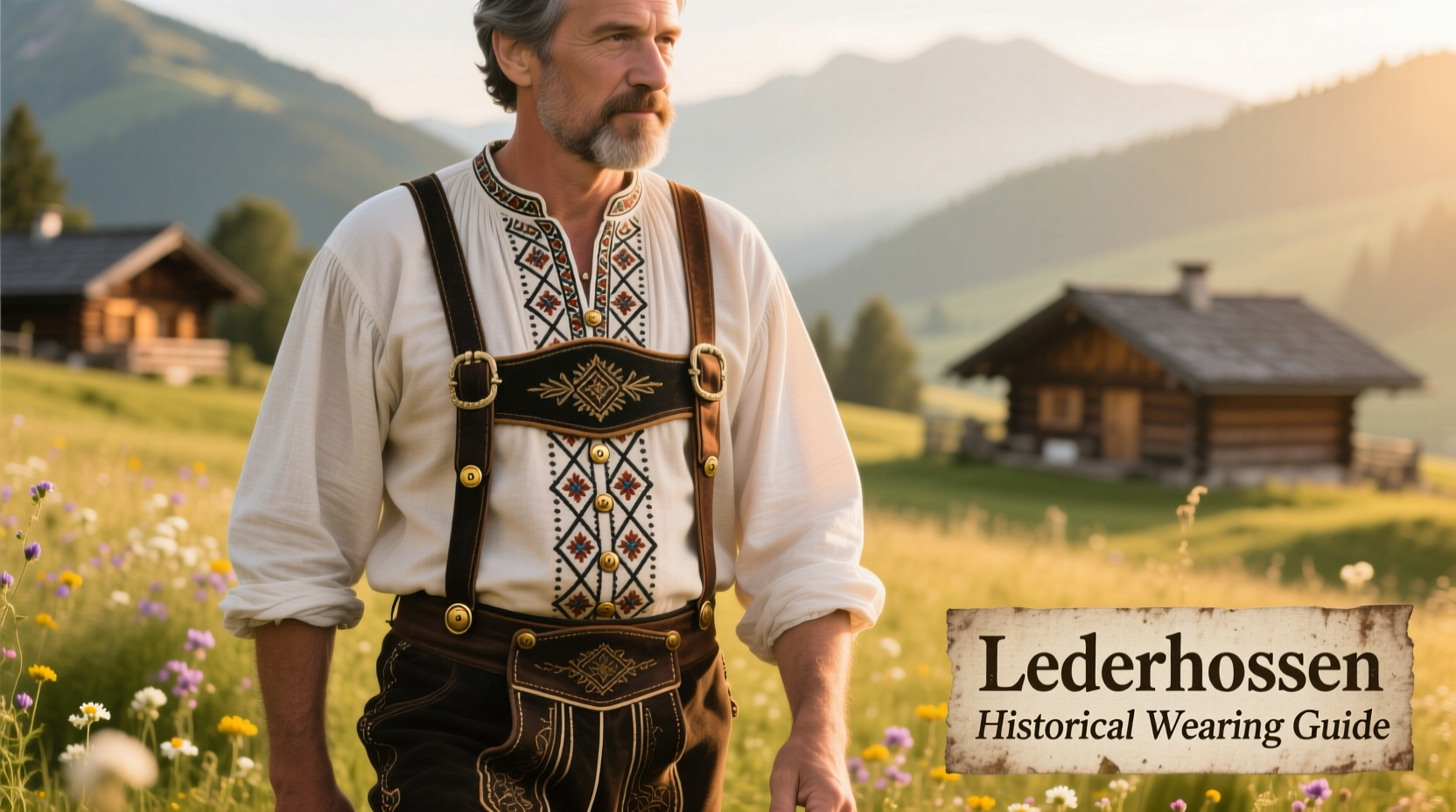
Never wear a modern t-shirt or a polyester button-down beneath your breeches. The traditional shirt, known as a Pfoad, is made of heavy linen or cotton. Historically, it features a band collar (Stehkragen) or a classic fold-down collar. While white linen is the most formal and historically universal, checkered patterns (blue/white or red/white) became popular among the working class in the 19th century. The shirt should be tucked in, though some shorter, contemporary Trachtenmode shirts are designed to be worn untucked.
2. The Breeches and the Latz (Drop-Front)
Authentic lederhosen do not have a modern zipper fly. They feature a Latz (drop-front flap) secured by horn or bone buttons. To wear them correctly, button the inner waistband first, ensuring the breeches sit high on the natural waist, not low on the hips. The drop-front is then folded up and fastened with two vertical rows of buttons. The inseam should end just below the knee, allowing the breeches to taper naturally against the calf.
3. The Hosenträger (Suspenders)
The suspenders are not merely functional; they are a canvas for regional artistry. The front straps should feature a crossbar (Quersteg or Schürze) that rests across the chest, often heavily embroidered to match the breeches. Historically, the straps are worn straight over the shoulders and crossed in an 'X' at the back, secured by leather loops and horn buttons. Ensure the leather is supple and matches the patina of the breeches.
4. Hosiery: Loferl vs. Trachtenstutzen
Your choice of legwear depends on the season and formality. The Loferl is a traditional two-piece summer hosiery consisting of a calf-warmer (Wadenwärmer) and a separate ankle sock. This was originally designed to protect the calves from brush and cold mountain air while leaving the ankle cool. For winter or highly formal events, wear full-length Trachtenstutzen (knee-high wool socks) pulled up tightly, folding the top cuff just once over the bottom of the lederhosen.
5. Footwear: The Haferlschuh
Complete the ensemble with Haferlschuhe, the traditional Alpine shoe characterized by a side-lacing system and a sturdy, hobnailed or rubber-cleated sole. Originally designed for traversing steep, rocky terrain, these shoes provide excellent ankle support. Avoid modern sneakers or generic loafers, which immediately break the historical illusion.
Sourcing Authenticity: Artisans, Materials, and Prices
Understanding how to wear a lederhosen also means understanding how to acquire a genuine one. The Deutsches Leder- und Schuhmuseum (German Leather and Shoe Museum) highlights the immense labor required for traditional Sämischgerbung tanning, which dictates the price of authentic garments.
- Mass-Produced / Trachtenmode (€100 - €250): Made from cowhide (Rindsleder) or pigskin, often split and chemically tanned. Embroidery is machine-done. Acceptable for casual Oktoberfest attendance, but lacks historical integrity and longevity.
- Authentic Tracht (€400 - €800): Crafted from genuine Ziegenleder (goat) or entry-level Hirschleder (deer). Features hand-guided machine embroidery, horn buttons, and proper drop-front construction. The leather will mold to the wearer's body over time.
- Master Artisan / Bespoke (€1,200 - €3,000+): Hand-stitched from premium, brain-tanned Hirschleder. Embroidery is done entirely by hand using silk threads. The leather develops a rich, dark patina (Speckschwarte) over decades of wear. These are heirloom garments passed down through generations.
Cultural Etiquette: Wearing Tracht at Oktoberfest and Beyond
Wearing traditional Alpine dress carries cultural weight. The Bayerisches Nationalmuseum (Bavarian National Museum) in Munich extensively documents the evolution of Tracht from everyday workwear to a protected cultural identifier. When wearing lederhosen, observe the following etiquette:
Respect the Garment: Lederhosen are meant to be worn, worked in, and aged. Authentic deer leather is self-cleaning to a degree; minor dirt and beer spills are historically considered part of the garment's "patina" and character. Never dry-clean authentic brain-tanned leather, as it will strip the oils and ruin the hide.
Hat Etiquette: If you wear a traditional Trachtenhut (felt hat) adorned with a Gamsbart (a tuft of chamois or deer hair), you must remove it when entering a church, a private home, or when sitting down at a formal dining table. The Gamsbart is a status symbol; historically, the larger and darker the tuft, the more skilled the hunter.
Tracht vs. Costume: Refer to your clothing as Tracht or Trachtenbekleidung. Calling it a "costume" (Kostüm) in German implies carnival wear or theatrical dress, which can be deeply offensive to members of traditional Trachtenvereine who view their attire as a living, respected cultural heritage.
By understanding the historical origins, regional nuances, and proper assembly of the garments, you elevate your experience from merely putting on a festival outfit to participating in a centuries-old Alpine tradition.