German Girl Lederhosen Etiquette
Beyond the Dirndl: The Legacy of Female Lederhosen
When exploring traditional Bavarian and Alpine clothing, the Dirndl immediately comes to mind as the standard feminine attire. However, the concept of a german girl lederhosen outfit is not a modern invention or a mere Oktoberfest novelty. Female-lederhosen—known natively as Damenlederhosen or Mädchenlederhosen—possess a rich, practical history rooted in the rugged landscapes of the Alps. Understanding the wearing etiquette, historical context, and proper styling of these garments is essential for anyone looking to embrace Alpine Tracht (traditional dress) with authenticity and cultural respect.
Historical Roots: From Alpine Trails to Trachtenvereine
To wear lederhosen respectfully, one must first understand its origins. According to archives at the Deutsches Ledermuseum (German Leather Museum) in Offenbach, leather trousers were originally the workwear of male peasants, hunters, and foresters in the 18th century. However, as women began participating more actively in alpine hunting, forestry, and mountain climbing in the late 19th and early 20th centuries, practical leather trousers became a necessity.
The 1920s Wandervogel Movement
The widespread adoption of lederhosen by young women and girls gained significant momentum during the Wandervogel (migratory bird) youth movement of the 1920s and 1930s. This back-to-nature movement rejected restrictive urban corsets and heavy skirts in favor of practical, durable hiking attire. Young women wore knee-bund leather trousers paired with rustic linen shirts, setting a precedent for female alpine wear that persists in traditional clubs today.
'In the context of the Bayerischer Trachtenverband (Bavarian Traditional Costume Association), female members of specific alpine and hunting guilds still wear historically accurate leather trousers during Schützenfeste (marksmen festivals) and alpine ceremonies, adhering to strict regional Trachtenordnung (dress codes).' — Bayerischer Trachtenverband
Anatomy of Authentic Mädchenlederhosen
A genuine pair of female lederhosen differs significantly from both male cuts and cheap commercial costumes. When evaluating an authentic garment, look for the following construction markers:
- The Leather: Authentic pairs are crafted from Hirschleder (deer leather) or Rehleder (roe deer). The leather undergoes sämisches Gerben (oil tanning), resulting in a soft, breathable, and washable suede-like finish that molds to the wearer's body over time.
- The Cut: Unlike the drop-crotch style of historical male workwear, female cuts feature a higher, tailored waist to accommodate the female silhouette. They typically come as a Kurze Lederhose (ending above the knee) or a Kniebundhose (ending just below the knee with a drawstring or buckle).
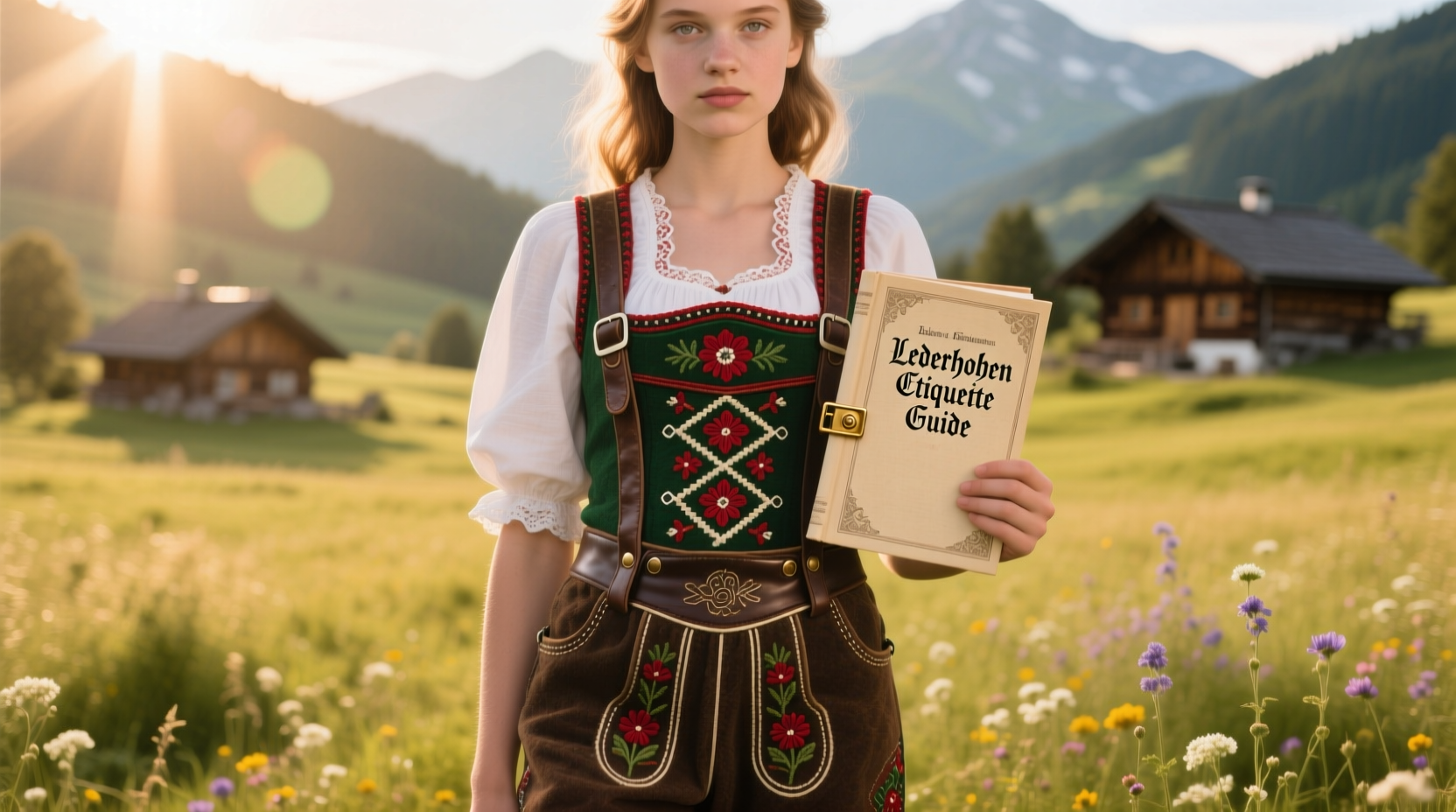
- The Latze (Bib): The front flap is secured with horn buttons or deer-antler toggles. On female garments, the bib is often slightly narrower and features distinct embroidery.
- Stickerei (Embroidery): While male lederhosen heavily feature oak leaves, acorns, and hunting horns, female embroidery often incorporates alpine florals like the Edelweiss, Enzian (gentian), and delicate vine motifs, though geometric Blattstickerei (leaf embroidery) remains popular across all genders in regions like Miesbach and Werdenfels.
Wearing Etiquette: When and Where to Wear Them
The most common mistake tourists and casual buyers make is wearing traditional garments in inappropriate settings. In Germany and Austria, Tracht is treated with the same respect as a business suit or a formal gown. Below is a guide to the appropriateness of wearing a german girl lederhosen outfit across various occasions.
| Occasion | Appropriateness | Etiquette & Styling Notes |
|---|---|---|
| Oktoberfest / Volksfest | Highly Appropriate | Opt for high-quality commercial Trachtenmode. Pair with a checkered blouse and comfortable shoes. Avoid overly short 'party' cuts. |
| Schützenfest (Marksmen Festival) | Strictly Regulated | Only wear if you are a member of the guild. Must adhere to the specific Trachtenordnung of the local club (e.g., specific hat feathers and embroidery). |
| Alpine Hiking / Outdoor Events | Highly Appropriate | Functionality is key. Wear a durable Kniebundhose with thick wool socks and hiking boots. This honors the garment's Wandervogel roots. |
| Church Weddings / Funerals | Context Dependent | Dark, subdued leather (black or deep brown) is acceptable for formal church events in rural Bavaria, but a conservative Dirndl is generally preferred for girls/women. |
| Formal Galas / City Nightlife | Inappropriate | Lederhosen is inherently rustic and alpine. Wearing it to a formal urban event or a standard nightclub is considered a cultural faux pas. |
Styling Rules: Footwear, Shirts, and Accessories
Assembling a respectful and historically grounded outfit requires attention to the accompanying pieces. The Bayerisches Nationalmuseum (Bavarian National Museum) frequently highlights how accessories denote regional identity and social context in alpine dress.
The Blouse and Shirts
Never pair authentic leather trousers with modern synthetic t-shirts or clubwear. For a traditional look, pair your lederhosen with a rustic linen button-down shirt (Leinenhemd) in white, natural beige, or subtle checks. Alternatively, a delicate cotton Dirndl blouse with a modest neckline or puffed sleeves bridges the gap between masculine tailoring and feminine tradition.
Footwear: The Foundation of Tracht
Stilettos, sneakers, and go-go boots instantly degrade the outfit into a caricature. The correct footwear includes:
- Haferlschuhe: The traditional alpine shoe with a side-lacing system and a robust, grippy sole. Originally designed for mountain terrain, they are the gold standard for Tracht.
- Trachtenstiefel: Calf-high leather boots, often featuring subtle embroidery, which pair beautifully with a Kurze Lederhose.
- Trachtenstutzen: Thick, ribbed wool socks that reach just below the knee. They should be made of virgin wool (Schurwolle) and feature a subtle folded cuff.
Accessories and Headwear
Complete the look with a Tirolerhut (Tyrolean hat) made of wool felt, adorned with a Gamsbart (chamois hair brush) or a cord (Hutschnur). For women, a small alpine bouquet (Hutstrauß) pinned to the hat band is a beautiful, culturally accurate alternative. A Charivari (a decorative chain worn across the bib, originally made from small hunting trophies or silver coins) can be worn, though it is traditionally more common on male attire; modern female adaptations often feature silver alpine charms.
Buying Guide: Price Ranges and Authenticity Markers
Investing in a german girl lederhosen outfit means navigating a market flooded with mass-produced imports. True Tracht is an investment in artisan craftsmanship. Use the pricing table below to set realistic expectations for authentic garments.
| Category | Material & Origin | Price Range (EUR) | Best For |
|---|---|---|---|
| Fast Fashion / Costume | PU Leather, Polyester; Imported | €30 - €80 | One-time costume parties (Not recommended for cultural events). |
| Commercial Trachtenmode | Genuine Suede/Cowhide; Made in EU/Asia | €150 - €350 | Oktoberfest, casual folk festivals, tourist wear. |
| Authentic Tracht (Prêt-à-porter) | 100% Hirschleder (Deer); Sämisch tanned; European artisans | €450 - €800 | Trachtenverein members, serious collectors, alpine weddings. |
| Maßgeschneidert (Bespoke) | Premium Deer/Roe; Hand-embroidered; Master Saddler (Säckler) | €1,000 - €2,500+ | Lifetime investment, heirloom quality, strict regional dress codes. |
When shopping, look for the hallmark of a master Säckler (leatherworker). The embroidery should be hand-stitched using waxed linen thread, not machine-embroidered with shiny polyester thread. The leather should smell of natural oils and smoke, not chemical solvents.
Cultural Respect: Avoiding the Costume Trap
Ultimately, wearing a german girl lederhosen outfit is about honoring the resilience, craftsmanship, and alpine heritage of the region. It is a rejection of fast fashion in favor of sustainable, lifelong garments. By understanding the difference between a commercial costume and authentic Tracht, choosing appropriate occasions, and styling the garment with traditional accessories, you participate in a living cultural tradition that continues to thrive in the mountains of Bavaria, Tyrol, and beyond.