Female Lederhosen Costume: Craftsmanship & Materials Guide
Beyond the Dirndl: The Rise of the Female Lederhosen Costume
When discussing traditional Bavarian and Alpine clothing, the Dirndl immediately comes to mind as the quintessential womenswear. However, the female lederhosen costume has carved out a significant, culturally rich space in modern Trachten fashion. Historically, Lederhosen (leather breeches) were strictly male workwear, worn by hunters, foresters, and farmers in the 18th and 19th centuries. Women in these Alpine regions wore the Dirndlgewand or heavy wool skirts (Rock).
The evolution of the female lederhosen began in the early 20th century as women increasingly participated in mountaineering, hunting, and Alpine preservation societies. Today, it is a celebrated garment that blends rugged heritage with tailored feminine elegance. According to the Bayerisches Nationalmuseum (Bavarian National Museum), while traditionalists maintain strict historical boundaries for folk dress, contemporary Trachtenmode embraces the female lederhosen as a living, evolving garment. Crafting an authentic pair for women requires master-level tailoring, specialized leatherworking, and a deep understanding of Alpine heritage.
Sämischgerbung: The Soul of Authentic Alpine Leather
The defining characteristic of any high-quality lederhosen—whether tailored for men or women—is the leather itself. Authentic garments are not made from standard chrome-tanned leather. Instead, they utilize an ancient, highly specialized technique known as Sämischgerbung (chamois or brain tanning). The Deutsches Ledermuseum (German Leather Museum) notes that this method dates back centuries and remains the gold standard for Alpine Tracht.
The Chemistry of Chamois Tanning
In Sämischgerbung, the raw hide is soaked, de-haired, and repeatedly worked with oxidized fish oil (traditionally cod liver oil) or animal fats. The chemical reaction between the oil and the hide's collagen fibers creates a leather that is entirely unique. Unlike modern chemically tanned leathers that crack and stiffen when wet, sämisch-tanned leather is completely washable, breathable, and incredibly soft. Over time, the leather absorbs the natural oils of the wearer's skin and the Alpine environment, developing a rich, dark patina that is highly prized in Trachten culture.
Hirsch vs. Ziege: Selecting the Premium Hide
When commissioning or purchasing a premium female lederhosen costume, the choice of animal hide dictates the garment's drape, durability, and price point.
- Hirschleder (Deer Leather): The undisputed king of Trachten leathers. Deer hide is exceptionally soft, velvety to the touch, and lightweight. Because deer are wild and roam through brush, the hides often bear natural scarring, which artisans view as a mark of authenticity rather than a defect. It drapes beautifully, making it ideal for the tailored, slightly shorter cuts of women's lederhosen.
- Ziegenleder (Goat Leather): A highly durable and slightly more affordable alternative. Goat leather has a distinct, fine grain and is more resistant to moisture and abrasion. It is slightly stiffer than deer leather but softens beautifully with wear. It is an excellent choice for women who plan to wear their costume for rigorous outdoor activities or frequent Oktoberfest celebrations.
- Rehleder (Roe Deer): Extremely rare and expensive. Roe deer hides are very small and delicate, requiring the master tailor to stitch multiple pieces together seamlessly. It is reserved only for the most exclusive, bespoke garments.
Anatomy of an Artisan Lady’s Lederhose
Constructing a female lederhosen costume requires adapting traditional male workwear anatomy to a woman's silhouette without losing the historical markers of the garment. A master Trachtenschneider (traditional tailor) focuses on several key structural elements.
The Latz, Horn Buttons, and Messertasche
The most iconic feature of the lederhosen is the Latz (the drop-front flap). In authentic designs, this is secured by two horn buttons (Hirschhornknöpfe). While men's lederhosen often feature the H-Latz (where the suspenders attach to the flap, forming an 'H' shape), female adaptations frequently utilize a tailored waistband with side-lacing or a modified flap that sits flatter against the hips for a streamlined silhouette.
Another non-negotiable hallmark of craftsmanship is the Messertasche (knife pocket). Located on the right thigh, this small, reinforced pocket was originally designed to hold a hunting or utility knife. Even on modern, fashion-forward female lederhosen, the inclusion of a properly stitched Messertasche is a primary indicator that the garment was made by an artisan who respects historical construction protocols.
Stickerei: Decoding Regional Floral Embroidery
The embroidery (Stickerei) on a female lederhosen costume is not merely decorative; it is a geographic identifier. Artisans use silk or heavy linen thread to stitch motifs that signify the wearer's regional allegiance.
For example, the Miesbacher Tracht often features intricate shading techniques (Schattierstickerei) depicting the Edelweiss, Alpenrose, and oak leaves. The Werdenfelser Tracht might incorporate lighter, more delicate floral vines. In high-end female costumes, the embroidery is done entirely by hand, a process that can take a master embroiderer up to 40 hours per garment. The stitching must be tight enough to withstand the stretching of the leather, yet flexible enough to move with the wearer.
Material & Cost Comparison: Mass-Produced vs. Maßgeschneidert
The market for female lederhosen is vast, ranging from fast-fashion festival wear to heirloom-quality bespoke pieces. Understanding these tiers is crucial for buyers seeking authentic craftsmanship.
| Tier | Leather Type | Embroidery & Hardware | Price Range (EUR) | Lifespan & Patina |
|---|---|---|---|---|
| Fast Fashion | Chrome-tanned cow/pig suede | Machine-stitched synthetic thread, plastic buttons | €80 - €150 | 1-2 seasons; cracks when wet, no true patina |
| Mid-Tier Boutique | Vegetable-tanned goat or basic deer | Machine-assisted embroidery, real horn buttons | €250 - €450 | 5-10 years; develops moderate patina |
| Maßgeschneidert (Bespoke) | Hand-rubbed Sämisch Hirschleder | 100% hand-stitched silk thread, carved antler buttons | €900 - €1,800+ | Lifetime; washable, develops rich, dark heirloom patina |
Styling and Wearing Etiquette for Women
Wearing a female lederhosen costume requires an understanding of Alpine styling etiquette to ensure the outfit remains respectful and culturally grounded. Because the lederhosen itself is a heavy, rugged garment, the accompanying pieces should provide balance.
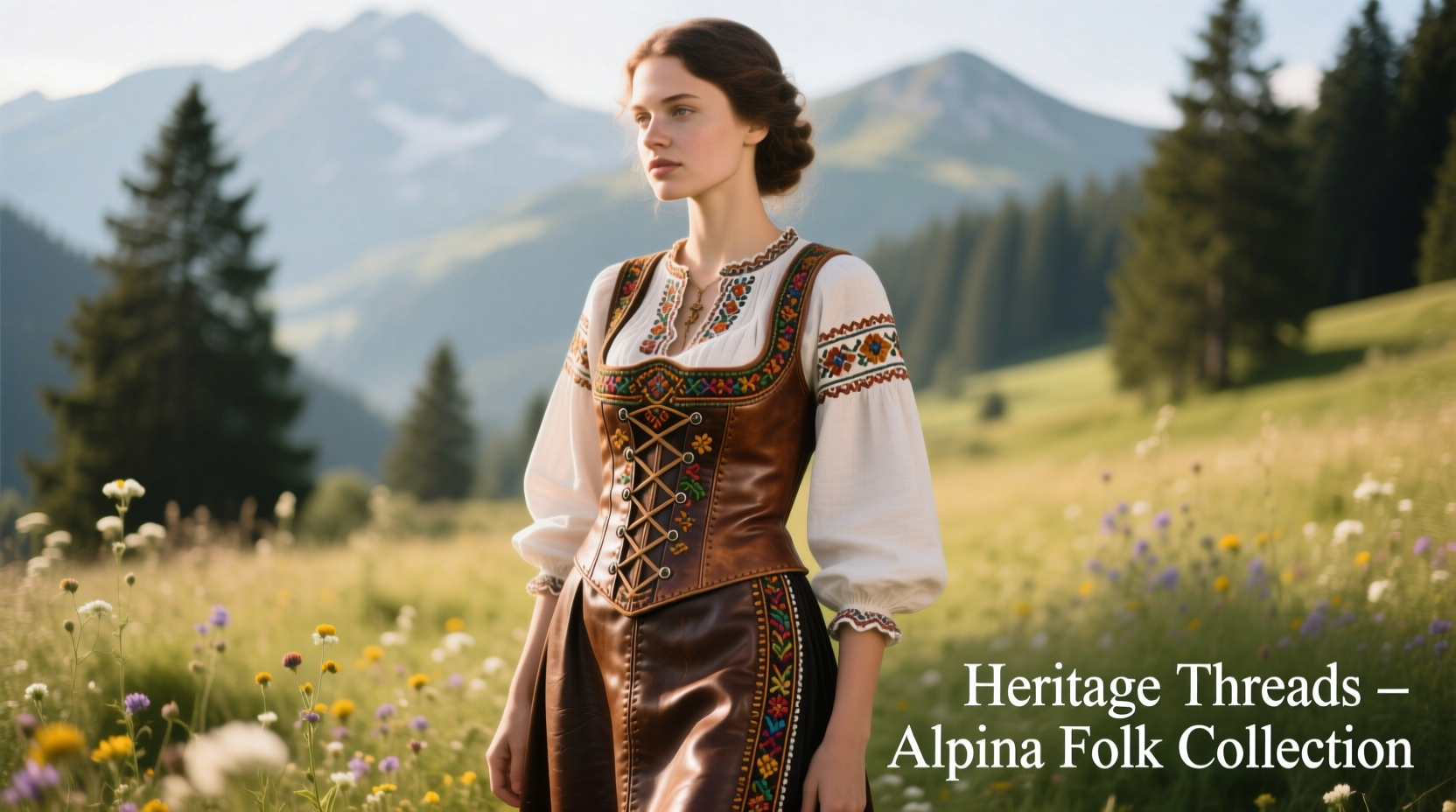
Traditionally, women pair the leather breeches with a high-quality Trachtenbluse (Tracht blouse) made of crisp white linen or delicate cotton lace. A tailored Trachtenweste (wool vest) or a silk Halstuch (neck scarf) tied at the collar adds layers of color and warmth. Footwear is equally important: avoid modern sneakers or stilettos. Instead, opt for traditional Haferlschuhe (Bavarian loafers with side lacing), sturdy leather ankle boots, or classic Trachtensneaker made by heritage brands.
Accessories should lean into natural materials. A Kropfband (velvet choker with a silver or stone cameo) or a silver Trachtenschmuck set complements the rustic leather beautifully. For headwear, a classic Trachtenhut adorned with a Gamsbart (chamois hair tuft) or a subtle alpine feather completes the silhouette. As noted by cultural preservationists at the Tiroler Volkskunstmuseum, the key to wearing Alpine Tracht is to prioritize natural materials, regional accuracy, and artisanal quality over fleeting festival trends.
Ultimately, the female lederhosen costume is a testament to the adaptability of European folk dress. It honors the rugged history of the Alps while providing modern women with a garment of unparalleled craftsmanship, comfort, and enduring style.