Europe Traditional Costume: Cultural Significance & Identity
The Semiotics of Stitch: Beyond the Festival
When scholars and textile historians discuss a Europe traditional costume, they are not merely referencing historical garments worn for Oktoberfest or Midsummer pageants. Traditional dress across the European continent functions as a complex semiotic system—a wearable archive of genealogy, social standing, regional geography, and spiritual protection. Unlike mass-produced historical reenactment clothing, authentic folk dress is governed by strict cultural protocols, artisanal guilds, and regional councils that dictate everything from the metallurgical composition of jewelry to the specific stitch count of a hem.
To understand the cultural gravity of these garments, we must deconstruct the regional variations that define European folk dress, moving beyond the superficial aesthetics to examine the materiality and encoded meaning within the threads.
Genealogical Mapping: The Norwegian Bunad
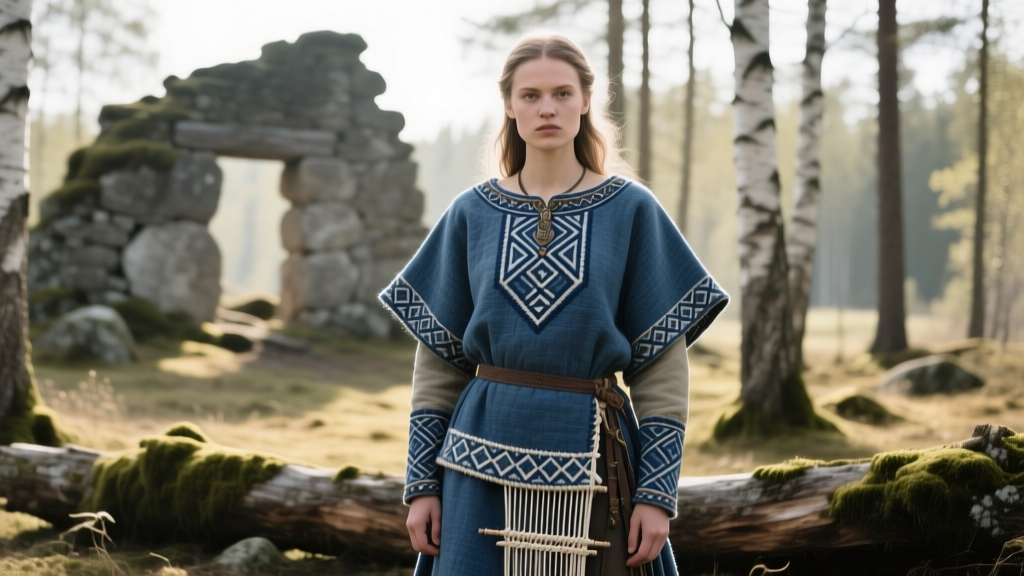
Perhaps no Europe traditional costume is as rigorously codified and economically significant as the Norwegian bunad. Unlike generic folk costumes, the bunad is deeply tied to the Norwegian concept of tilhørighet (belonging). According to guidelines overseen by the Norsk Folkemuseum and the National Council for Bunad and Folk Costumes (Bunad- og folkedraktrådet), a wearer typically selects a bunad corresponding to their ancestral home region or their current place of residence.
Materiality and the Silver Economy
The construction of an authentic bunad relies on historically accurate textiles, primarily locally sourced wool and unbleached linen. However, the true cultural and financial weight of the garment lies in its silverwork (sølv). A complete bunad ensemble includes oxidized silver brooches, cufflinks, and a crown or headpiece. The silver is traditionally passed down through generations, serving as a portable, wearable form of generational wealth. The intricate Hardangersaum (Hardanger cutwork) and svartsaum (blackwork embroidery) require hundreds of hours of hand-stitching. Because of this intense artisanal labor and the cost of precious metals, a fully authentic, custom-tailored bunad ranges from 30,000 to 60,000 NOK (approximately $2,800 to $5,500 USD), with elaborate silver belts pushing the price even higher.
Social Coding: The Alpine Tracht
In the German-speaking Alpine regions (Germany, Austria, and South Tyrol), the traditional costume is known as Tracht. It is vital to distinguish between authentic Tracht—which evolves slowly and adheres to regional guild standards—and Trachtenmode, the commercialized, mass-produced fashion often sold to tourists. The Bayerisches Nationalmuseum in Munich houses extensive archives demonstrating how historical Tracht signaled a wearer's exact village, marital status, and occupation.
Lederhosen, Dirndl, and the Charivari
Authentic Lederhosen (leather breeches) are constructed from specific types of deer or chamois leather, tanned using traditional oak-bark methods to achieve a supple, breathable texture. The embroidery (Stickerei) on the front flap and suspenders features specific alpine flora, such as edelweiss or oak leaves, denoting the wearer's specific valley. Buttons are traditionally carved from Hirschhorn (stag horn).
For men of historical standing, the Charivari—a heavy silver chain worn across the front of the Lederhosen—served as a status symbol and a hunter's trophy display, often incorporating animal teeth, claws, and silver coins. The women's Dirndl features a highly structured Mieder (bodice) that historically utilized a Miederverschluss (bodice closure) of silver hooks and laces, with the apron's bow placement serving as a well-known, albeit modernized, indicator of relationship status.
Apotropaic Magic: Eastern European Embroidery
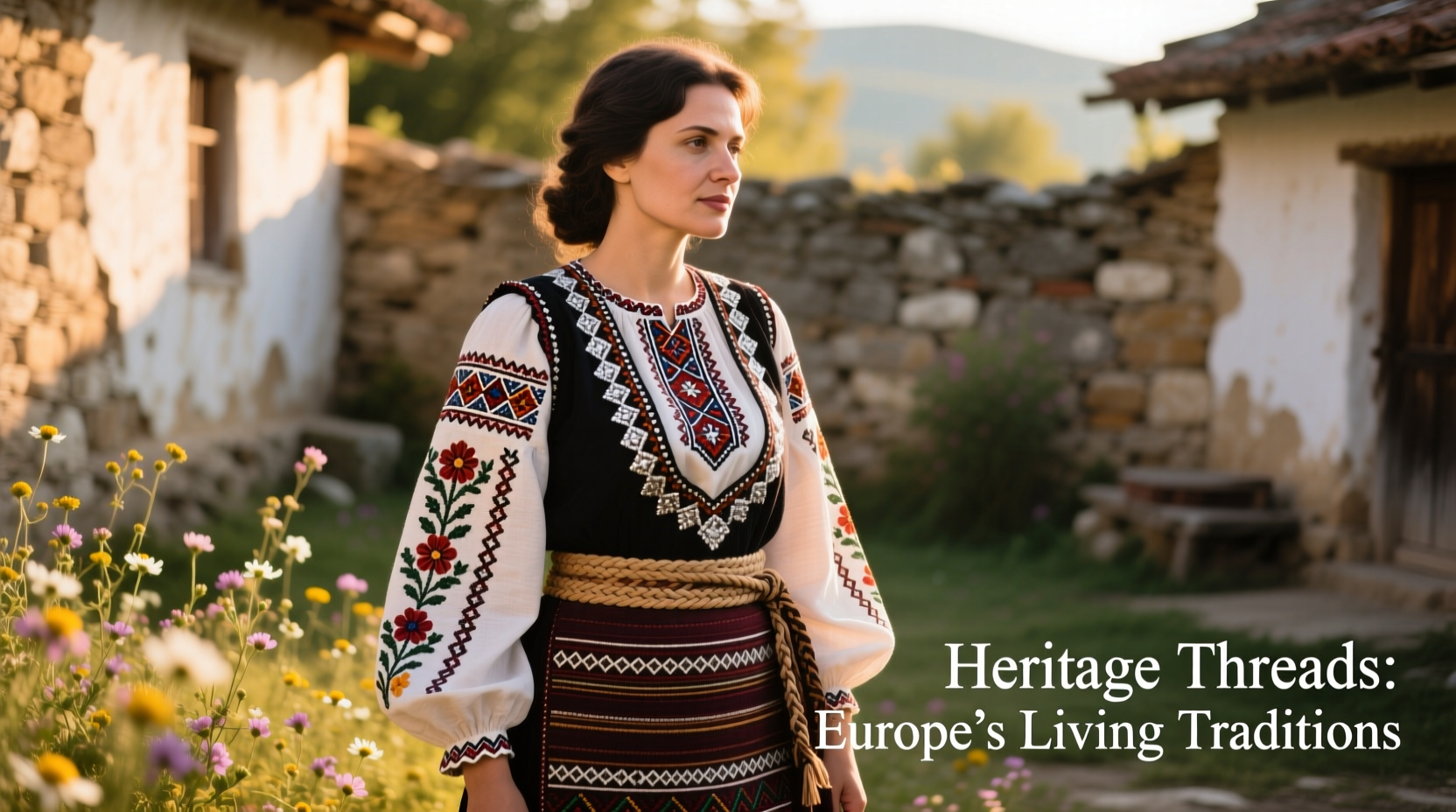
While Western and Northern European costumes often signaled economic status and regional geography, Eastern European folk dress frequently served an apotropaic (protective) function. In Ukrainian, Belarusian, and Russian traditions, the vyshyvanka (embroidered shirt) and the rushnyk (ritual cloth) were believed to act as spiritual armor.
The Vyshyvanka as a Protective Talisman
The Ukrainian Museum of America highlights how the geometric and floral motifs of the vyshyvanka were not merely decorative. The embroidery was strategically concentrated at the "vulnerable" points of the body: the collar, the cuffs, and the hem. It was believed that malevolent spirits could enter the body through these openings, and the dense, interlocking geometric patterns—such as the ruzha (rose) or the berehynia (goddess motif)—acted as energetic nets to trap or repel evil. The traditional nyzynka technique creates a pattern that is nearly identical on both the inside and outside of the garment, ensuring no "loose threads" could be used by witches to cast spells. Authentic, hand-embroidered linen vyshyvankas from master artisans command prices between $150 and $800 USD, reflecting weeks of meticulous needlework.
Comparative Matrix: Fabric, Function, and Protocol
To synthesize the diverse functions of the Europe traditional costume, the following matrix outlines the structural and cultural distinctions across three major regional archetypes.
| Garment | Region | Primary Materials | Authentic Price Range (USD) | Cultural Protocol |
|---|---|---|---|---|
| Bunad | Norway | Wool, Linen, Silver | $2,800 - $5,500+ | Must match ancestral or residential region; strict council oversight. |
| Tracht | Alpine (DACH) | Deerskin, Wool, Silk | $300 - $1,500 | Worn for Volksfeste and weddings; respects local guild standards. |
| Vyshyvanka | Ukraine / E. Europe | Linen, Cotton, Silk thread | $150 - $800 | Embroidery placed at bodily thresholds for spiritual protection. |
Preservation and the Modern Artisan
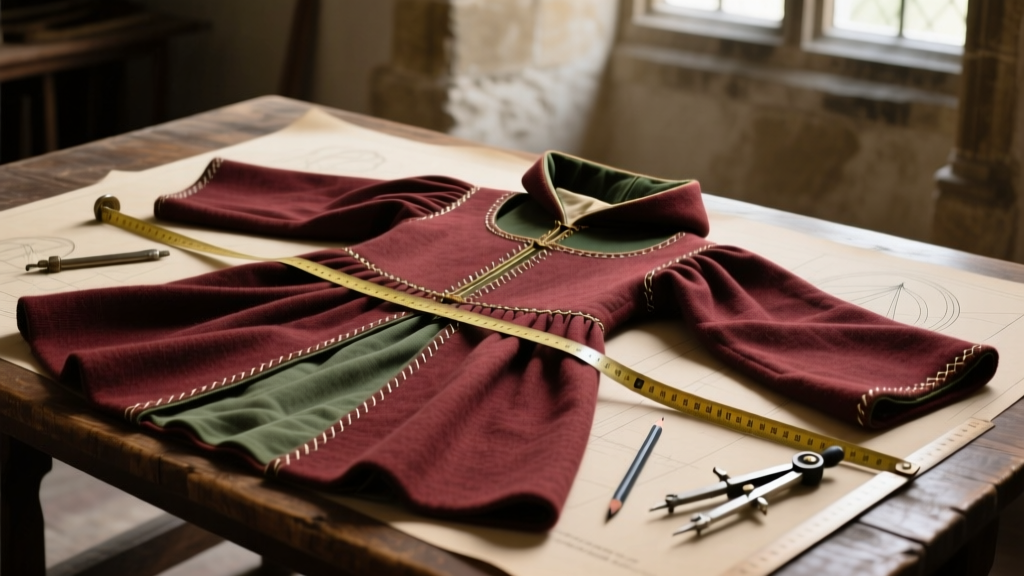
The survival of the Europe traditional costume relies heavily on the tension between preservation and living practice. Institutions like the Norsk Folkemuseum and the Bayerisches Nationalmuseum do not merely archive these garments in climate-controlled vaults; they actively support living artisan cooperatives, master tailors, and silversmiths who maintain the historical techniques.
For cultural enthusiasts and buyers, acquiring a traditional European garment requires a commitment to ethical sourcing. Bypassing mass-produced, synthetic approximations in favor of garments crafted by recognized regional artisans ensures that the profound cultural significance, historical accuracy, and economic lifeblood of these living traditions are preserved for future generations.