Eastern European Dress: Buying & Sizing Guide

Navigating the Market for Eastern European Traditional Dress
Sourcing authentic Eastern European traditional dress requires a nuanced understanding of regional heritage, textile construction, and artisan sizing paradigms. Unlike Western European folk wear, which often standardized into uniform national costumes during the 19th-century romantic nationalism movement, Eastern European narodne vbrannya (folk dress) remained deeply localized. A village just twenty miles away might feature entirely different embroidery motifs, weaving techniques, and color palettes. As global interest in heritage garments surges in 2026, buyers must navigate a market flooded with mass-produced stage costumes (kostium sceniczny) and distinguish them from genuine, culturally significant attire. This guide provides a comprehensive framework for purchasing, sizing, and ethically sourcing traditional garments from Ukraine, Poland, and Romania, ensuring your acquisition respects the living traditions of the Carpathian basin and the Eastern European plains.
Regional Spotlight: Key Garments and Native Terminology
To buy intelligently, you must speak the language of the garments. Understanding native terminology not only aids in searching artisan marketplaces but also signals cultural respect to the cooperatives crafting these pieces.
Ukraine: The Vyshyvanka and Plakhta
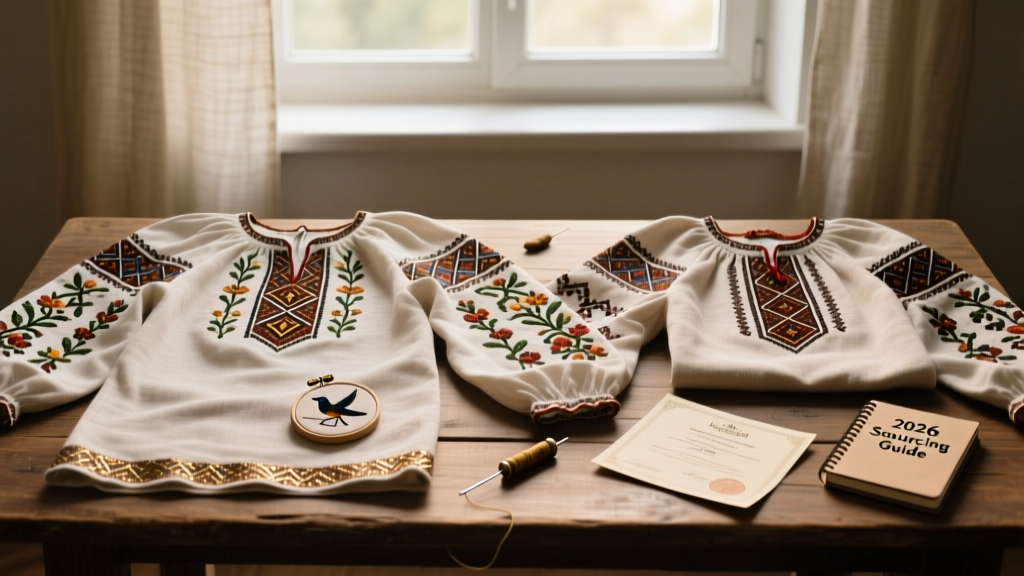
The cornerstone of Ukrainian traditional dress is the vyshyvanka, an embroidered linen or hemp shirt. When purchasing a vyshyvanka, examine the stitch work. Authentic pieces from the Poltava region utilize the glad (satin stitch) and lyshva (hemstitching), while Hutsul garments from the Carpathian mountains feature dense, geometric krestik (cross-stitch) in vibrant red, black, and yellow. For women, the lower garment is often a plakhta, a heavy, hand-woven wool wrap skirt. Unlike modern skirts, a plakhta is a single rectangular piece of fabric wrapped intricately around the body and secured with a woven krajka (belt). Sizing a plakhta is entirely dependent on waist and hip circumference rather than standard dress sizes.
Poland: The Kraków and Łowicz Regional Styles
Polish strój ludowy is highly regionalized. The most internationally recognized is the Kraków regional dress, characterized by a heavily embellished gorset (corset/bodice) and a floral spódnica (skirt). When buying a traditional Kraków gorset, look for velvet bases adorned with hand-stitched floral motifs, sequins, and brass grommets, a style that crystallized in the late 19th century. Conversely, the Łowicz region is famous for its striking, multicolored warp-striped fabrics (pasiaki). Authentic Łowicz skirts and aprons are woven on traditional wooden looms, resulting in a dense, heavy textile that drapes entirely differently than commercial cotton blends.
Romania & Moldova: The IE and Fota
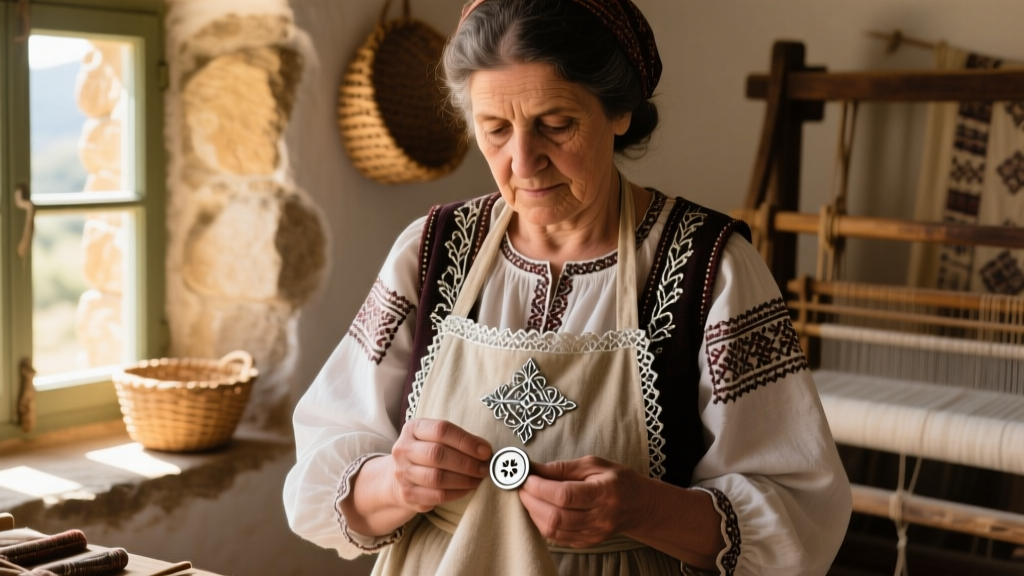
Romanian port popular centers around the ie, a masterfully embroidered blouse. The most critical authentication marker of a traditional ie is the altiță, a distinct, heavily embroidered rectangular panel on the shoulder. According to the Muzeul Național al Țăranului Român (Romanian Peasant Museum), the altiță historically denoted the wearer's regional origin and marital status. The lower body is wrapped in a fotă, a rich, dark wool wrap skirt often woven with metallic gold or silver threads (arnăuți) along the hem. Authentic fotă fabrics are rigid and require specific wrapping techniques to achieve the correct silhouette.
The Sizing Matrix: Translating Folk Measurements
Traditional Eastern European garments were not built on modern S/M/L grading scales. Artisans and heritage cooperatives draft patterns based on exact body measurements, heavily factoring in the lack of stretch in natural fibers like raw linen and fulled wool. When ordering from a cooperative, you will be asked for your measurements in centimeters. Use the matrix below to translate your modern sizing into artisan requirements.
| Standard US/UK Size | EU Size | Artisan Measurement (Chest/Waist in cm) | Fit & Construction Notes |
|---|---|---|---|
| XS / UK 6 | 34 | Chest: 80-84 / Waist: 62-66 | Traditional linen has zero mechanical stretch; artisans will add 4-6cm of ease for mobility and cross-stitch distortion. |
| S / UK 8-10 | 36-38 | Chest: 88-92 / Waist: 68-72 | For a Polish gorset, the bust measurement must be taken over the undergarment intended to be worn beneath it. |
| M / UK 12-14 | 40-42 | Chest: 96-100 / Waist: 76-80 | Romanian ie blouses feature a drawstring neckline (bentiță); chest width is forgiving, but sleeve length from shoulder to wrist is critical. |
| L / UK 16-18 | 44-46 | Chest: 104-108 / Waist: 84-88 | Wrap skirts like the Ukrainian plakhta require an additional 15-20cm of fabric beyond the hip circumference for proper overlapping. |
| XL / UK 20-22 | 48-50 | Chest: 112-116 / Waist: 92-96 | Custom loom-width adjustments are necessary; traditional looms produce fabric widths of roughly 60-80cm, requiring panel piecing. |
Material Authenticity and Construction Details
The soul of Eastern European traditional dress lies in its fibers. Commercial manufacturers often substitute hand-loomed hemp and linen with polyester blends to reduce costs and prevent wrinkling. However, authentic garments rely on the natural properties of plant and animal fibers.
Identifying Hand-Loomed Linen vs. Commercial Blends
Authentic Ukrainian and Romanian blouses are woven on pedal looms, resulting in a fabric with a slightly irregular slub texture. When inspecting a garment, perform the burn test (if a swatch is provided) or examine the selvedge. Hand-loomed linen will have a softer, more uneven selvedge compared to the laser-cut edges of factory textiles. Furthermore, traditional embroidery thread is mercerized cotton or wool, not synthetic rayon. Rayon threads, common in mass-market festival wear, possess an unnatural, glassy sheen that clashes with the matte finish of raw linen.
Natural Dyes and Color Fastness
While the late 19th century introduced synthetic aniline dyes to Eastern Europe, high-end artisan cooperatives in 2026 are reviving botanical dyeing. Look for descriptions citing madder root (rubia tinctorum) for reds, woad for blues, and walnut husks for browns. Naturally dyed garments will have a softer, more variegated color profile and may require specialized, pH-neutral washing to maintain their integrity.
Pricing Tiers: What to Expect in 2026
Investing in Eastern European folk dress is an investment in slow fashion and cultural preservation. Prices vary wildly based on the origin of the textile and the hours of hand-embroidery required. Below is the current market framework for authentic pieces.
- Tier 1: Commercial / Festival Grade ($35 - $90 USD): Machine-embroidered on commercial cotton/poly blends. While acceptable for casual cultural festivals, these lack historical accuracy, utilize synthetic threads, and do not support traditional artisans. Sizing follows standard fast-fashion charts.
- Tier 2: Artisan / Cooperative Grade ($150 - $450 USD): Hand-embroidered on hand-loomed or high-quality European linen. Stitch counts range from 10,000 to 50,000 per garment. These are commissioned directly from village cooperatives or specialized heritage brands. Expect a 4 to 8-week lead time for custom sizing. This tier represents the best balance of authenticity and wearability.
- Tier 3: Heirloom / Museum Reproduction ($600 - $2,500+ USD): Created by master weavers and embroiderers using historically accurate techniques, natural dyes, and antique pattern drafting. These pieces are often documented by institutions like the ASTRA National Museum Complex in Sibiu, Romania, or the Ethnographic Museum in Kraków. They are investment-grade textiles meant to be passed down through generations.
Ethical Sourcing and Wearing Etiquette
When purchasing Eastern European traditional dress, prioritize direct-to-artisan cooperatives or verified heritage NGOs over third-party dropshippers. Authentic cooperatives will transparently list the names of the embroiderers and weavers, the specific village of origin, and the historical provenance of the motif. Culturally, it is vital to treat these garments as formal, respectful attire rather than "costumes." In Ukraine, the vyshyvanka is worn with profound pride on Vyshyvanka Day and during significant life events; pairing it with distressed denim or overly casual footwear is considered disrespectful to the craft. Similarly, in Poland and Romania, regional headpieces (like the Kraków krakuska cap or the Romanian batic headscarf) carry specific rules regarding age and marital status. By understanding the deep semiotics woven into every thread, buyers in 2026 can honor the legacy of Eastern European traditional dress while ensuring its survival for future generations.