Dirndl Meaning & 2026 Buying Guide: Fit, Apron Bows & Sizing
Beyond the Stereotype: The True Dirndl Meaning and Origins
When enthusiasts and newcomers alike search for the dirndl meaning, they are often met with images of Oktoberfest beer tents and mass-produced costumes. However, the true meaning of the Dirndl is deeply rooted in Alpine history, rural sociology, and regional identity. The word 'Dirndl' itself is a diminutive of the Bavarian and Austrian dialect word Dirn, which historically translated to 'young woman' or 'maid.' Originally, the Dirndlgwand (the complete ensemble) was the practical, durable workwear of Alpine peasant women and domestic servants in the 18th and early 19th centuries.
The cultural shift occurred in the late 1800s when the Habsburg aristocracy, including Empress Elisabeth of Austria (Sisi), adopted the rural dress for hunting trips and summer retreats in the Salzkammergut region. This royal endorsement transformed a utilitarian uniform into a symbol of Alpine romanticism and regional pride. Today, according to archival records at the Bayerisches Nationalmuseum, the Dirndl is recognized not as a static historical relic, but as a living, evolving garment that bridges centuries of Central European heritage. Understanding this profound dirndl meaning is the first step to buying, sizing, and wearing the garment with the respect it commands.
Anatomy of the Dirndlgwand: What You Are Actually Buying
When purchasing authentic Tracht (traditional folk dress), you are not simply buying a single dress. A proper Dirndl ensemble consists of four distinct, interchangeable components. Knowing these terms is essential for navigating sizing guides and speaking with traditional tailors (Trachtenschneiderinnen).
1. The Bluse (Blouse)
Typically crafted from crisp white cotton, linen, or delicate batiste, the Dirndl blouse is cropped to end just below the bust. It features varying necklines—from modest high collars to sweetheart cuts—and is designed to be tucked seamlessly under the bodice. Sizing for the blouse is generally standard European (34-46), but shoulder width and sleeve length (puffed, short, or long) dictate the fit.
2. The Mieder (Bodice)
The Mieder is the structural heart of the Dirndl. It is a heavily tailored, sleeveless bodice designed to support the bust and create a defined waist without the severe restriction of a corset. High-quality Mieders feature internal boning, sturdy cotton or linen linings, and are fastened with either a hook-and-eye closure (Hakenverschluss), a front zipper, or traditional lacing (Schnürung) woven through metal or horn eyelets.
3. The Rock (Skirt)
The skirt is attached to the Mieder at the waistband. Traditional skirts are heavily gathered or knife-pleated to create volume. The most critical buying metric here is length: authentic, culturally respected Dirndls fall to the knee or mid-calf (typically 60cm to 80cm from the waist). Mini-skirts are a modern, commercialized deviation often discouraged at formal cultural events.
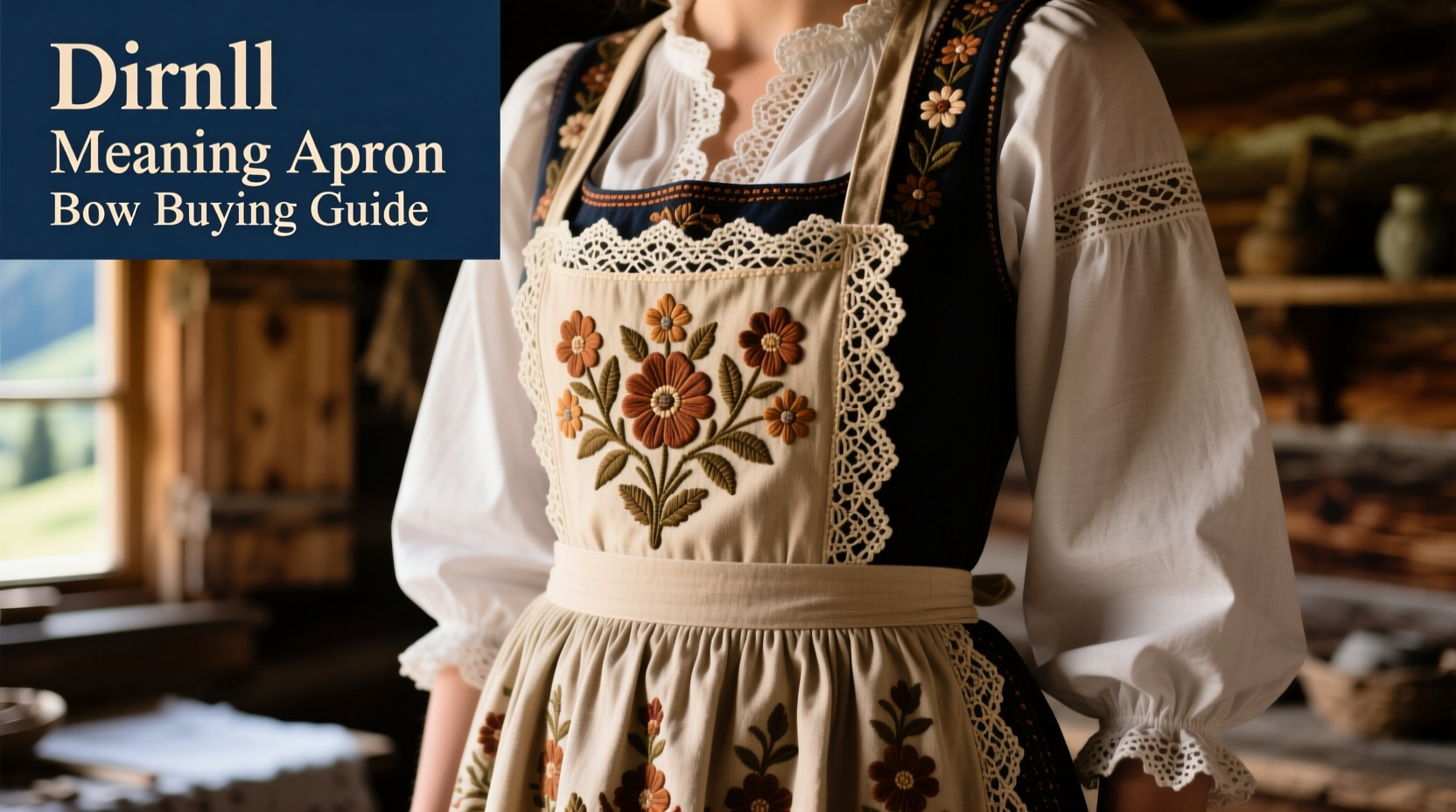
4. The Schürze (Apron)
Far from a mere accessory to keep the dress clean, the Schürze is a canvas for personal expression and marital signaling. Made from silk, fine linen, or printed cotton, the apron is slightly narrower than the skirt and tied at the front.
The Apron Bow (Schleife) Code: Cultural Etiquette You Must Know
The most famous aspect of the dirndl meaning in contemporary social settings is the Schleife (apron bow) code. Tying your apron on a specific side communicates your relationship status to the room. While this code was largely popularized in the late 20th century rather than being an ancient peasant tradition, it is now a strictly observed etiquette at events like Oktoberfest, weddings, and Alpine folk festivals.
| Bow Position (Schleife) | Cultural Meaning | Context & Etiquette |
|---|---|---|
| Tied on the Left Side | Single / Unattached | Worn on the wearer's left hip. Signals availability and openness to being approached. |
| Tied on the Right Side | Taken / Married | Worn on the right hip. Indicates you are in a relationship, engaged, or married. |
| Tied in the Center Front | Virginity / Youth | Historically signaled a young, unmarried girl or virginity. Today, often worn by children or young women. |
| Tied in the Center Back | Widowed / Service | Traditionally indicates the wearer is a widow. It is also the standard position for waitresses and staff for practical reasons. |
Sizing the Mieder: A Guide to Achieving the Traditional Silhouette
Sizing a Dirndl is fundamentally different from sizing a modern dress. The fit is entirely dictated by the Mieder. Because traditional patterns require a significant differential between the bust and the waist, off-the-rack sizing often fails to provide the correct silhouette. Here is how to approach sizing and alterations:
- Measure the Underbust and Waist: The Mieder should sit snugly against the ribcage. Use a soft measuring tape directly against the skin. A proper traditional fit leaves exactly one to two fingers of space between the body and the bodice fabric.
- The 'Tracht' Posture: Authentic bodices are cut to encourage an upright, regal posture. If you feel slouching is comfortable in the Mieder, the size is too large or the shoulder straps are improperly adjusted.
- Hook-and-Eye vs. Lacing: If you are buying online and cannot try the garment on, opt for a Schnürung (lacing) Mieder. Lacing allows for micro-adjustments of up to 3-4 centimeters, accommodating weight fluctuations and allowing you to customize the tightness over the bust and ribs.
- Professional Tailoring: The Trachten-Informationszentrum (TIZ) in Benediktbeuern emphasizes that true Tracht is rarely worn without minor alterations. Budget 50€ to 120€ for a local tailor to adjust the hem of the Rock and take in the side seams of the Mieder for a bespoke fit.
Price Tiers and Fabric Composition: What to Expect in 2026
The market is flooded with synthetic 'costumes' that disrespect the garment's heritage. When investing in a Dirndl that honors its Alpine roots, expect to pay for natural fibers, hand-pleating, and artisanal hardware. Here is the 2026 buying landscape:
Budget & Entry-Level Trachtenmode (150€ - 290€)
At this tier, you are buying Trachtenmode (fashion inspired by Tracht) rather than strict traditional dress. Fabrics are often cotton-polyester blends. The skirts are machine-gathered rather than hand-pleated, and the aprons are synthetic. These are acceptable for casual tourist attendance at beer festivals but lack the longevity and cultural weight of true Tracht.
Mid-Range Authentic Tracht (350€ - 750€)
This is the sweet spot for serious buyers. Brands like Gössl, Lodenfrey, and Kinga Matthe use 100% natural fibers: Austrian linen, pure cotton, and lightweight wool. The Mieder features proper structural lining and genuine horn or mother-of-pearl buttons. The aprons are often raw silk or high-grade linen with hand-rolled hems.
Couture and Handcrafted Meisterstücke (900€ - 3,000€+)
Commissioned from master tailors, these garments feature Seidenbrokat (silk brocade), hand-woven silk aprons, and intricate Paspelierung (contrast piping) along the Mieder seams. The skirts are hand-knife-pleated, a technique that requires meters of fabric and hours of labor, resulting in a swing and drape that machines cannot replicate.
Regional Variations: Ausseer, Miesbacher, and Salzburger Styles
The 'meaning' of a Dirndl changes depending on the valley it originates from. According to the Austrian Museum of Folk Life and Folk Art, regional specificity is a hallmark of authentic folk dress.
- Ausseer Dirndl: Originating from the Salzkammergut region, this style is highly recognizable. It typically features a pink skirt, a green Mieder, and a purple apron. Notably, the Ausseer style often omits the traditional blouse or features a highly specific, locally embroidered cotton top.
- Miesbacher Tracht: The quintessential Bavarian style. It heavily features dark, rich colors, intricate silk embroidery on the Mieder, and is often paired with a specific silk hood or hat (Bänderhut) for formal church occasions.
- Salzburger Dirndl: Known for its elegance and slightly more relaxed Mieder fit, often incorporating delicate floral brocades and pastel silk aprons, reflecting the historical wealth of the Mozart city's merchant class.
Where to Buy Authentic Tracht (And What to Avoid)
When shopping, avoid retailers that market 'sexy' or 'mini' Dirndls, as these are costumes, not cultural garments. Seek out established Trachtenhaus (Tracht houses) in Munich, Salzburg, or Innsbruck, or their verified online storefronts. Look for garments that specify the origin of their textiles, such as Steirischer Loden (Styrian loden wool) or Weißstickerei (traditional white embroidery). By understanding the deep dirndl meaning and investing in proper construction, you participate in the preservation of one of Europe's most vibrant and enduring sartorial traditions.