Beyond the Dirndl: Female German Outfit Roots

The Living Heritage of Traditional Female German Outfits
When the global public envisions female German outfits, the mind almost immediately jumps to the beer tents of Oktoberfest: a standardized, often mass-produced dirndl featuring a tight bodice and a flared skirt. However, reducing the rich tapestry of German Tracht (traditional regional dress) to a festival costume ignores centuries of complex social history, artisanal mastery, and deep-rooted regional identity. To understand authentic female German outfits is to understand the agrarian rhythms, religious divides, and civic pride of Central Europe.
According to curators at the Bayerisches Nationalmuseum in Munich, the evolution of rural dress was never static. Garments were visual resumes, communicating a woman's village, marital status, religious affiliation, and economic standing. Today, a cultural renaissance is underway, with younger generations reclaiming bespoke Tracht not as a costume, but as a profound expression of heritage.
Decoding the Alpine Dirndl: Anatomy and Construction
The dirndl is the most globally recognized of all female German outfits, originating as the utilitarian workwear of Alpine maidservants (Dirn in Bavarian dialect) before being adopted by the urban aristocracy in the late 19th century as a romanticized fashion statement. A true, high-quality dirndl is a marvel of structural tailoring, consisting of four distinct components:
- Das Mieder (Bodice): Unlike modern corsets, the traditional Mieder is stiffened with layers of canvas, reed, or cording rather than steel boning. It is designed to support the bust and posture while allowing the mobility required for farm labor or dancing. High-end versions feature hand-stitched hook-and-eye closures or intricate silver lacing chains.
- Der Rock (Skirt): The skirt is characterized by deep, meticulously calculated cartridge pleats (Falten) at the waistband, allowing the fabric to flare dramatically while keeping the waistline flush. Authentic skirts are cut from heavy wool or linen and fall just below the knee.
- Die Schürze (Apron): Originally meant to protect the expensive skirt from dirt, the apron is now the canvas for luxury textiles, often crafted from raw silk, damask, or hand-blocked cotton.
- Die Bluse (Blouse): Worn beneath the bodice, the blouse is typically crisp white cotton or linen, featuring regional variations in sleeve length and neckline, from modest square cuts to delicate lace-trimmed sweetheart necklines.
Beyond Bavaria: A Regional Matrix of German Tracht
Germany is a federal republic with deep regional distinctions, and female German outfits vary wildly from the northern coast to the southern Alps. The Museum Europäischer Kulturen in Berlin houses extensive archives demonstrating how geography and trade routes dictated local aesthetics.
| Region | Key Garment / Identifier | Headdress (Haube) | Cultural & Historical Context |
|---|---|---|---|
| Bavaria & Alps | Dirndl (Wool/Linen) | Goldhaube (Gold-threaded cap) | Worn for Catholic high festivals; the Goldhaube requires hundreds of hours of tambour embroidery. |
| Black Forest | Schäppel / Bollenhut Dress | Bollenhut (Straw hat with wool pom-poms) | Strictly limited to three villages. Red pom-poms denote unmarried women; black denotes married women. |
| East Frisia | Ostfriesische Tracht | Krimphut (Lace-trimmed bonnet) | Reflects 18th-century maritime wealth; heavily features imported silk, velvet, and silver filigree jewelry. |
| Spreewald | Sorbian Tracht | Haube with sweeping lace wings | Worn by the Slavic Sorb minority; colors and lace patterns change strictly according to the liturgical calendar. |
The Myth and Reality of the Apron Knot (Schleife)
One of the most pervasive myths surrounding female German outfits—specifically the dirndl—is the 'relationship status' code tied to the apron knot (Schleife). Popular folklore dictates that a knot tied on the left means the wearer is single, on the right means she is married or taken, in the center signifies virginity, and in the back indicates widowhood or that she is a waitress.
From an ethnographic standpoint, this is largely a modern invention. According to cultural historians associated with the Bayerischer Trachtenverband (Bavarian Folk Costume Association), historical rural women simply tied the knot wherever it was most comfortable or practical for their dominant hand. The 'secret code' was popularized in the late 20th century by Oktoberfest marketers and beer tent staff as a playful, flirtatious gimmick. While widely observed by modern festival-goers today, it is not a historical rule, and traditional Trachtlerinnen (folk dress wearers) tie their aprons based purely on regional custom or personal habit.
Materials, Artisans, and the True Cost of Authentic Tracht
The market for female German outfits is sharply divided between mass-produced 'costumes' and genuine Tracht. Understanding this divide is crucial for anyone looking to invest in a piece of living history.
1. Mass-Market / Festival Wear (€50 – €150)
Typically manufactured overseas using polyester blends, machine-glued lace, and plastic zippers. These garments lack structural integrity, do not breathe well, and are considered Gwand (a derogatory term for costume) rather than Tracht by traditionalists.
2. Mid-Range Commercial Tracht (€250 – €600)
Produced by established heritage brands in Germany and Austria. These outfits utilize natural fibers like cotton, linen, and lightweight wool. They feature proper hook-and-eye closures, reinforced seams, and horn or mother-of-pearl buttons. Excellent for attending local Volksfeste (folk festivals) and weddings.
3. Bespoke / Maßgeschneidert (€1,200 – €3,500+)
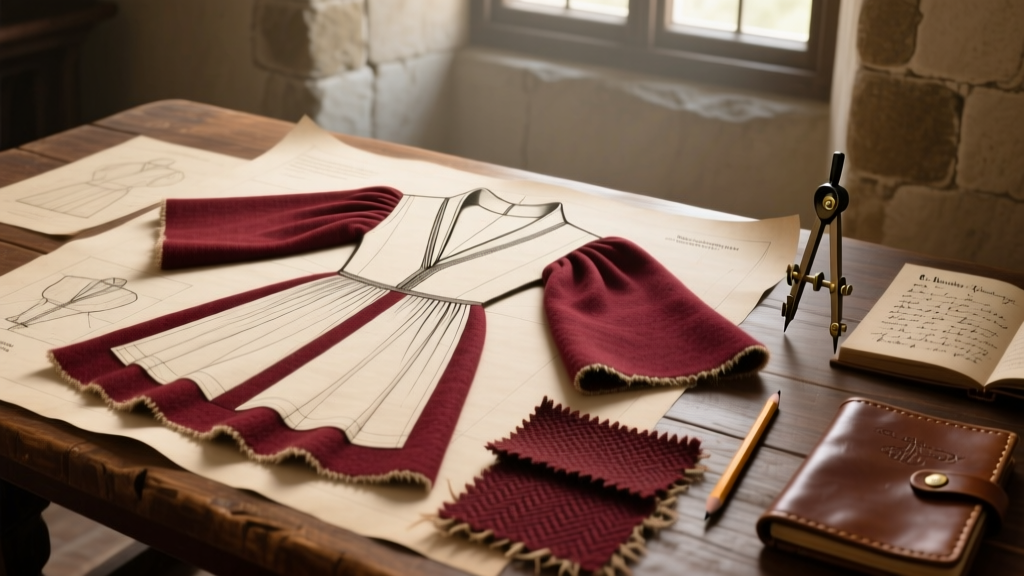
Commissioned from a master Trachtenschneiderin (traditional dressmaker). The process involves multiple fittings and the use of luxury materials such as Schafschurwolle (virgin sheep's wool), heavy silk brocade, and hand-woven linen. The bodice is custom-patterned to the wearer's exact measurements, and the skirt is hand-pleated using a traditional wet-pleating technique that sets the folds permanently. This level of garment is treated as an heirloom, often passed down through generations.
Preservation in the Modern Era: The Role of Trachtenvereine
The survival of authentic female German outfits is heavily reliant on Trachtenvereine (folk costume societies). Founded in the late 19th century as a reaction against rapid industrialization, these societies serve as living archives. Members do not merely wear the clothing; they study the historical context, maintain relationships with local weavers and silversmiths, and enforce strict standards of accuracy regarding which garments are appropriate for specific seasons and religious holidays.
'Tracht is not a costume you put on to play a role from the past. It is a living language. When a woman wears the specific silk brocade of her village's Sunday Mieder, she is speaking to her ancestors and anchoring her community in the present.' — Master Artisan at the Trachtenkulturzentrum, Bayerischer Trachtenverband.
Wearing Etiquette: Respect for the Garment
For those outside the culture who wish to wear female German outfits, cultural respect is paramount. Avoid pairing traditional bodices with modern denim or sneakers. If investing in a dirndl, opt for natural fabrics and modest hemlines (the traditional rule is that the skirt should cover the knees when seated). Furthermore, recognize that specific headdresses, like the Black Forest Bollenhut or the Sorbian lace wings, are deeply tied to specific micro-regions and should not be mixed and matched with Alpine garments. By honoring the construction, history, and regional boundaries of these garments, wearers help preserve the profound cultural legacy of German Tracht for the next generation.