Red Festive Dress: CNY & Folk Wear
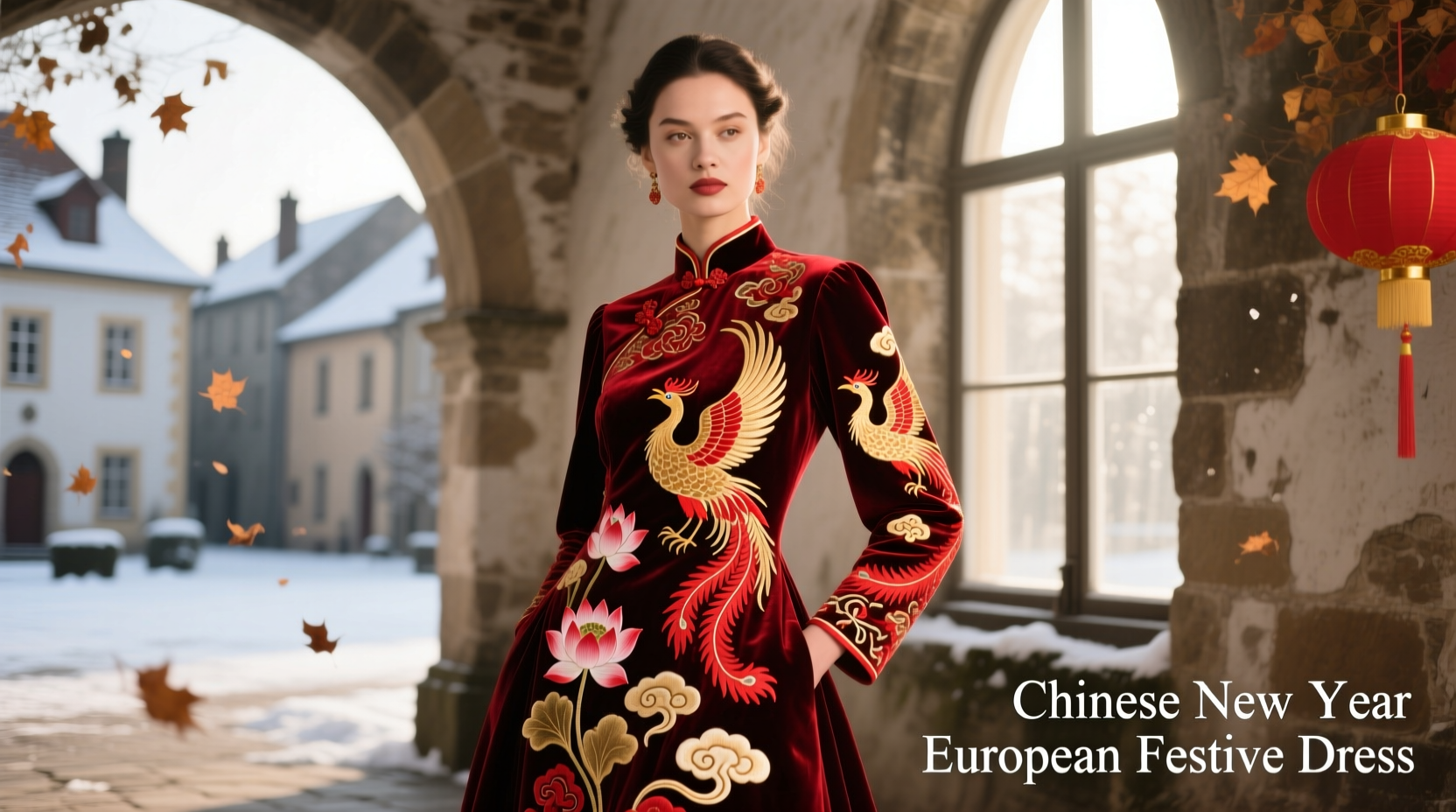
The Universal Language of Festive Garments
Across the globe, the transition into a new year or the celebration of harvest and midwinter festivals demands a departure from everyday utility into the realm of the ceremonial. For textile historians and cultural garment enthusiasts, examining the intersection of East Asian and European festive wear reveals profound parallels in human expression. When researching traditional dress Chinese New Year wardrobes and comparing them to European folk costumes—such as the Norwegian Bunad or the Bavarian Festtagstracht—we uncover a shared reliance on color symbolism, painstaking hand-embroidery, and the preservation of ancestral identity. This comparative analysis explores how European diaspora communities, collectors, and multicultural fashion hubs engage with these distinct yet spiritually aligned sartorial traditions.
The Alchemy of Red: Madder Root vs. Safflower Dyes
Red is the undisputed sovereign of festive dress in both Chinese and many European folk traditions, though the botanical and mineral sources differ vastly. In the context of Chinese New Year, red (hóng) symbolizes prosperity, warding off the mythical beast Nian and inviting auspicious energy. Historically, this vibrant hue was achieved using safflower (Carthamus tinctorius) or cinnabar mineral dyes, later evolving into complex synthetic processes for modern silk brocades.
Conversely, the deep, blood-reds found in traditional European folk dress—particularly in the intricate bodices of the German Tracht or the woven skirts of Eastern European ensembles—were historically derived from madder root (Rubia tinctorum) and kermes insects. While the Victoria and Albert Museum's Chinese Collections highlight the mastery of imperial silk dyeing, European textile archives show that achieving a colorfast, vibrant madder red required mordanting with alum and months of fermentation. Today, whether you are sourcing a crimson Qipao in London's Chinatown or a red wool Bunad in Oslo, the color remains a powerful cross-cultural signifier of joy, vitality, and protection against winter's darkness.
Structural Divergence: Flat-Cutting vs. Tailored Draping
The most striking difference between traditional East Asian festive wear and European folk dress lies in their foundational geometry and relationship to the human body.
The Architecture of Traditional Dress for Chinese New Year
Historically, Chinese garment construction relies on a flat-cutting method that honors the integrity of the woven textile. Garments like the Ming Dynasty Aoqun (a cross-collared jacket paired with a pleated skirt) or the modernized Tangzhuang (Tang suit) are cut in straight lines, utilizing the fabric's natural drape rather than forcing it into three-dimensional shapes. The structural focal points are the Pankou (intricate knotted frog fastenings) and the elaborate embroidery along the hems and collars. The fabric itself—often heavy silk brocade, Xiangyunsha (mud-silk), or velvet—carries the visual weight.
European Festive Counterparts: Bunad and Festtagstracht
European folk dress, by contrast, is deeply rooted in tailoring, structuring, and shaping the body. The Norwegian Bunad, meticulously documented by the Norsk Folkemuseum, relies on heavy, fulled wool tailored to fit the torso tightly, often featuring structured linen undergarments and metallic silver filigree clasps (sølv). Similarly, the Bavarian Festtagstracht utilizes a heavily boned Mieder (bodice) designed to create a specific silhouette, adorned with silk ribbons and metal chains. Where Chinese festive dress flows and drapes, European festive dress structures and frames.
Comparative Data: Festive Garment Construction
The following table illustrates the technical and material divergences between these two rich traditions of celebratory dress.
| Feature | Chinese New Year Festive Wear (e.g., Qipao, Tangzhuang) | European Folk Festive Wear (e.g., Bunad, Festtagstracht) |
|---|---|---|
| Primary Fabric | Silk brocade, Xiangyunsha mud-silk, velvet, satin | Fulled wool, heavy linen, silk taffeta, leather |
| Cutting Method | Flat-cut, geometric, minimal fabric waste | Tailored, darted, structured, multi-piece patterning |
| Fastenings | Pankou (knotted silk frogs), hidden zippers | Silver hooks, filigree clasps, brass buttons, lacing |
| Embellishment | Thread embroidery (dragons, peonies, bats), beadwork | Hardanger embroidery, metal thread (sølvgarn), ribbon |
| Average Bespoke Cost | £400 - £1,500 (London/Paris ateliers) | £2,200 - £4,500 (Norwegian/Bavarian artisans) |
Sourcing Authentic Garments in European Capitals
For European residents seeking authentic traditional dress Chinese New Year celebrations require, the continent offers several high-end sourcing hubs that rival East Asian markets in quality and artisanal integrity.
- London (Gerrard Street & Mayfair): Beyond the accessible, mass-produced silk jackets found in Chinatown, Mayfair hosts bespoke tailors specializing in the Haipai (Shanghai-style) Qipao. Expect to pay between £600 and £1,200 for a hand-stitched, silk-brocade garment with custom Pankou knots.
- Paris (13th Arrondissement & Le Marais): Parisian boutiques often blend French couture techniques with traditional Chinese silhouettes. The Avenue de Choisy offers authentic, imported Xiangyunsha garments, a rare, rustling mud-silk that is highly prized for its cooling properties and historical lineage.
- Berlin (Humboldt Forum Context): With the Museum für Asiatische Kunst raising awareness of historical textile conservation, Berlin has seen a rise in sustainable, independent designers creating modern Hanfu and Ming-style jackets using upcycled European silks and traditional Chinese flat-cutting patterns.
Curatorial Etiquette and Cross-Cultural Wearing
Wearing traditional garments outside their culture of origin requires a foundation of respect and historical awareness. In European multicultural spaces, it is increasingly common to see cross-cultural appreciation during Lunar New Year parades in cities like Manchester, The Hague, and Milan. However, etiquette dictates that buyers avoid cheap, synthetic 'costume' versions that appropriate sacred motifs (such as the imperial five-clawed dragon) without understanding their context.
When investing in festive wear, whether a Norwegian Bunad or a Chinese Aoqun, prioritize artisan cooperatives and heritage tailors. Understand the regional specificity of the garment; just as one would not wear a Telemark Bunad to represent a Hardanger heritage, one should recognize the difference between a Manchu-derived Tangzhuang and a Han-style Hanfu. By treating these garments as living artifacts rather than mere seasonal costumes, European collectors and diaspora communities help preserve the intricate textile arts that define our shared human celebration of the new year.
Conclusion: A Shared Thread of Celebration
The juxtaposition of traditional dress Chinese New Year festivities demand against the backdrop of European folk costumes highlights a beautiful dichotomy in textile history. One tradition masters the fluid drape of the loom and the symbolic knot; the other excels in the architectural tailoring of wool and the forging of silver. Yet, both serve the exact same human purpose: to wrap the wearer in the protective, joyous, and ancestral colors of their heritage as they step into a new cycle of time.