Bavarian Dirndl Guide: Oktoberfest Wear 2026

The Distinction Between Tracht and Trachtenmode
As you prepare for the 2026 Alpine festival season, understanding the cultural weight of your wardrobe is paramount. In Bavaria and Austria, there is a strict, culturally significant divide between Tracht and Trachtenmode. The Bavarian trachten dirndl is not merely a party costume; it is a living garment rooted in the agricultural and alpine history of Southern Germany. According to the Bayerischer Trachtenverband (Bavarian Costume Association), authentic Tracht is regionally bound, historically documented, and governed by local heritage societies. Conversely, Trachtenmode (or Landhausmode) refers to the commercialized, mass-produced fashion inspired by traditional dress, commonly seen in Munich beer tents.
While Trachtenmode is perfectly acceptable for tourists at Oktoberfest, those seeking to honor the culture, attend rural Kirchweih (church dedication) festivals, or participate in alpine shooting competitions (Gauschießen) must understand the anatomical and material rules of the authentic dirndl.
Anatomy of an Authentic Festival Dirndl
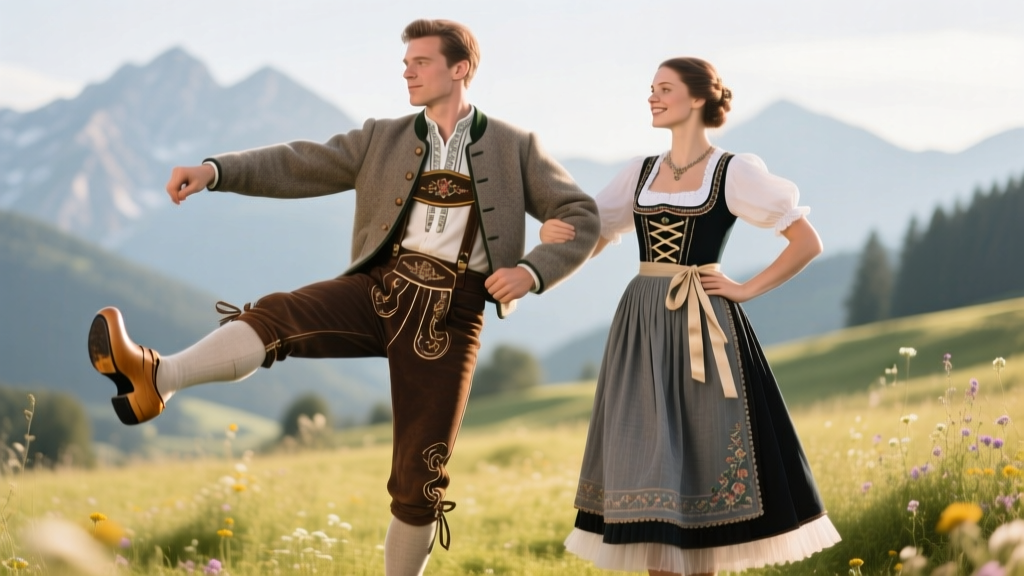
A true Bavarian trachten dirndl is a multi-piece ensemble. Purchasing a one-piece "dress" with an apron sewn on is an immediate indicator of a low-quality tourist garment. An authentic ensemble consists of four distinct elements:
- Das Mieder (The Bodice): The structural core of the dirndl. Traditional bodices are reinforced with sturdy linen canvas or internal boning to provide a smooth silhouette without the need for modern corsetry. They fasten with hidden hooks and eyes, silver lacing hooks (Miederhaken), or intricate button loops. The neckline often features a Froschgoschl (frog-mouth) or a modest square cut, trimmed with delicate Rüschen (ruffles) or lace.
- Der Rock (The Skirt): Historically, the skirt is heavily gathered or pleated at the waistband to create volume. The golden rule of traditional Tracht, as documented by the Bayerisches Nationalmuseum, is that the skirt must fall to at least mid-calf and must cover the knees when the wearer is seated. Mini-dirndls are strictly relegated to commercial Trachtenmode.
- Die Schürze (The Apron): The apron is a separate piece, tied at the front. It must be made of high-quality silk, fine cotton, or linen, and it must be exactly two to three centimeters shorter than the skirt. It is never sewn into the skirt's seams.
- Die Dirndlbluse (The Blouse): Worn beneath the bodice, the blouse is traditionally white, made of cotton batiste or linen. Sleeves can be short and puffed or elbow-length. The neckline must perfectly frame the bodice's cut without spilling over inappropriately.
The Schleife (Apron Bow) Protocol
At any Bavarian festival, the way you tie your Schürze bow communicates your relationship status. This is not a modern marketing gimmick but a widely respected social code in Alpine regions. Getting this wrong can lead to awkward misunderstandings in the beer tents.
| Bow Position | Meaning | Festival Context & Notes |
|---|---|---|
| Left Side | Single and available | Tied from the wearer's perspective. Indicates you are open to conversation and courtship. |
| Right Side | Taken, engaged, or married | A clear signal to potential suitors to keep a respectful distance. |
| Center (Front) | Virgin / Engaged | Historically denoted virginity, though today it is often used to signify engagement or simply a preference for symmetry. |
| Center (Back) | Widowed or Service Staff | Worn by widows, but also universally used by waitresses and festival workers to allow easy movement. |
Regional Variations for the Discerning Festival-Goer
Bavaria is not a monolith; its traditional dress varies deeply by valley and district. If you wish to invest in a high-end garment for the 2026 season, consider these prestigious regional styles:
Miesbacher Tracht
Originating from the Miesbach district south of Munich, this is considered one of the most elegant and formal variations. The Miesbacher dirndl often features a dark, solid-colored skirt (navy or forest green) paired with a heavily embroidered silk apron and a bodice adorned with silver chain lacing and talisman coins (Taler). It is the gold standard for formal alpine weddings and high-society Wiesn tents like the Käfer Wiesn-Schänke.
Werdenfelser Tracht
Hailing from the Garmisch-Partenkirchen region, the Werdenfelser style is famous for its distinctive Schürzen featuring hand-painted or block-printed floral motifs, and bodices made of rich, dark brocade or velvet for winter festivals. The color palette often leans into deep berry reds, mustard yellows, and pine greens.
2026 Investment Guide: Pricing and Artisan Makers
When budgeting for a Bavarian trachten dirndl, remember that authentic craftsmanship requires natural fibers and expert tailoring. Avoid polyester blends, which trap heat and are considered highly disrespectful in traditional circles. Below is a framework for what to expect when shopping in Munich, Salzburg, or online from heritage boutiques.
| Garment Tier | Price Range (EUR) | Materials & Construction | Best Use Case |
|---|---|---|---|
| Department Store (Kaufhaus) | €120 - €250 | Cotton-poly blends, machine embroidery, glued hems. Mass-produced. | Single-use tourist events, casual outdoor festivals. |
| Specialty Trachten Boutique | €350 - €850 | 100% linen (Reinleinen), pure silk aprons, horn buttons, finished seams. Brands like Angermaier or Lola Paltinger. | Oktoberfest, premium alpine holidays, cultural events. |
| Master Tailor (Meister-Schneiderei) | €1,500 - €4,000+ | Bespoke patterns, hand-embroidered silk, antique silver hardware, pure virgin wool (Schurwolle). Made-to-measure. | Traditional weddings, Trachtenverein events, generational heirlooms. |
Footwear and Accessories: Completing the Ensemble
A flawless dirndl is easily ruined by inappropriate footwear. Leave the stilettos and sneakers at the hotel. The traditional choice is the Dirndlschuh, a low-heeled pump or lace-up shoe crafted from deer leather (Hirschleder) or soft calfskin, often featuring a small, sturdy block heel for navigating gravel paths and cobblestones. For a more rustic, grounded look, women increasingly wear Haferlschuhe—the traditional alpine laced shoes originally designed for men, now crafted in elegant, feminine cuts for women.
To accessorize, consider a Charivari. While traditionally worn by men across the lederhosen flap, women now wear delicate silver Charivari chains across the bodice or apron waist, adorned with small silver charms, coins, or ethically sourced animal tokens (like badger hair or boar tusks) that historically served as hunting trophies and protective talismans. Finish the look with a Trachtenhut (felt hat) adorned with a Gamsbart (chamois hair tuft) or an elegant silk ribbon, especially if attending daytime outdoor Frühschoppen (morning pints) events.
Authoritative Sources & Further Reading
- Bayerisches Nationalmuseum (Bavarian National Museum) - Extensive archives on the evolution of Alpine peasant dress to modern Tracht.
- Bayerischer Trachtenverband - The official governing body for traditional costume preservation in Bavaria, offering guidelines on authentic regional variations.
- Official Oktoberfest Portal - Practical guides on festival grounds, tent etiquette, and historical context for the Wiesn.