Shoes Lederhosen: The Cultural History of Bavarian Footwear
The Alpine Foundation: Beyond the Oktoberfest Stereotype
When discussing traditional Bavarian and Alpine dress, the focus often falls heavily on the Lederhosen (leather breeches) or the intricate embroidery of the Dirndl. However, a foundational element of the Tracht (traditional living dress) is frequently overlooked by outsiders: the footwear. While the internet search term 'shoes lederhosen' often yields generic, mass-produced costume shop results, authentic Bavarian footwear represents a masterclass in regional cobbling, alpine survival, and sartorial respect. To understand the shoes worn with Lederhosen is to understand the rugged terrain of the Alps and the agrarian history of Southern Germany.
Unlike theatrical costumes, authentic Tracht is a living tradition governed by regional customs and historical continuity. The footwear must ground the outfit, both literally and culturally. Wearing modern sneakers or generic loafers with authentic Lederhosen is considered a severe breach of etiquette by Bavarian cultural societies. Instead, the ensemble demands specific, historically rooted footwear—most notably the Haferlschuh or the Trachtenhalbschuh.
Anatomy of the Haferlschuh: Construction and Craft
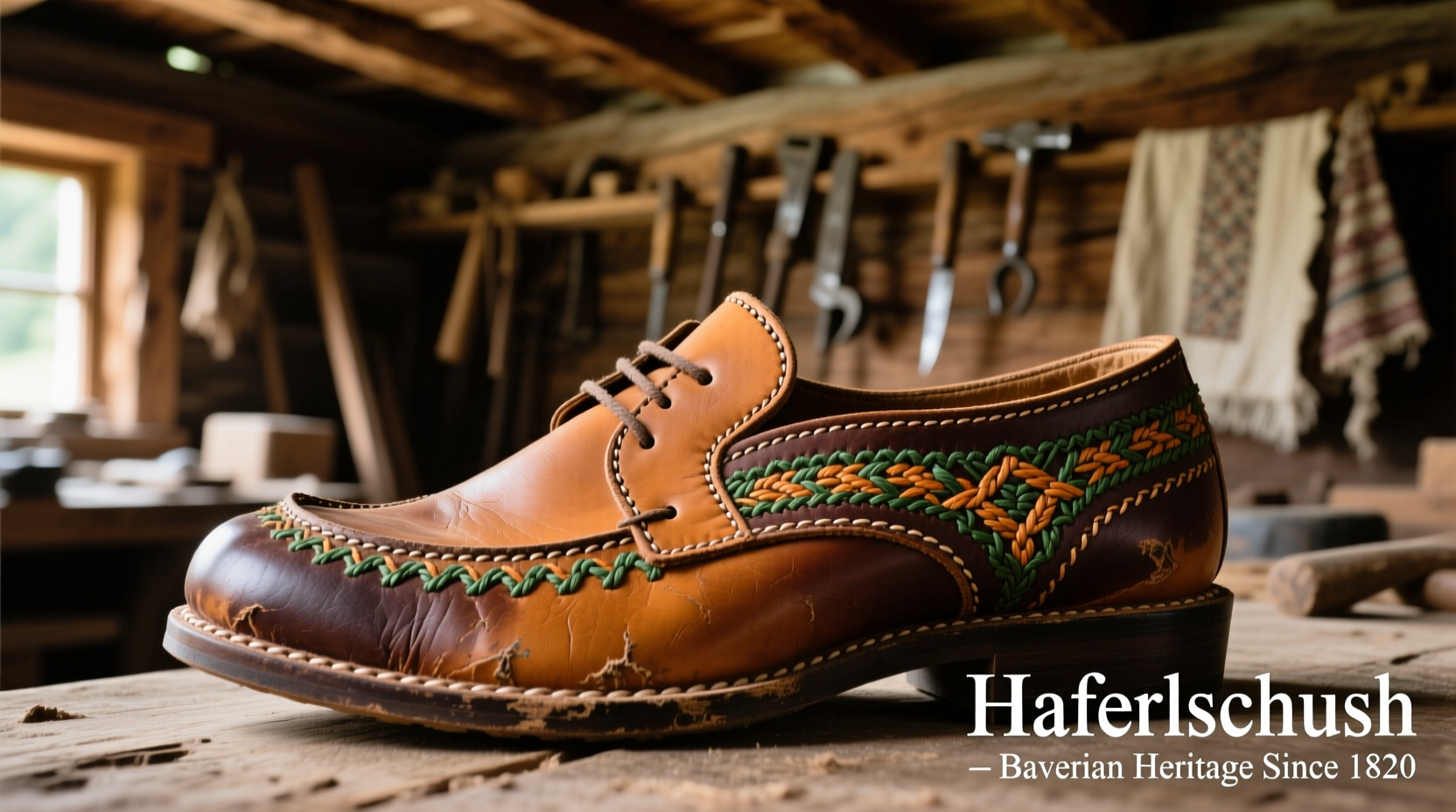
The undisputed king of alpine footwear is the Haferlschuh. The name translates roughly to 'small pot shoe' or 'oat mug shoe,' a nod to its distinctive, bulbous, boat-like toe box. According to the Bayerisches Nationalmuseum in Munich, this unique silhouette was not merely an aesthetic choice; it was a vital adaptation for alpine life. The wide toe box allowed for thick, hand-knitted wool socks and provided a broader surface area for navigating uneven scree, snow, and rocky mountain paths.
The 'Boat' Silhouette and Sole Architecture
A true artisan-crafted Haferlschuh is a marvel of traditional cobbling. The most critical element is the sole construction. Authentic pairs utilize a Zwiegenäht (double-stitched) or Rahmengenäht (Goodyear welted) technique. This ensures the shoe is entirely waterproof and resoleable, allowing a single pair to last a lifetime. The soles are typically made of double-layered, oil-tanned leather. Historically, the soles were driven with Trachtennägel (hobnails) for grip on icy alpine trails. Today, while hobnails are still used by active mountaineers and traditionalists in regions like Miesbach, many urban wearers opt for rubber-inlaid leather soles to prevent slipping on cobblestone streets and to avoid damaging indoor wooden floors.
Materials: From Calfskin to Hirschleder
The leather used in these shoes is as important as the breeches themselves. While mass-market versions use corrected grain leather, master shoemakers (Schuhmachermeister) utilize premium regional materials:
- Glattleder (Smooth Calfskin): The most common and versatile choice, usually dyed in deep brown or black, offering a polished look suitable for festive occasions and church attendance.
- Veloursleder (Suede/Roughout): Highly favored for everyday wear and hunting Tracht. It is rugged, scuff-resistant, and molds beautifully to the foot over time.
- Hirschleder (Deer Leather): The pinnacle of alpine luxury. Sourced from local Alpine deer, this leather is incredibly supple, durable, and carries a distinct, earthy patina that ages magnificently.
Regional Typology: Choosing the Right Tracht Shoe
Not all Lederhosen shoes are created equal. The Bavarian Tracht Information Center notes that footwear often signals the wearer's specific regional affiliation or the formality of the event. Below is a comparative breakdown of the primary styles.
| Footwear Style | Design Characteristics | Best Suited For | Formality Level |
|---|---|---|---|
| Haferlschuh | Bulbous toe box, lateral or front lacing, heavy double-leather sole. | Alpine festivals, outdoor events, traditional Gebirgstracht. | Medium to High (Regional) |
| Trachtenhalbschuh | Rounded toe, brogue-style perforations, sleeker profile, standard welt. | Urban Oktoberfest visits, weddings, indoor formal Tracht events. | High (Formal/Urban) |
| Schnallenschuh | Monk-strap or buckle closure, smooth leather, historical 18th-century silhouette. | Historical reenactments, specific regional heritage days. | Highest (Historical) |
| Bundschuh | Soft leather, wrapped and tied around the ankle, no hard sole. | Museums, historical peasant portrayals (Not worn in modern Tracht). | N/A (Historical Artifact) |
The Symbiosis of Socks: Loferl and Trachtenstutzen
One cannot discuss shoes for Lederhosen without addressing the hosiery, as the two are inextricably linked in Bavarian dress codes. The gap between the hem of the Lederhosen and the top of the shoe is a canvas for specific cultural markers.
In the summer and early autumn, or when wearing shorter Kurze Lederhosen, men traditionally wear a Loferl (also known as Wadenwärmer). This is a two-piece hosiery set consisting of a calf sleeve and a separate ankle sock. The Loferl originated as a practical way for alpine farmers to keep their calves warm in the morning chill while allowing the feet to breathe inside the heavy Haferlschuh during strenuous labor. Today, it remains a hallmark of authentic, well-dressed Trachtler.
During the winter, or when wearing longer Kniebundhosen (knee-breeches), the correct choice is the Trachtenstutzen—a thick, knee-high wool sock featuring subtle, traditional cable-knit patterns (Zopfmuster). The socks should always be pulled up neatly; slouching socks are considered sloppy and disrespectful to the tradition.
Authentic Acquisition: Pricing and Artisan Cooperatives
Investing in authentic Tracht footwear is an exercise in supporting European artisanal heritage. The market is sharply divided between commercial factories and master cobblers. According to historical archives maintained by the German Alpine Club (DAV), the preservation of alpine cobbling techniques is vital to maintaining the functional integrity of mountain gear.
Price Ranges and What to Expect
- Entry-Level / Commercial (€90 – €160): These are typically cemented-sole shoes made in larger factories outside of Germany. While they mimic the Haferlschuh silhouette, they lack the waterproof welting and will need replacing after a few seasons of heavy festival wear.
- Mid-Tier / Traditional Workshops (€220 – €380): Produced by established Bavarian and Austrian Tracht brands (e.g., Meindl, Haflinger). These feature genuine Goodyear welts, high-quality European calfskin, and proper anatomical lasts.
- Bespoke / Master Cobbler (€450 – €800+): Commissioned directly from a Schuhmachermeister in towns like Miesbach, Garmisch-Partenkirchen, or Salzburg. These are built on custom wooden lasts carved to your exact foot measurements, utilizing hand-selected Hirschleder and hand-forged hobnails. This is an heirloom-grade investment.
Cultural Etiquette: Wearing Tracht Footwear Today
Respecting the culture means adhering to its unspoken rules. If you are wearing authentic Lederhosen, never pair them with modern athletic socks, particularly white tube socks. This is the fastest way to signal to locals that you are treating their cultural heritage as a mere party costume. Furthermore, the leather tone of your shoes should harmonize with your Lederhosen and the Trachtengürtel (leather belt). While they do not need to match perfectly like a modern business suit, a dark brown shoe should not be paired with a light, honey-colored deerskin breech.
Finally, the lacing of the Haferlschuh is an art in itself. Traditionalists use thick, waxed cotton or leather laces, often tied in a specific, flat knot that sits flush against the tongue to prevent snagging on brush or alpine debris. By understanding and respecting the profound history embedded in these shoes, wearers elevate their Tracht from a simple outfit to a genuine participation in centuries of Alpine heritage.