Asian vs European Traditional Dress: A Guide

The Global Tapestry: Bridging East and West
When exploring the vast encyclopedia of global sartorial heritage, enthusiasts often find themselves drawn to two distinct yet equally magnificent pillars of cultural dress: the flowing, intricately draped silhouettes of the East and the structured, regionally specific folk costumes of the West. While our primary focus at The Garment Atlas often centers on European folk dress, understanding the global context is essential for any serious student of traditional garments. This beginner guide bridges the gap, offering a comparative look at asian traditional dresses and their European counterparts, examining how geography, history, and textile technologies shaped the way humanity dresses.
Whether you are a historian, a textile collector, or simply someone looking to respectfully purchase and wear traditional garments, understanding the fundamental differences in construction, fabric, and cultural etiquette between Asian and European traditional wear is paramount. This guide will decode the anatomy of these garments, trace their historical intersections, and provide actionable advice for ethical sourcing.
Decoding Asian Traditional Dresses: Core Silhouettes
Unlike Western clothing, which historically relied on complex tailoring, darts, and corsetry to mold fabric to the human body, traditional Asian garments largely utilize flat-pattern cutting. This approach preserves the integrity of the woven textile, treating the fabric as a canvas for elaborate surface design rather than a material to be aggressively sculpted.
The Hanfu and Qipao (China)
The Hanfu encompasses the historical clothing of the Han Chinese, characterized by the jiaoling youren (cross-collar, right lapel), wide sleeves, and sash ties rather than buttons. A staple silhouette is the ruqun (a top and wrap skirt) or the shenyi (a deep robe). In contrast, the Qipao (or Cheongsam), which gained global prominence in 1920s Shanghai, represents a later evolution, blending traditional Manchu elements with Western tailoring to create a form-fitting, high-collared dress with side slits.
The Kimono and Yukata (Japan)
The Japanese Kimono (literally 'thing to wear') is a masterclass in flat construction. Cut from a single bolt of fabric (the tanmono), the kimono features straight seams and an intricate wrapping system secured by the obi (sash). According to the Victoria and Albert Museum's Asian textile archives, the kimono's surface design—achieved through techniques like yuzen dyeing and shibori tie-dyeing—serves as a primary indicator of the wearer's age, marital status, and the season.
The Áo Dài (Vietnam)
Elegant and fluid, the Vietnamese Áo Dài is a split tunic worn over wide-legged trousers. Featuring a high Mandarin collar and form-fitting bodice that flares at the hips, it represents a beautiful synthesis of indigenous Vietnamese aesthetics and historical foreign influences, remaining a staple of modern formal and educational wear in Vietnam today.
European Folk Dress: Tailoring and Regional Identity
Where Asian traditional dresses often emphasize drape and surface artistry, European folk costumes (or Trachten) are defined by structured tailoring, heavy layering, and hyper-local regionalism. These garments evolved to withstand diverse climates and to serve as immediate visual markers of a wearer's village, religion, and marital status.
The Dirndl and Alpine Tracht (Germanic Regions)
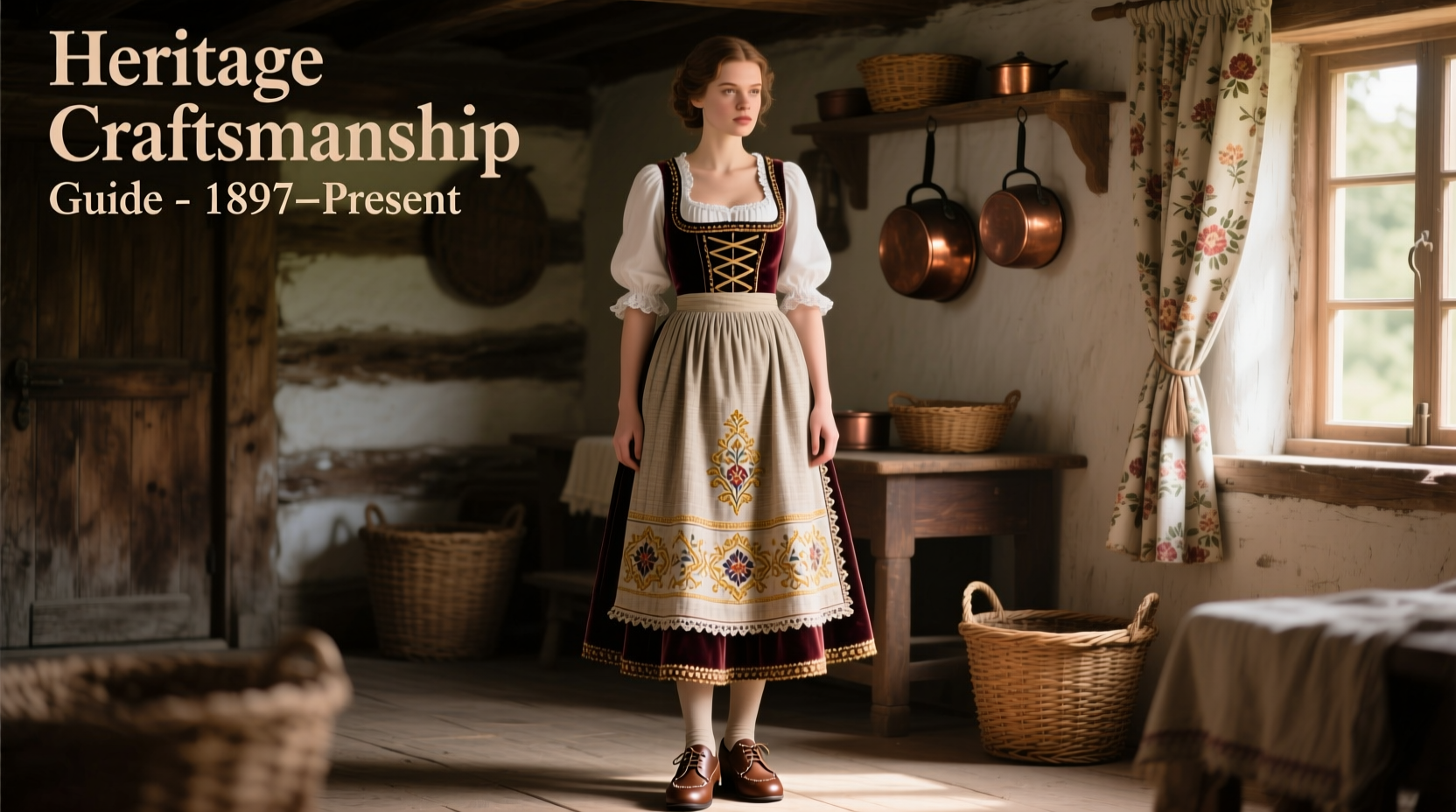
Originating in the Alpine regions of Bavaria, Austria, and Switzerland, the Dirndl is a highly structured ensemble consisting of a Mieder (fitted bodice), a Bluse (blouse), a Rock (full skirt), and a Schürze (apron). Unlike the flat-cut silk of a kimono, the Dirndl relies on precise tailoring, gathering, and corsetry to achieve its silhouette. The placement of the apron bow serves as a well-known cultural code indicating the wearer's relationship status.
The Bunad (Norway)
The Norwegian Bunad is perhaps the most revered folk dress in Europe. Far from a monolithic 'national costume,' there are over 400 distinct regional Bunads, each governed by strict local councils regarding historical accuracy. Crafted from heavy, locally sourced wools and linen, they are heavily embellished with regional embroidery and sølje (intricate silver filigree jewelry). As documented by the Norsk Folkemuseum, the Bunad is a living tradition, worn proudly at weddings, national holidays (Syttende Mai), and baptisms.
The Silk Road Influence: When East Met West
It is a misconception that Asian and European dress evolved in complete isolation. The Silk Road and subsequent maritime trade routes facilitated a massive exchange of textiles that forever altered European regional dress. During the 17th and 18th centuries, the European craze for Chinoiserie and imported Asian silks heavily influenced the textiles used in European folk and court dress.
Floral brocades, damasks, and silk velvet—originally perfected by Asian weavers—were imported and later mimicked by European mills in Lyon and Genoa. Consequently, many 'traditional' European folk costumes from the Renaissance and Victorian eras feature bodices and skirts made from silk brocades that trace their aesthetic lineage directly back to Asian traditional dresses and textile hubs.
Sartorial Showdown: Construction and Textile Comparison
To help beginners understand the fundamental differences in garment architecture, refer to the comparative data table below:
| Garment | Origin | Primary Construction | Traditional Fabrics | Authentic Price Range (USD) |
|---|---|---|---|---|
| Hanfu | China | Flat-cut, cross-collar, tied sashes | Silk, linen, ramie | $120 - $600+ |
| Kimono | Japan | Straight seams, T-shape, Obi sash | Chirimen (crepe), Rinzu (satin) | $300 - $5,000+ |
| Áo Dài | Vietnam | Fitted bodice, split side-seams, trousers | Silk crepe, brocade, synthetics | $150 - $450 |
| Dirndl | Alpine Europe | Tailored bodice, gathered skirt, apron | Cotton, linen, wool, silk blends | $180 - $900+ |
| Bunad | Norway | Structured wool, heavy embroidery, silver | Wool, linen, silver filigree | $2,500 - $6,000+ |
A Beginner’s Guide to Ethical Sourcing and Wearing Etiquette
As global interest in cultural garments rises, so does the market for cheap, mass-produced imitations. For beginners looking to acquire authentic pieces—whether an Asian traditional dress or a European folk costume—ethical sourcing and cultural respect are non-negotiable.
1. Avoid Fast-Fashion 'Costumes'
Garments sold as 'sexy geisha' or 'Oktoberfest wench' costumes are rooted in caricature and cultural appropriation. Authentic traditional garments are markers of identity, history, and artisan craftsmanship. Always purchase from recognized artisans, specialized cultural boutiques, or verified vintage dealers.
2. Understand the Rules of Wearing
Both Asian and European traditions have strict etiquette rules. For example, in Japan, the left side of the kimono must always wrap over the right (right-over-left is strictly reserved for dressing the deceased). In Bavaria, the Dirndl apron bow must be tied on the left if single, the right if married/taken, the center if a virgin (historically), and the back if widowed or working as a waitress. Ignorance of these codes can lead to unintended cultural offenses.
3. Invest in Artisan Cooperatives
When buying Asian traditional dresses like the Hanfu or Kimono, look for retailers that source directly from weaving cooperatives in regions like Kyoto or Hangzhou. The Kyoto Costume Institute frequently highlights the importance of preserving traditional weaving techniques like nishijin-ori. Similarly, authentic Norwegian Bunads must be custom-fitted and embroidered by certified local artisans, ensuring the survival of rural textile economies.
Conclusion: Respecting the Threads of History
Whether you are marveling at the structural engineering of a Norwegian Bunad or the fluid, poetic drape of a Japanese Kimono, traditional garments offer a tangible connection to human history. By studying asian traditional dresses alongside European folk costumes, we gain a holistic understanding of how our ancestors utilized local resources, trade networks, and profound artistry to clothe themselves. As a beginner, approach these garments not as mere fashion trends, but as living, breathing artifacts of cultural pride that demand our utmost respect and preservation.