2026 Guide to Traditional Chinese Footwear: Cloud Shoes & Boots
The Renaissance of Traditional Chinese Footwear in 2026
As the global appreciation for Asian traditional garments continues to evolve, the focus of the Hanfu and Xin Zhongshi (New Chinese Style) movements in 2026 has shifted from mere silhouette replication to complete, head-to-toe historical immersion. While flowing sleeves and intricate Mamianqun (horse-face skirts) often steal the spotlight, traditional Chinese footwear remains the foundational anchor of any authentic ensemble. In 2026, the market for traditional footwear has matured dramatically, offering historically accurate designs that incorporate modern ergonomic engineering. Whether you are stepping out in Ming dynasty-inspired winter boots or delicate Tang-style silk slippers, understanding the nuances of traditional Chinese footwear is essential for the modern wardrobe.
Decoding Yunxie: The Iconic Cloud Shoe
Yunxie, or 'cloud shoes,' are arguably the most recognizable form of traditional Chinese women's footwear. Characterized by their distinctive upturned toe caps that resemble the ruyi cloud motif, these shoes have been a staple of Chinese fashion since the Song and Ming dynasties. According to the Victoria and Albert Museum's extensive archives on Chinese dress, the cloud motif was not merely decorative; it symbolized good fortune, upward mobility, and a connection to the celestial realm.
In 2026, the construction of Yunxie has seen remarkable innovations. While traditional artisans still offer hand-stitched, multi-layered cotton soles (known as 'qiancengdi'), the mainstream market has embraced hybrid designs. Leading heritage brands now utilize vulcanized rubber outsoles that mimic the aesthetic of stacked cloth but provide essential arch support and slip resistance for modern city streets. The uppers are crafted from premium Song brocade, Zhuanghua satin, and sustainable vegan silks, featuring intricate Su embroidery techniques that showcase metallic gold couching and vibrant floral patterns.
2026 Pricing and Market Trends
The cost of authentic Yunxie in 2026 varies based on the embroidery complexity and material origin. Mass-produced, machine-embroidered cloud shoes typically range from $45 to $75 USD. However, artisan-crafted pairs featuring genuine silk threads, hand-lasted wooden or cork wedges, and authentic Ming-style upturned toes command between $120 and $280 USD. The current trend heavily favors 'subtle luxury'—shoes with muted, tonal embroidery that seamlessly integrate into daily Xin Zhongshi office wear.
Embroidered Boots: Elegance for the Colder Months
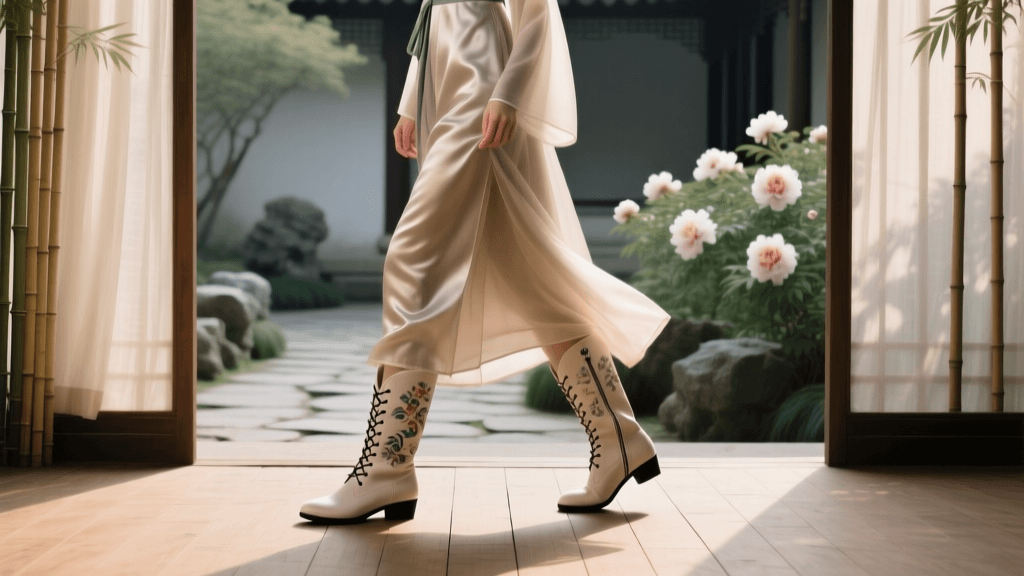
When the weather turns cold, traditional Chinese fashion transitions from delicate slippers to structured boots. The Hua Xue (floral boots) and plain velvet ankle boots are historically rooted in the Ming and Qing dynasties. As noted by Encyclopedia Britannica, Qing-era footwear often featured elaborate embroidery covering the entire shaft of the boot, serving as a canvas for storytelling through symbolic motifs like peonies for wealth and bats for blessings.
Modern 2026 interpretations of these boots are designed with a slightly tapered toe and a low, stable block heel (usually 2 to 3 centimeters). The shaft height typically ranges from 12cm to 18cm, making them the perfect companion for heavy winter Mamianqun made from wool-blend or thick jacquard fabrics. Many contemporary designs feature side zippers concealed by traditional fabric knot buttons (pankou), merging historical aesthetics with modern convenience.
2026 Sizing and Fit Matrix
One of the most significant challenges for international enthusiasts is navigating Asian footwear sizing. Traditional Chinese shoes are historically cut narrower than Western counterparts, and the rigid structure of brocade fabrics offers little stretch. When purchasing Yunxie or embroidered boots in 2026, it is highly recommended to measure your foot in centimeters and consult the manufacturer's specific size chart. Below is the standardized 2026 conversion matrix for traditional Chinese footwear.
| US Size | EU Size | UK Size | Foot Length (cm) | Fit Notes & Hanfu Pairing Advice |
|---|---|---|---|---|
| 5 | 35 | 3 | 22.5 | Narrow fit. Best for lightweight Tang-style Ruqun. |
| 6 | 36 | 4 | 23.0 | Standard. Size up if wearing thick winter socks with Ming boots. |
| 7 | 37 | 4.5 | 23.5 | Standard. Ideal for daily Xin Zhongshi office styling. |
| 8 | 38 | 5.5 | 24.0 | Wide toe box recommended for Song-style pointed slippers. |
| 9 | 39 | 6 | 24.5 | Ensure the upturned cloud toe is not compressed. |
| 10 | 40 | 7 | 25.0 | Custom-lasted boots recommended for optimal calf fit. |
How to Measure for the Perfect Fit
- Trace and Measure: Stand on a piece of paper in the evening (when feet are slightly swollen). Trace your foot and measure from the heel to the longest toe.
- The Sock Factor: If you plan to wear traditional cotton-lined socks or modern fleece tights, add 0.5cm to your measurement before selecting your size.
- Width Considerations: Brocade and silk satin do not stretch. If you have a wide forefoot, always size up by one half-size and use a cushioned insole to adjust the volume.
Styling Guide: Matching Footwear to Hanfu Silhouettes
The visual harmony of a Hanfu outfit relies heavily on the proportion between the skirt's hemline and the shoe's profile. The Metropolitan Museum of Art's historical costume archives emphasize that footwear in ancient China was deeply tied to the specific garment layers worn above it. Here is how to style your footwear in 2026:
1. Tang Dynasty High-Waisted Ruqun
Tang silhouettes are voluminous and flowing. The skirts often graze the floor, meaning only the toe of the shoe is visible during movement. Opt for low-profile, peep-toe cloud shoes or delicate silk slippers with vibrant, contrasting embroidery. The upturned toe should peek out elegantly from beneath the hem when walking.
2. Song Dynasty Beizi and Pleated Skirts
Song dynasty fashion favors slender, elongated, and minimalist lines. The skirts are often narrower and slightly shorter, exposing more of the foot. Choose pointed-toe Yunxie with subtle, tonal embroidery. The sleek profile of the shoe elongates the leg and complements the refined, intellectual aesthetic of the Song Beizi (long outer jacket).
3. Ming Dynasty Aoqun and Mamianqun
The Ming silhouette is structured, regal, and heavily layered. Because Mamianqun skirts are typically worn at the natural waist and fall to the mid-calf or ankle, the footwear is highly visible. This is where embroidered boots and substantial, wedge-heeled cloud shoes shine. Pair a heavily brocaded winter Mamianqun with a pair of 15cm-shaft Hua Xue boots for a commanding, historically grounded presence.
Care and Maintenance Protocols
Investing in high-quality traditional footwear requires proper maintenance to preserve the delicate textiles and structural integrity.
- Moisture Protection: Silk and brocade are highly susceptible to water stains. In 2026, many enthusiasts use specialized, breathable textile water-repellent sprays designed specifically for museum-grade silks. Never wear raw silk Yunxie in heavy rain.
- Cleaning Embroidery: Do not machine wash or submerge embroidered shoes. Use a soft-bristled brush to gently dust the metallic threads. For localized stains, a microfiber cloth lightly dampened with distilled water and a drop of pH-neutral silk detergent should be dabbed—not rubbed—onto the area.
- Storage: Store your shoes in a cool, dark place away from direct sunlight, which will fade the natural silk dyes. Insert cedar shoe trees or stuff the toes with acid-free tissue paper to maintain the structural curve of the cloud toe and prevent the shaft of the boots from collapsing.
- Sole Maintenance: If you own traditional multi-layered cloth soles, avoid wearing them on wet asphalt. For modern rubber-soled hybrids, simply wipe the outsoles with a damp cloth to remove urban grime and preserve the anti-slip traction.
Conclusion
Traditional Chinese footwear is far more than an accessory; it is a vital extension of the garment's narrative. As we navigate the fashion landscape of 2026, the fusion of historical Yunxie and embroidered boots with modern ergonomic comforts allows enthusiasts to honor the past without sacrificing the present. By understanding the correct sizing, historical pairings, and meticulous care required for these exquisite pieces, you can step confidently into the rich tapestry of Asian traditions, one beautifully embroidered footprint at a time.