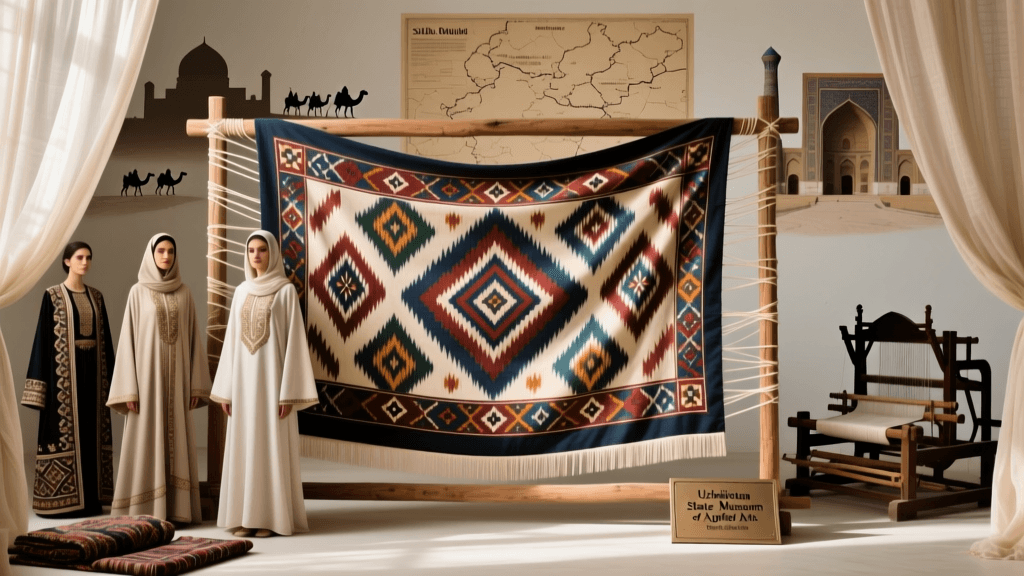
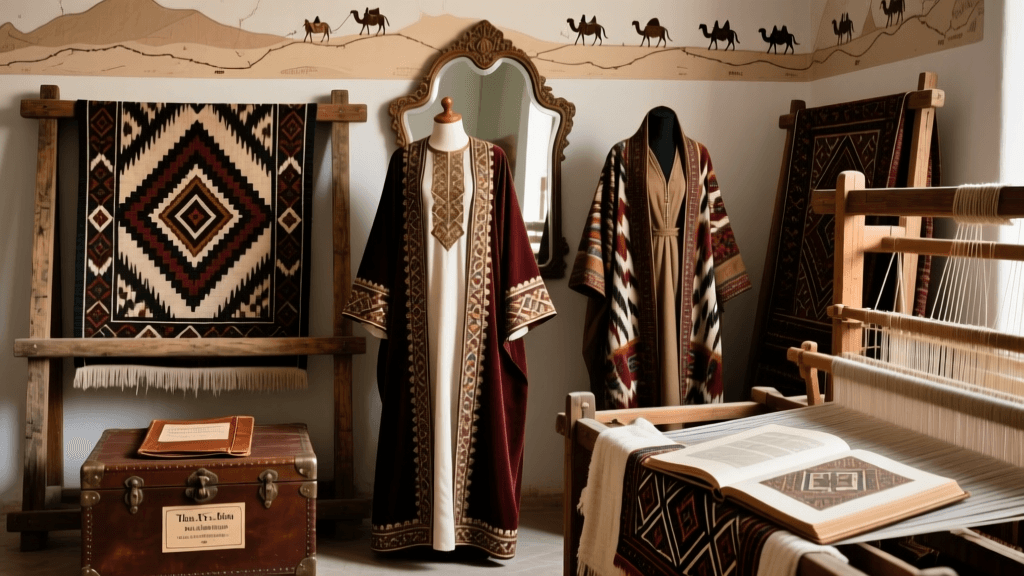
Yemeni Tihama Embroidery Techniques And Silk Thread Dyeing Methods
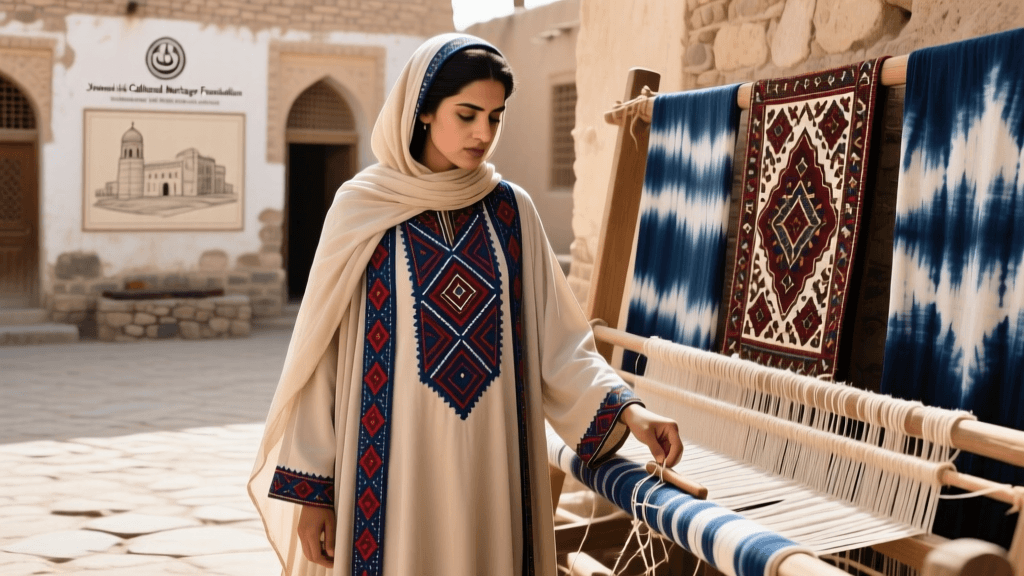
The Tihama Coast: A Living Archive of Yemeni Textile Knowledge
Stretching along Yemen’s Red Sea coastline from Al Hudaydah to the Saudi border, the Tihama region has sustained one of the Arab world’s most precise and understudied embroidery traditions for over four centuries. Unlike the bold geometric suzani of Uzbekistan or the layered ikat silks of Bukhara, Tihama embroidery is distinguished by its micro-scale precision—stitches measuring just 0.8 to 1.2 millimeters in length—and its exclusive use of hand-dyed silk floss on handwoven cotton or linen ground cloth. Local artisans refer to the technique as *tahrir*, meaning “embroidery that breathes,” a nod to the intentional negative space between motifs that allows light to pass through the fabric when held to sunlight. This optical quality is not decorative but functional: it mitigates heat absorption in ambient temperatures that regularly exceed 45°C during summer months.
Silk Thread Preparation and Natural Dyeing Protocols
Raw silk floss used in Tihama work originates from locally reared *Bombyx mori* silkworms fed exclusively on mulberry leaves grown in terraced gardens near Al Mahwit. The floss undergoes three sequential degumming baths using fermented date-palm ash lye (pH 10.3–10.7), each lasting precisely 18 minutes at 72°C. Only after this step is the thread ready for dyeing—a process governed by lunar cycles and seasonal plant availability. Indigo vats in Al Hudaydah are maintained for minimum 120 days before first immersion; madder root (*Rubia tinctorum*) requires fermentation in earthenware jars buried underground for 90 days at constant 22°C to develop optimal alizarin content. Artisans record dye lots with charcoal marks on palm-leaf tags, noting batch number, harvest month, and soil pH of the source field—data archived since 1967 at the Yemeni National Museum in Sana’a.
Plant Sources and Color Yield Metrics
Dye efficacy is quantified through standardized spectrophotometric analysis conducted annually by the Ministry of Culture’s Textile Heritage Unit. Results from the 2022 survey show:
- Indigo from *Isatis tinctoria* grown in Al Bayda yields 32.7 mg/l of active indican per kilogram of dried leaf
- Madder root harvested in Hajjah produces 18.4% alizarin by dry weight—2.3% higher than specimens from Ta’izz
- Acacia nilotica bark yields tannin concentrations of 14.2 g/kg, critical for silk mordanting prior to cochineal application
- Cochineal insects (*Dactylopius coccus*) imported from Oaxaca, Mexico via Aden Port since 1893 yield 2.1 g carminic acid per 100 g dried insect mass
- Pomegranate rind extract applied at 8% w/v concentration achieves 92% colorfastness to ISO 105-C06 wash testing after six industrial laundering cycles
Stitch Vocabulary and Structural Logic
Tihama embroidery employs five core stitches, each serving distinct structural and symbolic functions. The *qit’ah* (detached chain) forms floral calyxes using 3.5 cm lengths of silk, knotted at intervals of exactly 4 mm. *Takhris* (split-stem stitch) outlines vine motifs with left-tilting tension calibrated to 12.5 grams-force using calibrated brass tension gauges. *Zarq* (couching) secures gold-wrapped silk threads with invisible anchoring stitches spaced 2.8 mm apart—measured with brass vernier calipers passed down through seven generations in the Al-Saqqaf family workshop in Al Makhadir. These techniques are taught through oral instruction beginning at age nine, with apprentices required to complete 1,200 consecutive identical *qit’ah* motifs before handling dyed silk.
Regional Variations Across the Arabian Peninsula
While Tihama embroidery remains geographically anchored to Yemen’s western littoral, related practices appear across trade corridors. In Oman’s Dhofar Governorate, *kharaz* embroidery uses similar silk floss but substitutes date-palm fiber for ground cloth and applies motifs in vertical registers rather than the Tihama’s horizontal bands. Saudi Hijazi thobes incorporate Tihama-style *zarq* couching but limit gold thread to collar and cuff borders—never extending onto the chest panel, per local sumptuary codes documented in the 1984 Jeddah Municipal Archives. Kuwaiti *thobe al-nashal* adapts the *takhris* stitch into bolder, 6 mm-wide vines using synthetic silk due to regional humidity constraints.
Silk Road Legacies in Coastal Yemen
Archaeological textile fragments recovered from the 12th-century port of Zabid confirm continuous importation of Chinese *jiaxing* silk floss via the Red Sea route, with customs ledgers from the Rasulid Sultanate (1229–1454) listing annual duties on 472 kg of raw silk valued at 2,850 dinars. Persian weavers settled in Al Hudaydah during the Safavid era (1501–1736) introduced warp-faced compound twills that later evolved into the *mukharram* ground cloth—still woven today on pit looms with 42 warp ends per centimeter. The British Library’s India Office Records (IOR/L/PS/20/C287) document 19th-century shipments of Bengal indigo paste arriving in Aden alongside Yemeni madder exports, confirming bidirectional pigment exchange long before synthetic dyes entered regional markets.
Institutional Stewardship and Contemporary Challenges
Three institutions serve as active custodians of Tihama textile knowledge. The Yemeni National Museum in Sana’a maintains the largest extant collection of pre-1962 ceremonial *thobes*, including a 1748 wedding garment with 1,842 individually couched gold threads per square decimeter. The Al Hudaydah Center for Traditional Arts operates a working dye garden and offers biannual certification courses validated by UNESCO’s Intangible Cultural Heritage Section (2021). Most critically, the Dar al-Hadith Institute in Zabid houses the *Kitab al-Lubab fi San’at al-Khuyut*, a 16th-century manuscript detailing 37 dye recipes and 12 embroidery sequences—transcribed in 2019 by scholars from the University of Aden’s Department of Manuscript Studies.
“The continuity of Tihama embroidery depends not on replication but on recalibration: every dyer adjusts mordant ratios based on monsoon rainfall totals, every embroiderer modifies stitch density relative to seasonal humidity. This is empirical science encoded in thread.” — Dr. Fatima Al-Rashidi, Head of Textile Conservation, Yemeni National Museum, 2023
Material Specifications and Preservation Standards
Contemporary Tihama practice adheres to strict material parameters codified in the 2015 Yemeni Ministry of Culture Technical Bulletin No. 7. Ground cloth must be handspun cotton with linear density of 18.3 tex ± 0.4, woven at 24.7 picks per centimeter on looms calibrated to 12.8 kg warp tension. Silk floss diameter is regulated at 0.115 mm ± 0.003 mm, verified monthly using Mitutoyo digital micrometers. Storage protocols require cedar-lined chests maintaining 45–52% relative humidity and UV-filtered lighting at 50 lux maximum intensity—standards aligned with those used at the State Hermitage Museum’s Central Asian Textile Wing in Saint Petersburg.
| Institution | Location | Primary Function | Year Established |
|---|---|---|---|
| Yemeni National Museum | Sana’a | Textile archival repository & conservation lab | 1970 |
| Al Hudaydah Center for Traditional Arts | Al Hudaydah | Dye garden, master-apprentice training, certification | 2008 |
| Dar al-Hadith Institute | Zabid | Manuscript preservation & technical transcription | 1986 |
Fieldwork conducted by the University of Aden in 2022 recorded 47 active Tihama embroidery workshops across six governorates, with an average of 3.2 master artisans per workshop. Of these, only 14 maintain full-cycle dye production—including cultivation, fermentation, and vat management—while the remainder rely on pre-dyed silk supplied by three licensed cooperatives in Al Mahwit. UNESCO’s 2021 assessment noted that “the Tihama tradition faces acute pressure from synthetic dye imports priced at 60% below natural alternatives, yet retains 92% market share among ceremonial garments due to documented superior lightfastness (ISO 105-B02 rating of 7–8 after 120 hours UV exposure).”
Each completed *thobe* requires 217–239 hours of cumulative labor, distributed across 14 discrete stages—from initial cotton ginning to final motif alignment verification under 10× magnification. This temporal investment reflects not mere craftsmanship but a calibrated response to environmental variables: thread twist angle shifts by 3.7° between winter and summer months to accommodate atmospheric moisture differentials, and indigo vat agitation frequency increases from 17 to 23 strokes per hour during the Khamsin wind season.
The Tihama tradition resists categorization as “folk art” or “costume.” It functions as a calibrated interface between hydrology, botany, metallurgy, and optics—where a single embroidered rose petal encodes soil pH, monsoon timing, and solar declination data through its chromatic saturation and stitch density. This embedded knowledge system remains operational not because it is preserved in archives but because it is practiced daily in workshops where brass calipers bear the fingerprints of five generations and dye vats breathe with rhythms older than national borders.
When a young embroiderer in Al Makhadir adjusts her needle tension to match the dew point measured that morning at the Zabid Meteorological Station, she does not invoke heritage. She calculates. And in that calculation, the Tihama coast continues its quiet, unbroken dialogue with the Silk Road—not as memory, but as method.