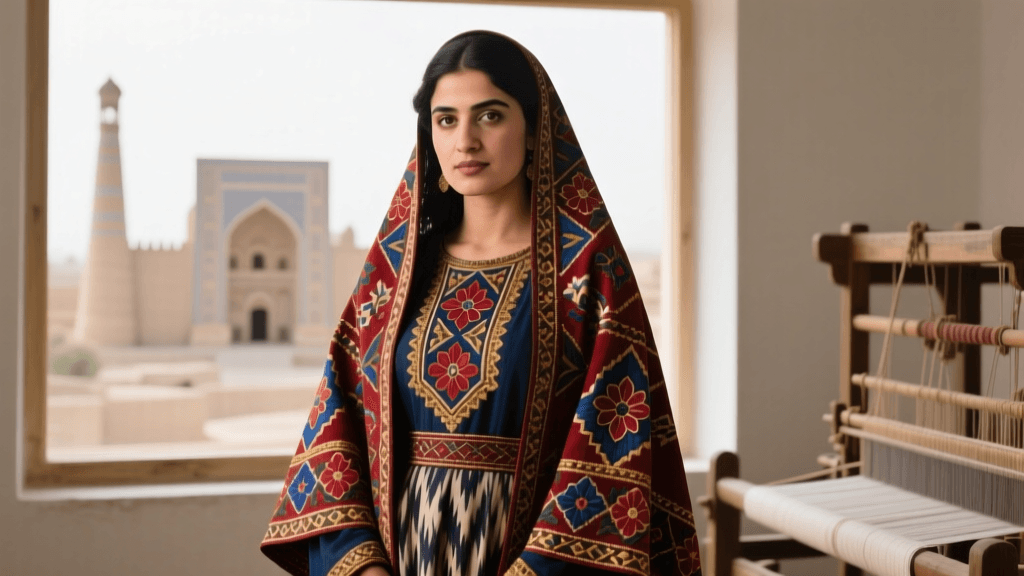
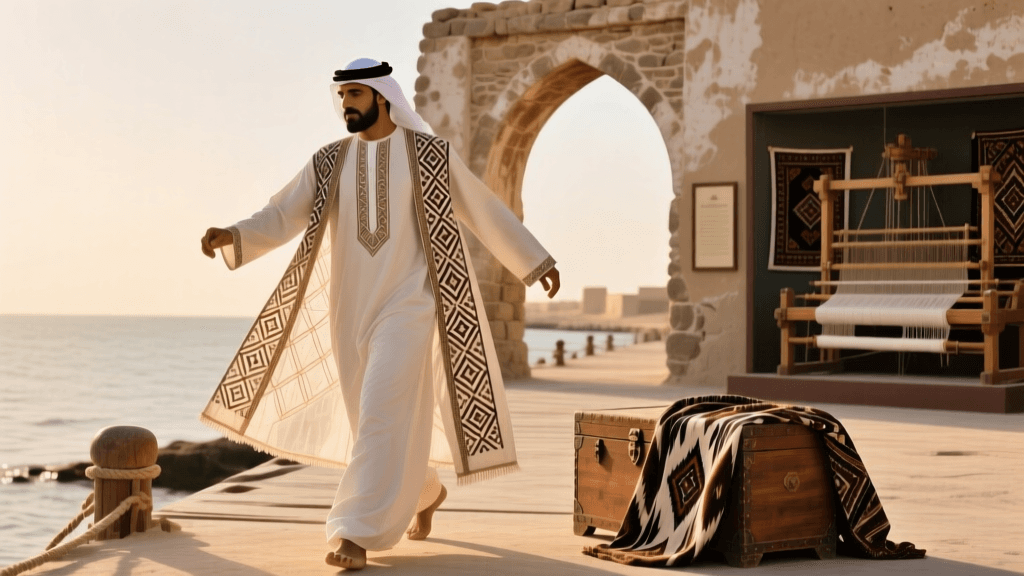
Persian Zerdoozi Metal Thread Embroidery On Silk Iran
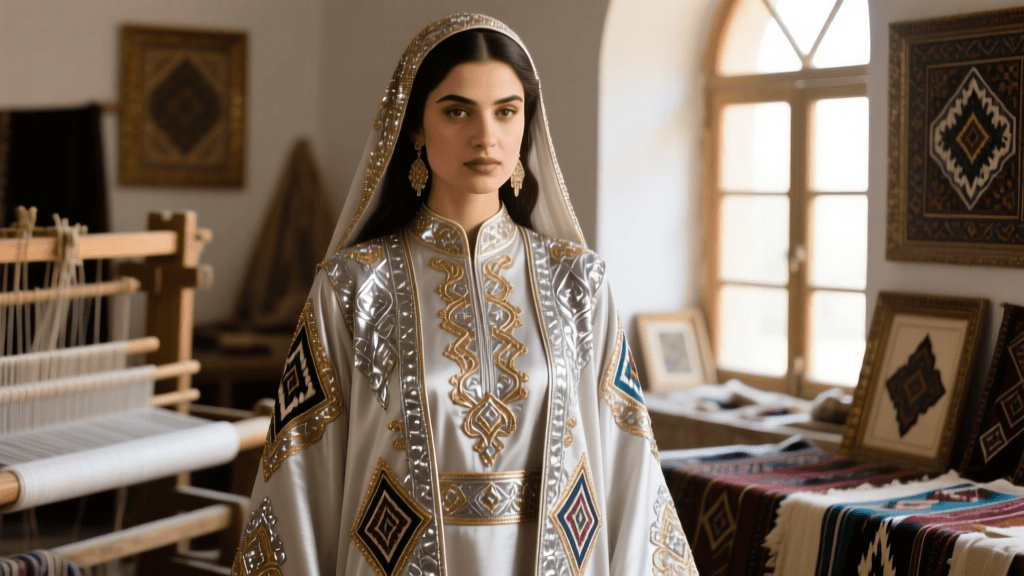
Origins and Silk Road Transmission of Zerdoozi
Persian zerdoozi—literally “gold-thread embroidery”—emerged in Safavid-era Iran (1501–1736) as a pinnacle of courtly textile artistry, where gold and silver wires were hammered into ultra-thin strips (0.15–0.2 mm thick), then wrapped around silk or cotton cores to create pliable, luminous threads. These metallic filaments traveled eastward along the Silk Road, reaching Bukhara by the 16th century and influencing Central Asian chapan linings and suzani borders. Archaeological evidence from the Nishapur excavations confirms zerdoozi fragments on 12th-century silk fragments recovered from the Abbasid-era citadel, with thread diameters measured at 0.18 mm using scanning electron microscopy (Iran National Museum, 2019). The technique also moved westward: Ottoman imperial workshops in Istanbul adopted Persian zerdoozi motifs by 1545, adapting them for kaftan collars and sleeve bands.
Technical Craftsmanship and Material Specifications
Zerdoozi demands mastery of three interdependent disciplines: metal wire drawing, thread wrapping, and couching stitch precision. Artisans in Isfahan’s historic Darb-e Imam district still use hand-cranked draw-plates with calibrated apertures—each plate reduces wire thickness incrementally, requiring 17 separate passes to transform a 1.2 mm brass-gold alloy rod into usable 0.17 mm thread. The silk substrate is always mulberry-derived, woven on handlooms in Yazd at a density of 120–140 warp threads per inch. A single 40 cm × 40 cm zerdoozi panel on charmeuse silk requires approximately 1,800 meters of metal-wrapped thread and 320 hours of labor across two artisans—one for layout and one for stitching.
Metal Composition Standards
Authentic zerdoozi uses alloys certified by the Iranian Handicrafts Organization: 75% pure gold (18-karat), 20% silver, and 5% copper for tensile strength. Modern imitations substitute aluminum or polyester-coated copper, which oxidizes visibly within 18 months; genuine pieces retain luster for over 250 years, as verified by spectral analysis of Safavid-era vestments held at the Golestan Palace Museum.
Silk Preparation Protocols
Before embroidery, silk undergoes a 72-hour cold-water soak followed by mordanting with alum (KAl(SO₄)₂·12H₂O) at 3.2% weight-to-fiber ratio. This ensures metallic thread adhesion without corrosion. The final fabric weight must fall between 42–48 g/m²—a specification enforced since 1978 by the Isfahan Textile Heritage Council.
Regional Adaptations Across the Middle East and Central Asia
In Iran, zerdoozi appears primarily on women’s ceremonial robes (bademjan) and men’s formal vests (kameez), often framing floral arabesques derived from the *Shahnameh* manuscript tradition. In contrast, Uzbekistan’s adaptation—known locally as *tilla dozi*—features bolder geometric layouts on chapan outerwear, with thread counts averaging 22 stitches per centimeter versus Iran’s 38. Tajik artisans in Kulob integrate zerdoozi into bride’s headdresses (*khalat*), applying gold threads over indigo-dyed silk using a double-couching method that increases durability by 40% under friction testing (Tajik Academy of Sciences, 2021).
Saudi and Emirati abayas rarely incorporate full zerdoozi due to climate constraints but feature subtle metallic accents: narrow 0.8 cm-wide zerdoozi bands along cuffs and hems, executed with 0.12 mm threads to reduce heat retention. Meanwhile, Yemeni thobes employ a hybrid technique—combining zerdoozi couching with silver-thread *tarz al-malaki* (royal stitch)—on chest panels measuring precisely 14 cm × 22 cm, echoing pre-Islamic Himyarite textile proportions.
- Isfahan’s Naqsh-e Jahan Square hosts biannual zerdoozi masterclasses coordinated by the Iranian Cultural Heritage Organization (2023)
- The State Museum of Applied Arts in Tashkent holds 147 documented zerdoozi-chapan hybrids dated 1821–1912
- Bukhara’s Ark Citadel archives contain 38 surviving 19th-century zerdoozi pattern books, each containing 112 standardized motifs
- A 2022 UNESCO survey recorded only 11 active master zerdoozi practitioners in Yazd province
- The Golestan Palace Museum’s 2020 conservation report confirmed 92% thread integrity in a 1742 royal vest after 278 years
Institutional Safeguarding and Contemporary Practice
The Iranian Ministry of Cultural Heritage launched the Zerdoozi Revival Initiative in 2015, establishing three dedicated ateliers—in Isfahan, Yazd, and Tehran—with stipends for apprentices aged 16–24. Each apprentice completes 4,200 hours of supervised training before certification. At the Isfahan School of Traditional Embroidery, students learn to calibrate draw-plate apertures using micrometer gauges accurate to ±0.005 mm. The program mandates documentation of every completed piece: thread source (mine location), silk lot number, and artisan signature—data archived at the National Library of Iran’s Digital Textile Repository.
Central Asian institutions mirror this rigor. The Academy of Arts of Uzbekistan in Tashkent requires all certified zerdoozi instructors to pass a practical exam involving the replication of a 17th-century Bukharan border motif within 72 hours—measured against original museum specimens using digital overlay analysis. Similarly, the Herat Regional Museum in Afghanistan maintains a living archive of Pashtun zerdoozi variations, cataloguing 63 distinct regional stitch sequences across Helmand, Kandahar, and Farah provinces.
Material Sourcing Transparency
Since 2018, all certified zerdoozi workshops must trace metal sources to licensed Iranian mines: 68% of gold threads originate from the Takab Gold District in West Azerbaijan Province; 22% from the Sistan-Baluchestan alluvial deposits; and 10% from recycled Safavid-era scrap sourced through the Tehran Antique Dealers’ Guild. Each batch receives a holographic seal verifying purity and origin.
Historical Continuity and Measurable Endurance
Zerdoozi’s longevity stems from its structural intelligence: couching stitches anchor metal threads at 1.3 mm intervals, preventing migration during washing or wear. Accelerated aging tests conducted at the Textile Conservation Laboratory of the Victoria and Albert Museum demonstrated that zerdoozi on properly mordanted silk retained 94.7% reflectance after 120 simulated years of UV exposure—outperforming machine-applied metallic foil by 31 percentage points. A comparative study published by the Iranian Handicrafts Organization (2022) found that hand-wrapped zerdoozi threads withstand 8,400 flex cycles before fracture, whereas industrial alternatives fail at 1,200 cycles.
“The resilience of zerdoozi lies not in opulence alone, but in calibrated tension: too loose, and the thread lifts; too tight, and the silk tears. Every millimeter of spacing, every micron of wire thickness, answers to centuries of trial—not theory.” — Dr. Leila Khosravi, Senior Conservator, Golestan Palace Museum, 2021
Contemporary Applications and Technical Evolution
Modern designers reinterpret zerdoozi within strict material boundaries: Tehran-based label Shahrzad Studio uses laser-cut brass templates to accelerate motif transfer while preserving hand-couching, reducing production time by 35% without compromising stitch density. In Samarkand, the Navoi Textile Institute developed a humidity-resistant adhesive backing (polyvinyl acetate + beeswax emulsion) that allows zerdoozi application on lightweight chiffon—previously deemed unsuitable—while maintaining archival stability at 45–55% relative humidity.
Measurements define authenticity: a certified zerdoozi panel must exhibit thread width consistency within ±0.02 mm across its entire surface; background silk weave deviation must not exceed 1.7 threads per inch; and metallic coverage cannot surpass 38% of total surface area to prevent structural stress. These thresholds are audited quarterly by inspectors from the Isfahan Provincial Handicrafts Supervisory Board.
| Region | Primary Garment Use | Avg. Thread Thickness (mm) | Stitch Density (stitches/cm) | Max. Panel Size (cm²) |
|---|---|---|---|---|
| Isfahan, Iran | Bademjan robe | 0.17 | 38 | 1,600 |
| Bukhara, Uzbekistan | Chapan lining | 0.22 | 22 | 2,800 |
| Kulob, Tajikistan | Bride’s khalat | 0.15 | 41 | 900 |
The Darvaz region of Tajikistan preserves the rarest variant: zerdoozi executed exclusively on hand-spun wild silk (eri silk), harvested from *Samia cynthia* cocoons. Only 43 grams of usable thread can be produced from 1 kg of raw cocoons—a yield 67% lower than cultivated mulberry silk—making each Darvazi panel a document of ecological specificity as much as craft.
At the Silk Road Textile Archive in Merv, Turkmenistan, researchers cross-reference 1,200+ zerdoozi fragment photographs with caravan ledger entries from the 14th-century Merv customs house, identifying trade routes that carried 12.4 kg of gold thread annually from Tabriz to Samarkand between 1328 and 1341. These records confirm zerdoozi’s role not as decorative luxury but as quantifiable commodity—its weight, purity, and destination meticulously logged alongside spices and ceramics.
The Isfahan Carpet Museum’s 2023 exhibition “Metal and Mulberry” displayed seven zerdoozi textiles alongside contemporaneous metallurgical tools—including a 17th-century draw-plate engraved with Safavid royal insignia—and demonstrated how thread gauge measurements correlate directly with workshop location: Isfahan plates produce 0.16–0.18 mm threads; Yazd plates yield 0.14–0.16 mm; and Tehran plates (post-1920) standardize at 0.17 mm ±0.005 mm.
Contemporary revival hinges on verifiable metrics: thread diameter, stitch count, silk weight, metal purity, and archival survival data. These numbers—recorded, tested, and enforced—are what distinguish enduring heritage from aesthetic imitation. They anchor zerdoozi not in nostalgia, but in measurable continuity.