2026 Guide to Preserving Vintage Silk Kimono & Hanbok
The Evolution of Asian Textile Conservation in 2026
Preserving the rich cultural heritage of East Asia requires a meticulous approach to garment care, particularly when dealing with antique and vintage silk kimono and hanbok. Historically, families stored these precious garments in traditional cedar chests or paper-lined drawers. However, as our understanding of textile chemistry has advanced, conservation science has proven that these traditional methods can actually accelerate degradation over decades. In 2026, the gold standard for preserving Asian silk garments relies on creating inert, museum-grade micro-climates that protect delicate protein fibers from acid migration, light damage, and fluctuating humidity.
Whether you are a collector of Taisho-era kimono, a curator of Joseon-dynasty hanbok, or a descendant safeguarding family heirlooms, adopting modern archival techniques is essential. This guide outlines the precise materials, folding methodologies, and environmental controls required to preserve these masterpieces for future generations.
Understanding Protein Fiber Vulnerabilities
Silk is a natural protein fiber, making it fundamentally different from plant-based cellulose fibers like cotton or linen. According to the Victoria and Albert Museum, protein fibers are highly susceptible to alkaline degradation, meaning they require a strictly neutral pH environment. Furthermore, vintage Asian garments often feature complex embellishments. Japanese kimono may include surihaku (metallic leaf applied with lacquer) or tightly woven metallic threads in the obi. Korean hanbok frequently feature geumbak (gold leaf imprinting) on the jeogori (jacket) or chima (skirt). These embellishments are incredibly fragile; friction, pressure, and chemical off-gassing can cause gold leaf to flake and metal threads to tarnish irreversibly.
Another critical threat is 'silk shattering,' a phenomenon where historical silk degrades into dust-like fragments. This is often caused by 'weighted silk,' a late 19th and early 20th-century manufacturing process where metallic salts were added to silk to increase its weight and drape. Over time, these salts cause the silk fibers to become brittle and split along fold lines. Preventing mechanical stress on these vulnerable areas is the primary goal of modern archival storage.
Essential Archival Materials for 2026
To construct a safe storage environment, you must abandon standard cardboard boxes, plastic dry-cleaning bags, and colored tissue papers. Cardboard is highly acidic and will cause acid migration, leaving brown, brittle stains on the silk. Plastic bags trap moisture and emit volatile organic compounds (VOCs) that degrade fibers. Instead, invest in the following conservation-grade materials, widely available from archival suppliers in 2026.
| Material | Application | pH Level | 2026 Average Cost |
|---|---|---|---|
| Unbuffered Acid-Free Tissue | Padding folds, interleaving, wrapping | 7.0 (Neutral) | $18 per 50 sheets |
| Tyvek 1443R (Soft) | Outer dust covers, protective bags | N/A (Inert) | $25 per linear yard |
| Art-Grade Silica Cassettes | Micro-climate humidity buffering | N/A | $40 per pair |
| Archival Coroplast Boxes | Rigid outer storage, light blocking | 7.0+ (Neutral) | $75 per box |
Critical Note on Tissue Paper: Never use 'buffered' acid-free tissue for silk. Buffered tissue contains an alkaline reserve (usually calcium carbonate) designed to neutralize acids in cotton and linen, but this alkalinity will actively destroy protein fibers like silk and wool. Always verify that your tissue is unbuffered with a neutral pH of 7.0.
Step-by-Step Archival Folding and Storage
Kimono and Obi Preservation
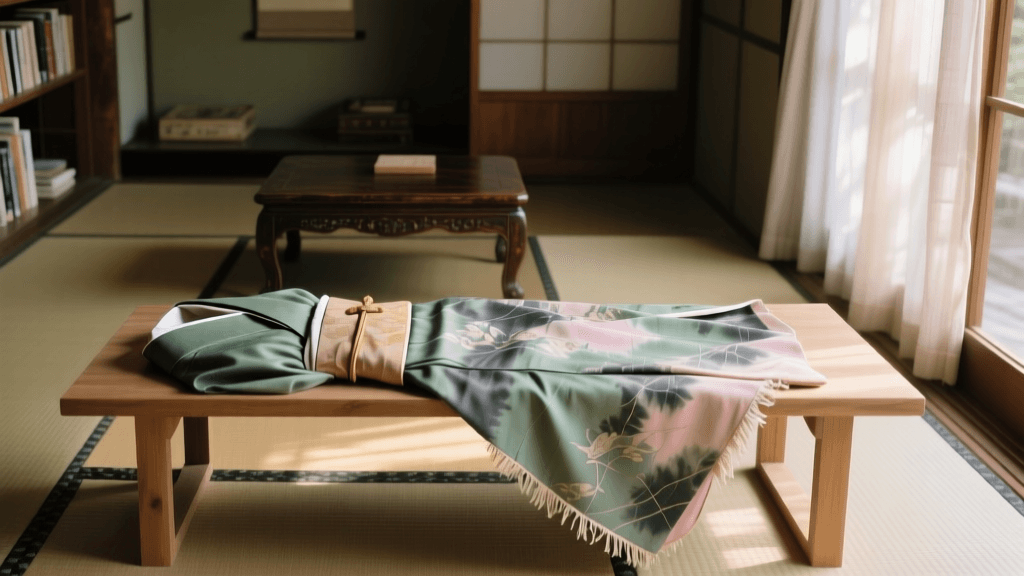
The traditional Japanese method of folding a kimono is known as hon-datami (the true fold). While this method is excellent for minimizing the footprint of the garment, it creates sharp, permanent creases that can lead to silk shattering over decades of storage. In 2026, conservators recommend modifying the hon-datami by padding every single fold with crumpled unbuffered acid-free tissue.
- Lay the kimono flat on a clean, padded surface covered with a washed cotton sheet.
- Follow the hon-datami folding lines, but before pressing any fold flat, place a 'sausage' of softly crumpled acid-free tissue along the inside of the crease. This creates a rounded roll rather than a sharp edge, distributing mechanical stress.
- Once folded, wrap the entire kimono in a soft Tyvek 1443R envelope or unbleached, washed muslin.
- The Obi: Never fold a brocade or metallic-thread obi. The metallic threads will snap and tarnish at the crease points. Instead, roll the obi around an acid-free cardboard tube padded with unbuffered tissue, and store it horizontally in its own Tyvek sleeve.
Hanbok Chima and Jeogori Care
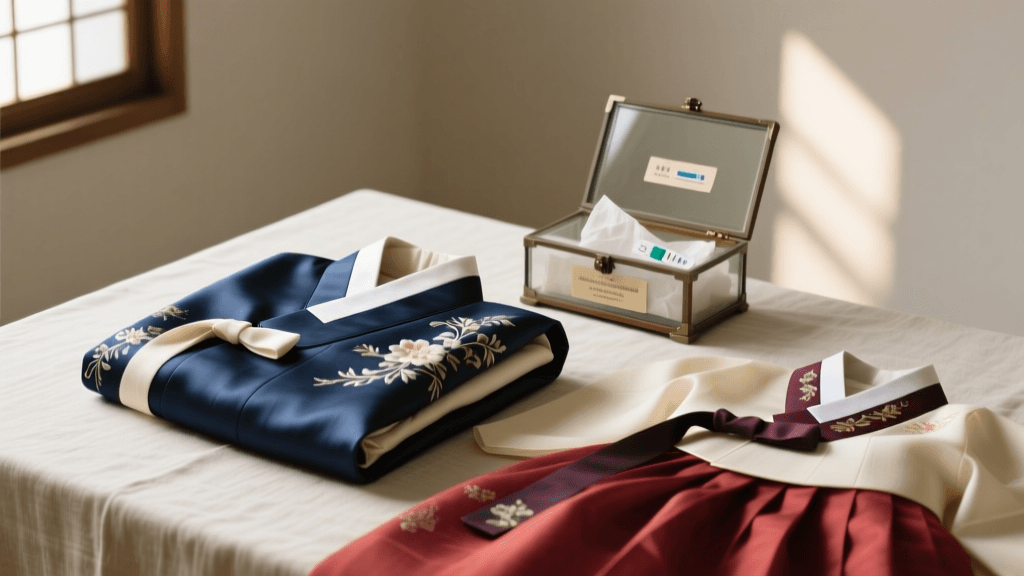
Hanbok presents unique structural challenges. The voluminous chima (skirt) is heavily gathered at the waistband, while the jeogori (jacket) often features delicate geumbak (gold leaf) on the collar, cuffs, and ties.
- The Chima: Folding a heavily gathered silk chima will crush the pleats and stress the gathering threads. The best preservation method for 2026 is to roll the chima. Lay it flat, place a sheet of acid-free tissue over the gold leaf or embroidered areas to prevent friction, and roll it gently around a large-diameter archival tube. Store the rolled chima horizontally in a Coroplast box.
- The Jeogori: Fold the jacket gently, padding the folds with tissue. Pay special attention to the geumbak. Gold leaf is adhered with a delicate natural glue that becomes brittle over time. Place a thick layer of soft tissue directly over the gold leaf before folding the jacket to ensure no friction occurs against the silk or the Tyvek wrapper.
Climate Control and Smart Monitoring
Silk is highly hygroscopic, meaning it absorbs and releases moisture from the surrounding air. Fluctuations in relative humidity (RH) cause the fibers to expand and contract, leading to structural fatigue. Furthermore, high humidity promotes mold growth, while low humidity desiccates the silk and causes metallic adhesives to fail.
The ideal micro-climate for Asian silk garments is a stable 45% to 55% RH, with a temperature between 65°F and 68°F (18°C - 20°C). In 2026, maintaining this environment is easier than ever thanks to affordable, high-accuracy smart hygrometers. Devices from brands like Govee or SwitchBot can be placed directly inside your archival Coroplast storage boxes. These Bluetooth and Wi-Fi-enabled sensors will send an alert to your smartphone if the humidity inside the box drifts outside the safe 45-55% range, allowing you to intervene before damage occurs.
To actively buffer the humidity inside the box, use art-grade silica gel cassettes (such as Art-Sorb or Prosorb). Unlike standard desiccant packets that only absorb moisture, these conditioned silica cassettes are pre-conditioned to 50% RH. They will absorb excess moisture if the room gets humid, and release moisture if the room gets too dry, creating a perfectly stable micro-climate inside the sealed box.
Pest Management Without Destructive Chemicals
Carpet beetles and clothes moths are the natural enemies of protein fibers. However, the traditional use of chemical mothballs (naphthalene or paradichlorobenzene) is strictly forbidden in modern conservation. These chemicals emit toxic gases that not only pose severe health risks to humans but also cause silk to yellow, degrade, and melt synthetic embellishments.
Instead, rely on exclusion and environmental controls. Archival Coroplast boxes with tight-fitting lids provide an excellent physical barrier against pests. If you suspect an active infestation, the Metropolitan Museum of Art's Textile Conservation Department and other leading institutions recommend anoxia (oxygen deprivation) or controlled freezing. For home use, sealing the garment in an airtight polyethylene bag and placing it in a standard chest freezer at -20°C (-4°F) for 72 hours will effectively kill all life stages of textile pests without the use of harmful chemicals. Always allow the garment to return to room temperature slowly while still sealed to prevent condensation from forming on the silk.
When to Seek Professional Restoration
While meticulous home preservation can halt further degradation, it cannot reverse existing damage. If you observe active silk shattering, severe acid burns, or detached gold leaf, do not attempt DIY repairs with modern adhesives or iron-on patches. These interventions will cause irreversible harm and drastically reduce the historical and monetary value of the garment.
Seek out a professional textile conservator who specializes in Asian garments. In Japan, traditional cleaners known as shikkui or arai-hari specialists can completely disassemble a kimono, wash the individual silk panels using traditional rice-bran and water techniques, and re-sew the garment, effectively removing decades of accumulated acidity and resetting the fibers. In the West, look for conservators accredited by national bodies such as the American Institute for Conservation (AIC) or the Institute of Conservation (Icon) in the UK, ensuring they have specific experience with East Asian textile structures and embellishments.
Conclusion
Preserving vintage silk kimono and hanbok is a profound responsibility that bridges the past and the future. By abandoning outdated storage habits and embracing the 2026 standards of neutral pH materials, rounded folding techniques, and smart micro-climate monitoring, you can ensure that these magnificent examples of Asian sartorial art survive in pristine condition for centuries to come.