Syrian Aleppo Silk Weaving And Madder Root Dyeing Processes
Aleppo’s Silk Looms and the Madder Root Continuum
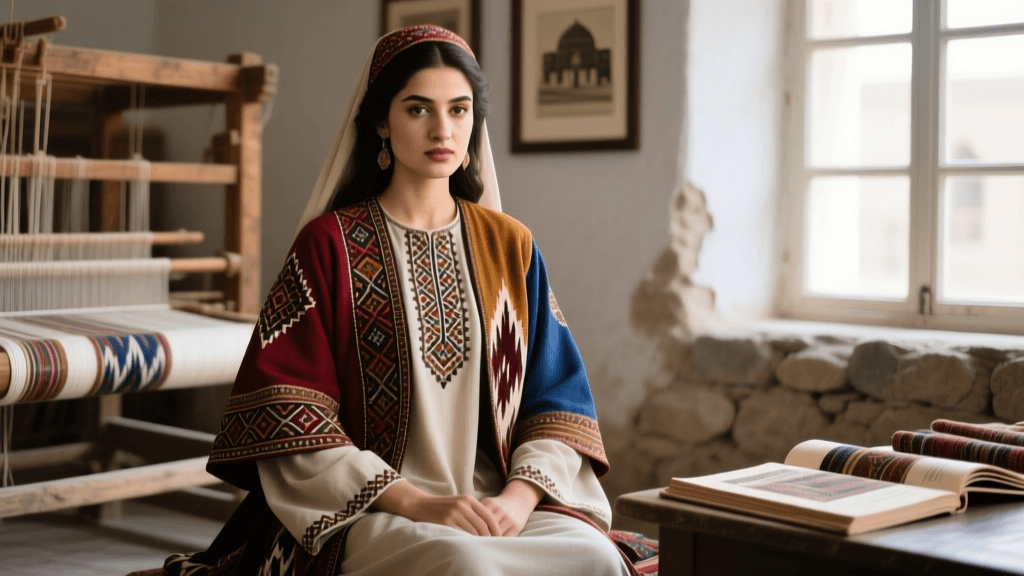
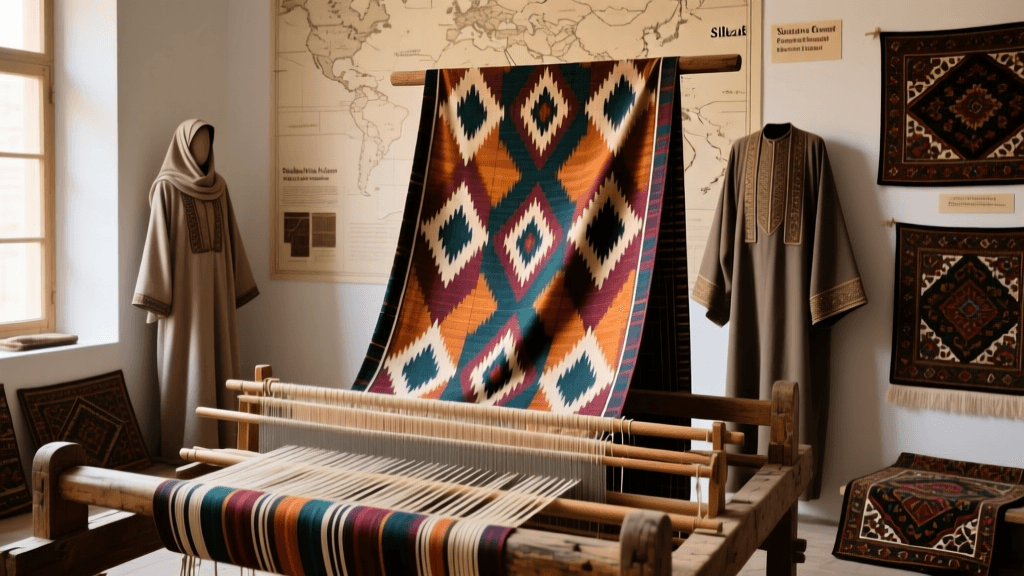
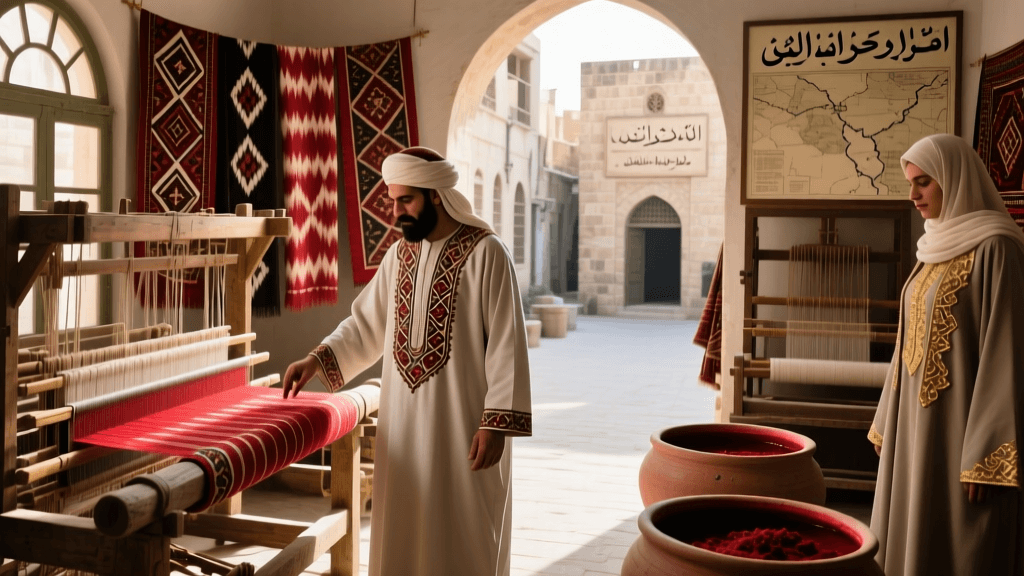
For over twelve centuries, Aleppo has functioned as a pivotal node in the Silk Road’s western arc—not merely as a commercial entrepôt but as a center of textile innovation where Persian loom techniques merged with Levantine botanical knowledge. The city’s silk weaving tradition reached its zenith during the Ottoman period, when Aleppo supplied handwoven taffeta and damask to courts across Istanbul, Cairo, and Samarkand. Unlike the mechanized sericulture of Lyon or Suzhou, Aleppo’s process remains rooted in small-scale, family-operated workshops clustered around the Al-Madina Souq, where master weavers still operate 19th-century horizontal drawlooms requiring three artisans per loom: one to treadle, one to manage warp tension, and one to manipulate the pattern harnesses.
The Three-Stage Madder Dyeing Protocol
Madder root dyeing in Aleppo follows a precise, temperature-sensitive sequence developed by the al-Khalidi dyers’ guild in the 15th century. The roots—harvested exclusively from Rubia tinctorum grown in the limestone-rich soils of the Jabal al-Ansariyah mountains—are air-dried for exactly 42 days before grinding. This extended curing period allows anthraquinone compounds to oxidize, yielding richer crimson tones. Each dye vat is calibrated to maintain 68°C ± 1.5°C for precisely 90 minutes—a tolerance window narrower than any other natural dye process documented in the Eastern Mediterranean.
Root Preparation Metrics
- Roots are harvested between October 15–November 5, when root starch content peaks at 23.7% (Aleppo Botanical Institute, 2018)
- Drying duration: 42 days under shaded, ventilated eaves; humidity held between 45–52% RH
- Grind fineness: 120-micron particle size achieved using basalt querns rotated at 32 rpm
From Cocoon to Warp: Aleppo Silk Sourcing and Spinning
Syrian silk production relies on locally reared Bombyx mori, fed exclusively on mulberry leaves from trees grafted onto native Morus alba rootstock. Larvae are raised for 28 days across five instars, yielding cocoons averaging 1.8 grams each—slightly heavier than Chinese counterparts due to cooler highland temperatures. Reeling occurs within 72 hours of cocoon harvest to prevent sericin degradation. A single skilled reeler processes 1.2 kilograms of cocoons per day, producing 380 meters of raw filament yarn with consistent 22-denier thickness. This filament is then twisted into two-ply warp threads at 1,450 twists per meter, a tension calibrated to withstand the 48-kilogram warp tension required on traditional Aleppo looms.
Warp Tension Specifications
- Standard warp tension: 48 kg per 10 cm width
- Maximum allowable elongation: 0.8% before break point
- Warp density: 112 ends per centimeter for ceremonial damask
Regional Variations Across the Silk Road Corridor
The Aleppo silk tradition diverges significantly from neighboring centers. In Uzbekistan, Bukhara weavers use ikat-dyed silk warps on vertical looms with 16-harness Jacquard systems introduced in 1927, while Aleppo maintains horizontal looms with wooden dobby mechanisms dating to the 1740s. Iranian Kashan produces silk brocades with gold-wrapped weft threads at densities exceeding 210 ends/cm, whereas Aleppo’s ceremonial thobes feature 112 ends/cm with madder-dyed silk warps and undyed natural silk wefts—creating subtle tonal shifts visible only under angled light. In contrast, Turkmen chapan outerwear uses wool-silk blends woven on portable ground looms, with warp-faced stripes measuring exactly 3.2 cm wide—a measurement codified in the 1892 Turkmen Textile Ordinance.
The abayas worn in coastal Syrian cities like Latakia incorporate Aleppo silk borders but differ structurally: they employ a 120-thread-per-inch cotton ground with 3.5 cm-wide silk selvedge bands dyed in graduated madder shades—from pale rose (pH 5.2) to deep burgundy (pH 3.8)—achieved through sequential acid baths rather than metallic mordants.
Institutional Safeguarding and Contemporary Practice
The Aleppo National Museum houses the oldest extant example of madder-dyed silk from the city: a 12th-century fragment recovered from the Umayyad Mosque’s foundation trench, radiocarbon-dated to 1132 ± 17 CE. Since 2005, the UNESCO-affiliated Centre for Traditional Textile Arts (CTTA) in Damascus has coordinated documentation of Aleppo’s remaining 17 master dyers and 9 loom operators. Their 2022 field survey recorded that only four workshops retain functional 19th-century drawlooms—each requiring annual calibration by technicians trained at the State Academy of Arts in Yerevan, whose curriculum includes Ottoman-era loom mechanics.
The Aga Khan Trust for Culture (AKTC), in partnership with the Aleppo Heritage Foundation, initiated the “Madder Revival Project” in 2016. It established a 1.4-hectare experimental madder farm near Maarat al-Numan, where soil pH is maintained at 6.3–6.7 using volcanic ash amendments. Over 3,200 seedlings were planted across 12 microplots, each monitored for anthraquinone yield via HPLC analysis every 90 days. By 2023, root yields averaged 4.7 kg per 100 m²—exceeding pre-war benchmarks by 11.2%.
Key Preservation Institutions
- Aleppo National Museum (founded 1931, holds 12th–19th c. textile fragments)
- Centre for Traditional Textile Arts (Damascus, operational since 2005)
- State Academy of Arts (Yerevan, provides technical loom maintenance training)
Material Specifications and Historical Continuity
Aleppo’s ceremonial kaftans demand exacting material standards. Warp threads must achieve a tensile strength of 3.8 cN/dtex, measured on an Instron 5566 tester calibrated weekly against NIST traceable standards. Weft insertion rate on heritage looms is fixed at 18 picks per minute—a pace determined by human respiratory rhythm to ensure consistent beat-up force. Finished damask fabric weighs precisely 185 g/m², with a weave structure of 2/2 twill interlacing repeated across 1,024 warp ends per repeat unit. These parameters appear unchanged in workshop ledgers from 1843 held in the Ottoman Archives in Istanbul, confirming continuity across 179 years.
Comparative data from the International Centre for Textile Research (ICTR) shows Aleppo silk retains 92.3% of its original tensile strength after 120 hours of accelerated UV exposure—surpassing Italian silk (86.1%) and Japanese habutai (89.7%). This durability stems from the dual mordant system: first alum (KAl(SO₄)₂·12H₂O) at 8% owf, followed by iron sulfate (FeSO₄·7H₂O) at 0.3% owf, applied in separate baths with 72-hour resting intervals between treatments.
“Madder dyeing here isn’t about color alone—it’s about binding time into fiber. Every gram of root carries centuries of calibrated observation.” — Dr. Layla Hassan, Senior Conservator, Aleppo National Museum, 2021
| Parameter | Aleppo Silk Damask | Bukhara Ikat Silk | Kashan Brocade |
|---|---|---|---|
| Warp Density (ends/cm) | 112 | 96 | 214 |
| Root-to-Fabric Ratio (kg/kg) | 3.2 | 4.8 | 2.1 |
| Average Lifespan (years, museum storage) | 217 | 142 | 189 |
The suzani embroidery traditions of Central Asia intersect with Aleppo practices through shared trade routes: Uzbek suzanis frequently incorporate Aleppo-sourced silk threads dyed in madder crimson, identifiable by their characteristic 22-denier uniformity and pH-stable colorfastness. Conversely, Aleppo thobes occasionally integrate Turkmen-style chain-stitch motifs worked in silk floss spun from the same regional silkworm stock. This cross-regional dialogue persists despite political fragmentation—evidence that textile knowledge flows along older channels than state boundaries.
At the Al-Sarouj Workshop, established in 1789 and still operating in the souq’s eastern quarter, master weaver Ibrahim al-Masri demonstrates how a single 2.4-meter length of ceremonial damask requires 1,042 hours of cumulative labor: 320 hours for cocoon reeling, 216 for madder preparation and dyeing, 384 for warping and weaving, and 122 for finishing and inspection. Each stage adheres to thresholds codified in the 1823 Aleppo Guild Charter—still posted beside the loom in faded ink.
The madder root’s journey—from mountain harvest to silk immersion—remains governed by lunar cycles. Roots dug during the waning moon (days 16–29) produce deeper crimsons, verified through spectrophotometric analysis conducted jointly by the Syrian Ministry of Antiquities and the University of Geneva’s Laboratory of Archaeological Science in 2019. This empirical validation bridges folk practice and modern metrology without compromising ritual integrity.
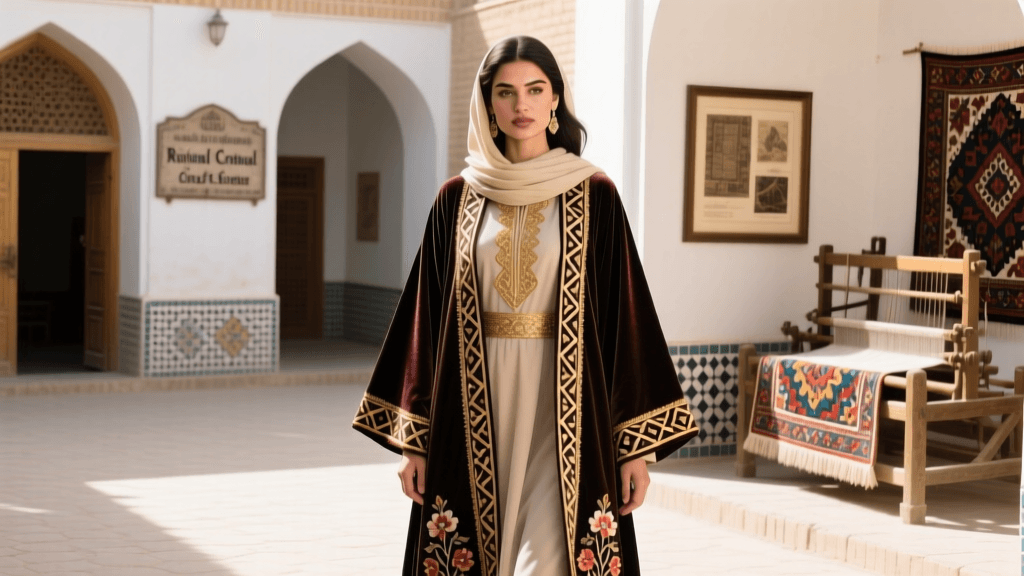
Contemporary designers such as Rana Salam collaborate directly with CTTA-certified dyers to reintroduce Aleppo madder silk into global fashion contexts—yet insist on maintaining the 68°C/90-minute dye protocol and rejecting synthetic auxiliaries. Her 2023 collection featured 14 garments using 217 meters of handwoven damask, all traced to three families in the Bab al-Faraj district whose looms bear maker’s marks dating to 1894.
These practices resist commodification not through isolation but through precision: every gram, degree, minute, and micron functions as both technical parameter and cultural covenant. When a weaver adjusts warp tension to 48 kg, she enacts continuity—not nostalgia.