Swedish Brudkrona Silver Bridal Crowns: 2026 Sourcing Guide
The Enduring Legacy of the Swedish Brudkrona
The landscape of European folk dress is defined not only by its intricate textiles and regional weaving patterns but also by the breathtaking metalwork and jewelry that accompany traditional garments. Among the most striking and culturally significant of these accessories is the Swedish brudkrona, or bridal crown. As we navigate the heritage revival movements of 2026, the demand for authentic, artisan-crafted folk jewelry has reached new heights. Brides, folk dancers, and cultural historians are increasingly seeking out these magnificent silver headpieces to complement their traditional folkdräkt (folk costumes). This comprehensive guide explores the history, regional variations, and modern sourcing avenues for the Swedish brudkrona in 2026, ensuring that collectors and enthusiasts can acquire and preserve these masterpieces of European metalworking.
Historically, the brudkrona was a symbol of purity, status, and divine blessing. According to the Swedish Institute, the tradition of the bridal crown is deeply intertwined with the imagery of the Virgin Mary, who was frequently depicted wearing a crown in medieval ecclesiastical art. In rural Swedish parishes, the church often owned a communal silver crown that was lent to brides on their wedding day, a practice that cemented the crown's association with marital sanctity and community standing. Over the centuries, as agrarian wealth expanded during the 18th and 19th centuries, affluent farming families began commissioning private silversmiths to create bespoke crowns, transforming the brudkrona from a shared ecclesiastical object into a highly prized family heirloom passed down through generations.
Anatomy and Artisan Metalworking Techniques
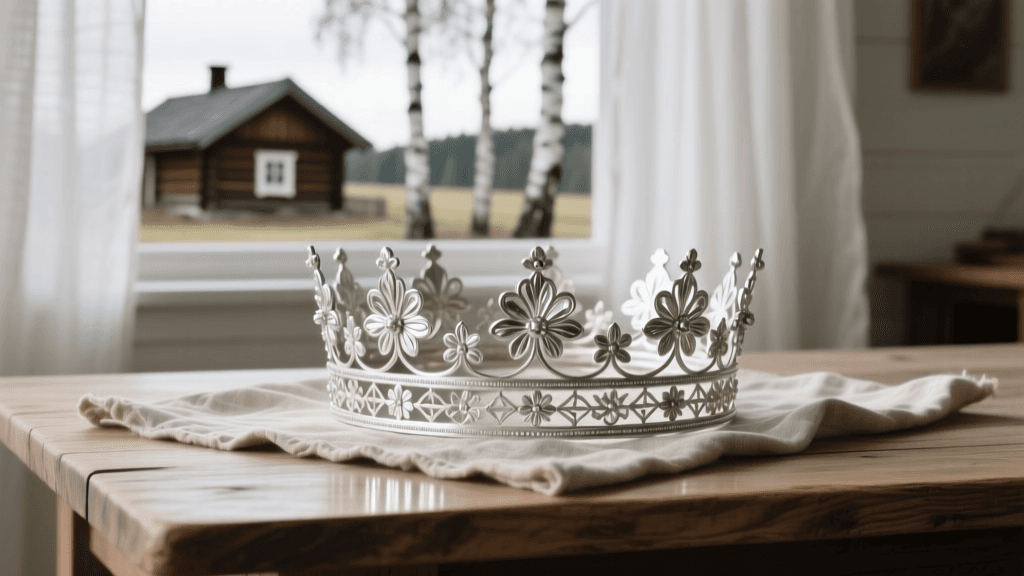
A traditional brudkrona is a marvel of pre-industrial and early-industrial silversmithing. The base is typically constructed from heavy-gauge sterling silver, shaped into a circlet that rests securely on the head. Rising from this base are intricate vertical elements, often resembling the points of a royal diadem or the rays of a halo. The metalworking techniques employed by historical artisans—and faithfully replicated by master silversmiths operating in 2026—include repoussé, chasing, and intricate filigree work.
Filigree, which involves twisting and curling fine silver wires into delicate lace-like patterns, is a hallmark of the finest Swedish crowns. These wires are soldered onto the main body of the crown, creating a three-dimensional texture that catches the light beautifully. Additionally, many crowns feature granulation, where tiny spheres of silver are fused to the surface to add geometric detail. The crowns are almost always adorned with cabochon-cut rock crystals, colored glass, or river pearls. In 2026, authentic restorations and new artisan commissions prioritize the use of ethically sourced freshwater pearls and unfoiled rock crystals to maintain historical accuracy, avoiding the synthetic rhinestones that plagued mid-20th-century reproductions.
Regional Variations in Swedish Folk Jewelry
Sweden’s diverse provinces boast distinct variations in folk dress, and the brudkrona is no exception. Understanding these regional differences is crucial for collectors and buyers in the 2026 market, as provenance significantly impacts both historical value and aesthetic pairing with specific regional costumes.
Dalarna
The Dalarna province is perhaps the most famous for its elaborate folk traditions. Dalarna bridal crowns are typically tall, dramatic, and heavily ornamented. They frequently feature dangling silver pendants, known as hängen, which clink softly as the bride moves. These crowns are designed to be worn with the vibrant, red-and-white textiles characteristic of the region, and their towering silhouettes are meant to draw the eye upward, creating a majestic profile.
Skåne
In the southernmost province of Skåne, the aesthetic shifts toward broader, heavier, and more grounded designs. Skåne crowns often feature extensive gold gilding (vermeil) over the silver base, reflecting the region's historical wealth and continental European influences. The ornamentation tends to be denser, with larger, more prominent cabochon stones set in high collets. The overall silhouette is wider and less vertically exaggerated than those found in the north.
Halland
Halland crowns are celebrated for their exquisite, lace-like filigree work. Because Halland was historically a region of intense trade and contact with Denmark and the broader continent, the metalwork often incorporates continental motifs, such as acanthus leaves and intricate floral scrolls. These crowns are generally lighter in weight but visually complex, relying on the interplay of light and shadow through the silver wirework rather than heavy gilding or massive stones.
The 2026 Market: Sourcing Authentic Brudkronor
Acquiring an authentic brudkrona in 2026 requires navigating a niche but vibrant market of antique dealers, heritage auction houses, and contemporary master silversmiths. Due to the surge in heritage weddings and the global popularity of Scandinavian folk culture, prices for verified antique pieces have appreciated steadily. A well-documented 19th-century crown from Dalarna can easily command between €3,500 and €6,000 at auction, depending on its condition, the quality of its rock crystals, and its provenance.
For those who prefer a newly crafted piece, a handful of specialized silversmiths in Sweden continue to forge crowns using traditional methods. Commissioning a bespoke brudkrona in 2026 is a significant investment, with prices starting around €4,500 and reaching upwards of €9,000 for heavily gilded, complex designs requiring hundreds of hours of filigree work. Buyers must be vigilant against mass-produced, imported replicas that flood online marketplaces; these modern factory-made items lack the structural integrity, historical accuracy, and precious metal content of true artisan work. Consulting databases like Digitalt Museum is highly recommended to compare prospective purchases against verified historical artifacts held in Swedish national collections.
Comparison Chart: 2026 Sourcing Avenues
| Sourcing Avenue | Estimated Price Range (2026) | Authenticity & Provenance | Lead Time |
|---|---|---|---|
| Heritage Auction Houses (e.g., Bukowskis, Kolon) | €2,500 - €7,000+ | High; fully documented historical provenance | Immediate (upon winning bid) |
| Contemporary Master Silversmiths | €4,500 - €9,500 | Guaranteed; new artisan work using historical methods | 6 to 14 months (bespoke commission) |
| Specialized Antique Dealers | €1,800 - €4,000 | Moderate to High; requires independent verification | Immediate to 4 weeks |
| Museum-Grade Replicas (Nordic Museum Partners) | €1,200 - €2,800 | High accuracy; clearly marked as modern replicas | 2 to 6 months |
Traditional Styling: Wearing the Crown in 2026
Wearing a brudkrona correctly is just as important as sourcing an authentic piece. In traditional Swedish folk dress, the crown is never placed directly onto bare hair. Instead, it is mounted onto a specialized hair padding known as a hårbottnad. This padding, historically made from rolled linen or horsehair, provides the necessary structural support to bear the weight of the silver, which can exceed two kilograms for larger Skåne pieces.
In 2026, heritage stylists utilize modern, breathable foam and linen blends to create the hårbottnad, ensuring comfort during long festival days or wedding ceremonies while maintaining the historically accurate silhouette. The hair is typically braided tightly and wrapped around the padding, then covered by a fine linen cap. The brudkrona is then secured to this foundation using hidden, U-shaped hairpins and silk ribbons tied beneath the chin or at the nape of the neck. Over the crown and cascading down the back is the kristin, a delicate white silk or linen veil that symbolizes purity. The interplay of the shimmering silver, the translucent veil, and the vibrant wool of the folk costume creates a breathtaking visual harmony that defines the pinnacle of European folk dress aesthetics.
Conservation and Care for Antique Silver
Preserving a brudkrona requires an understanding of historical metallurgy and modern conservation science. According to guidelines from the Nordic Museum, antique silver should never be subjected to harsh chemical dips or ultrasonic cleaners, especially when the piece features antique rock crystals or glass paste stones. Ultrasonic vibrations can easily fracture 19th-century glass or loosen the delicate foil backings that give historical stones their brilliance.
For routine maintenance in 2026, collectors should use a museum-approved, non-abrasive silver cream applied with a soft, lint-free cotton cloth. It is crucial to avoid polishing the deep crevices of the filigree work; the dark patina that naturally accumulates in these recessed areas is highly desirable, as it provides contrast and highlights the three-dimensional nature of the metalwork. When not in use, the crown should be stored in a custom-fitted, acid-free archival box, wrapped in unbleached cotton to prevent sulfur exposure, which causes rapid tarnishing. Silica gel packets should be included in the storage environment to control humidity and protect the metal from moisture-induced corrosion.
Conclusion
The Swedish brudkrona remains one of the most magnificent expressions of European folk jewelry. Whether you are a collector seeking an 18th-century Dalarna masterpiece, a bride commissioning a bespoke filigree crown for a 2026 heritage wedding, or a cultural enthusiast dedicated to preserving traditional metalworking arts, understanding the nuances of these silver crowns is essential. By respecting the regional variations, investing in authentic craftsmanship, and employing proper conservation techniques, we ensure that the brilliant legacy of the brudkrona continues to shine for generations to come.