Styling the Romanian Ia Blouse for 2026: Modern Wardrobe Guide
The Renaissance of the Romanian Ia in 2026
The intersection of heritage craftsmanship and contemporary sustainable fashion has never been more pronounced than in 2026. Among the most captivating garments experiencing a global renaissance is the Romanian Ia (pronounced 'ee-ah'), specifically the variant featuring the intricate altiță (shoulder embroidery). Once relegated primarily to museum displays, rural festivals, and folklore ensembles, this masterpiece of Eastern European folk dress has firmly secured its place in the modern, ethical wardrobe. As consumers increasingly pivot away from fast fashion, the demand for authentic, hand-stitched heritage garments has skyrocketed, positioning the Ia as a premier investment piece for the conscious consumer.
The global recognition of this garment reached new heights following its inscription on the UNESCO Intangible Cultural Heritage list. This monumental acknowledgment not only protected the traditional techniques from cultural appropriation but also sparked a massive revival among young artisans and contemporary designers. In 2026, wearing an Ia is no longer just a nod to ancestry; it is a bold statement of slow fashion, textile appreciation, and sophisticated global styling.
Decoding the Altiță: More Than Just Aesthetics
To style the Ia correctly, one must first understand its profound structural poetry. The traditional blouse from the Muscel, Argeș, and Vâlcea regions is defined by three distinct embroidered sections, each representing a layer of the cosmos:
- The Altiță: The dense, rectangular embroidery band on the shoulder. It symbolizes the sky, the heavens, and the stars. In 2026 contemporary adaptations, the altiță remains the focal point of the garment, often featuring geometric motifs or stylized floral patterns stitched in silk or metallic thread.
- The Încreț: The gathering or smocking located just below the altiță. Representing the earth and the horizon, this section traditionally uses a contrasting color, often yellow or white, to create a visual bridge between the sky and the earth.
- The Râuri (Rivers): The vertical or diagonal stripes of embroidery flowing down the sleeves and body. These symbolize the rivers of life, continuous flow, and vitality.
Understanding this anatomy is crucial for modern styling. The voluminous sleeves and heavily embroidered shoulders dictate that the rest of your outfit should provide a balanced, structured contrast to let the 'rivers' and 'sky' of the blouse take center stage.
Sourcing Authentic Pieces in the 2026 Market
The market in 2026 is flooded with mass-produced, machine-embroidered imitations that lack the soul and structural integrity of a true Ia. When investing in this heritage piece, authenticity and ethical sourcing are paramount. According to curators at the National Museum of the Romanian Peasant, a genuine hand-embroidered Ia requires anywhere from 40 to 120 hours of meticulous needlework.
Consequently, current 2026 pricing for authentic, newly commissioned hand-stitched pieces from verified artisan cooperatives ranges from $450 to $900 USD, depending on the complexity of the altiță and the fineness of the fabric (such as hand-woven hemp or premium borangic silk). Platforms and communities like Semne Cusute have been instrumental in connecting global buyers directly with rural artisans, ensuring fair wages and preserving the exact regional patterns without dilution. When shopping, always look for the slight irregularities on the reverse side of the fabric—a hallmark of true hand-stitching that machines cannot replicate.
Contemporary Styling: Integrating Heritage into Modern Life
The outdated 'peasant blouse' trope of the early 2000s has been entirely dismantled. In 2026, the Ia is treated as a high-fashion statement piece, styled with the same reverence and edge as a vintage designer archive find. Here is how to integrate this Eastern European treasure into your modern wardrobe.
The Modern Office and Smart Casual
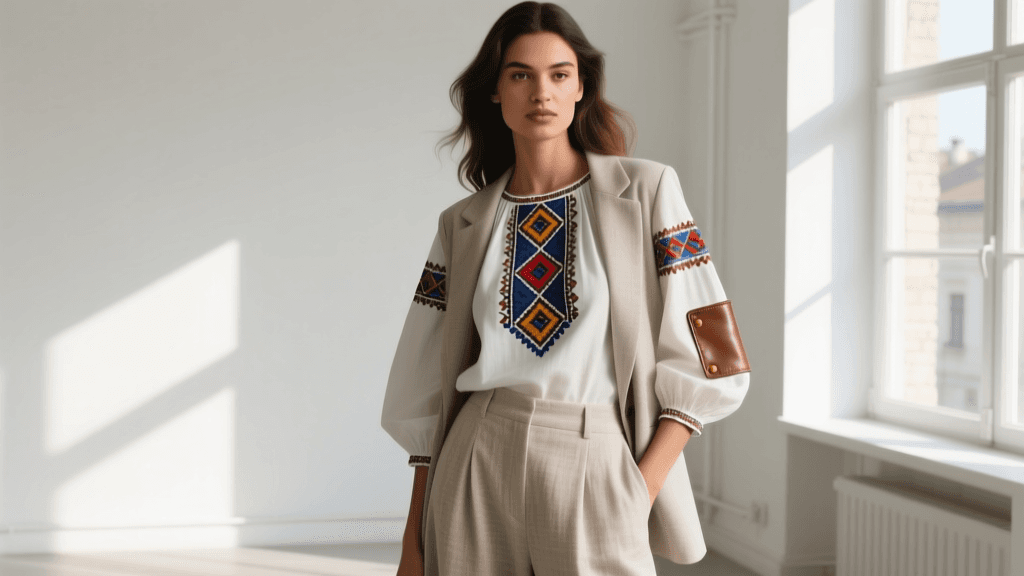
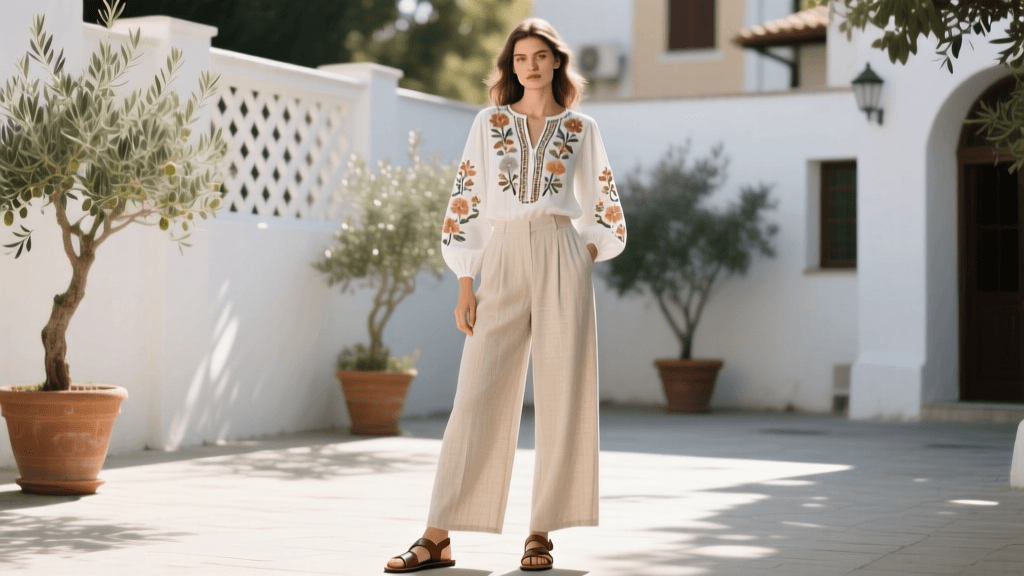
For a sophisticated daytime or office look, contrast the romantic volume of the Ia with sharp, architectural tailoring. Pair a monochromatic white Ia with black or deep indigo geometric embroidery with high-waisted, wide-leg wool trousers. Tuck the blouse in to define the waist, and add a structured, minimalist leather belt. Finish the look with sleek leather loafers or pointed-toe ankle boots. The key here is to let the altiță peek out elegantly from under a tailored blazer, providing a striking pop of cultural color against neutral suiting.
Weekend Streetwear and Transitional Layering
For weekend wear, embrace textural contrast. Layer a cropped, heavily embroidered Ia over a sleek, bias-cut silk slip dress in a complementary solid color, such as deep emerald, charcoal, or navy. The matte, textured cotton or hemp of the blouse contrasts beautifully with the fluid, reflective nature of the silk. Alternatively, pair the Ia with vintage, straight-leg denim and chunky leather boots for an effortless, grounded aesthetic that bridges rural heritage with urban streetwear.
Evening and Formal Events
The Ia can easily transition into evening wear when styled with luxurious fabrics. Tuck a sheer, borangic (Romanian silk) Ia into a high-waisted, floor-length satin skirt. Accessorize with modern, minimalist silver jewelry inspired by ancient Dacian and Thracian motifs, avoiding overly rustic or 'costume-like' accessories that can make the outfit look like a stage performance rather than a contemporary ensemble.
Traditional vs. 2026 Contemporary Adaptations
| Feature | Traditional Village Wear (Pre-1950) | 2026 Contemporary Styling & Adaptations |
|---|---|---|
| Fabric Base | Hand-woven hemp, flax, or coarse cotton | Refined cotton voile, organic linen, and borangic silk |
| Embroidery Thread | Hand-spun wool, cotton, and natural dyes | Mercerized cotton, silk floss, and eco-friendly metallic threads |
| Silhouette | Boxy, loose-fitting, gathered at the neck | Varied: cropped cuts, tailored waists, or preserved volume with modern cuffs |
| Color Palettes | Strictly regional (e.g., red/black in Muscel, blue in Olt) | Expanded natural dyes: walnut husk, woad, madder root, and monochromatic tones |
| Primary Pairing | Heavy wool skirts (fotă), woven belts (brâu) | Tailored trousers, silk skirts, vintage denim, and modern leather goods |
Garment Care for Longevity
An authentic Ia is an heirloom meant to outlive its wearer, but the delicate nature of the altiță embroidery requires meticulous care. In 2026, with the rise of specialized eco-friendly detergents, maintaining these garments is easier but still demands a gentle touch.
- Washing: Never machine wash an authentic Ia. Hand wash in lukewarm water using a pH-neutral, plant-based detergent. Do not soak for more than ten minutes to prevent natural dyes from bleeding.
- Drying: Never wring or twist the fabric, as this will distort the intricate gathering of the încreț. Instead, lay the blouse flat on a clean, dry towel, roll it up gently to absorb excess moisture, and then lay it flat to air dry away from direct sunlight.
- Ironing: Always iron on the reverse side. Place a soft pressing cloth over the embroidery to protect the 3D texture of the altiță from being crushed by the heat of the iron. Use a low-to-medium steam setting.
- Storage: Store the blouse folded in acid-free tissue paper inside a breathable cotton bag. Avoid wire hangers, which can stretch the delicate shoulder seams and distort the embroidery over time.
Conclusion: Wearing History with Intent
The Romanian Ia is not merely a garment; it is a wearable manuscript of cosmology, history, and human patience. As we navigate the 2026 fashion landscape, integrating such profound pieces of European folk dress into our daily lives offers a powerful antidote to the disposability of modern clothing. By sourcing ethically, understanding the deep symbolism of the altiță, and styling the blouse with contemporary intention, we ensure that this extraordinary textile tradition continues to thrive, evolve, and inspire for generations to come.