Rinzu vs Chirimen Silk: 2026 Kimono & Hanbok Guide
The Renaissance of Traditional Asian Silk Weaves in 2026
As we navigate the bespoke garment landscape in 2026, the selection of foundational textiles remains the most critical decision for artisans, designers, and collectors of Asian traditional dress. Whether you are commissioning a formal Japanese kimono, a vibrant Korean hanbok, or integrating traditional silhouettes into modern evening wear, understanding the structural differences between silk weaves is paramount. Among the most prestigious and widely utilized textiles in East Asian fashion are Rinzu (figured silk) and Chirimen (crepe silk). Both offer distinct aesthetic qualities, structural behaviors, and seasonal applications that dictate the final drape, silhouette, and longevity of the garment.
In 2026, the revival of heritage weaving techniques has merged with modern sustainable sourcing, giving buyers more transparency than ever before. According to the UNESCO Intangible Cultural Heritage registry, traditional silk production techniques continue to evolve, preserving ancient loom methods while adapting to contemporary ecological standards. This guide will dissect the technical specifications, visual characteristics, and practical applications of Rinzu and Chirimen silks, ensuring your next bespoke commission is perfectly aligned with your aesthetic and functional needs.
Understanding Rinzu: The Elegance of Figured Damask
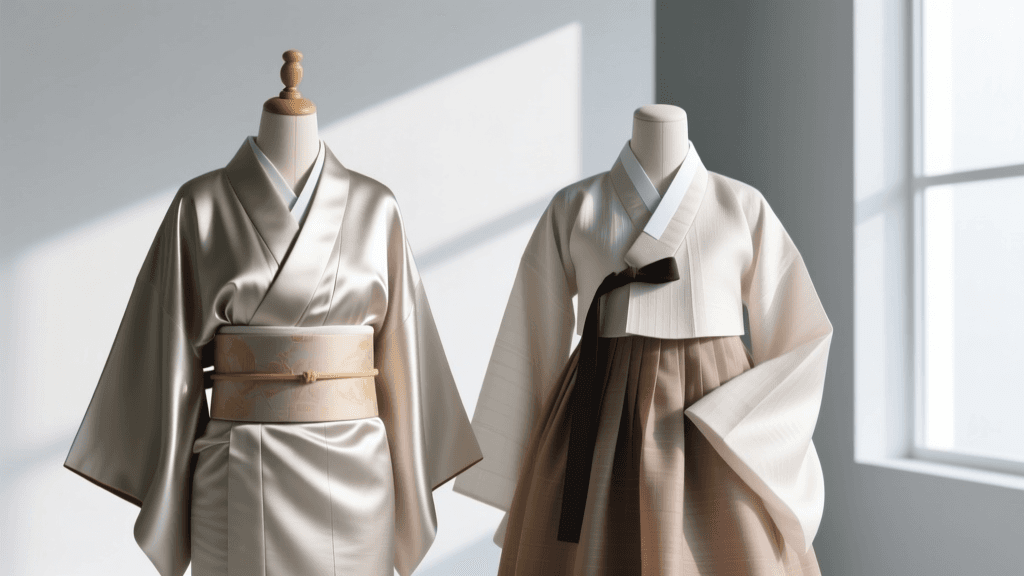
Rinzu is a Japanese damask weave characterized by its subtle, tone-on-tone patterns. The magic of Rinzu lies in its interplay of light. By alternating the warp and weft threads—using a satin weave for the glossy background and a twill or matte weave for the patterned areas—artisans create a fabric that reveals its intricate motifs only when the light catches it at specific angles. This understated luxury makes Rinzu the premier choice for highly formal garments where overt patterns might clash with elaborate outer layers or heavy embroidery.
The Metropolitan Museum of Art's Heilbrunn Timeline of Art History notes that figured silks like Rinzu became prominent in aristocratic wardrobes due to their ability to convey wealth and status through texture rather than loud coloration. In 2026, authentic Nishijin-ori Rinzu from Kyoto remains the gold standard for formal Furisode (long-sleeved kimono for unmarried women) and Uchikake (wedding over-robes). In Korean traditional dress, high-grade Rinzu is frequently utilized for the Dangui (a formal jacket worn by royalty and nobility) and the outer layers of ceremonial Hwarot, providing a stiff yet luminous foundation that holds architectural silhouettes beautifully.
Technical Profile and 2026 Market Pricing
Rinzu is inherently stiffer than crepe silks due to the tight, dense packing of the warp threads required to create the damask effect. This structural rigidity is highly desirable for garments that require volume and crisp lines, such as the wide, sweeping sleeves of a Furisode or the structured bodice of a modern Hanbok fusion gown. As of early 2026, authentic, hand-loomed Nishijin Rinzu commands a premium, typically ranging from $250 to $450 per yard, depending on the complexity of the jacquard punch cards and the inclusion of metallic threads (surihaku).
Exploring Chirimen: The Textured Drape of Crepe Silk
Where Rinzu relies on light reflection and structural rigidity, Chirimen celebrates texture, matte finishes, and fluid drape. Chirimen is a crepe fabric created by using standard, untwisted threads for the warp, and highly twisted threads for the weft. When the fabric is woven and subsequently washed or boiled, the highly twisted weft threads contract, creating a distinct, pebbled surface texture known as shibo. This microscopic unevenness not only gives Chirimen its signature tactile feel but also prevents the fabric from clinging to the skin, making it exceptionally comfortable in humid climates.
As highlighted by the Victoria and Albert Museum's textile archives, the crepe texture of Chirimen provides an ideal, slightly absorbent canvas for complex dyeing techniques. The matte surface diffuses light evenly, allowing the vivid colors of Yuzen (resist dyeing) and Edo Komon (micro-stencil dyeing) to appear incredibly rich and saturated. In 2026, Tango Chirimen (produced in the Kyoto prefecture) and Omi Chirimen are the most sought-after variants. For Hanbok, Chirimen is favored for the Chima (skirt) of everyday and semi-formal wear, as its fluid drape allows for the elegant, sweeping movements characteristic of Korean traditional dance and daily wear.
Dyeing Compatibility and Aesthetic Versatility
Because of its textured surface, Chirimen is rarely used for woven patterns; instead, it is the ultimate blank canvas for dyers. If you are commissioning a bespoke kimono in 2026 and desire a vibrant, hand-painted landscape or a bold, modern geometric print, Chirimen is the mandatory base fabric. The shibo texture grips the dye paste, preventing bleeding and ensuring razor-sharp edges in the final design. Pricing for high-grade, undyed Tango Chirimen in 2026 averages between $120 and $180 per yard, making it a more accessible entry point for bespoke dyeing projects compared to pre-woven Rinzu.
Head-to-Head Comparison: Rinzu vs. Chirimen
To assist in your textile selection, the following table outlines the core differences between these two foundational weaves based on current 2026 industry standards.
| Feature | Rinzu (Figured Damask) | Chirimen (Crepe Silk) |
|---|---|---|
| Weave Structure | Satin warp with patterned twill/matte weft interlacing. | Untwisted warp with highly twisted weft (crepe). |
| Surface Texture | Smooth, glossy background with subtle matte motifs. | Matte, pebbled texture (shibo), slightly porous. |
| Light Reflection | High; reflects light to reveal hidden patterns. | Low; diffuses light for deep, rich color saturation. |
| Drape & Stiffness | Stiffer, holds architectural shapes and volume well. | Fluid, heavy drape, clings elegantly to movement. |
| Primary Garment Use | Formal Furisode, Uchikake, Dangui, Hwarot. | Komon, Haori, Chima (skirt), everyday Hanbok. |
| Dyeing vs. Weaving | Pattern is woven into the fabric (jacquard). | Woven plain; pattern is dyed post-weaving (Yuzen). |
| 2026 Avg. Price/Yard | $250 - $450+ (depending on metallic threads). | $120 - $180 (for high-grade undyed base). |
The Crucial Metric: Selecting Momme Weight by Season
Choosing between Rinzu and Chirimen is only half the battle; you must also specify the Momme (mm) weight. Momme is the traditional Japanese unit of measurement for silk density, where 1 momme equals 3.75 grams per square meter. In 2026, bespoke tailors strictly categorize momme weights to ensure the garment performs correctly across different seasons and climates.
- Lightweight (12mm - 15mm): Reserved exclusively for summer garments. While Chirimen can be woven this light, summer wear often utilizes specialized open weaves like Ro or Sha rather than standard Chirimen. Rinzu is rarely woven this light, as it loses its structural integrity.
- Mid-Weight (16mm - 19mm): The standard for three-season wear (Spring, Autumn, and mild Winter). A 16mm Tango Chirimen is the industry standard for a high-quality Komon kimono or a standard Hanbok Chima. It provides enough weight to drape beautifully without causing the wearer to overheat indoors.
- Heavyweight (20mm - 30mm): Essential for formal winter wear and highly structured garments. A 24mm Rinzu is ideal for a winter Furisode, as the dense weave blocks wind and provides a luxurious, heavy hand-feel. In Korean Hanbok, heavy momme silks are used for winter outercoats (Durumagi) to provide insulation while maintaining a regal silhouette.
2026 Tailor's Tip: When commissioning a wedding Uchikake or a heavy ceremonial Hwarot, always request a minimum of 22mm Rinzu. The heavy weight ensures that the fabric can support the immense weight of gold-leaf embroidery and heavy silk floss padding without tearing or sagging over time.
Sustainable and Ethical Silk Sourcing in 2026
The silk industry has undergone a massive ethical transformation over the last few years. In 2026, discerning buyers and high-end bespoke houses are increasingly demanding transparency regarding sericulture. Traditional silk production requires boiling the cocoon with the silkworm inside to preserve the continuous filament. However, the rise of Ahimsa (Peace) Silk and Eri Silk has introduced cruelty-free alternatives to the market.
While Ahimsa silk yields shorter, spun fibers rather than continuous filaments—resulting in a slightly nubbier texture similar to raw silk—advancements in 2026 spinning technology have allowed ethical silk farms in Japan and South Korea to produce Peace Silk Chirimen that closely mimics traditional mulberry crepe. Furthermore, organic mulberry farming initiatives in regions like Geochang, South Korea, and Tango, Japan, have eliminated the use of harsh pesticides, resulting in cleaner water runoff and a higher-grade, more resilient silk fiber that takes natural plant dyes (like indigo and madder) with unprecedented vibrancy.
Modern Care and Preservation for Heritage Textiles
Investing in high-momme Rinzu or Chirimen requires a commitment to proper garment care. The structural differences between these weaves dictate how they should be cleaned and stored in 2026.
Cleaning Protocols
Historically, silk garments were taken apart, washed, and rewoven (a process called arai-hari). Today, this is a rare and expensive luxury. For modern maintenance, Chirimen is highly susceptible to water spotting due to its twisted weft threads; even a single drop of water can cause the fibers to contract locally, leaving a permanent ripple. Therefore, Chirimen must be professionally dry-cleaned using 2026's advanced liquid silicone solvents, which clean without swelling the silk fibers. Rinzu, while slightly more resistant to water spotting, can lose its glossy finish if subjected to harsh chemical perc (perchloroethylene). Always seek out heritage textile conservators who utilize eco-friendly, silk-safe hydrocarbon solvents.
Storage and UV Protection
Both Rinzu and Chirimen are protein-based fibers and are highly susceptible to UV degradation and protein-eating pests. When storing your bespoke garments:
- Never use plastic: Plastic traps moisture, leading to mildew and yellowing. Use 100% unbleached cotton or acid-free tatou paper wraps.
- Avoid wire hangers: The heavy weight of 20mm+ Rinzu will cause the shoulders to stretch and tear. Store kimono and hanbok flat, folded along their traditional seam lines, in drawers lined with paulownia wood, which naturally regulates humidity and repels insects.
- Climate Control: Maintain a storage environment at 65°F (18°C) with 50% relative humidity to prevent the silk proteins from becoming brittle.
Conclusion: Making the Right Choice for Your Bespoke Commission
The choice between Rinzu and Chirimen ultimately depends on the silhouette you wish to achieve and the environment in which the garment will be worn. If your 2026 commission demands architectural volume, formal prestige, and a subtle interplay of light and shadow, Rinzu is your definitive choice. If your vision calls for fluid movement, vibrant hand-dyed artistry, and a comfortable, breathable drape, Chirimen will serve as the perfect canvas. By understanding the mechanics of the weave, the importance of momme weight, and the latest advancements in ethical sourcing, you ensure that your traditional garment is not only a masterpiece of cultural heritage but a durable, sustainable investment for the future.