Restoring Zari Tarnish on Vintage Kanjeevaram Saris: 2026 Guide
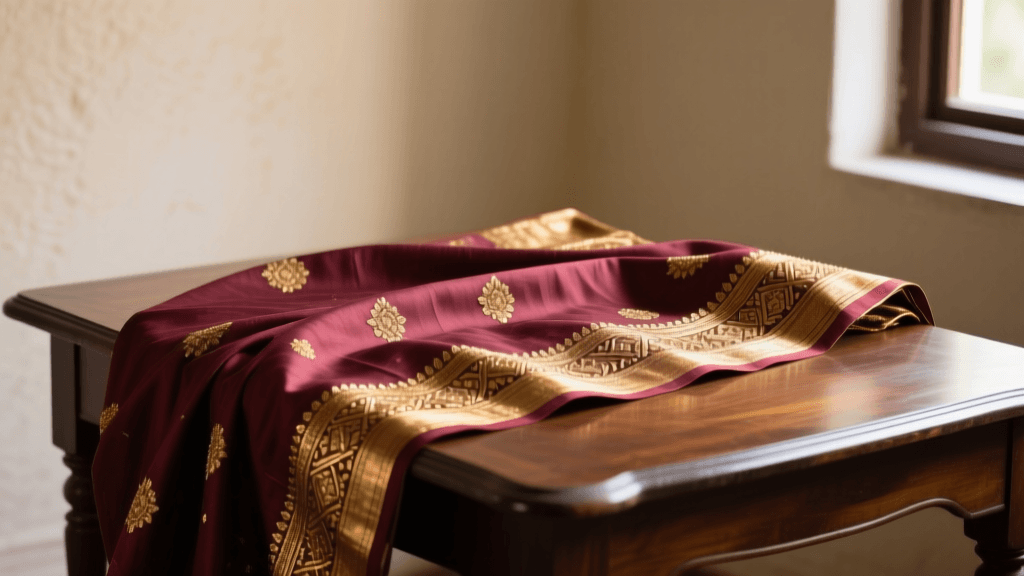
The Legacy and Vulnerability of Kanjeevaram Zari
The Kanjeevaram sari is more than a garment; it is a woven heirloom that carries the weight of South Indian heritage, ceremonial significance, and masterful craftsmanship. At the heart of its grandeur is the zari—the metallic thread that creates the sari's iconic, opulent motifs. However, as these textiles age, the brilliant gold and silver threads often succumb to environmental factors, resulting in a dull, blackened, or greenish tarnish. As of 2026, textile conservation science has advanced significantly, moving away from harsh, abrasive home remedies toward precise, museum-grade restoration protocols. This guide outlines the modern standards for assessing, cleaning, and preserving vintage Kanjeevaram zari work without compromising the delicate silk core.
Understanding Zari: Real vs. Synthetic Threads
Before attempting any restoration, it is critical to identify the type of zari used in your vintage sari. Authentic, traditional Kanjeevaram saris utilize pure zari (often referred to as Jari). Pure zari consists of a red or yellow silk core thread wrapped with flattened silver wire (badla), which is then electroplated with a thin layer of pure gold.
Tarnish in pure zari occurs when the silver layer oxidizes. Because the gold wash is microscopically thin, friction, sweat, and high humidity can cause the gold to wear away, exposing the silver beneath to sulfur and oxygen in the air. This results in silver sulfide—a dark, stubborn tarnish. In contrast, modern synthetic or 'tested' zari uses a polyester or cotton core wrapped in metallic-coated plastic or copper alloys, which degrade and discolor differently. The 2026 conservation standards dictate that wet chemical treatments should only ever be applied to pure zari, as synthetic coatings will melt or dissolve.
The 2026 Protocol for Assessing Tarnish Damage
Professional textile conservators now rely on non-destructive testing to assess zari degradation before intervention. If you are evaluating a vintage piece at home, follow these diagnostic steps:
- Visual Inspection under Magnification: Use a 10x jeweler's loupe to examine the metallic threads. If you see a white or grayish core beneath the flaking gold, the silver is heavily oxidized. If the core is bright copper or plastic, you are dealing with synthetic zari.
- The Burn Test (On Loose Threads Only): If you have a loose, fallen thread from the pallu, carefully burn it. Pure silk and silver will leave a fine, crushable ash and a metallic bead. Synthetic threads will melt into a hard, plastic bead and emit a chemical odor.
- Blacklight (UV) Fluorescence: Modern 2026 UV flashlights can help identify previous, improper restoration attempts. Older synthetic resins or commercial metal polishes will fluoresce brightly under UV light, indicating areas that require solvent removal before new treatments can be applied.
Step-by-Step Zari Restoration Techniques
Restoring the luster to vintage Kanjeevaram zari requires patience and an understanding of textile chemistry. According to guidelines published by the Victoria and Albert Museum, metallic threads on historic textiles must be treated with extreme caution to prevent the surrounding silk from water-staining or bleeding.
Step 1: Surface Dusting and Dry Cleaning
Never begin with liquids. Use a museum-grade, ultra-soft cosmetic sponge (vulcanized rubber sponge) to gently lift surface particulate matter and soot. Work in the direction of the weave to avoid snagging the metallic wires. Follow this with a soft-bristled hake brush to sweep away the lifted debris.
Step 2: Micro-Emulsion Gel Application
For stubborn silver sulfide tarnish on pure zari, the 2026 standard utilizes specialized micro-emulsion gels rather than liquid solvents. These gels are applied using cotton swabs and are formulated to lift oxidation without penetrating the silk core. Apply the gel strictly to the metallic threads, avoiding the surrounding silk. Allow it to dwell for exactly 45 to 60 seconds, then gently roll a fresh, dry cotton swab over the thread to absorb the lifted tarnish.
Step 3: Stabilization and Re-gilding
Once the tarnish is removed, the exposed silver must be stabilized to prevent immediate re-oxidation. Conservators use a dilute, reversible synthetic resin (such as a 2% solution of Paraloid B-72 in ethanol) applied via a micro-brush. This creates an invisible, breathable barrier. In cases where the gold wash has entirely worn away, professional conservators may use mica-based metallic pigments suspended in a conservation-grade binder to visually 're-gild' the thread without using actual gold leaf, which can cause galvanic corrosion.
Comparison Chart: Home Remedies vs. 2026 Conservation Standards
Historically, many well-meaning owners have damaged their heirlooms using kitchen remedies. The table below contrasts these outdated methods with current professional standards.
| Treatment Method | Composition / Action | Impact on Silk | Impact on Zari | 2026 Verdict |
|---|---|---|---|---|
| Lemon Juice & Salt | Highly acidic abrasion | Degrades protein fibers, causes permanent water stains | Strips remaining gold wash, accelerates future tarnishing | Strictly Avoid |
| Commercial Silver Polish | Ammonia and silica abrasives | Chemical burns to silk, leaves impossible-to-remove residue | Polishes silver but destroys the gold plating entirely | Strictly Avoid |
| Tamarind Paste | Mild organic acid | Attracts pests, promotes mold growth due to high moisture | Mildly reduces tarnish but leaves sticky residue | Not Recommended |
| Micro-Emulsion Gels | Targeted surfactant network | Zero penetration into silk core, no water staining | Lifts silver sulfide safely without abrading gold | Highly Recommended |
| Vulcanized Rubber Sponge | Dry chemical absorption | Safe for protein fibers, lifts soot without moisture | Removes surface oxidation safely | Highly Recommended |
Archival Storage and Climate Control in 2026
Restoration is futile if the garment is returned to a hostile storage environment. The American Institute for Conservation (AIC) emphasizes that preventative conservation is the most critical aspect of textile care. To preserve restored Kanjeevaram saris, adhere to the following 2026 archival parameters:
Acid-Free, Unbuffered Enclosures
Silk is a protein fiber. Unlike cotton or linen (which are cellulose-based and benefit from buffered, alkaline tissues), silk requires unbuffered, pH-neutral acid-free tissue paper. Wrap the sari loosely, placing sheets of tissue between the folds to prevent the zari motifs from pressing into each other, which causes friction and micro-abrasions.
Climate and Light Parameters
Store the sari in a powder-coated steel archival box or a washed, unbleached cotton muslin bag. Never use plastic bins, as they off-gas volatile organic compounds (VOCs) that accelerate silver tarnishing. Maintain a stable environment with a Relative Humidity (RH) of 45% to 50% and a temperature of 65°F to 68°F (18°C to 20°C). Fluctuations in humidity cause the silk core to expand and contract, which snaps the brittle metallic wires.
Refolding Schedules
Set a digital reminder to refold your vintage saris every four to six months. Always refold along different lines to prevent permanent crease damage and to relieve stress on the zari-woven borders.
When to Consult a Professional Textile Conservator
While surface dusting and minor stabilization can be performed by a knowledgeable collector, severe degradation requires professional intervention. You should seek a certified textile conservator if:
- The silk core of the zari thread is visibly fraying or snapping.
- There is active green corrosion (verdigris), which indicates the presence of copper alloys and requires specialized chelating agents.
- The sari has extensive water staining, mold, or pest damage alongside the tarnished zari.
- The garment is a documented antique (pre-1950) with significant monetary or museum value.
By embracing the meticulous, science-backed preservation methods of 2026, collectors and families can ensure that the brilliant gold and silver motifs of their Kanjeevaram saris continue to catch the light for generations to come. Treat your heirlooms not just as garments, but as masterpieces of Asian textile art deserving of the highest standard of care.